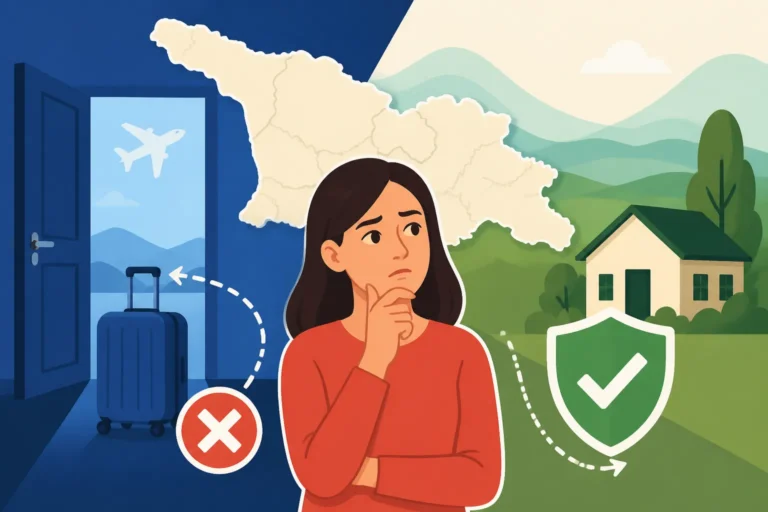
How Do I Apply for a Residence Permit to Join My Spouse in Georgia?
Moving to Georgia to be with your spouse should be a joyous adventure, a chance to build a life together in this incredible country. However, as many of us expats know all too well, the path to family reunification can sometimes feel less like a romantic journey and more like a bureaucratic obstacle course. The process of applying for a residence permit to join your beloved can be a maze of documents, rules, and waiting, leaving you feeling utterly overwhelmed. This comprehensive guide is here to walk you through every step, helping you understand the requirements, navigate the application, and finally settle down with your spouse in Georgia.
Understanding the Family Reunification Residence Permit in Georgia
The Georgian government, like most nations, has a specific pathway for family reunification, and it’s generally referred to as a Short-Term Residence Permit issued on the basis of family reunion. This permit is designed to allow foreign citizens to live legally in Georgia with their close family members who are either Georgian citizens or foreign residents holding their own valid Georgian residence permit. It’s a vital piece of paper that grants you the right to reside here, access certain public services, and integrate into society alongside your loved one.
Who Qualifies for a Spousal Permit?
First things first, let's clarify who the Public Service Development Agency (PSDA) considers eligible under "family reunification" for spouses. Essentially, this permit is for a foreign national who is legally married to either:
- A citizen of Georgia.
- A foreign citizen who holds a valid Georgian residence permit (be it for work, study, investment, etc.).
This distinction is crucial. If your spouse is a Georgian citizen, the process might feel a little more straightforward, as the direct link to the country is clear. If your spouse is also a foreign national, they must already have their own valid residence permit. You can't both apply for family reunification simultaneously based on each other – one of you needs to be firmly established in Georgia first. This often means one partner gets a work permit, for instance, and then the other applies for family reunification based on that established residency.
The legal marriage aspect is non-negotiable. Georgia recognizes marriages performed both within Georgia and abroad, as long as they are officially registered and valid according to the laws of the country where they took place. You'll need to provide an official marriage certificate, which, if issued outside Georgia, will need to be properly legalized and translated. There's no such thing as a "common-law" spouse permit here; it's strictly for those who are legally wed.
Key Eligibility Criteria You Absolutely Must Meet
Beyond the spousal relationship, there are several foundational eligibility criteria you’ll need to satisfy to even get your foot in the door. Ignoring any of these can lead to an immediate rejection, wasting precious time and effort. It’s not just about proving you're married; it's about proving you can genuinely integrate and sustain yourself in Georgia without becoming a burden.
Firstly, you need to demonstrate sufficient financial means. This means you must prove that you (or your spouse, if they are sponsoring you) have enough income or savings to support both of you. The exact amount can vary and is subject to change, but generally, it involves showing a stable income source – typically through employment, business profits, or significant bank account balances. For instance, if your Georgian spouse is working, their income will be assessed. If you're both foreign nationals, your spouse's income and assets will be paramount. The PSDA wants to see that you won't be relying on public funds, so this is a major sticking point for many.
Secondly, you'll need proof of accommodation. This could be a rental agreement in both your names, or if your spouse owns property, proof of their ownership. The address listed on your application must be a legitimate place of residence. They want to know you won’t be homeless or squatting. This means a proper, signed rental contract, registered with the Public Service Hall, or a property deed. Sometimes, for good measure, they might even ask for a utility bill to further prove the address is active and legitimate.
Lastly, and this often goes without saying but is vital, you need to have a clean legal record. This typically means no serious criminal convictions. While you usually aren't asked for a police clearance certificate upfront for this specific permit, having a history that raises red flags could certainly complicate or even derail your application. Also, your passport must be valid for at least six months beyond the requested permit duration.
The Different Scenarios: Georgian Citizen vs. Foreign Resident Spouse
The primary distinction in your application journey will depend on your spouse's status. Let’s break down how this can affect the process:
Scenario 1: Your Spouse is a Georgian Citizen
If your partner is a Georgian citizen, congratulations – you’ve got a direct link to the country, which can simplify some aspects. Your spouse will act as your sponsor, and their role in the application will be quite active. They’ll likely need to provide documents proving their citizenship, their income, and their residential address in Georgia. Their financial responsibility towards you will be a key factor in the assessment.
In this case, the emotional connection and the commitment to a family unit within Georgia are highly regarded. You're integrating directly into the fabric of Georgian society. The authorities will look for strong evidence of a genuine marriage, so be prepared to show photos, joint bank statements, or anything that paints a clear picture of your shared life. The PSDA wants to ensure this isn't a marriage of convenience solely for immigration purposes.
Scenario 2: Your Spouse is a Foreign Resident with a Georgian Residence Permit
This scenario is equally valid, but it adds another layer. Your spouse must have a valid Georgian residence permit, and it usually needs to be one that allows for family reunification (e.g., a work permit, investment permit, or even another family reunification permit if they joined a Georgian citizen). They cannot sponsor you if they are merely here on a visa-free stay or a tourist visa. Their permit duration will also largely dictate the maximum duration of your own permit.
For instance, if your spouse holds a work permit for one year, your family reunification permit will likely be issued for a similar duration. This means your renewal cycles will often be intertwined. When applying in this scenario, your spouse will need to provide copies of their valid residence permit, their financial documents, and proof of their accommodation, just as a Georgian citizen would. The focus remains on demonstrating that the family unit can be financially stable and legally accommodated in Georgia.
Navigating the Application Process: Step-by-Step for Your Spousal Permit
Once you understand the eligibility, it’s time to roll up your sleeves and tackle the actual application. This is where most expats hit their first real wall, feeling like they're trying to decode ancient scrolls. But take a deep breath; we'll go through it bit by bit.
Gathering Your Mountain of Documents
This is arguably the most tedious and critical part. A missing or incorrectly prepared document is often the downfall of many applications. You’ll need originals and copies, and many will require official translation and notarization.
Here’s a general checklist of what you'll typically need:
- Your Valid Passport: Original and a copy, showing entry stamps into Georgia. Ensure it has enough validity – at least 6 months beyond the requested permit period.
- Your Spouse's Passport/ID: Original and a copy. If they are a Georgian citizen, their Georgian ID card. If a foreign resident, their passport and valid Georgian Residence Permit card.
- Marriage Certificate: The original, official document. If it was issued outside Georgia, it must be apostilled or super-legalized (depending on your country's conventions with Georgia) and then officially translated into Georgian by a certified translator, with the translation notarized.
- Proof of Financial Means:
- For your spouse: Bank statements showing sufficient funds (usually a minimum balance of 2,500 GEL per applicant, but showing substantially more, like 6,000-10,000 GEL, is always safer), employment contracts, recent pay slips, or business registration documents if self-employed.
- For you (if applicable): If you have your own income, similar documents.
- Proof of Accommodation:
- Rental Agreement: A legally registered rental contract (stamped by the PSDA or a notary) showing both your names (or just your spouse's, with a letter of consent from them for you to reside there).
- Property Ownership: If your spouse owns property, a copy of the property deed (extract from the Public Registry).
- Application Form: You'll fill this out at the PSDA or online.
- Passport-Sized Photo: Usually 3×4 cm, often two copies.
- Receipt of Payment for State Fee: The administrative fee for the permit.
- A Notarized Letter from Your Spouse: Declaring their consent to your residence in Georgia and confirming your marital relationship.
- Health Insurance: While not always a strict initial requirement for submission, having health insurance is a very smart move. It demonstrates responsibility and can certainly aid your application. Providers like Cigna Global offer excellent international coverage options that are recognized here, which can give you peace of mind. Some residence permits now even explicitly state a requirement for health insurance.
A quick word on translations and notarization: Do not skimp on this. Get professional, certified translations into Georgian. The PSDA will not accept amateur translations. Then, ensure these translations are notarized by a Georgian public notary. This adds a layer of official recognition. For documents like your marriage certificate issued abroad, remember the apostille/legalization step before coming to Georgia, if possible. Trying to get this done from abroad while already in Georgia is a whole new headache.
Submitting Your Application: Where and How
Once your document pile is perfectly ordered, translated, and notarized, it's time for submission. You have a couple of primary routes:
- Public Service Hall (PSH): This is the most common and often recommended method, especially for first-timers. Head to a Public Service Hall in Tbilisi, Batumi, Kutaisi, or another major city. They have dedicated immigration desks. You'll take a number, wait for your turn, and a representative will review your documents. They can often catch minor errors on the spot, giving you a chance to correct them. It’s a very hands-on approach. Be prepared for potentially long waits, especially during peak hours. Some PSDA branches require booking an appointment in advance, so check online first.
- Online via the PSDA Portal: For those who are tech-savvy and confident in their document preparation, you can submit your application online through the Public Service Development Agency's official website (services.sda.gov.ge). This option offers convenience, allowing you to upload scans of your documents from home. However, any mistake or missing detail online might go unnoticed until it's too late, resulting in a denial without direct feedback. It's crucial to ensure all scans are clear and correctly formatted.
When you submit, you'll need to pay the state fee. The fee varies depending on the processing time you choose (e.g., 30 days, 20 days, 10 days, or even 5 days for an expedited but more expensive option). Remember, these are processing times for the government; they don't include the time you spend gathering documents or dealing with any follow-up requests.
The Waiting Game and Potential Follow-Ups
After submission, the dreaded waiting game begins. The official processing times are generally adhered to, but sometimes things can take a little longer. It's a test of patience for many expats. During this period, it's not uncommon for the PSDA to request additional documents or clarification. This doesn't necessarily mean something is wrong; it just means they need more information. Respond promptly and provide exactly what they ask for.
Occasionally, they might even call you or your spouse for an interview to verify the legitimacy of your marriage and your intentions to reside in Georgia. This is rare but can happen, especially if they have any doubts about the genuineness of the relationship. Don't panic if this occurs; just be honest and consistent in your answers.
| Document Category | Specific Documents Needed | Key Considerations & Pitfalls |
|---|---|---|
| Identity & Status | Your valid passport | Must have 6+ months validity beyond permit term. Copies of all relevant pages (ID, visa stamps). |
| Spouse's passport/ID & Residence Permit (if applicable) | Clear copies. If a foreign resident, their permit must be current and valid. | |
| Marital Status | Original Marriage Certificate | If foreign, must be apostilled/legalized and then officially translated & notarized in Georgia. No exceptions! |
| Financial Solvency | Bank Statements (your/spouse's) | Showing sufficient funds (min. 2500 GEL/person, but more is better). Should be recent. |
| Income Proof (e.g., employment contract, pay slips) | For spouse primarily, or for you if you have Georgian income. Must show stable, regular income. | |
| Accommodation | Registered Rental Agreement or Property Deed (spouse's) | Rental agreement must be officially registered. Letter of consent if property is only in spouse's name. |
| Application & Photo | Completed Application Form | Available at PSDA or online. Fill out accurately. |
| Passport-sized Photo (3×4 cm) | White background, recent. | |
| Consent & Fees | Spouse's Notarized Consent Letter | Confirming marriage and consent for you to reside. |
| State Fee Payment Receipt | Pay at PSDA or designated bank. Keep original receipt. | |
| Optional (Highly Recommended) | Health Insurance Policy (e.g., Cigna Global) | Demonstrates responsibility; increasingly seen as a de facto requirement for long-term stays. |
Practical Considerations and Common Pitfalls to Avoid
Anyone dealing with the Georgian bureaucracy should know there are some universal truths: it’s rarely perfectly smooth, sometimes illogical, and often requires an extra layer of patience. Being prepared for common hurdles can save you a lot of stress.
Financial Proof and Accommodation: More Than Just a Number
Let’s dive deeper into the financial and accommodation requirements, as these are frequently where applications stumble. When the PSDA asks for financial proof, they aren't just looking for a snapshot of money in a bank account on one specific day. They want to see stability. If your spouse is employed, an official employment contract, recent bank statements showing regular salary deposits, and even a letter from their employer confirming their position and salary are all excellent pieces of evidence.
If your spouse is self-employed or an individual entrepreneur (IE) here in Georgia, they'll need to provide their IE registration documents, recent tax declarations (especially if they are under the 1% Small Business Status), and bank statements showing consistent income from their business. Having an accountant who can provide official statements or guidance on this can be invaluable. This demonstrates not just that money exists, but that it's reliably coming in. Remember, the general guideline for funds is around 2,500 GEL per applicant, but showing significantly more, perhaps 6,000-10,000 GEL in a bank account, can really solidify your application.
For accommodation, while a rental contract or property deed is the primary document, try to have it in both your names if possible, or ensure your spouse’s ownership is crystal clear. If it's a rental, the contract should be registered with the Public Service Hall or notarized, showing it's a legitimate, long-term agreement. A simple handwritten note won’t cut it. This ensures you have a proper place to live and aren't just temporarily crashing.
Dealing with Bureaucracy and Language Barriers
Ah, the joys of Georgian bureaucracy! Even for native speakers, navigating government offices can be a task. For expats, the language barrier often adds another layer of complexity. While many staff at the Public Service Hall in Tbilisi speak some English, it's not guaranteed, especially in smaller branches or for in-depth inquiries.
My top tip? Bring someone who speaks fluent Georgian with you if you're not confident in your own language skills. This could be your spouse, a trusted friend, or even a professional interpreter. Having someone who can clarify questions, explain complex legal jargon, and advocate on your behalf can make a world of difference. Don't be afraid to ask for help! Some expats even use relocation services, like those found through platforms like Sirelo, who can assist with document gathering and navigating the PSDA, ensuring everything is in order before you even step foot in the building. This can reduce a huge amount of stress.
Remember, patience is key. Things might move slower than you’re used to, and sometimes you might be asked for a document you weren't initially told to bring. Maintain a polite and calm demeanor. A smile and a respectful attitude can go a long way in these situations.
What Happens After Approval
Once your application is approved – congratulations! You’ll receive an SMS notification. You then need to return to the Public Service Hall to collect your physical residence permit card. This card is vital; it's your official proof of legal residency in Georgia.
The initial family reunification permit is typically issued for a duration of six months to one year. It's rare to get a longer one on your first application. This means you’ll need to renew your residence permit before it expires. The renewal process is similar to the initial application but usually requires updated documents, especially financial proofs and accommodation details. Always apply for renewal at least 45 days before your current permit expires, but ideally even earlier, like 60-70 days out, just to be safe. If you let it expire, you could face penalties or even have to leave the country and reapply from scratch, which nobody wants.
With your residence permit, you gain certain rights. You can officially reside in Georgia, enter and exit the country without a visa for the duration of your permit, and legally access various services. While a family reunification permit doesn't automatically grant you the right to work, it often serves as a solid foundation if you later decide to seek employment, making it easier to convert to a work permit or obtain an employer-sponsored residence permit.
Life in Georgia with Your Spouse: Beyond the Permit
Getting that permit in hand is a huge milestone, but it's just the beginning of your shared life in Georgia. Now you can focus on truly settling in and enjoying the experience together.
Accessing Services and Integrating into Local Life
With your residence permit, you'll find accessing various essential services becomes much smoother. For example, opening a bank account as a foreigner is generally straightforward in Georgia, but having a residence permit removes any doubt about your long-term intent, which some banks appreciate. This allows you to manage your finances locally, set up utilities, and generally participate more fully in the Georgian economy. You can explore how to open a bank account at a Georgian bank as a foreigner.
Healthcare is another crucial area. While Georgia has a Universal Healthcare Program (UHC), it's important to understand that its coverage for expats can be limited depending on your status. Many expats opt for private health insurance. Having a local residence permit will facilitate registering with private clinics and doctors, allowing you to access quality medical care. Providers like Cigna Global are popular choices among expats here, offering comprehensive plans that are accepted at most major hospitals and clinics in cities like Tbilisi and Batumi. Knowing you're covered gives you immense peace of mind. For a deeper dive, check out our guide on how Georgia's health system works: universal healthcare and private care explained.
Beyond practicalities, integration is about building a life. Engage with local communities, learn some Georgian phrases (it goes a long way!), and explore the rich culture. Join expat groups, participate in local events, and embrace the vibrant lifestyle. Your spouse, whether Georgian or a fellow expat, will be your best guide in this journey.
Planning for the Future: Renewals and Permanent Residency
Your initial family reunification permit is temporary, so planning for renewals should start almost as soon as you get it. Keep all your documents organized, especially those related to finances and accommodation, as you'll need to present updated versions each time. The process is largely the same, requiring current proof of your marital status, financial stability, and residence. You can find more detailed information in our guide on how to renew your residence permit in Georgia.
For those dreaming of a long-term future, it’s worth understanding the path to permanent residency. After holding a temporary residence permit for a certain continuous period (currently 10 years, though this can vary by permit type and is subject to change), you might become eligible to apply for permanent residency in Georgia. This is a significant step, granting more stability and rights. If your spouse is a Georgian citizen, your path might be somewhat streamlined after a significant period of continuous legal residence and a proven family life. Delve into The Complete Guide to Permanent Residency in Georgia (2026) for more insights.
Ultimately, your residence permit is more than just a piece of plastic; it's your gateway to truly building a home and a future with your spouse in Georgia. While the administrative hurdles can be frustrating, the reward of shared life in this beautiful country is well worth the effort.
Disclaimer
The information provided in this article is intended for general guidance and informational purposes only, and does not constitute legal, financial, or immigration advice. While we strive to keep the information up-to-date and correct, rules and regulations in Georgia, particularly regarding immigration, can change frequently and without prior notice. Therefore, you should always consult with the Public Service Development Agency of Georgia, a qualified immigration lawyer, or other relevant professionals for advice tailored to your specific situation before making any decisions. We cannot be held responsible for any inaccuracies or omissions, or any actions taken based on the information provided herein.