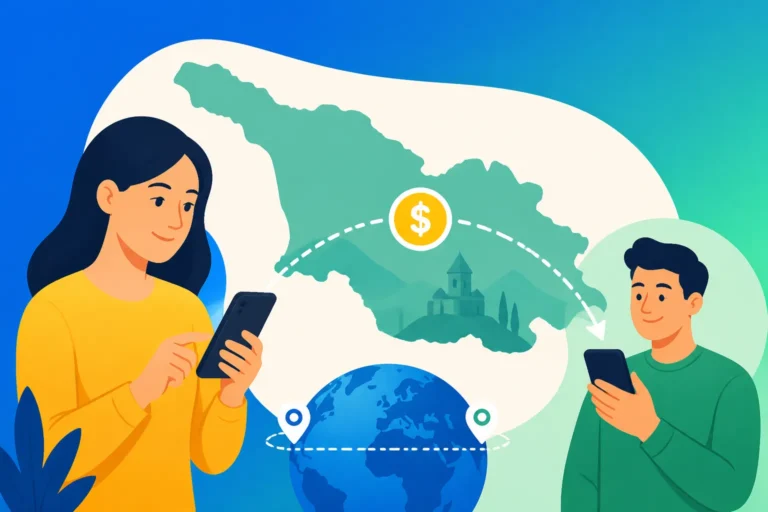
How to Transfer Money Into and Out of Georgia as an Expat
Ah, the eternal expat riddle: how do you get your hard-earned cash from one place to another, especially when one of those places is Georgia? Believe me, I've been there, staring at bank forms with a blank expression, trying to decipher what exactly a "correspondent bank" does, and wondering if my money would ever actually arrive. Moving funds across borders, whether bringing your savings in or sending your Georgian earnings back home, can feel like navigating a labyrinth designed by frustrated bureaucrats. But don't you worry, this guide is here to untangle that mess and show you the clearest paths to seamlessly transfer money into and out of Georgia as an expat.
Understanding the Landscape: Georgian Banks and Your Options
When you first arrive in Georgia, one of the very first things you'll realize is that while it's a wonderfully easy country to get into, the banking system can feel a little…different. It's not necessarily difficult, but it has its quirks, especially when you're dealing with international transfers. Understanding how local institutions operate is your first step to mastering your finances here.
Local Banks for Expats: TBC and Bank of Georgia
The banking scene in Georgia is largely dominated by two behemoths: TBC Bank and Bank of Georgia. You'll see their branches everywhere, their ATMs on every corner, and most people, both local and expat, will have accounts with one or both. When I first landed, opening an account felt like a rite of passage, and honestly, it’s a necessary one. These banks are your gateway to paying local utility bills, receiving local salaries, and generally integrating into the Georgian financial system.
Both TBC and Bank of Georgia offer pretty robust online banking platforms and mobile apps, which are usually available in English, Georgian, and sometimes Russian. This is a huge relief when you're trying to manage your money on the go. While their international transfer fees for sending money out of Georgia can sometimes feel a bit steep compared to specialized services, their convenience for everyday transactions within Georgia is unmatched. They are also usually quite helpful with English-speaking staff in their larger branches, especially in Tbilisi and Batumi, which makes things a little less daunting when you're signing up or asking questions about a suspicious transfer status. For more detailed information on which might be a better fit for you, check out our guide on Understanding the Difference Between TBC and Bank of Georgia.
The Role of Multi-Currency Accounts
For any expat living in Georgia, a multi-currency account isn't just a nice-to-have; it's practically essential. Picture this: you're earning in GEL, but you still have expenses back home in USD, EUR, or GBP, or you're getting paid by an international client in a foreign currency. Without a multi-currency account, every transaction could mean a hefty bite from your money due to less favorable exchange rates and conversion fees.
Most Georgian banks, particularly TBC and Bank of Georgia, readily offer multi-currency accounts that allow you to hold funds in various major currencies like USD, EUR, GBP, and of course, GEL. This means you can receive foreign currency payments directly into your Georgian bank account without immediate conversion to Lari. You can then choose when to convert it to GEL, ideally when the exchange rate is in your favor, or send it out in its original currency without multiple conversions. It really helps you mitigate some of the volatility of exchange rates and keeps more of your hard-earned money in your pocket. Learning How to Open a Multi-Currency Account in Georgia is one of the smartest financial moves you can make here.
Sending Money Into Georgia: Getting Your Funds Here
So, you're making the big move, or maybe you've been here a while and need to top up your local account from abroad. Getting money into Georgia can be done in several ways, each with its own pros and cons in terms of speed, cost, and convenience.
Traditional Bank Transfers SWIFT/SEPA
The old faithful, the method that feels as ancient as the hills surrounding Tbilisi, but still gets the job done: traditional bank transfers. These typically rely on the SWIFT network for transfers from outside the Eurozone and SEPA for transfers within the Eurozone. You’ll need the recipient's full name, bank name, account number (IBAN), and the SWIFT/BIC code of the Georgian bank. It sounds straightforward, and often it is, but there are some caveats.
Firstly, fees. Your sending bank will charge a fee, and often, intermediary banks involved in the transfer will also take a cut, sometimes without you even realizing it until the money arrives short. The recipient bank in Georgia (TBC or Bank of Georgia, for example) might also impose a receiving fee. Secondly, timing. While a SEPA transfer might arrive within a day or two, a SWIFT transfer from further afield can take anywhere from 3 to 7 business days, sometimes longer if there are public holidays or weekends involved. This can be frustrating if you're on a tight schedule, say, needing funds for a property down payment or a pressing bill. However, for very large sums, especially when buying property, a SWIFT transfer often feels like the most secure and familiar option, despite the potential for delays and multiple fees. If you're looking for guidance on setting up your banking in general, our comprehensive guide, Banking in Georgia: A Complete Guide for Foreigners (2027), has a lot more detail.
Online Money Transfer Services
This is where the game has really changed for expats. Online money transfer services have revolutionized how we move money internationally, offering faster, cheaper, and more transparent alternatives to traditional banks. I remember when I first discovered these platforms; it felt like a financial superpower.
Services like Wise (formerly TransferWise) are incredibly popular among expats in Georgia, and for good reason. They are renowned for their transparent fee structure and using the real, mid-market exchange rate, which is the same rate you see on Google. This means you avoid the hidden markups that banks often apply. You simply transfer money from your bank account in your home country to Wise, and they send the equivalent amount in GEL (or another chosen currency) directly to your Georgian bank account. The process is usually quick, often taking less than 24 hours for many currency corridors, sometimes even minutes. Other services like Revolut also offer competitive rates and ease of use, making them excellent choices for regular remittances or sending money for smaller to medium-sized expenses. These platforms are particularly useful if you're constantly sending money home, or receiving regular payments from international clients. They cut through the typical bank bureaucracy and can save you a significant amount over time.
Cash Pick-Up and Other Methods
Sometimes, speed is of the essence, or you're dealing with someone who doesn't have a bank account. In such cases, cash pick-up services like Western Union or MoneyGram can be an option. These services allow someone to send money from abroad, and the recipient in Georgia can pick it up in cash from a local agent, often within minutes.
While undeniably fast, the convenience comes at a cost. The fees are typically much higher than online transfer services or bank transfers, and their exchange rates might not be as favorable. They are best reserved for urgent situations or when a bank transfer simply isn't feasible. For day-to-day use, or for anything other than a true emergency, they will quickly eat into your funds. Expats tend to use them sparingly, usually only when there is no other way to get cash to someone quickly. Beyond these, some expats dabble in peer-to-peer (P2P) transfers or even cryptocurrency for moving funds, but these come with their own set of risks, including security concerns, fluctuating values, and potential regulatory complexities that might not be suitable for everyone, especially for large sums or regular transactions.
Sending Money Out of Georgia: Moving Funds Home or Elsewhere
Now for the flip side of the coin: getting your money out of Georgia. Whether you're sending savings back home, paying international bills, or moving funds for investments abroad, this process also requires a bit of savvy to avoid unnecessary costs and delays.
Bank Transfers from Georgian Accounts
If you're looking to send money internationally directly from your Georgian bank account, you’ll typically initiate a SWIFT transfer. Both TBC Bank and Bank of Georgia facilitate these, and you can usually do it via their online banking platforms or by visiting a branch. You’ll need the recipient's full bank details, including their bank name, account number/IBAN, and SWIFT/BIC code.
The process is generally straightforward, but you need to be aware of the costs. Georgian banks will charge a fee for outgoing international transfers, which can vary based on the amount and destination currency. Critically, the exchange rate they offer for converting GEL to your desired foreign currency might not be the most competitive. Banks often build a margin into their exchange rates, meaning you get fewer USD, EUR, or GBP for your Lari than the actual market rate. For substantial amounts, this difference can really add up. Additionally, similar to incoming transfers, there's the possibility of intermediary bank fees cutting into your transfer, and the recipient bank might also charge a fee to receive the funds. Depending on the amount and purpose, Georgian banks might also ask for supporting documentation, such as proof of the source of funds or the reason for the transfer, especially for larger transactions, so be prepared for a bit of paperwork if you're sending a significant sum. For those just starting out with Georgian banking, our guide on The Expat Guide to Opening a Bank Account in Georgia offers a great overview.
Leveraging International Transfer Platforms
Just as they are beneficial for bringing money into Georgia, international transfer platforms like Wise are often the best choice for sending money out of Georgia as well. They really shine when you need to convert your Georgian Lari into another currency and send it abroad efficiently.
Using a service like Wise, you can initiate a transfer from your Georgian bank account (or even directly from your Wise multi-currency account if you have one linked) and specify the amount you want to send and the currency you want it converted into. The key advantage here is the exchange rate. Wise typically offers the mid-market rate, which means you're getting the best possible conversion, rather than a bank's marked-up rate. Their fees are also transparent and generally much lower than traditional bank fees, making them a more cost-effective option for most expats. For example, if you've been working remotely in Georgia and receiving your salary in GEL, and you want to send a portion back to your home country for family support or mortgage payments, Wise offers a seamless and affordable way to do so. This convenience, combined with cost savings, makes these platforms an invaluable tool for managing your finances as an expat in Georgia, ensuring more of your money reaches its intended destination. You can read more about options in our piece on What Is the Best Multi-Currency Account in Georgia?.
The Nitty-Gritty: Fees, Exchange Rates, and Regulations
Understanding the basic mechanics of transferring money is one thing, but truly mastering it requires a deeper dive into the less obvious aspects that can make or break your budget: fees, exchange rates, and the bureaucratic hoops you sometimes have to jump through.
Navigating Transfer Fees and Hidden Costs
Ah, fees. They're the bane of every expat's existence when it comes to international money transfers. It's not just about the advertised fee; it's about the total cost. Banks often have complex fee structures. You might see a flat fee for an international transfer, but then there could be correspondent bank fees, and even a receiving fee on the other end. These can quickly add up, especially for smaller, more frequent transfers.
The biggest "hidden" cost, however, often lies in the exchange rate. Banks rarely offer the interbank or mid-market rate (the rate at which banks trade with each other). Instead, they apply a "spread" – a small markup on the exchange rate – which is how they make additional profit. This means that even if a bank advertises a "low" or "no" transfer fee, you could still be losing a significant amount of money in the unfavorable exchange rate. This is why comparing services based on the total cost, including the exchange rate, is crucial. For instance, if you're sending 1000 GEL to USD, one service might charge a 5 GEL fee but give you a terrible exchange rate, while another charges a 10 GEL fee but a much better exchange rate, resulting in more USD in your recipient's account. Always calculate the final amount the recipient will receive.
To give you an idea, here's a simplified comparison of potential costs for sending money:
| Method | Typical Fees (Estimate) | Exchange Rate | Speed | Best For |
|---|---|---|---|---|
| Georgian Banks (SWIFT) | 0.2% – 1.5% + fixed fee (min. $15-50 equivalent) + intermediary fees | Marked-up | 3-7 business days | Large, infrequent transfers; familiarity |
| Online Transfer Service (e.g., Wise) | 0.4% – 1% + small fixed fee (e.g., $1-5 equivalent) | Mid-market | Instant – 2 business days | Regular, small to medium transfers; cost-efficiency |
| Cash Pick-up (e.g., Western Union) | 2% – 10% + fixed fee | Highly marked-up | Minutes – hours | Urgent, small cash needs; no bank account |
Note: These are estimates. Actual fees and rates vary by service, amount, and currency corridor.
Understanding Exchange Rates and the Georgian Lari (GEL)
The Georgian Lari (GEL) is a relatively stable currency, but like any currency, it fluctuates against major global currencies. Understanding these exchange rates is paramount for maximizing your transfers. When you're dealing with international transfers, you'll encounter different types of rates: the interbank rate (also called the mid-market rate), which is the true value you see on financial news sites like Google or XE.com, and the consumer rate, which is what banks and money transfer services offer you.
As mentioned, traditional banks often apply a margin to the mid-market rate, which is essentially a hidden fee. This means that even small fluctuations can significantly impact how much foreign currency you receive for your GEL, or how much GEL you get for your foreign currency. My advice? Always check the mid-market rate right before you initiate a transfer. Websites and apps dedicated to currency exchange can help you monitor trends and decide the optimal time to send or receive funds. Using a multi-currency account can also help here, as it allows you to hold funds in different currencies and convert them only when the rate is favorable, rather than being forced to convert at whatever rate is offered at the time of transfer. For more on managing your funds in the local currency, you'll want to read about Understanding the Lari (GEL) and Foreign Currency Accounts in Georgia.
Regulatory Considerations and Documentation
Moving money isn't just about clicking a button; there are regulations designed to prevent money laundering and terrorist financing, known as AML (Anti-Money Laundering) and KYC (Know Your Customer) policies. Georgian banks, like banks worldwide, adhere to these strict international standards. This means that for certain transactions, especially larger ones, you might be asked for documentation proving the source of your funds or the purpose of the transfer.
For instance, if you're transferring a substantial sum into Georgia to buy property, the bank might ask for a sale agreement from your home country, bank statements showing where the money came from, or even a letter from your previous employer. Similarly, if you're sending a large amount out of Georgia, they might inquire about the recipient, the reason for the transfer, or demand proof that the funds are legitimate and not proceeds from illegal activities. While it can feel intrusive, it's standard practice. Banks will have thresholds for reporting transactions to the National Bank of Georgia. Keeping clear records of all your income, expenses, and international transfers is not just good practice but essential for compliance and potential tax declarations. This leads nicely into the next section, as these records can also protect you from tax misunderstandings.
Practical Advice for Expats: Avoiding Pitfalls
Living in Georgia as an expat means embracing a new way of life, and that includes navigating its financial systems. Being prepared and understanding some best practices can save you a lot of grief and money.
Best Practices for Secure Transfers
Security should always be your top priority when moving money across borders. A small mistake can lead to significant headaches, or worse, lost funds. The most crucial rule? Double-check everything. I cannot stress this enough. Before hitting "send," meticulously verify the recipient's bank account number (IBAN), the bank's SWIFT/BIC code, and the exact spelling of the recipient's name. A single digit error can mean your money goes to the wrong person, or gets stuck in limbo for weeks while banks try to trace it.
Beyond verification, only use reputable money transfer services or established banks. Be wary of unsolicited emails or messages asking you to transfer money to unknown accounts, as these are often phishing scams. If you use online platforms, ensure your internet connection is secure, and your devices are protected with strong passwords and two-factor authentication. Always keep a digital or physical record of your transaction confirmations, including reference numbers. These records are invaluable if you ever need to query a transfer or provide proof of funds for tax purposes or other administrative tasks in Georgia. Think of it as your financial safety net.
Managing Tax Implications for Transfers
One of the most attractive aspects of Georgia for many expats is its territorial tax system. In simple terms, this means that if you're a Georgian tax resident, your foreign-sourced income is generally exempt from Georgian income tax. This is fantastic news for digital nomads, freelancers, and remote workers who earn money from clients or employers outside Georgia. However, this doesn't mean you can just ignore taxes or that transfers are entirely free of scrutiny. Our guide to The Complete Guide to Taxes in Georgia for Expats (2027) covers this in much more detail.
While receiving a transfer from abroad is not inherently taxable, banks, being diligent about AML/KYC, might flag unusually large or frequent incoming transfers as potential income, especially if you don't clearly declare their source. This is where keeping good records of your income (showing it's foreign-sourced), business contracts, or even personal gift declarations can be vital. If you are operating as an Individual Entrepreneur under the small business status (with the attractive 1% tax rate on Georgian-sourced income), you need to be very clear about what income is foreign and what is Georgian to ensure compliance. It's important to demonstrate that foreign transfers are indeed foreign-sourced income or represent personal savings, rather than undeclared Georgian earnings. For complex situations, or if you're uncertain about how your specific income streams fit into Georgia's tax framework, consulting with a tax advisor who specializes in expat finances in Georgia is highly recommended. Companies like Taxes for Expats can provide invaluable guidance, ensuring you remain compliant and avoid any unwelcome surprises from the Georgian Revenue Service. Getting your finances sorted out early, especially regarding how your income is taxed, is key to a stress-free expat life. Understanding Filing Your Tax Return with the Revenue Service in Georgia: The Complete Walkthrough (2027) will also be critical.
Disclaimer
The information provided in this guide is for general informational purposes only and does not constitute financial, legal, or tax advice. While we strive to provide accurate and up-to-date information, regulations and circumstances can change. Expats are strongly advised to consult with qualified financial, legal, or tax professionals in Georgia for advice tailored to their individual situation before making any financial decisions or taking any action based on this content.