How to Use Local Payment Systems and Cards in Georgia
Moving to Georgia often means encountering a charming blend of the old and the new, and nowhere is this more apparent than in its financial systems. For many of us expats, the initial scramble to pay for groceries, a marshrutka ride, or even just top up our phone credit can feel like navigating a maze blindfolded. You've got your trusty international cards, but suddenly, that simple transaction is met with a blank stare or a cryptic shrug. This guide is here to untangle the nuances of using local payment systems and cards in Georgia, helping you seamlessly handle your finances and live your life without constant payment anxiety.
The Lay of the Land: Cash, Cards, and Digital Wallets in Georgia
When you first arrive in Georgia, you'll quickly notice that while progress is definitely being made towards a more cashless society, there's still a significant reliance on traditional payment methods. It's a patchwork quilt, really, of old-school cash transactions and surprisingly modern digital solutions, all existing side-by-side.
Cash is Still King, Especially Outside the Big Cities
Let's be real: the Georgian Lari (GEL) in physical form is still an absolute necessity. While the major cities like Tbilisi and Batumi are increasingly card-friendly, venture just a little outside these urban hubs, or even into certain corners of the city, and cash becomes your best friend. Imagine trying to haggle for fresh produce at the local Dezerter Bazaar or paying for a ride in a private taxi – cash is often the only way, and sometimes even the preferred way. You’ll also find that many smaller bakeries, local corner shops (often called ‘patara magazinebi’), and family-run guesthouses operate primarily on a cash-only basis.
It's not just about acceptance; it's about convenience. Carrying a decent amount of small denominations is crucial. A 100 GEL note might get you a frown at a tiny shop trying to make change for a 5 GEL purchase. You'll find ATMs widely available in all towns and cities, typically from major banks like TBC Bank, Bank of Georgia, and Liberty Bank. These are usually reliable, but do keep an eye on potential transaction fees if you're using an international card. Always opt to withdraw in GEL to avoid your bank’s potentially unfavourable exchange rates.
The Rise of Card Payments: Visa and Mastercard Dominance
Now, don't get me wrong, Georgia is very much on the global payment grid. Visa and Mastercard are king, widely accepted across the country's growing modern infrastructure. If you're shopping at larger supermarkets like Carrefour or Goodwill, dining at established restaurants in Tbilisi, or booking a room at a major hotel, your international Visa or Mastercard will almost certainly work without a hitch. The same goes for petrol stations, pharmacies, and most modern cafes.
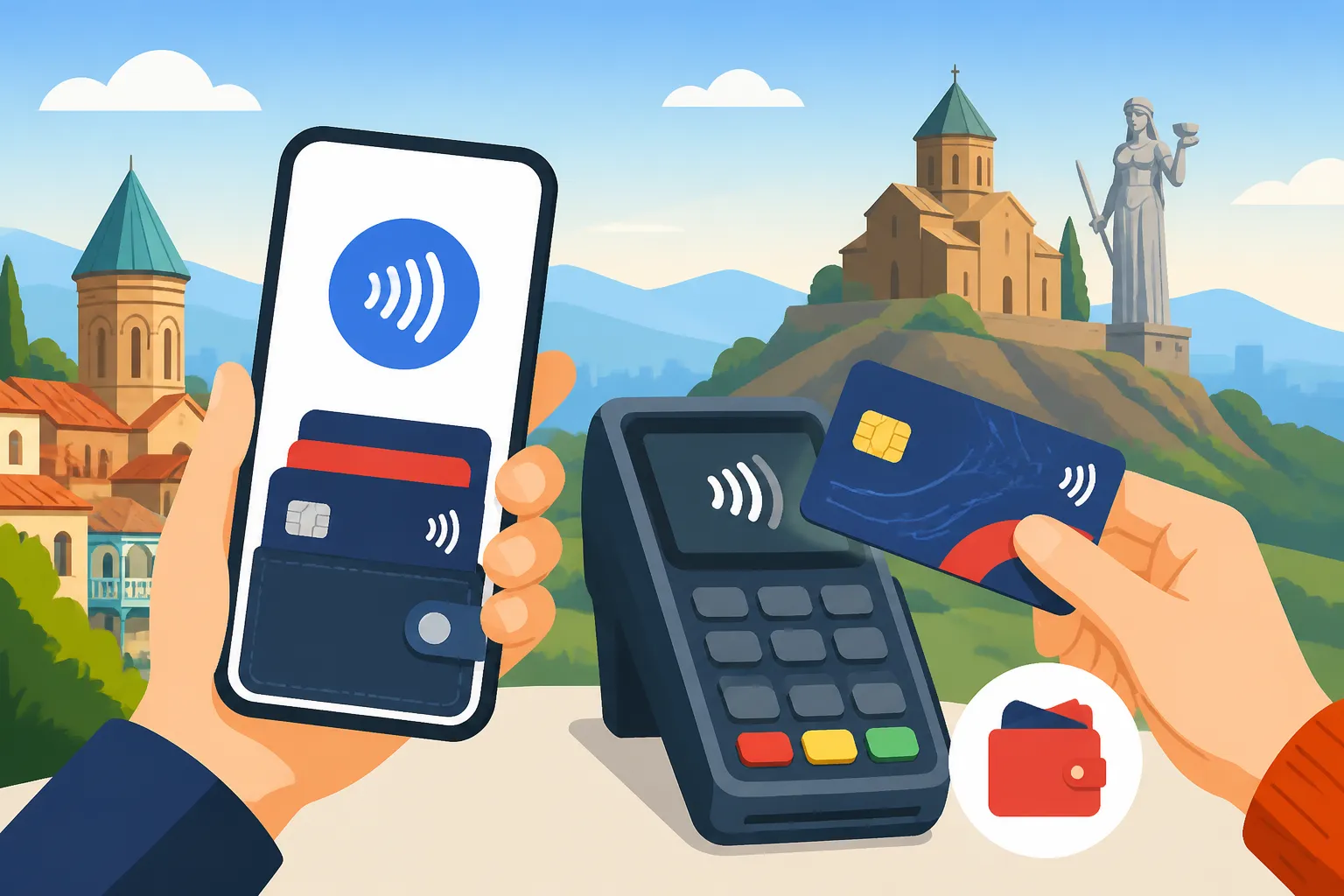
What’s more, contactless payment technology has really taken off here. It’s common to see people simply tapping their cards or even their phones at POS terminals. This makes transactions incredibly fast and convenient, especially in busy spots. However, while most places are equipped, sometimes a terminal might be out of order, or a shop might simply prefer cash for smaller transactions. It’s always a good idea to have a backup, whether that’s another card or a bit of cash in your pocket, just in case. Don't be surprised if your international card gets rejected at a smaller, independent business that simply hasn't upgraded its payment system or is trying to avoid transaction fees. It's not personal, it's just Georgia!
Georgian Digital Payment Systems: TBC Pay and Bank of Georgia's Offerings
Beyond traditional cards, Georgia has developed its own robust ecosystem of digital payment solutions, primarily driven by its major banks. These are a massive convenience once you get used to them. You'll see bright yellow TBC Pay kiosks dotted everywhere – literally on every street corner, inside metro stations, and in shopping malls. These kiosks are incredibly versatile, allowing you to pay a vast array of bills, top up mobile phone credit, pay for parking, and even transfer money. They’re usually multilingual, offering options in Georgian, English, and Russian, making them user-friendly even for newcomers.
Bank of Georgia offers similar services, often integrated into their mobile banking app, which we’ll delve into more later. These local systems are designed for the Georgian context, often linking directly to utility providers and other services that might not easily accept international cards or online payments from foreign banks. Understanding and utilizing these local payment options, especially TBC Pay kiosks, can significantly simplify your daily life, from ensuring your lights stay on to keeping your phone connected. It really shows how Georgia has adapted technology to suit its unique administrative landscape.
Getting Your Hands on Georgian Cards: Local Bank Accounts and Their Perks
Okay, so you've been living here for a bit, or you're planning a longer stay. You've navigated the cash-card divide, but you're probably starting to feel the pinch of foreign transaction fees or the occasional awkward moment when your international card just won't play ball. This is where getting a local Georgian bank card becomes not just a convenience, but a near necessity.
Why a Local Bank Card is a Game-Changer
Opening a local bank account and getting a Georgian card isn't just about avoiding a few fees; it fundamentally changes how smoothly you can operate here. Firstly, it offers unparalleled convenience. From paying your monthly utility bills directly through your bank's mobile app to easily sending money to a friend via local bank transfers (which are often free or very low cost), a local card integrates you into the financial fabric of the country. Many smaller online retailers or service providers in Georgia are set up primarily for local bank transfers or card payments, making your life infinitely easier if you have a local account.
Secondly, it's about cost savings. Every time you use your foreign card, your bank back home is likely hitting you with foreign transaction fees, and the exchange rate might not always be in your favor. With a local Georgian card, all transactions are in GEL, eliminating these extra costs. For self-employed expats or those receiving local income, a Georgian bank account is essential for managing your finances, paying local taxes, and integrating with other financial services. It's a critical step in truly making Georgia your home. If you're wondering how to even get started, this guide on The Expat Guide to Opening a Bank Account in Georgia provides a fantastic overview.
Major Georgian Banks and Their Card Offerings
When it comes to banking in Georgia, two names stand head and shoulders above the rest: Bank of Georgia and TBC Bank. These are the behemoths, offering the most extensive networks of ATMs, branches, and digital services. While they are both excellent choices, they each have their own quirks and benefits. You might want to refer to Understanding the Difference Between TBC and Bank of Georgia for a deeper dive.
- Bank of Georgia: This bank is often seen as a reliable and established option, with a strong physical presence and a very user-friendly mobile app. They offer a range of Visa and Mastercard debit cards, which are typically easy to obtain once your account is open. Their online banking platform is robust, allowing you to manage multiple currencies, pay bills, and make transfers with ease. They also offer various premium services and dedicated expat support in some branches.
- TBC Bank: TBC is known for its innovative approach and often appeals to a slightly younger, tech-savvy demographic. Their TBC Concept premium service is particularly popular with expats for its enhanced benefits. Like Bank of Georgia, they provide various Visa and Mastercard debit options, and their mobile app is highly functional, offering similar bill payment and transfer capabilities. Their TBC Pay kiosks, as mentioned, are ubiquitous and a huge plus.
- Liberty Bank: While not as dominant as the top two for general personal banking, Liberty Bank is notable for its extensive network, particularly in rural areas, and its strong focus on pension and social welfare payments. For expats, they might not be the first choice for a primary account, but they are a solid option nonetheless.
Most expat-friendly branches of these banks will issue you a standard debit card (Visa or Mastercard) fairly quickly after your account is approved. These cards come with standard security features like chip & PIN and contactless capabilities, making them suitable for almost all your daily needs.
The Application Process: What to Expect as an Expat
Opening a bank account in Georgia as a foreigner can sometimes feel like a rite of passage. It's generally straightforward, but there can be unexpected hurdles, mostly around documentation and proving your "local connection." The process typically requires your passport, a valid visa or residence permit (if applicable), and sometimes proof of address or income. Some banks might also ask for a local Georgian SIM card. Remember, Georgia doesn't have a universal system for "proof of address" like some Western countries, so a rental contract or a letter from your landlord might suffice, or they might not ask for it at all.
You'll often undergo a brief interview where bank staff will ask about your source of income, your purpose for opening the account, and your general financial background. This is part of their due diligence, especially given international anti-money laundering regulations. Don't be discouraged if you face a rejection at one bank; it's a common expat experience. Often, trying another branch or even another bank altogether will yield a different result. Persistence is key! For a detailed, step-by-step guide on what documents to gather and how to navigate the interview, check out How to Open a Bank Account at a Georgian Bank as a Foreigner. And while it's not strictly for banking, understanding how to get a How Do I Get a Taxpayer ID Number in Georgia? is an important step for any long-term financial engagement here.
Navigating Daily Transactions: Using Your Cards Like a Local
Once you’ve got your shiny new Georgian debit card in hand, it’s time to truly put it to work. You'll quickly find that it integrates seamlessly into almost every aspect of daily life, making your financial interactions much smoother and more efficient.
Point of Sale POS Terminals: Tapping, Swiping, and Chip & PIN
Using your Georgian card at a point-of-sale (POS) terminal is generally straightforward and mirrors what you’d find in most modern economies. In supermarkets, cafes, restaurants, and larger retail stores, you'll encounter modern terminals that accept various payment methods.
- Tapping (Contactless): This is by far the most common and convenient method. Simply hold your card (or phone, if linked to a digital wallet like Apple Pay or Google Pay via your Georgian bank app) over the contactless reader, and you're good to go for smaller transactions. Most transactions under a certain limit (currently around 100-150 GEL, though this can vary) won't require a PIN, speeding things up considerably.
- Chip & PIN: For larger purchases or if the contactless reader isn't working, you'll insert your card into the terminal and enter your four-digit PIN. Always shield your PIN when entering it, just as you would anywhere else in the world.
- Swiping: While increasingly rare, some older terminals, particularly in very small shops or remote areas, might still require a swipe. However, most modern cards are chip-enabled, and merchants prefer chip & PIN for security.
It’s worth noting that if you’re using an international card, some older terminals might struggle to process it, or the staff might not be familiar with troubleshooting foreign card issues. Having a local card eliminates these minor headaches and allows you to transact with confidence, knowing it’s designed for the local infrastructure.
Online Shopping and Bill Payments: Domestic vs. International
This is where a local Georgian bank account truly shines. Online shopping is booming in Georgia, with a plethora of local e-commerce sites, food delivery services, and digital marketplaces.
- Domestic Online Shopping: Your Georgian debit card will work flawlessly on almost all Georgian websites, including popular platforms like Vendoo.ge, TKT.ge (for event tickets), and numerous local restaurant delivery services. This often isn't the case with international cards, which some Georgian websites might reject due to stricter fraud prevention measures or simply compatibility issues with their payment gateways. This makes a huge difference for daily conveniences.
- Utility Bill Payments: Gone are the days of trekking to a service center or a TBC Pay kiosk every month to settle your bills. With a Georgian bank account, you can pay virtually all your utility bills—electricity (Energo-Pro Georgia), water (Georgian Water and Power), gas (KazTransGas Tbilisi), and even internet and mobile phone bills—directly through your bank's mobile app or online portal. This is a massive time-saver and eliminates the hassle of remembering due dates. You can even set up recurring payments. This ease of payment is a lifesaver, and we've got a whole guide on How to Pay Your Utility Bills in Georgia if you want to dive deeper into that.
- Mobile Top-ups: Similarly, topping up your local mobile phone credit (for providers like Magti, Geocell, or Silknet) is instantaneous via your bank app. No more scrambling for cash or specific kiosks.
This seamless integration of local cards with Georgian online services and bill payments is a stark contrast to the occasional frustrations faced by expats trying to use international cards for the same tasks. It simplifies administrative chores significantly. If you want to master the digital side of banking, definitely explore How to Set Up Online Banking with a Georgian Bank.
ATM Usage: Withdrawals, Deposits, and Currency Exchange
ATMs are widely available in Georgia, particularly from the major banks. You'll find them in shopping centers, on main streets, and often outside bank branches. They are generally reliable and secure.
- Withdrawals: Using your Georgian debit card to withdraw cash is straightforward and typically free of charge if you use an ATM from your own bank. If you use another Georgian bank's ATM, there might be a small interbank fee, but it's usually minimal. For international cards, be prepared for withdrawal fees from both your home bank and the Georgian ATM operator, plus potential unfavorable exchange rates. Always check the screen for any fees before confirming a transaction.
- Deposits: Many ATMs, particularly those at bank branches, allow you to deposit cash directly into your Georgian bank account. This is a convenient feature if you deal with cash regularly, such as receiving payments for services or managing funds from various sources.
- Currency Exchange: While some ATMs offer currency exchange, it's generally not the most economical option. For larger amounts, dedicated currency exchange booths (which are numerous and competitive in Georgia) or exchanging through your local bank account online will likely give you better rates. When using an ATM with an international card, always choose to be charged in GEL, not your home currency. This allows your home bank to handle the conversion, which is almost always better than the ATM's dynamic currency conversion rate. For a deeper understanding of local currency, you might find Understanding the Lari (GEL) and Foreign Currency Accounts in Georgia helpful.
Beyond the Basics: Practical Tips and Common Pitfalls
Living in Georgia is an ongoing learning experience, and managing your money is no exception. There are some essential insights and warnings that every expat should be aware of to ensure their financial journey here is as smooth and secure as possible.
Dealing with Foreign Transaction Fees and Exchange Rates
This is a common pain point for newcomers. When you use an international debit or credit card in Georgia, you're almost certainly incurring foreign transaction fees. These usually range from 1% to 3% of the transaction value, tacked on by your home bank. While a few percentage points might not seem like much, they quickly add up over weeks and months of daily spending. Imagine paying an extra 2% on every coffee, every grocery run, and every taxi ride!
Furthermore, your home bank will convert the Georgian Lari (GEL) amount into your home currency using its own exchange rate, which may not always be the most favourable. This is where services like Wise (formerly TransferWise) really come into their own. Wise offers multi-currency accounts that allow you to hold GEL, convert it at interbank rates (with transparent, low fees), and often get a debit card that can be used like a local one or for cheaper international withdrawals. Using Wise for larger transfers or to top up a local Georgian bank account can save you a significant amount compared to traditional bank wire transfers or continuously using your foreign debit card. For more on this, check out our guide on How to Transfer Money Into and Out of Georgia as an Expat.
The clear winner for routine, day-to-day spending within Georgia is a local Georgian bank card. It eliminates foreign transaction fees and gives you direct access to local GEL funds without hidden conversion costs.
Security and Fraud Prevention: Keeping Your Funds Safe
Financial security is paramount no matter where you are, and Georgia is no exception. While serious card fraud is not rampant, it's always wise to be vigilant.
- ATM Safety: When withdrawing cash, always choose ATMs in well-lit, public areas, ideally attached to a bank branch. Before inserting your card, give the card slot and keypad a quick check for anything unusual or loosely attached (skimmers or camera overlays). Always shield your PIN with your free hand. If an ATM looks tampered with or swallows your card, contact your bank immediately and ideally the bank that owns the ATM.
- Online Security: When making online purchases, ensure the website address begins with "https://" and look for a padlock icon in your browser's address bar. Be cautious about clicking on suspicious links or responding to unsolicited emails or messages asking for bank details. Georgian banks, like TBC and Bank of Georgia, have excellent mobile banking apps that use two-factor authentication (usually a code sent to your registered phone number) for logins and high-value transactions. Always use these security features.
- Lost or Stolen Cards: If your card is lost or stolen, contact your bank immediately to have it blocked. Most Georgian banks have 24/7 hotlines (often with English-speaking staff) that you can call. It's a good idea to keep these numbers saved in your phone or written down somewhere safe, separate from your wallet. Having travel insurance or a separate emergency fund can also provide peace of mind in such situations.
Alternative Payment Methods and Emerging Trends
The Georgian payment landscape is dynamic, constantly evolving with new technologies and preferences. While cash and traditional cards dominate, other methods are slowly gaining traction.
- Digital Wallets (Apple Pay/Google Pay): As mentioned, many local banks now support Apple Pay and Google Pay for their debit cards. This is a fantastic convenience, allowing you to pay with your phone or smartwatch wherever contactless payments are accepted. It's secure and quick.
- QR Code Payments: While not as widespread as in some Asian countries, QR code payment options are appearing in some shops and for specific services, especially through local bank apps. Keep an eye out for these.
- Government and Administrative Payments: For paying taxes, fines, or fees for government services (like residence permit applications at the Public Service Hall), you'll often use a dedicated payment portal online or a TBC Pay kiosk. These systems are designed to integrate seamlessly with local bank cards. In fact, understanding the intricacies of online government services is key to managing your finances and legal status, and knowing how to pay online is part of that. If you're tackling tax season, a deep dive into Filing Your Tax Return with the Revenue Service in Georgia: The Complete Walkthrough (2027) will be invaluable, and relies on these local payment systems.
The trend is definitely towards more digital and convenient payments. As an expat, embracing these local options not only makes your life easier but also helps you feel more integrated into the Georgian way of life.
Here's a quick comparison of using local vs. international cards for common transactions:
| Feature | Local Georgian Bank Card | International Debit/Credit Card |
|---|---|---|
| Daily Purchases (GEL) | Seamless, no extra fees, local exchange rate | Potential foreign transaction fees (1-3%), bank's exchange rate, occasional rejection |
| Online Local Shopping | Widely accepted, smooth experience | May be rejected by some local merchants, compatibility issues |
| Utility Bill Payments | Easy via bank app/online banking, often free | Often requires TBC Pay kiosk or manual transfer, may incur fees, difficult setup |
| ATM Withdrawals (GEL) | Free at own bank's ATM, minimal fees at others | Fees from home bank and Georgian ATM, unfavorable exchange rates if DCC is chosen |
| Transfers to Local Accounts | Free or very low cost within Georgian banks | Often costly international wire transfers, slow |
| Mobile Top-ups | Instant via bank app | Requires kiosk or third-party service |
| Fraud Protection | Local bank's support, often English-speaking | Home bank's support, may be harder to resolve issues remotely |
| Convenience | High, integrates into local ecosystem | Medium, often requires workarounds or extra steps |
Disclaimer
The information provided in this article is intended for general guidance only and does not constitute financial or legal advice. While we strive to keep the information accurate and up-to-date, Georgia's regulations and banking practices can change. We recommend consulting with a qualified financial advisor or legal professional for advice tailored to your specific situation.