How to Open a Multi-Currency Account in Georgia
Living as an expat in Georgia, you quickly learn that while life here is incredibly rewarding, managing your finances across different currencies can feel like a constant juggling act. You’re paid in one currency, you spend in another, and suddenly you’re losing money to those sneaky exchange rates and transfer fees. This guide is here to walk you through the ins and outs of opening a multi-currency account in Georgia, helping you streamline your finances and keep more of your hard-earned cash.
Why Expats Really Need a Multi-Currency Account in Georgia
Let's be honest, living abroad means dealing with money in ways you never thought you would back home. You're constantly converting, transferring, and trying to keep track of what's what. In Georgia, this reality hits even harder for many of us. A multi-currency account isn't just a nice-to-have; it's often an essential tool for financial sanity.
Navigating the Lari and Foreign Currencies
The Georgian Lari (GEL) is your day-to-day currency here, used for everything from your morning khachapuri to your monthly rent. But chances are, your income isn't solely in GEL. Many expats, particularly freelancers or those working for international companies, receive their salaries or payments in USD, EUR, or GBP. This creates an immediate headache: how do you get your foreign earnings into GEL without getting fleeced by banks?
Imagine you're a digital nomad, and your clients pay you in US dollars. Your landlord, the grocery store, and your favorite cafe all operate in Lari. Every time you need to pay for something locally, you're faced with the need to exchange currencies. Without a proper multi-currency setup, you might find yourself doing multiple transfers, each incurring a fee or a less-than-favorable exchange rate, slowly but surely eroding your funds. It's a frustrating dance, especially when you're trying to budget and those small losses start to add up over time.
The Hidden Costs of Traditional Exchange
Before multi-currency accounts became widely accessible, we all used traditional banking methods, and let me tell you, the hidden costs were infuriating. Banks often give you an exchange rate that's not the "real" market rate, adding a spread that benefits them, not you. Then there are the transfer fees themselves, often a flat rate or a percentage, which can sting, especially on smaller transactions. This is where you really start to feel like you're constantly losing money just by trying to access your own funds in the local currency.
Even using your foreign debit or credit card at an ATM in Georgia can be a minefield. You might be asked if you want to be charged in your home currency or in GEL – this is called "dynamic currency conversion," and it almost always means you're getting a worse deal. The local ATM’s conversion rate might look convenient, but it’s rarely in your favor. These small, often unnoticed charges quickly compound, making your money stretch less than it should. A multi-currency account aims to cut through this complexity, offering clearer rates and fewer surprises, giving you back control.
Preparing for International Transactions and Travel
Beyond daily expenses, a multi-currency account becomes invaluable when dealing with other international aspects of your expat life. Perhaps you need to pay for an online course in USD, book flights in Euros for a trip back home, or even send money to family in a different currency. Traditional accounts might process these, but you'll almost certainly pay a premium.
Having multiple currency balances under one roof means you can hold funds in the currency you need, ready for immediate use. If your clients are in Europe, you can receive Euros directly without an intermediate conversion. If you're buying something online from the US, you can pay in USD without your bank doing a double conversion (your currency to GEL, then GEL to USD). This capability extends to travel too; if you're popping over to Turkey, you can hold Turkish Lira, making your cross-border financial life far smoother and more economical. It’s about minimizing those frustrating moments when you realize a simple transaction has cost you more than it should have.
Understanding Your Options: Georgian Banks vs. International Platforms
Alright, so you're convinced a multi-currency account is the way to go. Now, what are your choices? Broadly, you're looking at two main avenues: the established local Georgian banks, or the newer, often more agile, international online platforms. Each has its pros and cons, and understanding them will help you make the best decision for your unique financial situation here in Georgia.
Multi-Currency Accounts with Local Georgian Banks
Georgia's banking sector has modernized significantly, and major players like TBC Bank and Bank of Georgia definitely offer multi-currency account options. For many expats, starting with a local bank feels natural. These banks have physical branches, local ATMs, and their services are integrated directly into the Georgian financial ecosystem. This means paying utility bills, receiving local transfers, and accessing cash are generally seamless.
You can typically open accounts in GEL, USD, and EUR, sometimes even GBP or other major currencies, all linked under one client profile. This centralisation can be really convenient. However, there are trade-offs. While the service is local and tangible, the exchange rates offered by traditional banks are often not as competitive as those you'd find on dedicated currency exchange platforms. They might have a wider spread between buying and selling rates, and transfer fees, especially for international SWIFT transfers, can still be a bit steep. If you’re trying to compare options, it’s worth reading up on Understanding the Difference Between TBC and Bank of Georgia, as they are the two dominant players. Their processes for non-residents can also be a bit more involved, requiring more documentation and potentially longer approval times compared to opening a basic GEL account.
The Rise of Online Multi-Currency Platforms
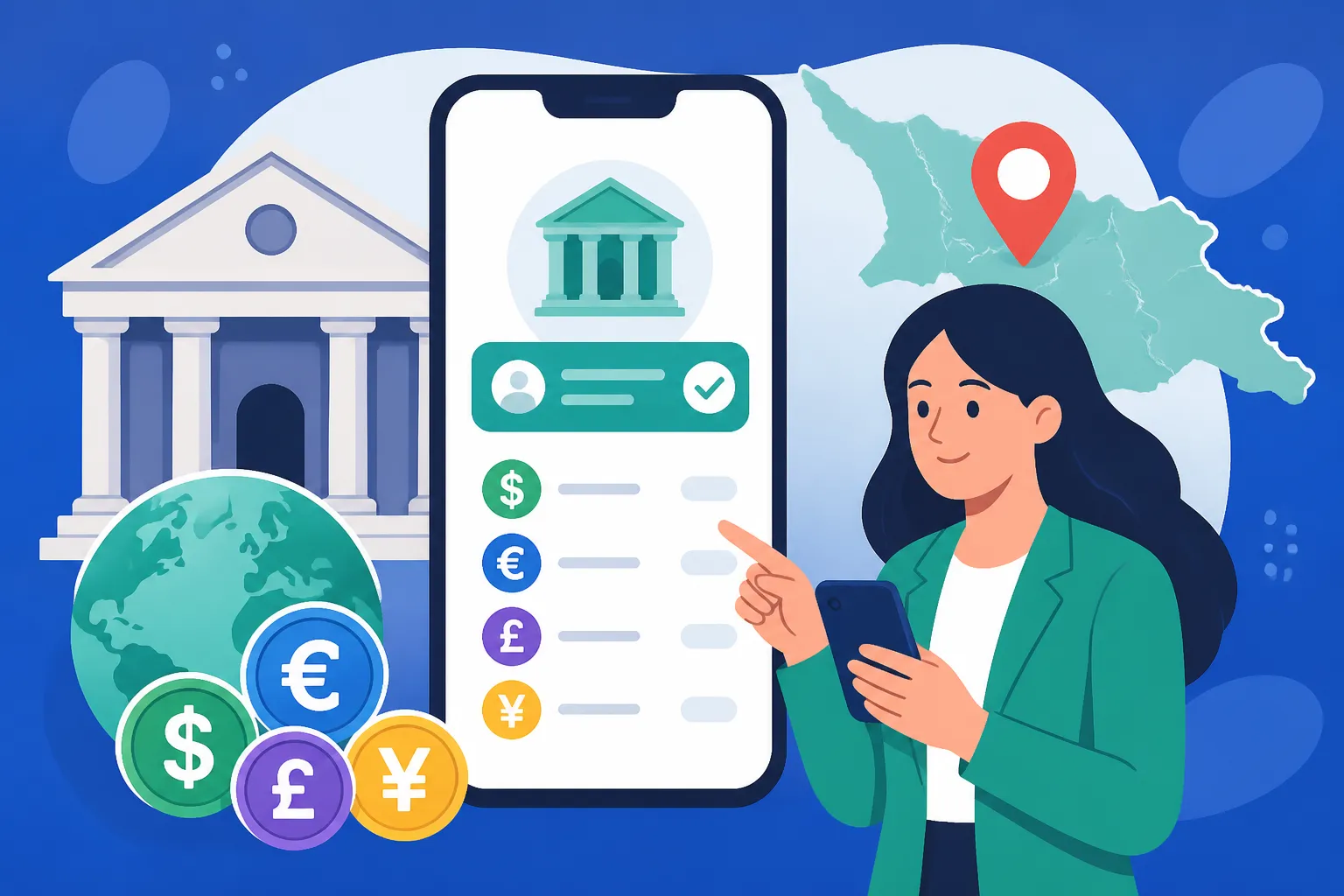
This is where the game changed for many expats. Platforms like Wise (formerly TransferWise) have revolutionized how we manage money across borders. These digital solutions are built specifically for international transfers and multi-currency holding, often boasting superior exchange rates (the mid-market rate) and significantly lower fees than traditional banks. For us expats, this is huge, because it means more money stays in our pockets.
Wise, in particular, allows you to hold balances in dozens of currencies, including GEL, USD, EUR, and GBP, complete with local bank details for many of these. This means you can receive payments as if you had a local bank account in the US, UK, or Eurozone, avoiding international transfer fees for senders. The virtual and physical debit cards offered by Wise are fantastic for spending locally or abroad, automatically converting at the best available rate. While they aren't full-fledged banks in the traditional sense (they don't offer loans or complex investment products), for day-to-day multi-currency management, they are incredibly efficient. When considering How to Transfer Money Into and Out of Georgia as an Expat, these online platforms are often the most cost-effective solution. The main 'con' is that for very large cash withdrawals, you might still need to transfer funds to a local Georgian bank account first, as ATM limits apply, and they don't have physical branches here.
Step-by-Step: Opening a Multi-Currency Account with a Georgian Bank
Navigating the Georgian banking system can sometimes feel like a quest, especially when you're trying to set up something as specific as a multi-currency account. But don't despair! With the right preparation and a bit of patience, it's absolutely doable. Let's break down the process.
Gathering Your Documents (The Bureaucracy Gauntlet)
The first and often most challenging hurdle is assembling the required paperwork. Georgian banks, quite rightly, have strict Know Your Customer (KYC) regulations. You’ll need more than just your passport, particularly if you’re a non-resident. Generally, expect to provide:
- Your Passport: A valid passport with at least six months of validity remaining is a must.
- Georgian Visa or Residence Permit: If you’re staying longer than the visa-free period, or if your nationality requires a visa, this document is crucial. Banks need to confirm your legal status in Georgia. For those without a residence permit, opening accounts can be more difficult, and some banks might even refuse or impose stricter conditions. You can read more about the general requirements in How to Open a Bank Account at a Georgian Bank as a Foreigner.
- Proof of Address: This is where many expats get tripped up. A rental contract (preferably registered) or a recent utility bill in your name is typically required. Sometimes, a letter from your employer confirming your address can work.
- Georgian Taxpayer Identification Number (TIN): Also known as a Personal Number, this is essential for any financial dealings in Georgia. You can easily obtain this from a Public Service Hall. Without it, you’ll hit a wall, so make sure to get this sorted early. If you need assistance with this, check out How to Get a Taxpayer ID as a Foreigner in Georgia.
- Proof of Income/Funds Source: Banks want to see where your money comes from. This could be an employment contract, recent bank statements showing salary deposits, invoices for freelance work, or even proof of funds from your home country. Be prepared to explain your financial situation thoroughly.
Honestly, the bureaucracy can be frustrating. You might walk into one branch, and they ask for slightly different documents than another. Always bring more than you think you need, and don't be afraid to ask for a list in English before your visit. It’s far better to be overprepared than to make multiple trips.
The Application Process: In-Branch Visits and Approval Times
Unlike some countries where you can open an account online, opening a multi-currency account with a Georgian bank almost always requires an in-person visit. You'll head to a branch of your chosen bank (TBC Bank and Bank of Georgia are the most popular for expats), take a number, and wait to be seen by a customer service representative.
Language can be a barrier. While staff in central Tbilisi branches often speak English, don’t assume it. It’s always a good idea to bring a Georgian-speaking friend, a translator, or use a translation app. The process will involve filling out forms, providing copies of your documents, and potentially undergoing a brief interview about your financial activity and reasons for opening the account. Be transparent and clear. Approval times can vary; sometimes it's quick, and you'll get your account details on the spot. Other times, especially if your income source is complex or your documents are from a non-standard country, it might take a few days for their compliance department to review everything. Patience is key here.
Activating and Using Your Georgian Multi-Currency Account
Once approved, you'll get your account numbers for each currency you've opened (GEL, USD, EUR, etc.). You’ll usually receive your debit card(s) either immediately or within a few business days. Make sure to activate your card and set up your online banking access right away. The online banking platforms for TBC and Bank of Georgia are quite good and offer English language options, allowing you to easily manage your different currency balances, make transfers, and pay bills.
You can then link these accounts, making internal transfers between your GEL, USD, and EUR balances very simple. This is where you'll start to see the benefits of the multi-currency setup, allowing you to convert funds when the exchange rate is favorable, rather than on demand. Be mindful of the fees associated with converting between your own accounts within the bank, as these can still apply. Understand the fee structure for different types of transactions and remember to check What Documents Do I Need to Open a Bank Account in Georgia? if you have any doubts. Getting comfortable with your new banking portal will be crucial for smooth financial management.
Exploring International Multi-Currency Solutions for Georgia-Based Expats
While local Georgian banks have their place, for many expats, the real game-changer in managing international finances comes from dedicated online platforms. These services are built from the ground up to handle multiple currencies and cross-border transactions, often with transparency and efficiency that traditional banks struggle to match.
The Wise Way: Simplicity and Transparency
When it comes to international money management, Wise has truly set the standard for many of us living abroad. I've used it myself for years, and it's invaluable. The core appeal of Wise lies in its commitment to the mid-market exchange rate – the real rate you see on Google – and its transparent, low fees. No hidden spreads, no nasty surprises. This alone can save you a significant amount over time, especially if you’re frequently converting funds.
For Georgian expats, Wise offers an incredibly flexible multi-currency account. You can hold balances in over 50 currencies, including GEL, USD, and EUR. What's even better is that you get local bank details for up to 10 different currencies, such as a UK sort code and account number, a US routing and account number, or a Eurozone IBAN. This means your international clients or employers can pay you as if you had a local bank account in their country, completely bypassing costly international wire fees. You can then spend directly from your Wise balance using their debit Mastercard, or easily transfer funds to your local Georgian bank account when you need physical cash. For anyone asking How to Open a Multi-Currency Account in Georgia, especially freelancers or those with diverse international income, Wise offers a streamlined, cost-effective solution that integrates seamlessly into an expat lifestyle.
Other Contenders and Hybrid Approaches
While Wise is often considered the gold standard for its sheer breadth of currencies and transparent pricing, other platforms like Revolut also exist, though their full range of services and regulatory coverage for Georgia-based users can vary, so it's always worth checking the latest information. Generally, Wise tends to have a stronger, more consistent presence and utility specifically for receiving payments into and spending within Georgia.
Many savvy expats actually adopt a hybrid approach, combining the best of both worlds. They might use an international platform like Wise to receive foreign income, hold various currency balances, and manage international transfers due to its superior exchange rates and lower fees. Then, they’ll transfer money from their Wise account to their local Georgian bank (like TBC or Bank of Georgia) when they need to pay local bills that don't accept card payments or require cash, or for larger local transactions. This strategy ensures you benefit from the low costs and flexibility of digital platforms for international dealings, while still having a robust local bank for your day-to-day Georgian needs, making How to Use Local Payment Systems and Cards in Georgia even more efficient. This way, you optimize for both cost-efficiency and convenience, getting the most out of your financial setup as an expat in Georgia.
Managing Your Multi-Currency Finances: Tips and Tax Considerations
Once you've got your multi-currency accounts set up, the real task begins: smart management. It's not just about having the accounts; it's about using them strategically to maximize your savings and stay compliant with local regulations, especially when it comes to taxes. This is where an expat's financial planning truly comes into its own.
Best Practices for Currency Exchange and Transfers
Think of managing your multiple currency balances like playing the stock market, but on a much smaller, safer scale. The key is to be strategic about when you convert funds. Don't just convert your USD or EUR income into GEL the moment it arrives. Keep an eye on the exchange rates. Often, banks and platforms will offer slightly better rates during weekdays than on weekends, and rates can fluctuate throughout the day. If you have the flexibility, try to convert when the Lari is slightly weaker against your incoming currency, meaning you get more GEL for your buck.
Many online platforms and even some local banks allow you to set up "limit orders" or alerts – essentially, you tell them to convert a certain amount when the exchange rate hits a specific, favorable point. This takes the guesswork out of it and ensures you’re not constantly glued to a currency tracker. Also, consider the size of your transfers. Sometimes, converting a larger sum at once is more cost-effective than several smaller ones, as flat fees can disproportionately impact small transactions. By following these simple practices, you'll be making your money work harder for you, rather than letting it evaporate in fees.
The Tax Implications of Multiple Currencies
This is a big one, and it's often overlooked until it's too late. Georgia operates on a territorial tax system, which is fantastic news for many expats! Generally, if your income is sourced outside of Georgia, it is not subject to Georgian income tax, even if you are a tax resident here. This applies to most remote workers, freelancers with international clients, or those receiving pensions from abroad. However, simply converting foreign income into GEL in your Georgian multi-currency account does not change its source. It remains foreign-sourced income.
Where it gets tricky is if you have Georgian-sourced income alongside your foreign earnings, or if you're earning interest on your foreign currency balances held within a Georgian bank. Interest income from Georgian bank accounts, regardless of the currency, is generally subject to a 5% withholding tax. This is something to be aware of. For complex situations, especially if you have a mix of income sources or are nearing the criteria for tax residency (which involves the 183-day rule), it's highly advisable to consult with a professional specializing in expat taxes. Services like Taxes for Expats are specifically designed to help foreigners navigate these nuances. Understanding Is My Foreign Income Taxed in Georgia? and Understanding the Territorial Tax System for Expats in Georgia are crucial reads to ensure you remain fully compliant and avoid any unwelcome surprises come tax season. Even with territorial taxation, proper reporting is key.
Security and Fraud Prevention
With multiple accounts and online access, security is paramount. Always use strong, unique passwords for each of your banking and multi-currency accounts. Enable two-factor authentication (2FA) wherever possible – this adds an extra layer of security, usually by sending a code to your phone. Be extremely wary of phishing attempts, which are fraudulent emails or messages trying to trick you into revealing your login details. Banks will never ask for your full password or PIN via email.
Regularly review your transaction history across all your accounts. Look for any suspicious activity, even small amounts. If you use a physical debit card, be careful about where and how you use it; protect your PIN, and be mindful of ATM skimmers. If you use virtual cards for online purchases, this can add an extra layer of security by not exposing your primary card details. Should anything look amiss, contact your bank or platform immediately. It’s better to be safe than sorry, and a quick response can often prevent significant financial loss. This due diligence ensures that your new streamlined financial system doesn't become a vulnerability.
| Feature / Platform | Georgian Banks (TBC/Bank of Georgia) | International Platforms (e.g., Wise) |
|---|---|---|
| Ease of Setup | Moderate (in-person required, extensive documents) | High (online application, fewer documents) |
| Currencies Supported | GEL, USD, EUR (main), some others | 50+ currencies, including GEL, USD, EUR, GBP |
| Exchange Rates | Bank's own rates (often with spread) | Mid-market rate (real rate), transparent |
| Fees | Varying fees for transfers, conversions, maintenance | Low, transparent fees for transfers and conversions |
| Local Integration | High (physical branches, local services, ATMs) | Medium (no physical branches, relies on local bank transfers for cash) |
| Card Options | Local debit/credit cards, often multi-currency | International debit Mastercard (virtual/physical) |
| Local Bank Details | Only for GEL (typically) | Local bank details for 10+ currencies (e.g., USD, EUR, GBP) |
| Regulation | Regulated by National Bank of Georgia | Regulated in multiple jurisdictions (e.g., UK, EU, US) |
Disclaimer
The information provided in this article is for general informational purposes only and does not constitute financial, legal, or tax advice. While we strive to provide accurate and up-to-date information, laws and regulations, particularly concerning banking and taxation for foreigners in Georgia, can change. Expats are strongly advised to consult with a qualified financial advisor, tax professional, or legal expert for advice tailored to their individual circumstances before making any financial decisions.