Can I Pay My Utility Bills Through My Bank in Georgia?
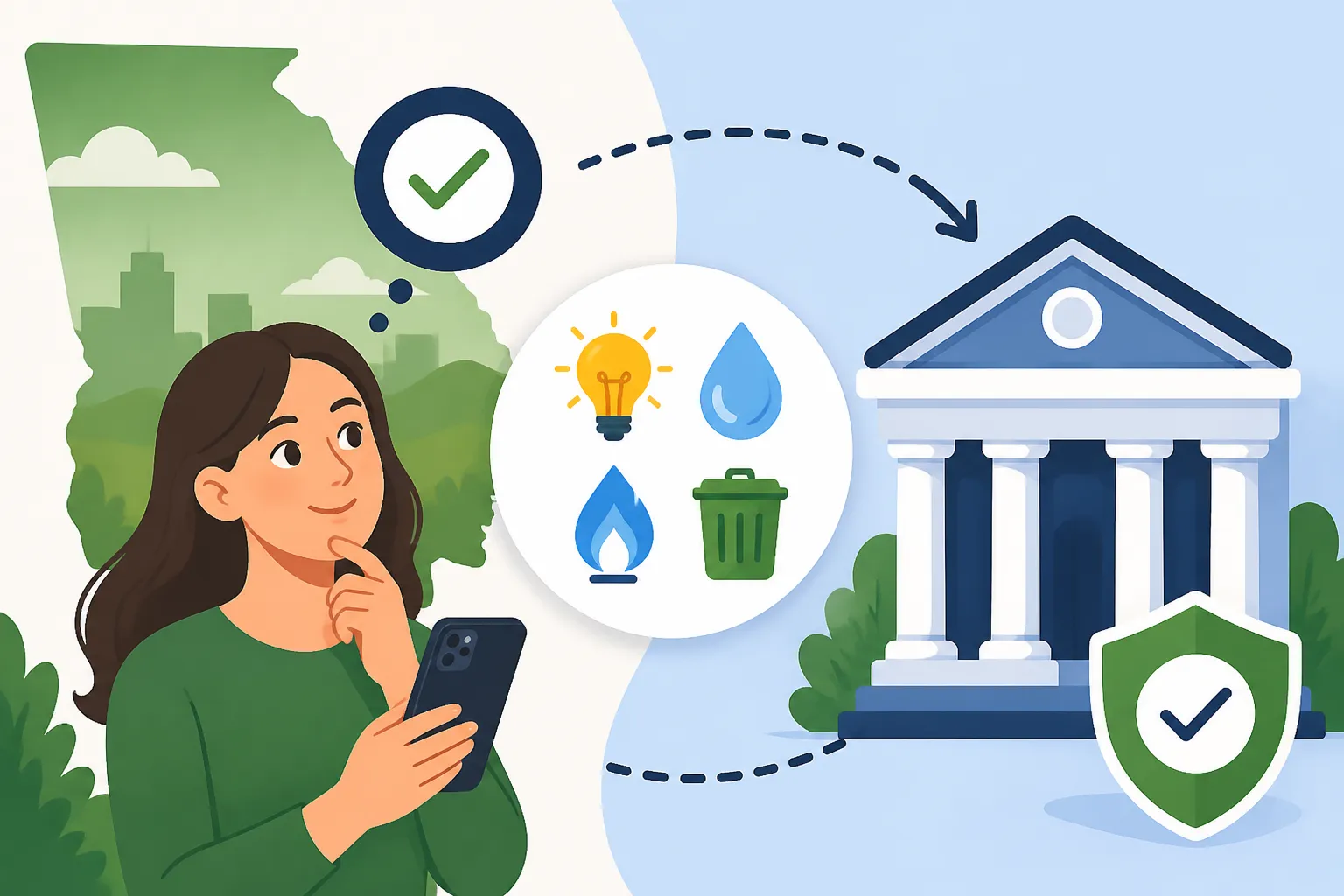
Ah, the never-ending dance with utility bills! If you've just landed in Georgia, or even if you've been here a while, you've probably wondered about the most straightforward way to tackle those monthly payments for electricity, water, and gas. The good news is, yes, absolutely, you can pay your utility bills conveniently through your bank in Georgia, and this guide is here to walk you through the ins and outs, saving you from unnecessary stress and late fees.
The Nuts and Bolts: Paying Bills Through Georgian Banks
Navigating the billing system in a new country can feel like learning a new language entirely, even if the figures are universal. But I promise you, once you understand the systems, Georgia's banking infrastructure actually makes utility payments quite straightforward. The two major banks, TBC Bank and Bank of Georgia, dominate the landscape and offer excellent online and mobile services for precisely this purpose.
Setting Up Auto-Payments and Direct Debits
This is, hands down, the easiest way to manage your recurring utility expenses and avoid those frantic last-minute dashes to a payment terminal. Both TBC Bank and Bank of Georgia provide robust systems for setting up automatic payments, which I highly recommend.
Here’s how it generally works: you link your utility accounts directly to your bank account or card, and on a pre-determined date, the payment is automatically deducted. For instance, if you're dealing with electricity from Telasi (Tbilisi's main electricity provider) or gas from KazTransGas-Tbilisi, or even water from Georgian Water and Power (GWP), you'll find options to set up direct debits within your online banking portal or mobile app.
To set this up, you'll typically need your subscriber number for each utility. This number is unique to your property and will be clearly printed on any physical bill you receive. If you haven't received a bill yet, your landlord or property manager should be able to provide these numbers. It’s crucial to double-check these digits when inputting them into your bank's system to avoid paying someone else's bills – believe me, that's a headache you don't want!
The beauty of auto-payments is the peace of mind. You set it once, and forget it. No more scribbling reminders on your fridge or getting hit with annoying late payment penalties. Just ensure you have sufficient funds in your account, especially if you're funding your Georgian account from abroad. For those moments, services like Wise can be incredibly helpful for moving money internationally with good exchange rates, ensuring your Georgian account is topped up for those auto-payments. For a deeper dive into setting up these essentials, check out our guide on how to set up auto-pay for my utility bills in Georgia.
Using Online Banking Platforms for Manual Payments
Perhaps you prefer to be more hands-on, or maybe you just moved in and haven't quite gotten around to setting up auto-payments. No problem! Manual payments through online banking are equally user-friendly.
Let's take TBC Bank and Bank of Georgia as examples. Both have excellent mobile applications and web platforms that are available in English. Once you log in, you'll typically find a section dedicated to "Payments" or "Utility Payments."
Here's a general step-by-step:
- Log in: Access your internet banking or mobile app.
- Navigate to Payments: Look for a menu option like "Payments," "Utilities," or "Pay Bills."
- Select Utility Type: You'll usually see categories like "Electricity," "Water," "Gas," "Internet," "Communication," etc. Choose the relevant one.
- Choose Provider: Select your specific provider (e.g., "Telasi" for electricity, "GWP" for water, "Magti" or "Silknet" for internet).
- Enter Subscriber Number: This is your unique ID for that utility. Double-check it!
- View Bill Details: The system should pull up your current outstanding bill, showing the amount due and the due date.
- Confirm Payment: Select the account you wish to pay from and confirm the transaction. You'll usually receive an SMS or in-app notification for successful payment.
The main advantage of manual online payments is control. You see the bill, you approve the payment, and you track it directly. This can be great for your first few months while you get a feel for your consumption and billing cycles. However, it does require remembering to do it each month, which, let's be honest, can easily slip your mind when you're busy exploring the country or dealing with other expat life complexities. Understanding water and gas bills in Georgia or how to set up electricity in your Georgia home will give you confidence in these manual checks.
Understanding Utility Bill Cycles and Payment Deadlines
Georgian utility companies generally operate on a monthly billing cycle. You'll typically receive a bill for the previous month's consumption early in the current month, with a due date usually set for the middle or end of the month.
For example, your electricity bill for January's usage might arrive in the first week of February, with a due date around February 20th. It's really important to keep these dates in mind. Utility companies here aren't shy about applying late fees or, in more extreme cases, temporarily cutting off services for non-payment. While reconnecting isn't usually a massive ordeal, it's an unnecessary hassle and often comes with a reconnection fee.
Many expats find it useful to create a simple spreadsheet or set up calendar reminders to keep track of their various utility bills. Remember, besides electricity, gas, and water, you might also have internet, building maintenance fees, and potentially other services. Staying organized from day one can save you a lot of grief down the line. Check out our detailed guide on how to pay your utility bills in Georgia for more comprehensive advice.
Here's a quick overview of common utility payment deadlines:
| Utility Type | Common Provider (Tbilisi) | Billing Cycle | Typical Due Date | Notes |
|---|---|---|---|---|
| Electricity | Telasi | Monthly | Mid-month | Bills can be accessed online or via app. |
| Natural Gas | KazTransGas-Tbilisi | Monthly | Mid-to-late month | Important for heating in winter. |
| Water | Georgian Water and Power (GWP) | Monthly | Mid-to-late month | Bills include sewage. |
| Internet/TV | Magti, Silknet, Myvideo | Monthly | Varies by provider | Often paid in advance for the month. |
| Building Mgmt. | Management Company (varies) | Monthly | End of month | Can include elevator, cleaning, etc. Refer to understanding building maintenance fees for apartments in Georgia. |
This table provides a general idea, but always refer to your specific bills or contract for exact dates.
Beyond the Basics: Other Payment Methods and Considerations
While using your bank for utility payments is incredibly convenient, it's not the only way. Sometimes, especially when you're first settling in, or if you prefer a physical transaction, other options might come in handy.
Exploring Alternative Payment Channels
Georgia has a widespread network of payment terminals, often called "PayBoxes" or "Nova Technology" terminals. You'll see these bright red or blue kiosks almost everywhere – in supermarkets, metro stations, street corners, and even small shops.
These terminals are incredibly versatile. You can pay for almost anything through them: mobile top-ups, internet, gas, water, electricity, even traffic fines. They usually have an English language option, making them very accessible for foreigners. You simply select the utility, input your subscriber number, insert cash (they give change), and receive a receipt. The main downside is that they only accept cash, which might not always be convenient. They also sometimes charge a small service fee, usually around 0.50 GEL.
Other alternatives include:
- Post Offices: Georgian Post offices also accept utility bill payments. This can be an option if you prefer a human interaction or need to pay with a debit card and your bank's system is down.
- Utility Company Offices: You can always visit the physical offices of Telasi, GWP, or KazTransGas-Tbilisi to pay your bills directly. This is less convenient but guarantees direct interaction if you have questions or disputes.
These alternative channels are good to know, especially for emergencies or if your bank's online services are temporarily unavailable.
Managing Multiple Utilities and Bill Consolidation
Living in Georgia, especially in an apartment, means you're often juggling several different utility providers. Beyond the big three (electricity, gas, water), you'll likely have an internet provider like Magti or Silknet, and potentially a building management fee for common areas, elevator maintenance, or cleaning services.
The key to managing these effectively is organization. As mentioned, auto-payments are a lifesaver. Once those are set up through your bank, you hardly have to think about them. For any remaining manual payments, dedicating a specific day each month to "bill paying" can help.
Some apartment buildings have a collective management system where one person or entity collects all utility payments from residents and then pays the providers. This isn't universal, and it's less common for expats, but it's worth checking if your building has such an arrangement. If your landlord handles utilities, ensure you have a clear understanding of the arrangement, including how you'll be reimbursed or what proof of payment you'll receive. This is crucial for maintaining a good landlord-tenant relationship and avoiding disputes.
For a comprehensive look at how to set up all your home services, including mobile and internet, our guide on how to set up internet and mobile service in Georgia offers excellent advice.
The Role of Property Managers and Landlords
When you rent property in Georgia, particularly for short to medium-term stays, it's very common for landlords or property managers to handle the utility payments. They might either include the utilities in your rent (less common for long-term, but happens), or they might pay the bills and then request reimbursement from you.
If your landlord or manager is handling the payments, make sure this is clearly stipulated in your rental contract. It's also wise to request copies of the utility bills or receipts as proof of payment. This isn't about distrust, but about transparency and good practice. Knowing how much electricity costs per month in Georgia can also help you gauge if the amounts seem reasonable.
Be aware of contracts where utilities are included "up to a certain amount." This can sometimes lead to unexpected charges if your usage exceeds that threshold. Always clarify the terms before signing anything. If you ever run into a disagreement about payments or other rental terms, understanding how to resolve a dispute with my landlord in Georgia could prove invaluable.
Navigating Common Expat Challenges with Bill Payments
Even with the convenience of online banking, being an expat in Georgia means facing unique challenges. It’s not just about the transaction itself, but the context around it.
Language Barriers and Customer Service
While major banks like TBC and Bank of Georgia offer English interfaces for their online and mobile banking, direct communication with utility companies can sometimes be a hurdle. Not all customer service representatives speak fluent English, especially when calling their general hotlines.
My advice here is twofold:
- Bank for Help: If you encounter an issue with a payment made through your bank, start with your bank's customer service. They are usually more equipped to handle English-speaking customers and can often assist in resolving payment issues directly with the utility provider on your behalf.
- Seek Local Assistance: If you need to speak directly to a utility company about a specific billing query, and you're not comfortable with Georgian, consider asking a Georgian-speaking friend, colleague, or even your landlord to help you. While it's always best to be self-sufficient, sometimes a little local help goes a long way to avoid frustration. Many expat groups on social media are also great resources for finding recommendations for English-speaking assistance.
Ensuring Accurate Billing and Dispute Resolution
Understanding your Georgian utility bill can be confusing at first. They are typically structured to show your previous meter reading, current reading, consumption, and the calculated cost. If you ever suspect an error, or if a bill seems unusually high, don't just pay it.
Here’s a simplified approach to dispute a charge:
- Check Your Meter: If it's a consumption-based utility (electricity, gas, water), check your meter reading against what's printed on the bill. Sometimes, estimated readings can be inaccurate.
- Contact the Utility Company: Gather your bill and meter readings, and try to contact their customer service. Be prepared with your subscriber number and any relevant documents. If you have a Georgian speaker, that's the time to bring them in!
- Document Everything: Keep a record of who you spoke to, when, and what was discussed. Save copies of all bills and payment confirmations.
- Bank Intervention: If the utility company is unresponsive or unhelpful, your bank might be able to offer some mediation, especially if the payment was processed through them.
It's a bit more effort, but catching an error early can save you money and prevent future billing issues.
Staying Organized and Avoiding Penalties
The best defense against utility payment headaches is a good offense. Being proactive and organized will save you countless hours of stress.
- Centralize Information: Keep all your utility subscriber numbers, account details, and payment schedules in one easily accessible place. A digital spreadsheet or a dedicated folder for physical bills works wonders.
- Utilize Bank Features: Make full use of your bank's auto-payment features. Seriously, they are a lifesaver. Set up notifications for successful payments or for low account balances.
- Regular Checks: Even with auto-payments, it's a good habit to occasionally glance at your utility company's app or your bank statement to ensure payments are going through correctly and that there are no unexpected spikes in usage.
- Plan for Absences: If you plan to travel for an extended period, make sure your auto-payments are set up, or pre-pay your estimated bills if possible. You don't want to come back to a mountain of late fees or, worse, disconnected services.
- Think Beyond Utilities: This mindset of being organized and leveraging banking services extends to other financial aspects of expat life. Managing your overall finances efficiently, including understanding your income tax and pension contributions for employees in Georgia or even navigating the intricacies of taxes in Georgia for expats, can significantly ease your experience here. This comprehensive approach is what truly makes expat life smoother.
Disclaimer
The information provided in this guide is for general informational purposes only and does not constitute financial, legal, or professional advice. While we strive to keep the information up-to-date and accurate, regulations, policies, and service offerings in Georgia can change. Always consult with the relevant bank, utility provider, or a qualified professional for specific advice tailored to your situation.