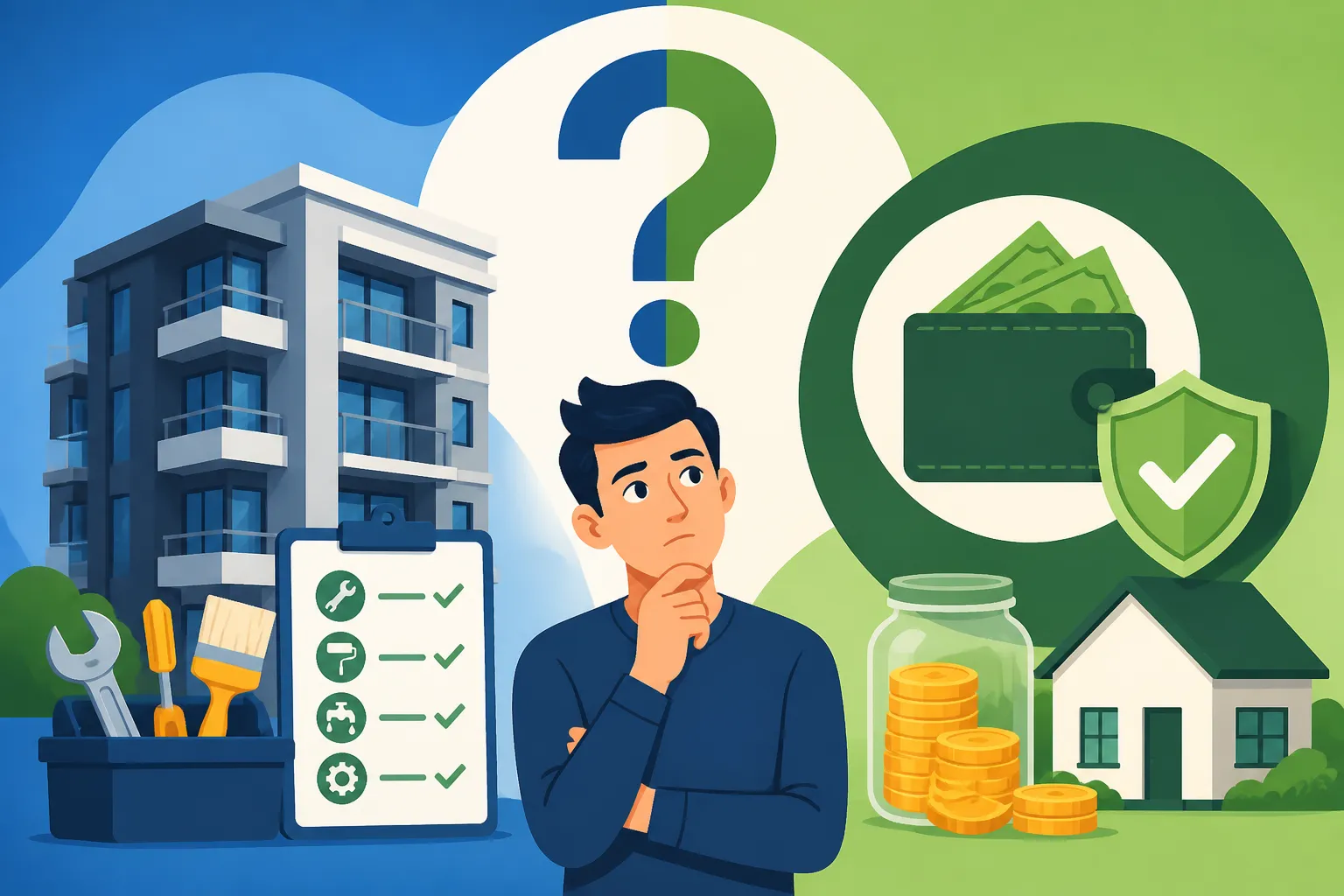
Are Building Maintenance Fees Tax Deductible for Landlords in Georgia?
Oh, the joys of being an expat landlord in Georgia! You've navigated the exciting, sometimes bewildering, journey of buying property here, and now you're faced with the ongoing reality of maintaining it, all while trying to make sense of the tax system. Trust me, you're not alone in wondering if all those necessary expenses, like building maintenance fees, can actually help reduce your tax bill. It's a common headache for many of us trying to do things by the book. This guide will meticulously break down Georgia's tax rules specifically for landlords, focusing on whether those building maintenance fees are indeed tax deductible and how you can properly claim them.
Understanding Your Tax Obligations as a Landlord in Georgia
Let's cut right to it: being a landlord, whether you've got a studio in Vake or a larger family apartment near Batumi Boulevard, means you're generally expected to pay tax on the rental income you receive. Georgia prides itself on its relatively straightforward tax system, but "straightforward" can still feel like a labyrinth when you're dealing with a foreign bureaucracy for the first time.
The Basics of Rental Income Tax
In Georgia, the general rule for individuals receiving income is a flat 20% Personal Income Tax (PIT) rate. This applies to your rental income as well. Now, for us expats, this often raises immediate questions. Is it 20% on the gross rent I collect, or is it on what's left after expenses? The good news is, it's generally on your net income, meaning certain expenses can indeed reduce your taxable amount. This is where understanding deductions becomes absolutely vital.
It's not just about collecting the rent; it's about declaring it accurately to the Georgian Revenue Service. Many expat landlords in Georgia operate as Individual Entrepreneurs (IEs) under the Small Business Status, which offers a 1% turnover tax on certain activities. However, it's crucial to note that income from property rental to individuals is not covered by the 1% tax regime for IEs if the property is residential. For commercial property rental, it might be different, but for residential, it typically falls under the standard 20% PIT. You'll need to understand the nuances of this; for a deeper dive, check out our guide on how to register as an Individual Entrepreneur in Georgia.
Navigating Tax Residency and Foreign Income
Your tax obligations in Georgia are heavily influenced by your tax residency status. If you are deemed a tax resident of Georgia, you are generally taxed on your worldwide income. However, Georgia operates on a territorial tax system for individuals, which is often a massive relief for expats. This means that foreign-sourced income, in most cases, is not taxed in Georgia. But here's the kicker: if your rental property is in Georgia, the income it generates is considered Georgian-sourced income, regardless of where you, the landlord, reside or where the rental payments originate. This income is therefore subject to Georgian tax.
The 183-day rule is key here. If you spend 183 days or more in Georgia within any consecutive 12-month period, you generally become a tax resident. Even if you're not physically present for that long, you might still qualify as a tax resident if Georgia is your "center of vital interests." It's a complex topic, and you can learn more by reading our comprehensive guide to Tax Residency in Georgia: A Definitive Guide for Expats (2026). Understanding this distinction is paramount, as it dictates your overall tax burden, not just for your Georgian rental property but potentially for other global income streams too.
Are Building Maintenance Fees Deductible? The Direct Answer
Alright, let's get to the heart of the matter. You're paying monthly fees to your building management company, perhaps for cleaning common areas, elevator maintenance, security, or even minor repairs to the shared infrastructure. Are these expenses something you can write off against your rental income?
General Principles of Deductible Expenses
In Georgia, as in many countries, the general principle for deducting expenses against rental income is that the expense must be incurred "wholly and exclusively" for the purpose of generating that income. This means the costs must be directly related to the upkeep and operation of the property to make it rentable and keep it in a condition that earns rent. They shouldn't be for your personal benefit or for improving the property beyond its original state.
Think about it: if your apartment building's elevator breaks down and the management fee covers its repair, that's a direct cost to maintain the tenant's access and the building's functionality, which in turn supports your ability to rent the unit. Such expenses are typically seen as necessary for the business of renting property.
Specifics on Building Maintenance Fees
Yes, in most cases, routine building maintenance fees are tax deductible for landlords in Georgia. These fees, often referred to as "management fees" or "utility fees for common areas," are considered operational costs directly associated with your rental business. They are essential for maintaining the appeal, safety, and functionality of the rental property and the building it's located within, ensuring it remains suitable for tenants.
For example, if you own an apartment in a complex managed by a company like Axes Management or similar, and you pay a monthly fee that covers:
- Cleaning of stairwells and common corridors.
- Maintenance of the elevator system.
- Security services or concierge.
- Upkeep of communal gardens or amenities.
- Minor repairs to the building's facade or roof (not major renovations).
These expenses are typically deductible against your rental income. They are costs you incur to ensure the property continues to generate income. Without these services, the building's overall condition would deteriorate, potentially affecting your ability to attract and retain tenants, and thus, your rental income.
It's vital that these fees are actually paid by you, the landlord, and that you have proper documentation to prove it. The Georgian Revenue Service expects a clear paper trail, just like any tax authority. If these fees are passed directly to the tenant, then they are not an expense for you and thus not deductible from your income.
What Counts as a Deductible Maintenance Fee?
Defining what precisely falls under "deductible maintenance" can sometimes feel like walking a tightrope. It's not always black and white, but there's a pretty clear distinction that the tax authorities look for.
Routine Upkeep vs. Capital Improvements
This is perhaps the most crucial distinction.
-
Routine Upkeep (Deductible): These are expenses that maintain the property in its existing condition, keep it functioning, and don't significantly extend its useful life or increase its value. Think of them as keeping the status quo.
- Examples:
- Repairs to a leaky faucet or a broken window.
- Repainting a wall to cover wear and tear.
- Replacing a worn-out light fixture.
- Cleaning services for the apartment between tenants.
- Routine pest control.
- The common area maintenance fees we've been discussing (elevator, security, cleaning of shared spaces).
- Minor plumbing or electrical repairs.
- Examples:
-
Capital Improvements (Not Immediately Deductible, but can be depreciated): These are expenses that add significant value to the property, extend its useful life, or adapt it for a new use. Instead of being deducted in the year they occur, these costs are typically "capitalized" and recovered over time through depreciation. However, for residential property rental income for individuals, depreciation is often not a direct deduction in the same way as routine expenses.
- Examples:
- Installing a brand-new kitchen or bathroom suite (a significant upgrade, not just a repair).
- Adding a new room or expanding the property.
- Replacing an entire roof or HVAC system with a new, more efficient one (rather than just repairing a leak).
- Major structural renovations.
- Upgrading an older building to include an elevator where there wasn't one before.
- Examples:
The key is whether the expense restores the property to its original condition or improves it beyond that. Most routine building maintenance fees fall squarely into the "restores/maintains" category, making them deductible. If you're undertaking major works, it's always best to consult with a local tax advisor or a service like Taxes for Expats to ensure you classify these correctly.
Documenting Your Maintenance Expenses
This cannot be stressed enough: documentation is everything. The Georgian Revenue Service, like tax authorities everywhere, requires proof. If you can't prove an expense, you can't deduct it. It's that simple.
For building maintenance fees, you'll want to keep:
- Official Invoices/Bills: These should clearly state the name of the management company, your name (or the property owner's name), the service period, and the amount charged.
- Proof of Payment: Bank statements showing the transfer, payment receipts, or any other document that confirms you actually paid the invoice. If you pay via an online portal like TBC or Bank of Georgia, screenshots or printouts of payment confirmations are essential.
- Contracts (if applicable): If you have a service agreement with the building management, keep a copy.
Organise these documents meticulously. I've seen too many expats get into hot water because they tossed receipts or relied solely on memory. Digital copies backed up in the cloud, alongside physical files, are your best friends here. For more insights on financial management, you might find our guide on How to Set Up Online Banking with a Georgian Bank useful.
Practical Steps for Claiming Deductions
So, you've got your ducks in a row with expenses and documentation. Now, how do you actually make these deductions count when it's time to file?
Keeping Meticulous Records
Let's reiterate: record-keeping is paramount. For every single maintenance fee or other deductible expense related to your rental property, you need:
- Date of expense.
- Description of the expense (e.g., "Monthly building maintenance fee for July 2026," "Repair of leaky pipe in apartment 12A," "Annual fire alarm inspection for common areas").
- Amount paid.
- Name of the vendor/supplier.
- Proof of payment (bank statement entry, receipt, invoice marked paid).
Create a dedicated folder, physical and digital, for each property and each tax year. When I first started renting out my place, I had a shoebox full of receipts, but that quickly became unmanageable. Now, I scan everything and keep it in a cloud folder organised by year and property. This way, if the Revenue Service ever comes knocking (which they absolutely can, even for small landlords), you're ready.
Filing Your Tax Return with Deductions
When it's time to file your annual income tax return with the Georgian Revenue Service, you'll need to accurately report your gross rental income and then subtract your allowable deductions, including those building maintenance fees.
- The Revenue Service Online Portal: This is where most individuals in Georgia manage their taxes. You'll log in, navigate to the income tax declaration section, and input your figures. It's not the most intuitive system at first glance, especially if you're not fluent in Georgian, but many of the sections have English translations.
- Calculating Net Income: You'll essentially declare your total rental income, then list your total deductible expenses. The portal will then calculate your taxable net income, and apply the 20% PIT rate to that figure.
- Seeking Professional Help: If you're unsure, especially in your first few years, it's highly advisable to use a local accountant or a tax service that specialises in expat taxes in Georgia. They can ensure everything is declared correctly and that you don't miss out on any legitimate deductions. They also stay up-to-date with any changes in tax law, which can happen. Companies like Taxes for Expats are experienced in dealing with the Georgian system and can be a huge asset.
Remember, the deadline for filing individual income tax returns in Georgia is typically April 1st of the following year. Miss that, and you're looking at penalties, which nobody wants! For a full walkthrough, check out our guide on Filing Your Tax Return with the Revenue Service in Georgia: The Complete Walkthrough (2027).
Potential Pitfalls and Audit Risks
While deducting legitimate expenses is your right, there are always a few areas where expats, or any taxpayer, can inadvertently stumble.
- Insufficient Documentation: As mentioned, this is the biggest one. No proof, no deduction.
- Misclassifying Expenses: Trying to deduct a capital improvement as a routine repair is a red flag. Be honest and accurate.
- Personal Expenses: Don't try to sneak in expenses that are partly for your personal use. The "wholly and exclusively" rule is firm. If you buy a new set of towels for your rental, that's fine. If you buy a new couch that you then move to your personal home, that's not.
- Late Filing or Payment: Always adhere to deadlines. The Revenue Service is surprisingly efficient with penalties.
Being meticulous and transparent will save you a lot of stress in the long run. The Georgian tax authorities generally prefer clear, well-documented declarations. If you are ever audited, having all your records organised and accessible will make the process much smoother.
Table: Deductible vs. Non-Deductible Landlord Expenses in Georgia
To make things a bit clearer, here's a quick overview of common landlord expenses and their typical deductibility:
| Expense Category | Type of Expense | Deductible? | Notes |
|---|---|---|---|
| Building Maintenance Fees | Routine management, cleaning of common areas, elevator maintenance, security | Yes | Must be paid by landlord and documented. |
| Utilities (Tenant's) | Electricity, water, gas consumed by tenant | No | These are the tenant's responsibility; not a landlord expense. |
| Utilities (Landlord's) | Utilities for vacant periods, or common area utilities paid by landlord directly | Yes | Only for periods when property is vacant or for common areas (if not covered by maintenance fee). |
| Repairs & Maintenance | Fixing a broken boiler, leaky pipe, repainting walls | Yes | Must maintain current condition, not improve. |
| Capital Improvements | Installing a new kitchen, adding a room, major renovations | No | Not immediately deductible; typically capitalised. |
| Property Insurance | Insurance for the rental property | Yes | Covers risks associated with the rental business. |
| Interest on Mortgage | Interest portion of a loan taken to acquire the rental property | Yes | Principal repayments are not deductible. |
| Agent/Broker Fees | Fees paid to a real estate agent for finding tenants | Yes | Directly related to generating rental income. |
| Legal & Accounting Fees | Fees for drafting rental contracts, tax advice | Yes | Professional services related to the rental business. |
| Travel Expenses | Travel to inspect property (if substantial business purpose) | Potentially | Must be directly, wholly, and exclusively for the rental business; hard to justify for many. |
| Personal Use Items | Items for landlord's personal enjoyment | No | Not related to generating rental income. |
Knowing how to transfer money in and out of Georgia efficiently can also save you fees, impacting your overall net income. Services like Wise (formerly TransferWise) are quite popular among expats for international money transfers, and while these aren't tax deductions, managing your finances smartly certainly helps the bottom line.
In conclusion, yes, building maintenance fees are generally tax deductible for landlords in Georgia. By understanding the distinction between routine upkeep and capital improvements, and by maintaining impeccable records, you can confidently claim these expenses and ensure you're paying the correct amount of tax on your Georgian rental income. Navigating the tax landscape here can be tricky, but with the right information and a little diligence, it's certainly manageable.
Disclaimer
The information provided in this article is for general guidance only and does not constitute professional tax advice. Tax laws and regulations in Georgia can change, and individual circumstances vary. It is strongly recommended to consult with a qualified Georgian tax professional or accountant for advice tailored to your specific situation.