Schools and Education in Georgia: A Complete Guide for Expat Families
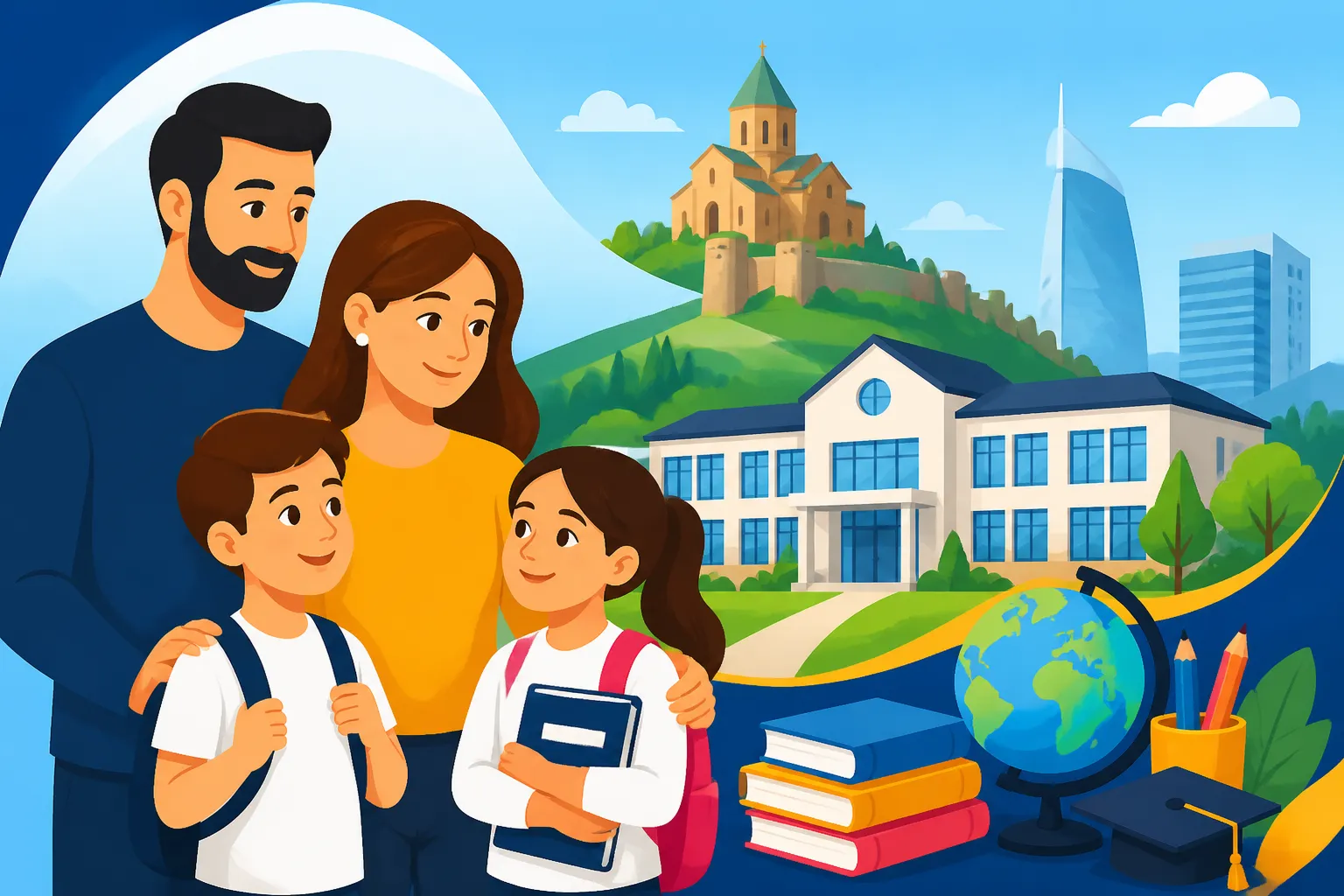
Moving your family to a new country like Georgia is an adventure, but let's be honest, nothing causes more sleepless nights than figuring out the schooling situation for your kids. You're trying to navigate an entirely new education system, often in a different language, with different expectations, and frankly, completely different ways of doing things than what you're used to back home. It can feel like walking through a fog, but trust me, many of us have been there. This guide is here to cut through that fog, offering you a clear, empathetic, and realistic look at schools and education in Georgia, helping you find the best fit for your expat family.
Understanding the Georgian Education System: An Overview for Expats
When you first land in Georgia, especially if you have school-aged children, the local education system can feel like a labyrinth. It’s certainly not identical to what you might be accustomed to in Western Europe, North America, or even other parts of Asia. But once you get a handle on its structure and underlying philosophy, it becomes a lot less daunting. It's a blend of post-Soviet academic traditions, a strong focus on national identity, and a growing drive towards internationalisation.
Structure and Stages of Education
The Georgian education system is broadly structured into several stages, mirroring many systems worldwide, but with its own distinct rhythm. Understanding these stages is the first step in figuring out where your child fits in.
First off, you have Pre-school, often referred to as kindergarten or sabavshvo bagi. This is for children typically aged 3 to 5 or 6. While not compulsory, most parents enroll their children for socialisation and early learning. These are generally free state-run institutions, though private options exist. They focus on play-based learning, basic literacy, numeracy, and a lot of singing and dancing. For expat children, this can be a fantastic, low-pressure way to start picking up Georgian language and making local friends. However, don't expect structured ESL support; it's immersion from day one!
Next up is Primary Education, which spans Grades 1 through 6, usually for children aged 6 to 12. This is compulsory. Here, the focus is on foundational subjects like Georgian language and literature, mathematics, natural sciences, history, and a foreign language, often English. The transition from kindergarten to primary school can be a significant leap, as the academics become much more structured. You'll find that teachers here are often highly respected figures, and there's a certain formality in the classroom that some expat children might find different from more relaxed pedagogical approaches in their home countries.
Following primary education is Basic Education, encompassing Grades 7 to 9 (ages 12-15). This stage is also compulsory. It deepens the curriculum introduced in primary school and broadens into more specialised subjects like physics, chemistry, biology, geography, and often a second foreign language. At the end of Grade 9, students typically receive a Basic Education Certificate, which is a prerequisite for continuing to secondary school or vocational training. This is where you might start to see students deciding on academic streams, though the system maintains a fairly common core curriculum for all.
Finally, we have Secondary Education, which covers Grades 10 to 12 (ages 15-18). This stage is optional but necessary for those wishing to pursue higher education. The curriculum here is designed to prepare students for university entrance exams. It's a time of intensive study, with a wide range of subjects, and students are expected to take more responsibility for their learning. Upon successful completion of Grade 12, students are awarded a General Education Certificate. This certificate is vital for applying to universities, both within Georgia and, if recognised internationally, abroad.
After secondary education, students can move on to Higher Education, which includes Bachelor's, Master's, and Doctoral programs offered by universities and other higher education institutions. We'll delve into that a bit later, but it’s worth noting that Georgia has been actively working to align its higher education system with the Bologna Process, which aims to ensure comparability in the standards and quality of higher education qualifications across Europe. This is great news for international students considering further study here.
Key Characteristics and Cultural Nuances
Beyond the structural divisions, the Georgian education system carries several characteristics and cultural nuances that expats will quickly notice. These can significantly impact your child’s experience.
Firstly, there's the clear distinction between state (public) and private schools. State schools are funded by the government, generally free for citizens and permanent residents, and predominantly teach in Georgian. They are the backbone of the national education system. Private schools, on the other hand, charge tuition fees and often offer more diverse curricula, smaller class sizes, and sometimes instruction in multiple languages. For many expat families, especially those not planning a long-term integration into Georgian language and culture, private or international schools become the default choice due to language and curriculum compatibility.
The language of instruction is arguably the biggest hurdle for expat children. While Georgian is the primary language in state schools, you will find some public schools that offer programs in Russian, Armenian, or Azerbaijani, reflecting Georgia's diverse ethnic makeup. However, English-language instruction in public schools is rare, and dedicated support for non-Georgian speakers is almost non-existent. This means that if your child is going into a public school without any Georgian language skills, they are in for a steep learning curve. The good news is that children are incredibly adaptable and often pick up languages much faster than adults, but it's still a significant challenge.
Historically, Georgian education, influenced by Soviet pedagogy, placed a strong emphasis on rote learning and memorisation. While modern reforms are gradually shifting towards more critical thinking and student-centred approaches, you might still encounter teaching methods that lean heavily on textbooks and teacher-led instruction, rather than collaborative projects or inquiry-based learning. For children coming from systems that prioritize creativity and independent thought, this might require an adjustment. It’s not necessarily a bad thing; it’s just different, and it's something to be aware of when choosing a school.
Finally, parental involvement and expectations can also vary. In many Georgian schools, there's a strong emphasis on respect for teachers and authority. While parents are generally expected to support their children's education, the level and nature of direct involvement in school activities, volunteering, or challenging school policies might be less common than in some Western countries. However, teachers and school administrators are generally very approachable and welcoming, especially to foreign parents who show genuine interest. It’s all about navigating those cultural subtleties. For more information on adapting to life here, check out our guide on The Complete Guide to Moving to Georgia: Your First 90 Days (2027).
Public Schools in Georgia: What Expats Need to Know
For many expat families, especially those on a tighter budget or those committed to a deep cultural immersion, public schools in Georgia might cross their minds. It's an interesting option, offering a direct route into Georgian society, but it comes with a unique set of challenges that need careful consideration. I've heard stories from expat parents who've successfully navigated this, and others who found it simply too demanding.
Accessibility and Enrollment Process
The idea of sending your child to a local public school is certainly appealing from a cost perspective, as tuition is generally free. But the reality of accessibility and the enrollment process for foreign children is where things can get a bit tricky. It’s not a straightforward walk-in-and-register situation for most expats.
Firstly, while public education is a right for Georgian citizens, it’s not automatically extended to all foreigners in the same way. Generally, foreign children who hold a residence permit for Georgia are eligible to enroll in public schools. This is a crucial distinction. If you’re here on a visa-free stay, for example, your child might not qualify for public schooling without a change in your immigration status. This means securing your own The Expat Guide to Getting a Residence Permit in Georgia (2027) is often the first step. You need to prove a legal, long-term connection to the country.
Once you've sorted out the residence permit, the next hurdle is gathering the required documents. This typically includes your child's birth certificate (often with a notarized Georgian translation), their passport, your residence permit, sometimes a medical certificate (including vaccination records), and crucially, any academic reports or certificates from their previous schooling. The medical certificate is standard practice and often includes a general health check and an update on vaccinations. Finding an English-speaking doctor for this can be helpful; you can learn more about that in our guide on How to Find an English-Speaking Doctor in Georgia. Be prepared for a bit of bureaucratic back-and-forth, as different schools or district education offices might have slightly varied requirements. Patience, a smile, and a willingness to ask for clarification (perhaps with a Georgian friend or translator) will be your best assets here.
Application periods and deadlines are another important factor. Enrollment for public schools usually takes place in late spring or early summer, typically June to September, ahead of the new academic year which starts in mid-September. Missing these deadlines can mean your child won't get a spot, or will have to wait for the next intake. It’s not like in some countries where you can enroll at any point in the year and start immediately. Planning ahead is key. If you arrive mid-year, you'll need to speak directly with the school administration and the local education resource center (TERC) to understand if a mid-year enrollment is even possible, which it sometimes is, but often involves more paperwork and discretion.
One of the most significant challenges you'll face is the language barrier, not just for your child, but for you as a parent during the enrollment process. School administrators and teachers, especially outside of major cities, may not speak English fluently. Having a Georgian-speaking friend, colleague, or a professional translator accompany you to initial meetings can make a world of difference. This isn't just about practical communication; it also demonstrates your respect for the local culture and your commitment to integrating your child.
Curriculum, Language, and Support for Foreign Students
So, your child is in a public school. What can you expect from the day-to-day learning environment? The experience can be incredibly enriching, but also profoundly challenging, particularly concerning language and support.
The Georgian national curriculum is the foundation of all public education. It's centrally developed by the Ministry of Education, Science, Culture, and Sport of Georgia, and it's fairly rigorous. Students follow a structured syllabus designed to instill a comprehensive understanding of core subjects. This means your child will be learning Georgian history, literature, and geography – subjects deeply intertwined with national identity and culture. For many expat children, this offers a unique opportunity to truly connect with their new home country beyond the expat bubble. They'll learn about Shota Rustaveli, King Tamar, and the rich tapestry of Georgia's past, which can be incredibly rewarding.
The biggest hurdle, as I touched upon earlier, is that instruction is predominantly in Georgian. While some public schools in regions with ethnic minorities might offer classes in Russian, Armenian, or Azerbaijani, finding a public school with a significant English-language track is exceedingly rare. This means that if your child doesn't have a strong foundation in Georgian, they will be dropped into a full immersion environment. Children are amazing at picking up languages, often within 6-12 months for basic conversational fluency, but academic proficiency takes much longer. Initially, they might struggle with understanding complex subjects like history or science, leading to frustration.
Crucially, you should not expect specific ESL (English as a Second Language) or EAL (English as an Additional Language) support in most public schools. Unlike international schools, public schools are generally not equipped with dedicated staff or programs to assist non-Georgian speaking students. Your child's integration will largely depend on their natural aptitude for language, the patience of their teachers, and the kindness of their classmates. Some teachers might go the extra mile, but it won't be a structured program. This lack of formal language support is often the primary reason why many expat families, after considering public options, opt for private or international schools instead.
Therefore, for your child to thrive in a Georgian public school, proactive measures are often necessary. Many expat parents in this situation arrange private Georgian language tutoring for their children outside of school hours. This can significantly accelerate their language acquisition and boost their confidence in the classroom. Additionally, fostering friendships with Georgian classmates and encouraging participation in local activities can help with both language and cultural integration. It’s a full-family effort, and the rewards can be immense, but it's important to go in with open eyes about the dedication required.
Private Local Schools: A Middle Ground for Expat Families
For some expat families, international schools might be out of budget, or they might desire a more integrated, yet still supportive, environment than public schools offer. This is where private local schools come into play. They often represent a fantastic middle ground, blending elements of the Georgian curriculum with enhanced language programs and more modern facilities. It's a sweet spot for many, offering quality education without the full international price tag.
Advantages and Disadvantages
Private local schools in Georgia can be a very attractive option, but like any choice, they come with their own set of pros and cons that need careful weighing.
One of the most immediate advantages is often smaller class sizes. Unlike the sometimes crowded public school classrooms, private institutions typically boast a better student-to-teacher ratio. This means more individual attention for your child, which can be invaluable, especially during the initial adaptation phase. Teachers might have more capacity to cater to diverse learning styles and provide additional support. Furthermore, these schools often have better and more modern facilities. Think well-equipped science labs, dedicated art and music rooms, good sports facilities, and up-to-date technology – amenities that aren't always standard in public schools.
Another significant benefit is the multi-lingual environment. While many private local schools still primarily follow the Georgian national curriculum, a considerable number offer enhanced English programs or even have bilingual streams. You might find schools where subjects like maths or science are taught in English, or where there's a strong focus on English language development from an early age. This is a game-changer for expat children who are not fluent in Georgian but whose parents want them to learn it gradually. It allows them to continue their academic progress in English while slowly immersing themselves in Georgian. Some schools also offer Russian or other language tracks.
The curriculum variations are also a plus. While many adhere to the Georgian national standards, they often integrate international pedagogical approaches or enrich the curriculum with extracurricular activities not always available in public schools. This can lead to a more holistic and engaging learning experience. It gives your child a taste of local culture and language while maintaining a connection to international educational standards.
However, there are also disadvantages. The most obvious one is the cost implication. Private local schools charge tuition fees, which can range from moderate to quite high, though generally still significantly less than international schools. These fees need to be factored into your budget, and they usually increase with grade level. Beyond tuition, you’ll also need to consider costs for uniforms, books, transportation, and sometimes additional activities.
Another point to consider is that while many have enhanced English programs, the primary curriculum is still Georgian-based. This means that at some point, particularly in higher grades, your child will need to engage with Georgian history, literature, and civic education. If your stay in Georgia is short-term, or you plan for your child to pursue higher education back in your home country, this Georgian-centric curriculum might not perfectly align with international university entry requirements without supplementary courses or specific exam preparation. It's about finding that balance between local immersion and international portability of their education.
Popular Options and Enrollment Tips
Georgia, especially Tbilisi and Batumi, has a growing number of private local schools that are becoming popular among expat families for exactly the reasons we just discussed. They provide a comfortable and stimulating environment for children who are learning Georgian and adapting to a new culture.
While I can't endorse specific schools, broadly speaking, you'll find private institutions that market themselves as "European schools" or "gymnasiums" with strong language programs. Many of these have excellent reputations locally and are increasingly attracting international students. Examples often include schools that offer a blend of national curriculum with elements of international methodology, focusing on developing critical thinking and a broader worldview alongside traditional academic rigor. When researching, look for schools that explicitly state they have English-speaking staff, offer English as a core subject, or even have bilingual classes.
For enrollment tips, start your search early. Good private local schools often have competitive admissions, especially for popular grades. It's not uncommon for them to have admission tests and interviews, particularly for older children. These assessments might cover English language proficiency, mathematics, and sometimes a general aptitude test. This helps the school gauge whether your child will cope with the curriculum, especially if there's a language transition involved. You, as parents, might also be interviewed to understand your expectations and commitment to the school's philosophy.
Submitting applications early is paramount. Many schools have specific application windows, often in spring for the upcoming academic year. If you're planning your move, try to align your arrival with these periods. However, some schools might accommodate mid-year transfers if they have space, but it's always best to check directly with the admissions office. Remember to have all your documents ready: birth certificates, previous academic records, medical certificates, and residence permits. Always get crucial documents translated and notarized into Georgian well in advance. For the logistics of moving and setting up, remember that services like those mentioned by Sirelo can help streamline the relocation process, ensuring your family arrives smoothly and you can focus on school enrollment.
Lastly, make an effort to visit the schools in person, if possible. A website can only tell you so much. Walking the halls, observing a class (if permitted), and speaking directly with teachers and administrators will give you a much better feel for the school's atmosphere, its facilities, and how it caters to international students. Ask about their support systems for new students, particularly those who might be facing a language barrier or cultural adjustment. Don't be shy; this is your child's education we're talking about!
International Schools in Georgia: The Go-To for Many Expats
For many expat families, especially those on shorter assignments or those prioritizing continuity with their home country's curriculum, international schools are the default choice. They offer a familiar educational framework, often with English as the primary language of instruction, and an environment designed specifically to cater to a transient, multicultural student body. While they come with a higher price tag, they often offer peace of mind and a smoother transition for children.
Types of International Curricula Offered
International schools in Georgia pride themselves on offering globally recognized curricula, which ensures that your child's education remains consistent regardless of where your career path takes you next. This portability is a major draw for expat parents.
The International Baccalaureate (IB) program is a very popular choice and is offered by several leading international schools in Georgia. The IB is renowned for its holistic approach, encouraging students to be active, compassionate, and lifelong learners. It’s structured across three main programs: the Primary Years Programme (PYP) for ages 3-12, the Middle Years Programme (MYP) for ages 11-16, and the Diploma Programme (DP) for ages 16-19. The DP, in particular, is widely recognized by universities worldwide as a rigorous and challenging pre-university course. Students graduating with an IB Diploma are often highly regarded by admissions officers globally for their critical thinking, research skills, and well-rounded education.
Another prominent curriculum you’ll find is the British Curriculum. Schools offering this typically follow the framework set by Cambridge Assessment International Education (Cambridge International) or Edexcel. This means your child will progress through Key Stages, leading up to external examinations such as the International General Certificate of Secondary Education (IGCSE) at around age 16, and then A-Levels for those pursuing higher education at around age 18. The British curriculum is known for its subject-specific depth and its clear progression routes. Many parents appreciate the familiarity and structure of this system, especially if they hail from a Commonwealth country.
The American Curriculum is also available, particularly in schools that follow a US-style educational model. These schools often use an American grading system, focus on a broad liberal arts approach, and prepare students for SAT or ACT exams, which are standard for university admissions in the United States. They typically emphasize critical thinking, project-based learning, and a wide range of extracurricular activities, mirroring the American educational experience.
Beyond these major players, you might also find schools offering other national curricula, such as German or French schools, catering to specific expatriate communities. These schools often combine their national curriculum with elements of local studies or international programs. Regardless of the specific curriculum, it's crucial to check the accreditation of any international school you consider. Reputable international schools will hold accreditation from recognized international bodies such as the Council of International Schools (CIS), the New England Association of Schools and Colleges (NEASC), or others. This accreditation signifies quality assurance and ensures that the school meets high international educational standards, giving you confidence in the education your child receives.
Leading International Schools in Tbilisi and Batumi
When it comes to international schooling, Tbilisi is clearly the hub, though Batumi is developing its own options. These schools are specifically designed to serve the expat community, providing education often indistinguishable from similar institutions back in your home country.
In Tbilisi, you'll encounter a few prominent names that consistently come up in expat conversations. QSI International School of Tbilisi is one such institution, known for offering an American curriculum from elementary through secondary levels. It's often praised for its small class sizes and personalized approach. Then there's the British International School of Tbilisi, which, as the name suggests, follows the British curriculum, leading to IGCSEs and A-Levels. It's a popular choice for those seeking a familiar UK-style education. The European School is another well-established institution, unique in offering three distinct programs: an International Baccalaureate (IB) program, an American High School Diploma program, and a Georgian program. This versatility can be a major plus for families with diverse needs or those considering a longer stay. The New School (International School of Georgia) also offers the IB program, from PYP to DP, and has a strong reputation for academic rigor and a diverse student body.
The admission process for these schools typically involves several steps: an application form, submission of previous school records, and often an admission test (assessing English, Math, and sometimes reasoning skills) and an interview with the child and parents. Be prepared for waiting lists, especially for popular grades, so applying early is highly advisable. Some schools prioritize based on nationality, sibling enrollment, or the parent's employer.
When you're trying to navigate this whole process – researching schools, checking admissions calendars, setting up visits – having reliable connectivity is a lifesaver. You’ll be making calls, sending emails, and looking up reviews constantly. This is where an eSIM from Airalo can be incredibly useful. You can land, activate your data plan instantly, and hit the ground running with all your research and communications without hunting for a local SIM card or relying on patchy Wi-Fi.
Tuition fees at international schools are substantial. They typically range from around $5,000 to $20,000+ USD per year, depending on the school and the grade level. This usually covers tuition, but you’ll often find additional costs for things like registration fees, capital levies, uniforms, textbooks, extracurricular activities, school trips, and transportation. It’s crucial to get a full breakdown of all potential costs upfront to avoid any surprises. For families considering these costs, a detailed understanding of the overall The Complete Guide to Cost of Living in Georgia for Expats (2026) will be essential for budgeting.
The Cost of International Education: A Realistic Look
Let’s not beat around the bush: international education in Georgia is a significant financial investment. It's often one of the largest expenses for expat families, second only to housing. Understanding the full scope of these costs is vital for accurate financial planning.
The headline figure you'll always see is the annual tuition fee. As mentioned, this can vary wildly, generally starting from perhaps $5,000 USD for early years and climbing to over $20,000 USD for senior high school years at the most prestigious institutions. These figures are usually paid annually or in a few installments. It's not uncommon for schools to offer a slight discount if you pay the full year upfront.
Beyond the tuition, there are several other compulsory and optional fees that quickly add up. A one-time registration fee or application fee is standard, sometimes non-refundable, ranging from a few hundred to over a thousand dollars. Some schools also levy a capital development fee or facilities fee, either annually or as a one-off payment, which contributes to the school's infrastructure maintenance and development. This can be another substantial chunk, sometimes in the thousands.
Then you have the day-to-day expenses. School uniforms are mandatory at most international schools, and purchasing a complete set (including sports kits) can run into several hundred dollars. Textbooks and learning materials might be included in the tuition, but often there's a separate charge, especially for specific workbooks or digital licenses. Extracurricular activities (ECAs), while enriching, can also carry extra charges, particularly for specialized clubs like robotics, advanced music lessons, or competitive sports teams.
Transportation and meals are other practical considerations. Most international schools offer school bus services, but these come at an additional annual fee, usually ranging from $1,000 to $2,000 USD, depending on the route. If your child eats school lunch, that’s another monthly or annual expense. Then there are school trips, both local and international, which can range from affordable day excursions to costly overseas educational tours.
Let's put this into a table to give you a clearer picture:
| Cost Category | Public Local School (Georgian) | Private Local School (Georgian + English) | International School (English) |
|---|---|---|---|
| Tuition (Annual) | Free | $2,000 – $8,000 USD | $5,000 – $25,000 USD |
| Registration Fee | None | $50 – $200 USD | $300 – $1,500 USD |
| Capital Levy | None | Rare | $0 – $3,000 USD (one-off/annual) |
| Uniform | Optional/Minimal | $100 – $300 USD | $200 – $500 USD |
| Textbooks | Free | Sometimes extra | Sometimes extra |
| Transport (Bus) | Not usually offered | $500 – $1,500 USD (optional) | $1,000 – $2,000 USD (optional) |
| Meals | Pack lunch | $50 – $150 USD/month (optional) | $80 – $200 USD/month (optional) |
| Extracurriculars | Minimal/Free | Some included, some extra | Some included, many extra |
| Language Support | None | Limited/Integrated | Dedicated ESL/EAL available |
| Curriculum | Georgian National | Georgian National + Int'l elements | IB, British, American |
Comparing these costs to your home country's education expenses is key. For some, particularly those from high-cost-of-living countries, even Georgia’s international school fees might seem reasonable. For others, it's a significant jump. This is why financial planning for education in Georgia requires a clear understanding of all potential outlays, not just the advertised tuition. Discussing these with the school's admissions office and seeking clarity on every line item is absolutely essential before committing.
Higher Education in Georgia: Options for Expats and Their Children
Once your children have navigated primary and secondary schooling in Georgia, or perhaps even if they’re coming directly from abroad, the option of pursuing higher education here is definitely on the table. Georgia has been working hard to modernise its university system and attract international students, with some impressive results. It’s an increasingly popular destination, particularly for certain fields, and often at a more affordable cost than in Western countries.
Universities with English-Taught Programs
Historically, Georgian universities primarily offered programs in Georgian or Russian. However, over the past decade, there's been a significant push to internationalise, leading to a proliferation of English-taught programs. This is fantastic news for expat children who have completed their schooling in English, or for international students looking for a quality education without a language barrier.
The most popular fields for English-taught degrees often include Medicine, Business Administration, Information Technology (IT), and various engineering disciplines. Universities like Tbilisi State Medical University, David Tvildiani Medical University, and others have excellent reputations for their English-language medical programs, attracting students from across Europe, Asia, and Africa. For business and IT, institutions like Tbilisi State University, Ilia State University, and the Free University of Tbilisi are increasingly offering comprehensive Bachelor's and Master's degrees entirely in English. These programs aim to meet international standards and prepare graduates for global careers.
It's crucial to look for universities that are part of the Bologna Process and are nationally accredited. Georgia is a participant in the Bologna Process, which means that degrees obtained from accredited Georgian universities are generally recognized across the European Higher Education Area. This provides a level of assurance regarding the quality and transferability of qualifications. While Georgian universities might not have the global brand recognition of Oxford or Harvard, they offer a solid education at a fraction of the cost, making them an attractive proposition.
When exploring these options, it's worth checking out the specific university websites for their international student sections. They often provide detailed information on available programs, faculty, and student support services. You might also find testimonials from current international students, which can give you a realistic peek into campus life and academic expectations. For those considering university directly after secondary school here, a strong performance in their chosen curriculum (IB, A-Levels, or equivalent) will be key. For more on this, you might find our guide on How to Get Your Foreign Degree Recognised in Georgia useful for understanding the broader context of qualifications.
Admission Requirements and Visa Process
Navigating university admissions in a new country can feel like a bureaucratic labyrinth, but with proper planning, it's entirely manageable. For international students, there are specific steps and documents required to secure a spot and, crucially, a legal right to study here.
First and foremost, you'll need to demonstrate your secondary school diploma recognition. This means that your high school diploma or its equivalent (e.g., IB Diploma, A-Level certificates, American High School Diploma) needs to be recognized by the Georgian National Center for Educational Quality Enhancement (NCEQE). This process ensures that your previous qualifications meet Georgian standards. It usually involves submitting official transcripts and certificates, often requiring notarized translations into Georgian and sometimes an apostille from your home country. This step can take time, so it's wise to start it well in advance of university application deadlines.
Language proficiency is another key requirement for English-taught programs. While some universities might offer their own internal English tests, most will require proof of proficiency through standardized exams like TOEFL (Test of English as a Foreign Language) or IELTS (International English Language Testing System). The specific score requirements will vary by university and program, so always check the individual institution's website. If English isn't your first language, or if your previous schooling wasn't primarily in English, preparing for and taking one of these tests is a necessary step.
The application timeline for Georgian universities typically runs from spring to late summer for admission in September. However, it's always best to check the exact dates for your chosen program, as they can differ. Early application is generally recommended to allow ample time for document processing, recognition, and the subsequent visa or residence permit application.
Speaking of which, the student visa/residence permit process is an essential part of the journey. Once you receive an acceptance letter from a Georgian university, you'll need to apply for a D3 category study visa (if you're from a country that requires a visa to enter Georgia) or directly for a student residence permit if you are already in Georgia under a visa-free regime. The residence permit, specifically the "study permit" (satsavlebis nebarTva), allows you to reside in Georgia legally for the duration of your studies. Key documents for this will include your passport, university acceptance letter, proof of financial means (to cover tuition and living expenses), proof of accommodation, and sometimes a medical certificate. This is a critical administrative step that cannot be overlooked. For a deep dive into the process, our guide How to Get a Student Visa and Study in Georgia: The Full Guide (2027) walks you through everything you need to know.
It's also worth noting that living expenses for students in Georgia are generally more affordable than in many Western European or North American cities. This, coupled with lower tuition fees, makes Georgia an increasingly attractive option for higher education. However, managing your finances will still require careful planning, as detailed in our guide on The Complete Guide to Cost of Living in Georgia for Expats (2026).
Special Education Needs (SEN) and Support Services
Navigating the education system for a child with Special Education Needs (SEN) is challenging in any country, let alone in a new one where language and systemic differences add layers of complexity. For expat families in Georgia, finding appropriate support for children with learning difficulties, physical disabilities, or other special needs requires diligent research and often, a proactive approach.
Navigating SEN in Public vs. Private Settings
The availability and quality of Special Education Needs (SEN) provision in Georgia can vary significantly between public and private educational settings, and understanding these differences is crucial for expat families.
In public schools, while the Georgian government has made efforts to include children with special needs in mainstream education, resources can be limited, especially in terms of specialized staff and tailored programs. You might find general support, like additional teachers in the classroom or minor accommodations, but dedicated SEN departments, speech therapists, occupational therapists, or educational psychologists specifically trained to support a diverse range of learning difficulties are often scarce. The primary challenge here, again, is the language barrier. Most public school teachers and support staff will operate in Georgian, making it difficult for non-Georgian speaking children to access the limited support that might be available. This can lead to frustration and hinder academic progress for expat children with SEN. Integration, while well-intentioned, often falls short without the necessary linguistic and specialized pedagogical resources.
Conversely, private and international schools generally offer more tailored support for students with SEN. These institutions are more likely to have dedicated SEN coordinators, learning support teachers, and sometimes on-site or contracted therapists (e.g., speech and language therapists, educational psychologists). They often have smaller class sizes and more flexible curricula that can be adapted to individual needs. Many international schools pride themselves on being inclusive and having robust support systems in place. However, the level of support can still vary greatly from one international school to another, and it’s critical not to assume universal provision. Some schools might have excellent resources for mild learning difficulties but struggle with more complex needs. It’s imperative to have detailed conversations with the admissions and SEN departments of any prospective international school to understand exactly what services they provide, what their capacity is, and whether their approach aligns with your child's specific requirements.
The trade-off, as always with private education, is the higher cost. Specialized SEN support in international schools often comes with additional fees, sometimes significantly increasing the overall tuition burden. This could be for dedicated one-on-one sessions, specialized assessments, or external therapy services coordinated by the school. It’s a financial reality that parents must prepare for, and it's a key factor in deciding whether Georgia is the right place for your child's education if they require extensive SEN provision.
Finding Resources and Advocacy
Given the varying levels of support, finding the right resources and becoming a strong advocate for your child is paramount for expat families with SEN in Georgia. It’s not a system where you can simply expect everything to be laid out for you; you'll likely need to be proactive.
One of the most valuable resources you'll find is the expat community itself. Online forums, social media groups for expat parents in Tbilisi and Batumi, and word-of-mouth networks are incredibly powerful. Other parents who have navigated similar challenges can offer invaluable advice, recommendations for schools, and contacts for therapists or specialists. They can share experiences about which schools are genuinely inclusive and which might struggle. Don't underestimate the power of these informal networks; they often hold the most practical and up-to-date information.
For direct therapeutic support, you'll likely need to seek out private therapy centers. In major cities like Tbilisi, there are a growing number of private clinics and centers offering services such as speech therapy, occupational therapy, and psychological counseling. While finding English-speaking therapists might be challenging outside of a few specific clinics, they do exist. It's often a matter of asking for recommendations within the expat community or contacting international schools, who might have a list of trusted external professionals they work with. Be prepared for costs, as private therapy can be expensive and may not be covered by standard health insurance plans, though some premium international plans might include it.
Ultimately, parental advocacy is key. You will need to be your child's strongest champion. This means clearly communicating your child's needs to school staff, requesting Individualized Education Plans (IEPs) if available, and regularly following up on their progress. It also involves educating yourself on your child's specific condition and the best support strategies. While the system is evolving, it often requires parents to drive the conversation and actively seek out solutions, rather than passively waiting for them to be offered. This level of engagement, combined with patience and persistence, will be crucial in ensuring your child receives the best possible education and support in Georgia.
Extracurricular Activities and Educational Enrichment
Education isn't just about what happens in the classroom; it's also about what happens outside of it. For expat children, extracurricular activities (ECAs) are not only a way to explore new interests and develop skills, but also a crucial avenue for social integration, language practice, and building a sense of belonging in a new country. Georgia offers a surprisingly rich tapestry of options for enriching your child's life beyond academic lessons.
Beyond the Classroom: Sports, Arts, and Clubs
When children move to a new country, familiar routines and activities can provide much-needed stability. Happily, many schools, particularly international ones, prioritize a broad range of sports, arts, and clubs.
In international schools, you'll typically find a comprehensive array of ECAs. Sports programs often include football (soccer), basketball, volleyball, swimming, and track and field, with opportunities for inter-school competitions. For the artistically inclined, there are usually drama clubs, school choirs, instrumental music lessons, and art studios. Academic clubs like debate teams, model UN, science clubs, and robotics are also common, fostering intellectual curiosity and critical thinking. These activities are designed to be inclusive and are an excellent way for expat children to make friends with peers from diverse backgrounds and to continue developing skills they might have started in their home country. Often, these activities are integrated into the school day or run immediately after, making logistics easier for parents.
Beyond the school gates, there's a vibrant scene of local clubs and academies. For aspiring musicians, Tbilisi boasts numerous private music schools (e.g., Evgeni Mikeladze State Music College or smaller private studios) where children can learn instruments, often at a more affordable rate than in many Western countries. Similarly, dance studios are incredibly popular, offering classes in Georgian national dance, ballet, and various modern styles. This is a fantastic way to immerse your child in Georgian culture and see their confidence blossom.
For sports, local sports clubs are plentiful. Football academies, swimming pools, tennis courts, and martial arts dojos can be found throughout major cities. While the language of instruction in these local clubs might primarily be Georgian, many coaches are patient, and the universal language of sport often helps children integrate quickly. It’s an authentic way to make Georgian friends and feel part of the community. Before signing up, you can visit a few to see if there's an English-speaking coach or if your child is comfortable with the language immersion.
Encouraging your child to participate in these activities is more than just keeping them busy; it's about integrating into local culture. Whether it's learning a few steps of a Georgian dance, joining a local football team, or attending an art class, these experiences help children understand and appreciate their new surroundings, making their expat journey richer and more fulfilling. It might be slightly daunting at first, but the benefits for their confidence and connection to Georgia are immense.
Language Learning Opportunities
For expat children living in Georgia, developing some proficiency in the Georgian language is invaluable. While international schools provide an English-speaking bubble, understanding and speaking Georgian can unlock a deeper connection to the country and its people. Plus, for those in local private or public schools, it’s a necessity.
The most direct way to acquire Georgian is through private tutors. This is often the preferred method for expat families, especially if their child is attending an international school but they want them to learn Georgian. A good private tutor can tailor lessons to your child's age, learning style, and existing language level, making the process engaging and effective. Tutors can focus on conversational Georgian, grammar, or even help with school-specific vocabulary if your child is in a local school. You can often find recommendations for tutors through expat groups, international schools, or local universities with language departments. The cost of private tutoring in Georgia is generally quite reasonable compared to many Western countries, making it an accessible option.
For a more structured learning environment, language schools offer group classes. While many language schools cater to adults, some also have programs specifically designed for children and teenagers. These provide a social setting for learning, allowing children to practice with peers. However, ensure the teaching methodology is age-appropriate and engaging for younger learners. Look for schools that use interactive methods rather than just rote memorization, which can be less effective for children.
Don't underestimate the power of online resources. Apps like Duolingo, Memrise, and other language-learning platforms can provide a fun and interactive way for children to learn basic vocabulary and phrases at their own pace. YouTube channels dedicated to teaching Georgian can also be a supplementary tool. While these shouldn't replace formal lessons, they can be excellent for reinforcing learning and making it feel less like a chore.
Finally, natural immersion is arguably the most powerful language teacher. Encouraging your child to interact with Georgian children in playgrounds, local clubs, or through neighborhood activities will naturally accelerate their language acquisition. Children are incredibly adept at picking up languages through play and social interaction. Even if they start with only a few words, consistent exposure and the need to communicate will drive their progress. The combination of formal lessons and informal immersion creates the most effective path to learning Georgian.
Practical Tips for Enrolling Your Child in a Georgian School
Enrolling your child in a school in a foreign country can be fraught with uncertainty, bureaucratic hurdles, and cultural misunderstandings. But with a few practical tips and a proactive approach, you can navigate the process smoothly and prepare your family for a successful transition into the Georgian educational landscape.
Essential Documents and Translations
This is where the rubber meets the road. Before you even think about school tours or curriculum choices, you need to get your administrative ducks in a row. Georgian institutions, like many worldwide, are sticklers for paperwork.
You’ll absolutely need your child’s original birth certificate and passport. Make multiple copies of both, as you’ll need them for various stages of the application. Your own passports and Georgian residence permits will also be required as proof of your legal status in the country. If you are still working on your residence permit, understand that schools (especially public ones) may not process your application until that is sorted. For guidance on obtaining your permit, see The Expat Guide to Getting a Residence Permit in Georgia (2027).
Crucially, you'll need previous academic records from your child's current or former school. This includes report cards, transcripts, and any certificates of completion. These documents help the Georgian school understand your child's academic background and place them in the correct grade level. For older students, particularly those applying to higher education, a detailed curriculum outline of their previous schooling might also be requested to ensure equivalence.
Don't forget medical certificates and vaccination records. Georgian schools will need proof that your child is healthy and up-to-date on their vaccinations. A local doctor can provide the necessary medical certificate after a check-up, and you’ll need to ensure your home country vaccination records are legible and translatable.
Now, for the really important part: notarized translations into Georgian. Almost all documents submitted to Georgian schools and government bodies must be in Georgian. This means your child’s birth certificate, academic records, and medical certificates will need to be professionally translated and then notarized by a public notary in Georgia. Do NOT attempt to do these translations yourself, no matter how good your Georgian is; official bodies require professional, notarized versions. It's an extra step and an extra cost, but it's non-negotiable.
In some cases, particularly for official records from certain countries, an apostille might be required. An apostille is a certification that authenticates the origin of a public document (e.g., birth certificate, academic diploma) for use in other countries that are parties to the Hague Apostille Convention. Check with the school or the relevant Georgian authority (like the Public Service Hall) if an apostille is needed for your specific documents. This is typically obtained in your home country before you arrive in Georgia. Get these documents sorted early; delays here can hold up your entire enrollment process.
Preparing Your Child and Family for the Transition
Moving to a new country and starting a new school is a monumental change for a child. It’s not just about the curriculum; it’s about new friends, new routines, a new language, and a new culture. Thoughtful preparation can significantly ease this transition.
Firstly, managing expectations is vital. Talk openly with your child about what to expect. Explain that things will be different – the school building might look different, the lessons might be taught differently, and they might not understand everything at first. Reassassure them that it’s okay to feel a bit overwhelmed, frustrated, or even sad. Validate their feelings. Avoid sugarcoating the challenges, but emphasize the exciting new opportunities and friends they will make.
Visiting the school together, if possible, before the first day can make a huge difference. Let your child walk the halls, see the classrooms, and meet some of the teachers or administrative staff. A familiar face or a mental image of the environment can reduce first-day jitters. If an in-person visit isn't feasible, see if the school offers a virtual tour or photographs you can show your child. Discuss the school’s routine, lunch options, and playtime activities to help them visualize their new day.
Encourage your child to maintain connections with home culture and friends. Video calls with old classmates or family members, reading books from home, and celebrating familiar traditions can provide a comforting anchor in a sea of newness. This helps prevent feelings of isolation and reminds them of their roots. However, also encourage them to dive into Georgian culture. Try local foods, learn a few Georgian phrases together as a family, and explore the city. This dual approach helps them feel grounded while embracing their new environment.
Finally, prepare yourself, the parents, for the transition too. There will be good days and challenging days. Your child might come home upset or frustrated. Your role is to be patient, empathetic, and a steady source of support. Be prepared to dedicate time to helping them with homework if they’re in a local school, or simply being a listening ear. Remember that language acquisition and cultural adaptation take time. Celebrate small victories, like making a new friend or understanding a new phrase. Moving internationally with a family is a huge undertaking, and services like Sirelo can simplify the process of moving your belongings, ensuring cherished items and familiar comforts arrive safely to help your child settle in. The smoother the move, the more mental energy you'll have to support your child's educational journey.
Disclaimer
The information provided in this guide is intended for general informational purposes only and does not constitute legal, financial, or educational advice. While every effort has been made to ensure accuracy and timeliness, the Georgian educational landscape, regulations, and institutional policies can change without prior notice. Expats are strongly advised to verify all information directly with the relevant schools, universities, and government authorities (such as the Public Service Hall or Ministry of Education) to obtain the most current and specific details applicable to their individual circumstances. We cannot be held responsible for any inaccuracies or omissions.