Understanding the School System (Public, Private, International) in Georgia
Moving to a new country with children often brings a whirlwind of questions, and figuring out the school system is usually at the top of the list for expat parents. It's not just about finding a school; it's about finding the right school, one that understands your child's needs, offers a quality education, and helps them thrive in a foreign land. Trust me, I’ve been there – juggling application forms, trying to decipher curricula, and worrying about language barriers. This guide is here to untangle the complexities of Georgia’s public, private, and international school systems, giving you a clear roadmap to make an informed decision for your family.
Understanding Georgia's Educational Landscape for Expats
When you first arrive in Georgia, especially if you have school-aged children, the immediate thought is often, "Where do they go to school?" It’s a huge decision, one that shapes not only your child’s academic future but also their social integration and your family's daily life. Georgia offers a diverse range of educational environments, each with its own advantages and challenges, particularly for families coming from abroad. You’re looking at a spectrum that runs from the deeply rooted local public schools to the globally-minded international institutions, with various private options nestled in between.
The Big Picture: Public, Private, and International Options
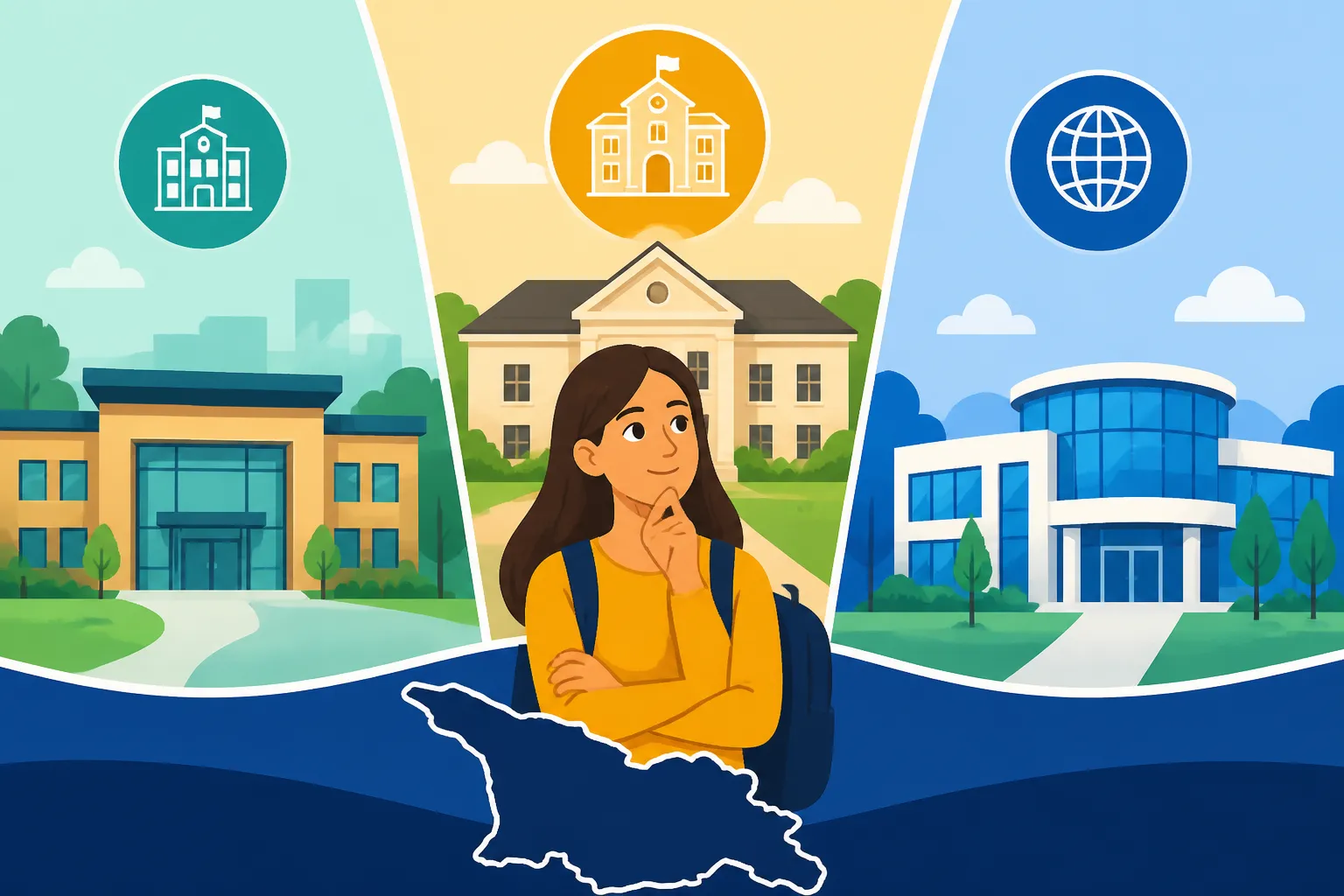
At a glance, Georgia's school system is pretty standard in its categorization: public schools, private schools, and international schools. However, the nuances within each category are what truly matter to expat families. Public schools are state-funded, follow the national curriculum, and are primarily taught in Georgian. They are widespread and form the backbone of the national education system. Private schools, on the other hand, offer more varied curricula, smaller class sizes, and often bilingual or specialized programs, but they come with tuition fees. Then there are the international schools, explicitly designed for the expat community, usually offering globally recognized curricula like the International Baccalaureate (IB) or British/American systems, with English as the primary language of instruction. These are often the first port of call for many expat families, but they’re not the only solution, nor are they always the most suitable for every child or budget. Deciding between these often feels like choosing between three different worlds.
Initial Hurdles: Language and Cultural Differences
One of the biggest anxieties for expat parents is the language barrier. If your child doesn't speak Georgian, immersing them in a public school might seem daunting, or even impossible. While some public schools in larger cities like Tbilisi or Batumi might have a handful of teachers who speak English, the vast majority of instruction and social interaction will be in Georgian. This isn't just an academic hurdle; it's a social one, potentially isolating for children, especially older ones.
Beyond language, there's the cultural adjustment. The Georgian educational approach might differ significantly from what your child is used to. It might be more traditional, with a stronger emphasis on rote learning or respect for authority figures, compared to more progressive, child-centered pedagogies. Parents might also find that communication with teachers and administration in public schools can be a bit challenging without a local contact or a strong command of Georgian. This is where researching early and even connecting with other expat families who have navigated these waters becomes incredibly valuable. Remember, adapting to life in Georgia includes more than just finding a place to live; it's about helping your entire family settle in, and schooling is a huge part of that. If you're just starting your journey, you might want to look at a broader guide on The Complete Guide to Moving to Georgia: Your First 90 Days to get all your ducks in a row.
Delving into Georgian Public Schools
For some expat families, especially those planning a long-term stay, those with Georgian heritage, or those on a tighter budget, the public school system in Georgia can be a viable, even desirable, option. It offers an authentic immersion experience into Georgian culture and language, which can be incredibly enriching. However, it’s crucial to understand what you’re getting into before committing.
Curriculum, Language of Instruction, and Enrollment Process
Georgian public schools follow the National Curriculum of Georgia, which is developed and overseen by the Ministry of Education and Science. This curriculum covers subjects like Georgian language and literature, mathematics, history, geography, foreign languages (often English and Russian from an early age), and sciences. The primary language of instruction is, naturally, Georgian. While efforts are being made to introduce more English-language teaching and resources, especially in certain subjects, it’s not yet widespread enough to rely on for full academic immersion if your child doesn't speak Georgian. Some schools might offer minority language programs (e.g., Armenian, Azeri, Russian), particularly in regions with significant minority populations, but English-only is rare.
The enrollment process for public schools is managed by local educational authorities and individual schools. Generally, children must be registered at a school within their residential district. Required documents typically include the child's birth certificate, their parent's passport and Georgian residence permit, and sometimes a medical certificate. If your child is new to the Georgian language, you might need to explore schools that have specific integration programs, although these are not universally available. It's often a good idea to visit prospective schools, even if you need a translator, to gauge the environment and speak with the principal about your child's needs. The process can feel bureaucratic and less streamlined than in some Western countries, so be prepared for a bit of back-and-forth, and don't hesitate to seek local assistance if needed.
The Day-to-Day Experience and Parent Involvement
A typical school day in a Georgian public school generally runs from around 9 AM to 2 or 3 PM, depending on the grade level. Younger students often attend shorter days. The atmosphere can be quite formal compared to many international schools, with a strong emphasis on discipline and respect for teachers. Class sizes can vary significantly but are often larger than what you'd find in private or international schools. Students are expected to wear uniforms in many schools, and the school year generally runs from mid-September to early June, with holidays throughout the year.
For expat parents, getting involved in the public school community can be a unique experience. Parent-teacher meetings are held, but effective communication can hinge on language skills. Many parents rely on school staff or other bilingual parents to translate during meetings or when communicating about their child's progress. While some schools may have parent committees, their function might differ from what you’re used to. Volunteering in classrooms might be less common than in international schools. However, this environment offers an unparalleled opportunity for children to truly integrate, form friendships with local children, and become fluent in Georgian, which can be a huge asset for families planning to stay in Georgia long-term. Remember, immersing in local life, even through schooling, can open up so many doors to understanding your new home. For those navigating the broader aspects of settling in, an article like How to Enrol Your Child in a School in Georgia might provide more specific, actionable steps for both public and private options.
Exploring Private Schools Beyond the International Bubble
While international schools often grab the spotlight for expats, Georgia also boasts a growing number of local private schools. These institutions offer a middle ground between the full immersion of public schools and the often higher costs and global focus of international schools. They can be an excellent choice for families seeking a different kind of educational experience, perhaps one that blends Georgian culture with elements of international pedagogy, or offers specialized programs.
Local Private Schools and Their Unique Offerings
Local private schools in Georgia are diverse. Many offer an enhanced version of the Georgian National Curriculum, often supplemented with additional foreign language instruction, extracurricular activities, or a more project-based learning approach. These schools tend to have smaller class sizes than public schools, more modern facilities, and a higher teacher-to-student ratio. This can lead to a more individualized learning experience, which can be particularly beneficial for children who might need extra support or a different teaching style.
One of the key advantages of these schools for expats is that some, especially in Tbilisi, are making efforts to integrate English or other foreign languages into their curriculum more robustly, sometimes even offering bilingual programs. While the primary language might still be Georgian for core subjects, the exposure to other languages can be significant. This creates an environment where children can learn Georgian while maintaining some connection to a familiar language of instruction. These schools often attract a mix of affluent Georgian families and expat families who are keen for their children to become truly bilingual and culturally adept in Georgia. Tuition fees vary wildly depending on the school's reputation, facilities, and location, but they are generally more affordable than top-tier international schools. For families considering moving and setting up their home, it’s useful to remember that companies like Sirelo can assist with the logistics of moving your belongings, ensuring a smoother transition for your entire household as you explore these school options.
Faith-Based and Specialized Private Institutions
Beyond the general private schools, Georgia also has a selection of faith-based and specialized private institutions. For families seeking an education rooted in religious values, there are schools affiliated with various denominations, predominantly the Georgian Orthodox Church, but also some Catholic and other Christian schools. These schools integrate religious instruction and values into their curriculum alongside the national standards. They offer a community-focused environment that can be very supportive for families sharing similar beliefs.
Furthermore, you might find specialized private schools catering to specific educational philosophies or talents. For instance, there could be schools with a strong emphasis on arts, music, sports, or science and technology. These can be perfect for children with particular passions or learning styles that might not be fully accommodated in a general curriculum. Finding these specialized schools often requires a bit more digging and local networking, as they may not market themselves extensively to the international community. When researching, don't be afraid to ask about specific programs, teacher qualifications, and how they support diverse learners. It's a journey of discovery, much like finding your way around Tbilisi itself. A good source of information for this kind of specific research might be expat forums or local community groups where parents share their experiences.
The World of International Schools in Georgia
For many expat families, international schools are the default choice when relocating. They offer continuity in curriculum, English-language instruction, and a ready-made expat community, which can ease the transition significantly for children and parents alike. Georgia, particularly its capital Tbilisi, has several well-regarded international schools.
Top International Schools in Tbilisi and Beyond
Tbilisi is home to the majority of Georgia's international schools, catering to a diverse student body from dozens of different nationalities. Some of the most prominent names you'll encounter include the European School in Georgia, which offers IB, American High School Diploma, and Georgian National Programs, making it a truly multi-faceted option. Then there's the QSI International School of Tbilisi, following an American curriculum with a strong focus on individualized instruction. Another popular choice is the British-Georgian Academy, which combines the British curriculum with elements of Georgian culture and language. While these are the big players, there are other smaller international schools and institutions offering various curricula like the French school or German school, catering to specific national communities.
Beyond Tbilisi, options become much more limited, though some developing cities like Batumi are seeing a rise in private and international educational offerings, albeit on a smaller scale. When evaluating these schools, consider factors like the student-teacher ratio, facilities (sports, arts, science labs), extracurricular programs, and the diversity of the student body and teaching staff. It's a significant investment, so thorough research and campus visits are essential. These schools are often quite proactive in engaging with new expat families, providing tours and information sessions to help you understand their unique value proposition.
Curriculum Standards, Accreditation, and Admissions
The curricula offered by international schools in Georgia are varied but generally fall into widely recognized international standards. The International Baccalaureate (IB) program (Primary Years Programme, Middle Years Programme, and Diploma Programme) is highly popular, known for its rigorous academic approach and focus on critical thinking and global citizenship. British curriculum schools follow the English National Curriculum, leading to IGCSE and A-level examinations, while American schools typically offer an American-style diploma, often accredited by US-based bodies. These curricula provide a familiar framework for expat children and ensure that their education is transferable if you move to another country or plan for university abroad.
Accreditation is a critical factor to consider. Schools accredited by international bodies (such as CIS, NEASC, WASC, COBIS) meet certain quality standards and often have easier pathways for student transfers. This assurance can be incredibly important for families whose children may attend multiple international schools throughout their educational journey. Admissions processes typically involve an application form, submission of previous school records, possibly placement tests or interviews, and sometimes a review of English language proficiency. Demand can be high for top schools, especially in popular grade levels, so it’s advisable to apply well in advance. Understanding the specific Understanding the Cost of International and Private Schools in Georgia is also a crucial step, as tuition fees can be substantial and represent a significant part of your cost of living. When dealing with applications and communication, having a reliable internet connection is paramount; services like Airalo can help ensure you're always connected, even when you're on the go visiting different schools or attending online info sessions.
Alternative Education and Support Systems
Not every child or family fits neatly into the traditional school boxes. For various reasons – a desire for a more personalized education, specific learning needs, or simply a different lifestyle choice – some expat families in Georgia explore alternative educational paths. It's empowering to know that options exist, even if they require a bit more legwork.
Homeschooling, Online Learning, and Tutoring Resources
Homeschooling is an option for expat families in Georgia, though it's important to understand the local regulations, which can be less clearly defined for international residents compared to public school enrollment. Many homeschooling families in Georgia opt to follow an international curriculum through online learning platforms or by purchasing curriculum materials from their home countries. This allows for flexibility in scheduling, tailored learning paces, and a highly individualized approach to education. Online international schools, which offer full curricula and accreditation remotely, have also become increasingly popular, especially since the pandemic. These can be a fantastic way to maintain a consistent educational standard no matter where your family travels or lives.
Beyond full-time homeschooling, tutoring is a widely utilized resource in Georgia, both for local students and expats. You can find tutors for a wide range of subjects, from academic support in math and sciences to language lessons (Georgian, English, Russian). Many expat families hire tutors to help their children with Georgian language acquisition, whether they are in public school or an international setting. You can find tutors through word-of-mouth within the expat community, online platforms, or through local language centers. It's a flexible way to provide targeted support without overhauling an entire schooling structure.
Navigating Special Educational Needs and Inclusive Practices
Finding appropriate support for children with special educational needs (SEN) can be one of the most challenging aspects for expat families in any new country, and Georgia is no exception. While Georgian law promotes inclusive education, the practical implementation, resources, and trained specialists in public schools can still be developing. Some public schools may have resource teachers or psychological support, but the level of specialized intervention might not match what families are accustomed to in Western countries.
Private and international schools often have better resources for SEN support, but this varies significantly between institutions. Many international schools offer learning support services, counselors, and adapted programs for students with mild to moderate learning difficulties. However, for children with more complex needs, it's crucial to have open and honest discussions with admissions staff about the specific support the school can realistically provide. Some families may need to consider engaging private therapists, educational psychologists, or specialized tutors outside of school hours to supplement institutional support. Thoroughly vetting schools for their inclusive practices and available resources is absolutely non-negotiable if your child has special needs. It's a deeply personal journey, and ensuring your child's well-being and academic success is paramount.
Making the Right Choice for Your Family's Future
Choosing a school for your child in a foreign country is never a one-size-fits-all decision. It involves balancing academic rigor, social integration, language development, financial implications, and your child's individual personality and needs. Take your time, do your research, and trust your instincts.
Key Factors to Weigh: Cost, Curriculum, and Community
When you're sifting through brochures and visiting campuses, keep these core considerations front and center:
- Cost: This is often the most straightforward, yet most impactful, factor. Public schools are essentially free, requiring only minor contributions for materials. Private local schools have varying tuition fees, generally more affordable than international schools. International schools, however, come with substantial tuition fees, often ranging from $5,000 to $20,000+ USD per year, plus additional costs for uniforms, books, trips, and extracurriculars. Make sure you understand the total financial commitment. For a comprehensive overview, checking articles like The Cost of Healthcare in Georgia: A Complete Breakdown for Foreigners (2026) can give you a better idea of overall expat expenses, alongside school fees.
- Curriculum: Does the curriculum align with your long-term plans? If you anticipate moving again to another country, an internationally recognized curriculum (IB, British, American) offers greater portability. If you plan to stay in Georgia for many years, the Georgian National Curriculum might be a better fit, fostering deeper integration. Consider your child’s learning style and your educational philosophy.
- Language: How important is it for your child to learn Georgian? How will they manage if they don't speak the language of instruction? Many children adapt quickly, especially younger ones, but older children might struggle initially. Look for schools with strong language support programs for non-native speakers.
- Community and Culture: An international school offers an immediate expat bubble, which can be comforting. Public schools offer deep local integration. Private local schools often sit somewhere in between. Consider the school's overall culture – is it supportive, inclusive, and a good fit for your family values? Some families find that How to Find Family-Friendly Neighbourhoods in Tbilisi can also help narrow down school options by geographical convenience and community feel.
A good way to compare these aspects is to create a simple table that summarises your options:
| Feature | Georgian Public Schools | Local Private Schools | International Schools |
|---|---|---|---|
| Language | Primarily Georgian | Mostly Georgian, some bilingual programs | Primarily English, French, German, etc. |
| Curriculum | Georgian National Curriculum | Georgian National Curriculum (enhanced) | IB, British, American, French, German |
| Cost (Annual) | Free (minor contributions) | Moderate (approx. $1,500 – $7,000 USD) | High (approx. $5,000 – $20,000+ USD) |
| Class Size | Larger | Smaller to moderate | Smaller |
| Teacher Ratio | Standard | Better than public | Generally excellent |
| Expat Integration | Low (requires active effort) | Mixed, some expat families | High (designed for expats) |
| Facilities | Varies, can be basic | Often modern | Excellent, extensive |
| Accreditation | Ministry of Education & Science Georgia | Ministry of Education & Science Georgia | International bodies (CIS, NEASC, COBIS) |
Practical Steps for Enrollment and Settling In
Once you’ve narrowed down your choices, the real work begins. Start the application process as early as possible, especially for popular international schools which can have waiting lists. Gather all necessary documents, including academic transcripts, immunization records, birth certificates, and residence permits. Be prepared for potential translation and notarization requirements for foreign documents.
Don’t underestimate the power of a personal visit. Pictures on a website can only tell you so much. If possible, visit the schools, speak with the admissions team, and if permitted, observe a class or two. If you can’t visit in person, request virtual tours or video calls with staff. Connect with other parents already at the school – their candid insights can be invaluable. The expat community in Georgia is generally very welcoming and supportive, so reach out on social media groups or forums. Getting your children settled into a good school is one of the biggest achievements in your relocation journey, enabling them to build new friendships and flourish in their new home. It’s all part of making Georgia truly feel like home for your entire family.
Disclaimer
Please remember that while I strive to provide accurate and up-to-date information, the educational landscape, regulations, and school availability in Georgia can change. It is always best to verify specific details directly with individual schools, the Ministry of Education and Science of Georgia, or a qualified educational consultant. This guide is for informational purposes only and should not be taken as legal or professional advice.