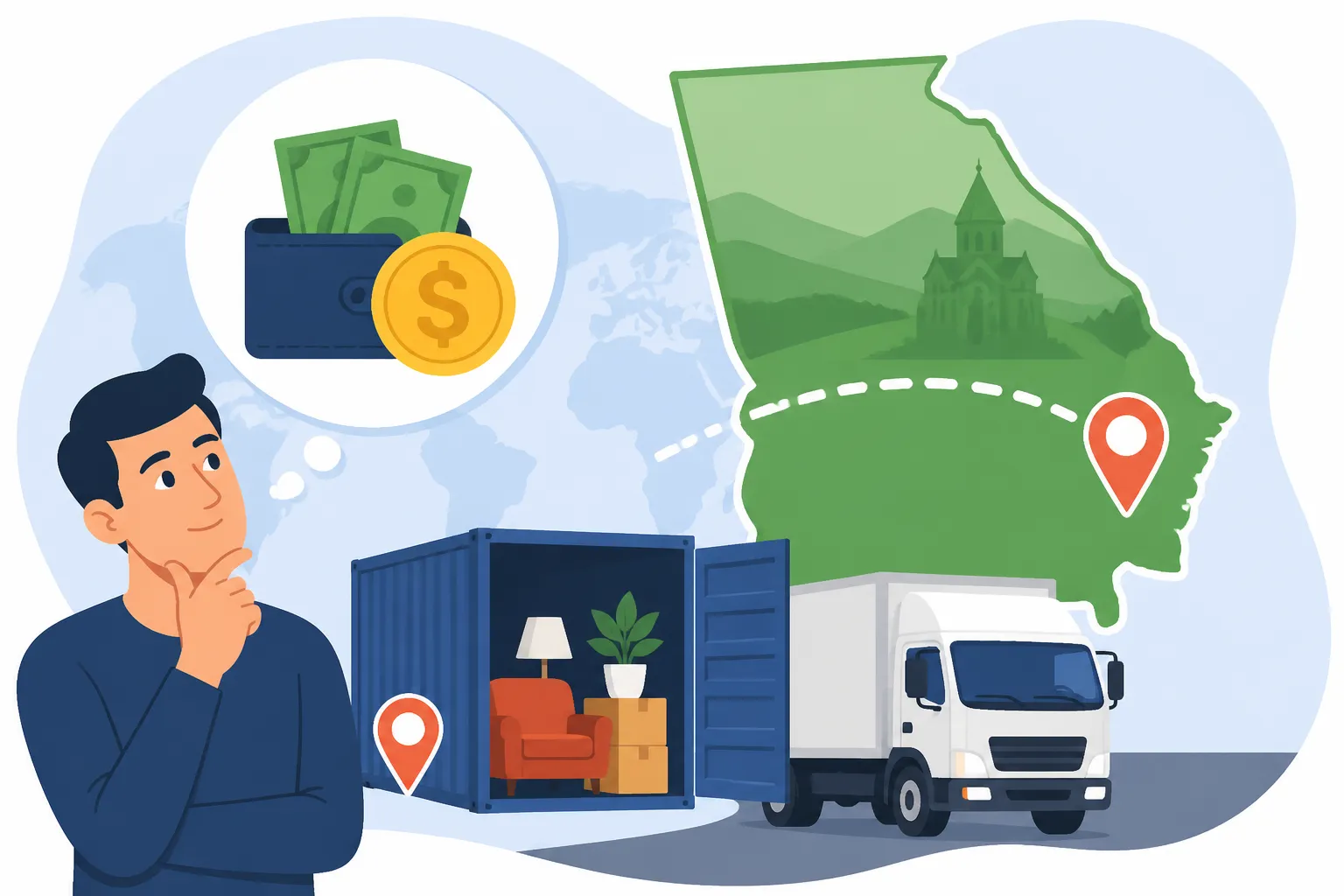
How Much Does It Cost to Ship Belongings to Georgia?
Ah, the big move! Packing up your life and shipping it across continents is easily one of the most daunting parts of becoming an expat. You’re already juggling visa applications, finding a new place to live, and saying goodbye to loved ones, and then there’s the monumental task of figuring out how to get your cherished belongings to Georgia without breaking the bank or losing your mind. The truth is, it’s not just about throwing things into boxes; there’s a labyrinth of logistics, customs, and costs that can leave anyone feeling completely overwhelmed. But don't you worry, because this guide is going to walk you through the real costs and practicalities of shipping your stuff to Georgia, helping you demystify the process one step at a time.
Understanding the Factors That Drive Shipping Costs to Georgia
When you first start looking into shipping your belongings, it feels like you're staring at a black box. What exactly makes the price fluctuate so wildly? From one quote to another, you might see huge differences, and it’s not always immediately clear why. The reality is that several key factors play a massive role in the final price tag, and understanding them is your first line of defense against unexpected expenses and frustrating surprises.
Volume and Weight: The Biggest Determinants
Let's be blunt: the more stuff you have, the more it's going to cost. This might seem obvious, but the way shipping companies calculate "more" can be a bit nuanced. They typically consider either the volumetric weight or the actual weight, whichever is greater, especially for air freight. Volumetric weight is essentially how much space your items take up, calculated in cubic meters (CBM) or cubic feet (CFT). For example, a big, light piece of furniture might not weigh much, but it takes up a lot of space, so you'll be charged based on its volume. Conversely, a small box of books will be heavy for its size, so the actual weight will likely be the determining factor.
Many expats initially underestimate the sheer volume of their possessions. A "few boxes" can quickly turn into ten, then twenty, and before you know it, you're looking at half a container. Even if you're only planning to ship personal effects, every extra box adds to the total cubic meters. If you're considering bringing larger items like furniture, remember that things like sofas, dining tables, and even large suitcases contribute significantly to your volumetric weight. The savvy expat learns to be ruthless when decluttering, asking if each item is truly worth the cost of shipping, the potential customs hassle, and the time it will spend in transit.
Shipping Method: Air Freight vs. Sea Freight vs. Road Freight
The method you choose for shipping your belongings will dramatically impact both the cost and the speed of delivery. Each option has its own set of trade-offs, and the "best" choice really depends on your budget, timeline, and how quickly you need your items.
Air freight is by far the fastest option. If you absolutely need a specific item or a set of crucial documents within a matter of days, then air freight is your go-to. However, it's also the most expensive. You'll often pay a premium per kilogram or per cubic meter, and these costs add up rapidly. For larger shipments, air freight becomes prohibitively expensive for most expats. Think of it for small, high-value, or urgent items only, like essential work equipment, critical medications, or irreplaceable personal documents. The good news is that transit times can be as short as 3-7 days, depending on the origin and routing, but be prepared for the price tag.
Sea freight, or ocean freight, is the most cost-effective option for larger shipments. If you're moving an entire household or even just several cubic meters of goods, this is likely what you'll be using. It's slow, however. We're talking weeks, if not months, depending on your origin country and the specific shipping route. A common option is Less than Container Load (LCL), where your items share space in a container with other people's goods, which is more affordable. If you have enough stuff to fill an entire container, you might opt for a Full Container Load (FCL), which gives you dedicated space but comes with a higher base cost. The slow pace means you'll need to pack essentials for your initial stay in Georgia, but the savings can be significant. Many expats find sea freight to be the sweet spot for bringing the bulk of their belongings without going broke.
For those moving from neighboring European or Eurasian countries, road freight is another viable option, offering a balance between speed and cost that falls somewhere between air and sea. Given Georgia's geographical location, especially its connections through Turkey or other land routes, truck transport can be an efficient way to move goods from various parts of Europe. This can be particularly useful if you're planning a phased move or have larger, bulky items that would be tricky on air freight but don't warrant an entire sea container. Transit times for road freight are typically faster than sea freight but slower than air, often ranging from one to three weeks. Road freight also offers greater flexibility in terms of pick-up and delivery points, which can be a huge advantage for door-to-door services.
Origin and Destination: Where You're Coming From Matters
The distance and logistical complexity between your starting point and Georgia will naturally influence the cost. Shipping from a major port city in Western Europe will generally be more straightforward and potentially cheaper than shipping from a remote inland town in North America or Asia. Georgia, being a landlocked country (though with Black Sea ports like Batumi and Poti), means that sea freight often involves transshipment – your container might go to a larger port like Istanbul or Piraeus and then be transferred to a smaller vessel or truck for the final leg to Georgia. Each of these transfers adds to the complexity, time, and ultimately, the cost.
Furthermore, the availability of direct shipping routes and the volume of trade between your origin country and Georgia play a role. If there's a well-established trade route, competition among shipping companies might keep prices more reasonable. Conversely, if your origin is less common for shipments to Georgia, you might find fewer options and higher prices. For those looking to understand the broader context of relocation, you might find useful information in our guide on Understanding How to Move to Georgia Legally from Abroad (2027). The infrastructure at Georgian ports and customs facilities also factors in; while improving, it can sometimes lead to longer processing times compared to highly developed logistics hubs.
Deconstructing the Cost Components: What You're Really Paying For
So, you've got a general idea of how your choices affect the shipping method and overall price. But when that quote lands in your inbox, it's often a confusing list of acronyms and charges that don't always make sense. Beyond the basic freight cost, there's a whole host of other fees and services that you'll need to consider. Ignoring these can lead to significant budgetary surprises down the line. It's not just the journey across oceans or land; it's everything that happens before, during, and after that trip.
Packing and Crating Services
This is one of those areas where you can potentially save money if you're willing to put in the elbow grease. Professional packing and crating services mean exactly that: the shipping company's crew comes to your home, carefully packs all your items using industry-standard materials, and builds custom crates for fragile or unusually shaped belongings. This service offers peace of mind, as professionals are trained to pack for international transit, reducing the risk of damage. They use high-quality boxes, bubble wrap, packing peanuts, and sometimes even custom wooden crates for extremely delicate items like artwork or antique furniture.
However, this convenience comes at a cost. Professional packing can add a significant percentage, often 10-20% or even more, to your overall shipping bill. If you choose to pack yourself, you'll save on labor costs, but you'll need to purchase all the packing materials yourself and dedicate considerable time to the task. Remember, poorly packed boxes are more susceptible to damage, and your insurance might have clauses about professional packing requirements for certain items. If you opt for DIY, invest in good quality moving boxes, plenty of packing tape, and protective materials. Don't skimp on these; replacing damaged items in Georgia will certainly cost you more.
Customs Duties, Taxes, and Import Regulations in Georgia
Ah, customs. This is often where expats in Georgia hit their first major bureaucratic wall. While Georgia is generally considered a business-friendly country, importing personal effects is a separate beast entirely. The rules and regulations can seem a bit opaque, and what might be allowed for one person could be flagged for another.
For personal belongings, specifically "household goods and personal effects" of an individual moving residence, Georgia generally offers duty and VAT exemption if the goods have been owned and used for at least six months prior to import, and you are establishing residence. You'll typically need to provide proof of residency (like a residence permit – check out The Expat Guide to Getting a Residence Permit in Georgia (2027) for more on this), a detailed inventory of your items, and a copy of your passport. The crucial caveat is that these items must not be intended for sale or commercial use.
However, this exemption isn't automatic or guaranteed, and the interpretation can vary. High-value items, new items (still in packaging), or large quantities of certain goods (e.g., more than one of a specific electronic item) might trigger questions or even duties. Alcohol and tobacco, in particular, often face strict limits or high duties. It's not uncommon for customs officials to perform physical inspections, which can lead to delays and sometimes even a demand for "facilitation fees" if your paperwork isn't perfectly in order or if they suspect something is amiss. Always, always declare everything accurately. Misdeclaration can lead to fines, confiscation, or even legal issues. Working with a reputable shipping agent who has experience with Georgian customs is highly recommended, as they can guide you through the intricacies and act as your local representative.
Insurance, Handling, and Delivery Fees
Once your goods leave your home, they are embarking on a long journey, and things can, unfortunately, go wrong. This is where transit insurance becomes absolutely indispensable. While it’s an added cost, it provides crucial financial protection against loss, theft, or damage during shipping. Most reputable shipping companies will offer various insurance packages, typically covering either "all-risk" (comprehensive coverage for almost anything) or "total loss" (only covers if the entire shipment is lost). Always read the fine print, understand what's covered (and what isn't), and consider the actual replacement value of your items, not just what they originally cost. This is not an area to cut corners.
Beyond the core freight and customs, there are often additional handling and delivery fees that can catch expats off guard. These include terminal handling charges (THC) at both the origin and destination ports, drayage (transport from the port to a warehouse or your final address), and destination port charges. The "last-mile" delivery in Georgia can also present unique challenges. If you're moving into an apartment building in Tbilisi without a service elevator, for instance, you might incur extra charges for manual carrying of heavy items upstairs. Navigating narrow streets or pedestrian-only zones can also complicate delivery and add to the cost. Ensure your quote is "door-to-door" to avoid nasty surprises, and clarify exactly what that entails for your specific Georgian address. Knowing these granular details helps you budget effectively, especially when you're also trying to figure out How Much Does It Cost to Rent an Apartment in Tbilisi in 2026? and other initial living expenses.
Estimated Costs and Practical Tips for Shipping to Georgia
Now that we’ve delved into the various elements that factor into the cost, let's talk numbers and practical advice. Getting a firm quote requires contacting shipping companies, but having some ballpark figures in mind will help you plan your budget. Remember, these are estimates, and the market can fluctuate, but they should give you a realistic idea of what to expect.
Ballpark Figures: What to Expect Financially
Providing exact figures is tough without knowing your origin, specific items, and current market rates, but here’s a general overview based on common expat scenarios for shipping to Georgia. These figures typically include freight, port charges, and basic destination services, but often exclude customs duties/taxes, comprehensive insurance, and complex last-mile delivery.
| Shipment Size & Method | Estimated Cost (USD) | Transit Time (Approx.) | Notes |
|---|---|---|---|
| Small Shipment (1-2 CBM) | Personal effects, a few boxes, small furniture | ||
| Air Freight | $1,500 – $3,000 | 1-2 weeks | Fastest, most expensive. Good for urgent, small items. |
| Sea Freight (LCL) | $700 – $1,500 | 4-8 weeks | Most common for small volumes. Cost-effective. |
| Road Freight (from Europe) | $800 – $1,800 | 2-4 weeks | Good option for European origins. |
| Medium Shipment (5-10 CBM) | 1-bedroom apartment, significant boxes, some furniture | ||
| Sea Freight (LCL) | $2,500 – $5,000 | 4-8 weeks | Most economical for this size. |
| Road Freight (from Europe) | $3,000 – $6,000 | 2-4 weeks | Competitive if originating from mainland Europe. |
| Large Shipment (20+ CBM) | 2-3 bedroom house, full household contents | ||
| Sea Freight (FCL) | $6,000 – $12,000+ | 6-12 weeks | Dedicated container, best value for large moves. |
Important Considerations:
- Origin Country: Shipping from North America or Australia will generally be at the higher end of these estimates due to distance and logistics. European origins often fall into the lower or middle range, especially for road freight.
- Door-to-Door vs. Port-to-Port: Always clarify if the quote includes pickup from your home and delivery to your final address in Georgia. "Port-to-port" is cheaper but leaves you responsible for navigating local transport and customs clearance at the Georgian end, which can be a nightmare if you're not fluent in Georgian or don't have local support.
- Additional Services: Packing, comprehensive insurance, customs brokerage, and storage at either end will add to these base figures.
- Currency Fluctuations: International shipping costs are often quoted in USD or EUR, so exchange rate fluctuations with the Georgian Lari (GEL) can impact your final cost.
These figures represent a general range. The best way to get accurate pricing is to get multiple detailed quotes.
Choosing the Right Shipping Company
Selecting the right shipping company is probably the most critical decision you'll make when moving your belongings. This isn't just about price; it's about reliability, transparency, and peace of mind. A cheap quote that leads to lost items, hidden fees, or endless delays can turn your relocation into a nightmare.
First and foremost, look for companies with extensive experience in international removals, particularly with Georgia as a destination. Companies that regularly ship to Georgia will have established networks, understand local customs procedures, and anticipate potential issues. Don't be afraid to ask specific questions about their experience with this particular route.
Transparency in quoting is also vital. A good company will provide a detailed breakdown of all costs, including freight, port charges, customs brokerage, insurance options, and delivery fees. If a quote seems unusually low or lacks detail, be wary. Hidden fees are a common pitfall in international shipping. Read online reviews, check expat forums, and ask for references. Word-of-mouth recommendations from other expats who have successfully shipped to Georgia are invaluable. When I first moved, I relied heavily on community advice for almost everything, from finding a place to live to figuring out How to Set Up Internet and Mobile Service in Georgia.
This is where services like Sirelo can be incredibly helpful. They act as a platform to compare international moving companies, allowing you to get quotes from several reputable providers that serve the Georgia route. It saves you the legwork of finding companies individually and gives you a good baseline for comparison. Make sure any company you consider is licensed and insured. Don't underestimate the value of responsive customer service – you want a company that communicates clearly and regularly, especially when your worldly possessions are halfway across the globe.
Minimizing Costs and Maximizing Efficiency
No one wants to overspend, and there are definitely smart ways to reduce your shipping bill without sacrificing too much. A little strategic planning can go a long way.
The first, and often most impactful, step is ruthless decluttering. Seriously, take a hard look at everything you own. Ask yourself: "Do I truly need this? Can I buy it new in Georgia for less than it costs to ship?" Often, basic household items, cheap furniture, or electronics that are easily replaceable might not be worth the shipping cost, potential duties, and the hassle. Things like old towels, chipped dishes, or even bulky but inexpensive kitchen gadgets are probably better left behind or donated. Remember, Georgia has a thriving market for new and used goods, especially in cities like Tbilisi.
Consider consolidating your shipment. If you don't have enough items for a full container (FCL), opting for Less than Container Load (LCL) is usually the most economical. Some companies might even offer groupage services, where multiple small shipments are combined into one container heading to the same region. This might mean slightly longer transit times but significant cost savings.
Timing can also be a factor. While less common than with air travel, some shipping routes can have peak seasons that drive up prices. If you have flexibility, inquire about off-peak shipping periods. Finally, be pragmatic about what absolutely must come with you. If you’re a digital nomad, your laptop and a good headset might be your most crucial items, not your entire library. For other essential items, you might even consider picking them up locally once you arrive. Our guide on The Complete Guide to Cost of Living in Georgia for Expats (2026) might give you an idea of what everyday items cost here.
Navigating Georgian Customs and Logistics for a Smooth Arrival
You’ve packed, you’ve shipped, and your belongings are finally making their way to Georgia. This is often when a new wave of anxiety can hit. What happens when it arrives? How do you actually get your stuff through customs? This final stage of the shipping process can be fraught with unexpected challenges, but with the right preparation and mindset, you can navigate it successfully.
Required Documentation and Clearance Process
The key to a smooth customs clearance in Georgia is having all your paperwork in order – and by "in order," I mean perfectly, meticulously, absolutely correct. Georgian customs officials are generally straightforward, but they are sticklers for detail. Any discrepancy, missing document, or unclear declaration can lead to delays, additional storage fees, and a whole lot of stress.
Here’s a general list of documents you'll likely need:
- Passport: A valid copy of your passport (photo page and all relevant visa/entry stamps).
- Residence Permit: A copy of your Georgian residence permit. This is absolutely crucial for claiming personal effects exemption. If you're still in the process of getting one, your customs agent will need to advise on alternative proof of intent to reside. You can learn more about this in Understanding Georgian Residence Permits: Work, Short-Term and Investment (2027).
- Itemized Inventory: A comprehensive, detailed packing list of everything in your shipment. This list should be in English and, ideally, also translated into Georgian. It needs to describe each item accurately (e.g., "used books, personal" not just "books"). If you packed yourself, ensure this matches your boxes perfectly.
- Bill of Lading (B/L) or Air Waybill (AWB): This is the contract of carriage from your shipping company.
- Proof of Ownership/Use: While not always explicitly requested for every item, you should be prepared to prove that household goods have been owned and used by you for at least six months. This is often implicitly covered by your itemized inventory declaring "used personal effects."
- Declaration Form: A customs declaration form, often provided by your shipping agent, which you will need to sign.
Once your shipment arrives at a Georgian port (like Poti) or airport, it will be moved to a customs warehouse. Your local shipping agent or a designated customs broker will then submit all your documentation to the Georgian Revenue Service (which handles customs). They will review your paperwork, possibly request additional information, and might even schedule a physical inspection of your goods. If everything is in order and your exemption is granted, they will issue a clearance document. Only then can your goods be released for final delivery to your home. This process can take anywhere from a few days to several weeks, depending on the completeness of your documents and the current workload at customs. Remember to always be honest and upfront in all your declarations, especially if you want to avoid future hassles when Filing Your Tax Return with the Revenue Service in Georgia: The Complete Walkthrough (2027).
Common Challenges and How to Overcome Them
Despite the best planning, bumps in the road are inevitable when dealing with international logistics in a foreign country. One of the most common frustrations is delays. Shipments can get held up for various reasons: weather, port congestion, a backlog at customs, or even a minor error on a single piece of paperwork. The key is to be patient but persistent. Regularly check in with your shipping agent for updates.
Communication barriers can also be an issue. While many people in the logistics industry speak English, the further you get into local processes, the more Georgian becomes prevalent. This is another reason why a local customs broker or a reputable international moving company with local partners is invaluable. They can bridge this language gap and navigate the local system on your behalf. For yourself, staying connected is paramount; consider getting a local SIM or an eSIM from Airalo so you can always communicate with your agent, even upon immediate arrival.
Unexpected fees, while less common with a transparent "door-to-door" quote, can still arise if, for example, your goods are held in storage longer than anticipated due to clearance delays, or if an item triggers an unforeseen duty. Always keep a buffer in your budget for these possibilities. My advice? Don't stress too much over things you can't control, but be meticulous about what you can control: your documentation and your choice of shipping partner.
What to Prioritize for Your Initial Days in Georgia
Given the potential for delays, it's absolutely crucial not to rely on your shipped belongings for your immediate needs upon arrival in Georgia. Pack a "first-night" or "survival" bag with everything you'll need for at least the first week or two. This should include:
- Essential Documents: Passport, residence permit, driver's license, copies of all your shipping documents, important contacts.
- Medications: Any prescription medications you need, with a sufficient supply.
- Clothing: A few changes of clothes, suitable for the local climate.
- Toiletries: Basic hygiene products.
- Electronics: Laptop, phone, chargers, universal adapter.
- Cash: Enough local currency (GEL) for initial expenses like taxis, food, and small purchases.
- Snacks: Non-perishable snacks for those moments when you're too tired to cook or venture out.
Remember, you'll likely be dealing with jet lag and the general exhaustion of moving. Having these essentials readily available will make your first few days infinitely smoother. You can always pick up additional items like bedding, basic kitchenware, and groceries locally. There are plenty of supermarkets and stores in major cities. Thinking about your early days here, you'll also want to look into The Expat Guide to Setting Up Utilities (Electricity, Water, Gas) in Georgia pretty quickly to ensure your new home is comfortable. Getting settled in Georgia takes time, and expecting your shipped items to be at your doorstep the moment you arrive is setting yourself up for disappointment. Embrace the adventure, prepare for the unknowns, and you'll navigate the process like a seasoned expat.
Disclaimer
The information provided in this guide is for general informational purposes only and does not constitute professional advice. While we strive to keep the information up-to-date and accurate, customs regulations, shipping costs, and logistical processes in Georgia can change without notice. Always consult with a professional international moving company, customs broker, or the relevant Georgian authorities for the most current and specific advice tailored to your individual situation. We accept no liability for any loss or damage incurred as a result of relying on this information.