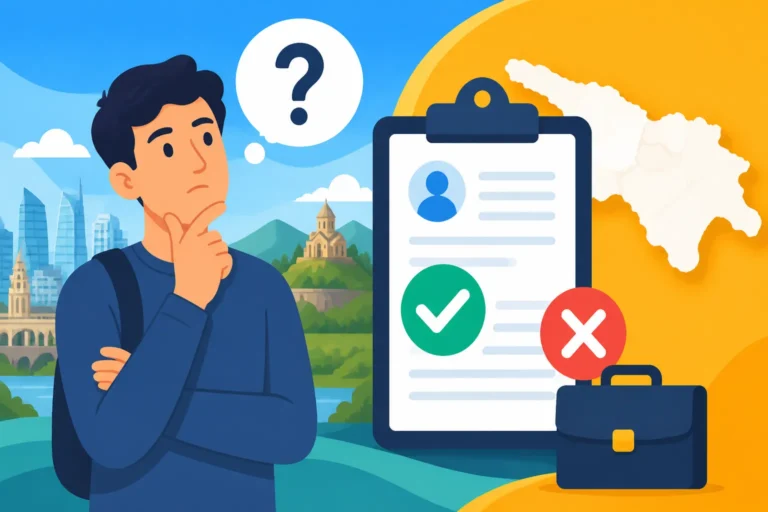
How to Register as an Individual Entrepreneur in Georgia
Navigating the bureaucratic maze in a new country can feel like trying to solve a Rubik's Cube blindfolded, especially when you're trying to set up your own business. Many expats arrive in Georgia with dreams of freelancing, consulting, or launching a small venture, only to be met with a deluge of unfamiliar terms and processes. If you're wondering how to legally operate your independent hustle and take advantage of Georgia's famously low tax rates, this comprehensive guide is here to demystify the process of registering as an Individual Entrepreneur (IE) and getting that coveted 1% tax status.
Why Become an Individual Entrepreneur (IE) in Georgia?
When you first hear about Georgia's tax system, especially the much-talked-about 1% tax rate for small businesses, it almost sounds too good to be true. And for many expats, particularly freelancers, digital nomads, and consultants, becoming an Individual Entrepreneur (IE), often referred to locally as an "Individual Enterprise" or "Sole Proprietor," is indeed a game-changer. It's not just about the tax savings; it's about simplicity and flexibility, which are precious commodities when you're building a life and a business abroad.
The Allure of the 1% Tax Status (Small Business Status)
Let's cut to the chase: the 1% tax status is usually the primary draw for foreigners considering the Individual Entrepreneur route. Imagine earning a decent income and only paying 1% of your gross turnover in taxes. Yes, it’s real, and it’s one of the most compelling reasons why Georgia has become a magnet for independent professionals. This special tax regime, officially known as "Small Business Status," is designed to foster entrepreneurship and lighten the load on small-scale operations.
To qualify for this fantastic 1% rate, your annual turnover generally needs to be under 500,000 Georgian Lari (GEL). If your income exceeds this threshold, the rate jumps to a still-reasonable 3%. However, if you exceed the 500,000 GEL limit twice within a calendar year, you lose your Small Business Status permanently and are then subject to the standard 20% personal income tax. This is a crucial detail many new expats overlook, so it's vital to keep a close eye on your earnings. For those operating within these parameters, the financial benefits are substantial, allowing you to reinvest more into your business or simply enjoy more of your hard-earned money. It simplifies things considerably, particularly compared to the complexities you might face in other countries. Understanding the Small Business Status and 1% Tax in Georgia (2026) is paramount before you dive in.
Flexibility and Simplicity for Freelancers and Consultants
Beyond the tax advantages, setting up as an Individual Entrepreneur in Georgia offers a remarkable degree of operational flexibility and administrative simplicity. For freelancers, remote workers, and consultants, this means fewer hurdles and less red tape compared to establishing a Limited Liability Company (LLC) or a similar corporate entity. When you're an IE, you are essentially your business. This structure is often ideal for solo operators or those with a small team, as it doesn't require a complex corporate structure, board meetings, or extensive accounting procedures that larger businesses demand.
The administrative burden is significantly lighter. You won't need to file intricate corporate tax returns or adhere to the same stringent reporting requirements as an LLC. This ease of management frees up your time to focus on what you do best – your actual work – rather than drowning in paperwork. It's a structure that acknowledges the independent nature of modern work, providing a legal framework that supports individuals who are their own boss. For many, it’s about regaining control over their professional life without the overwhelming administrative overhead. This simplicity is often the quiet benefit that truly solidifies the decision for many expats.
Eligibility and Requirements for Foreigners
Alright, so the 1% tax sounds amazing, right? But before you start dreaming of your next tax-free purchase, let's get down to the nitty-gritty: who exactly can become an Individual Entrepreneur in Georgia, and what do you need to have in order to make it happen? This isn't just a free-for-all; there are specific requirements, and as a foreigner, you’ll want to ensure all your ducks are in a row.
Residency Status and Passport Essentials
First and foremost, to register as an Individual Entrepreneur in Georgia, you absolutely need to be physically present in the country. While Georgia offers a generous 365-day visa-free stay for many nationalities, some banks and government agencies may prefer or even require you to have a residence permit. It's not always a strict legal requirement for registering an IE, but having a residence permit, such as a work permit, investment permit, or short-term permit based on property ownership, definitely smooths out the process, especially when it comes to opening a bank account. Many expats find that banks can be hesitant to open business accounts for individuals who are only on a visa-free stay and lack a clear, long-term tie to the country.
Your passport is your golden ticket, and it needs to be valid for at least six months beyond your intended stay. You’ll also need to obtain a Personal Number, sometimes called a Public Service Hall ID or Taxpayer Identification Number (TIN). This is absolutely essential for any official registration in Georgia, whether it's for banking, taxes, or business. Think of it as your unique national identification number. The Public Service Hall is where you'll get this, and thankfully, it's usually a straightforward process. Just present your passport, fill out a simple form, and often, you'll have it within minutes or a few hours. This Personal Number is the foundation of all subsequent registrations, so make sure it’s the very first thing you acquire after landing. If you're looking for more details, check out How to Get a Taxpayer ID as a Foreigner in Georgia.
Understanding the Permitted Activities
Now, this is where many people get tripped up. The 1% Small Business Status is fantastic, but it's not a blanket offer for all types of business activities. Georgia's tax code specifies certain categories of activities that are excluded from the Small Business Status. If your business falls into one of these categories, you won't be able to enjoy the 1% rate, and you'll be subject to the standard 20% personal income tax from the get-go.
Common excluded activities include:
- Consulting services (in specific areas): This is a big one for many expats. If your consulting services involve providing financial, legal, or accounting advice, you are typically excluded from the 1% tax. However, general business consulting, IT consulting, marketing consulting, or creative services are usually fine. The line can sometimes be blurry, and it’s crucial to get clarity on your specific service.
- Medical activities: Doctors, dentists, clinics, etc., generally do not qualify.
- Architectural activities: While creative, specific architectural services are often excluded.
- Gambling activities: No surprises here.
- Currency exchange operations: Also not permitted.
- Production of excisable goods: Manufacturing alcohol, tobacco, etc., is out.
It's absolutely vital to thoroughly review the list of prohibited activities with a Georgian tax professional or accountant. Do not assume your activity qualifies for the 1% simply because it's "freelancing." Misinterpreting this can lead to significant tax liabilities down the line. Many people rush into registration, only to discover later that their specific consulting niche is actually taxed at 20%, not 1%. This kind of misunderstanding can be a rude awakening, so due diligence here is non-negotiable.
The Step-by-Step Registration Process
Alright, you've decided the IE route is for you, and you've checked your eligibility. Now comes the actual process of getting registered. While it might seem daunting, Georgia has made significant strides in streamlining its public services, and much of this can be done relatively efficiently. Just remember that patience and a good attitude will serve you well, especially when dealing with any unexpected twists.
Getting Your Personal Number and Registering with the Revenue Service
The very first official step on your entrepreneurial journey in Georgia is securing your Personal Number, if you haven't already. This is your unique identifier for virtually all interactions with government bodies. You get this at any branch of the Public Service Hall (PSH), often referred to as "Justice House." These modern, efficient centers are generally foreigner-friendly, with English-speaking staff available in major cities like Tbilisi and Batumi. Simply present your valid passport, fill out a quick application form, and within minutes, or sometimes a couple of hours, you'll walk away with a small card bearing your Personal Number. Hold onto this, it's priceless.
Once you have your Personal Number, the next critical step is to officially register as an Individual Entrepreneur with the National Agency of Public Registry. Again, this is handled at the Public Service Hall. You'll need your passport and your Personal Number for this. You'll complete another form declaring your intention to register as an IE. Here, you'll need to specify your business activity using Georgia's standard classification codes (often referred to as NACE codes, though Georgia uses its own adapted system). If you're unsure which code applies to your specific service, don't hesitate to ask the PSH staff or consult with a local accountant. They can help you select the most appropriate code. This registration makes you a legal entity for tax purposes. At this stage, you're officially recognized as an Individual Entrepreneur, but you're not yet on the 1% tax regime. For a comprehensive guide on the initial steps, read How to Register with the Revenue Service in Georgia.
Applying for Small Business Status (The 1% Tax)
You're an IE, great! Now for the magic: getting that 1% Small Business Status. This isn't automatic after registering as an IE; it's a separate application you make to the Georgia Revenue Service. You'll typically do this immediately after your IE registration, or very shortly thereafter. The application needs to be submitted to the Revenue Service via their online portal (eservices.rs.ge) or in person at one of their service centers. For most expats, the online portal is the way to go, but it can be a beast if you're not familiar with it and don't read Georgian.
This is often where an accountant or a trusted local helper becomes invaluable. They can navigate the Georgian-only interface and ensure all fields are correctly filled out. The application requires details of your registered IE, your Personal Number, and a declaration of your business activities, confirming that they fall within the permitted categories for Small Business Status. Once submitted, the Revenue Service will review it. If approved – and assuming your activities are eligible – you'll receive confirmation, and you can then officially operate under the 1% tax regime. It’s a huge relief when that approval comes through! This process is detailed further in How to Get Small Business Status (1% Tax) as a Freelancer in Georgia.
Opening a Business Bank Account
Having a dedicated business bank account is absolutely essential for an Individual Entrepreneur. While it’s technically possible to use a personal account for business transactions, it’s a recipe for headaches, especially when it comes to separating your personal finances from your business income for tax purposes. Georgia’s major banks, like Bank of Georgia and TBC Bank, are generally experienced with expat clients and offer various accounts suitable for IEs.
When heading to the bank, you’ll need your passport, your Personal Number, and proof of your IE registration from the Public Registry. Some banks might also ask for proof of income or a brief business plan, though this is less common for IEs than for LLCs. The process can sometimes be a bit of a bureaucratic dance, as each bank might have slightly different requirements or internal policies. Be prepared for some questions about the nature of your business and the source of your funds. It’s always a good idea to call ahead or check their websites for the most current requirements. Once your account is set up, you can easily manage your finances, receive payments from clients, and track your income for those crucial monthly tax declarations. Finding the Best Bank for Expats in Georgia can save you a lot of time and hassle.
Ongoing Compliance and Responsibilities
So, you're officially an Individual Entrepreneur with that sweet 1% tax status, and your bank account is humming. Congratulations! But the journey doesn't end there. Staying compliant with Georgian tax laws requires ongoing attention, and it's where many expats, used to different systems, can sometimes falter. This isn't meant to scare you, but rather to prepare you for the routine responsibilities that come with running your own show in Georgia.
Monthly Tax Declarations and Payment Deadlines
As an Individual Entrepreneur with Small Business Status, you are required to file a monthly tax declaration. This declaration details your total gross turnover for the previous month. The deadline for filing this declaration is generally the 15th of the following month. For example, your income for January must be declared by February 15th. Payments for the declared tax are also typically due by the 15th of the month.
This entire process is managed through the Revenue Service's online portal, eservices.rs.ge. While incredibly convenient once you get the hang of it, navigating this portal can be a significant challenge for non-Georgian speakers. The interface is primarily in Georgian, and even with browser translation, it can be tricky to ensure you're submitting the correct form and figures. This is why many expats choose to engage a local accountant from day one. A good accountant will file these declarations for you, track your turnover, and alert you to payment deadlines, ensuring you remain compliant and avoid any penalties. For a detailed walkthrough of the online system, see Filing Your Tax Return with the Revenue Service in Georgia: The Complete Walkthrough.
Maintaining Your Small Business Status
The 1% tax rate is a privilege, not a permanent right, and you need to actively maintain your Small Business Status. The most critical factor, as mentioned before, is your annual turnover. If your gross income exceeds 500,000 GEL within a calendar year, your tax rate for that excess amount immediately jumps to 3%. Furthermore, if you exceed the 500,000 GEL threshold twice within the same calendar year, you will permanently lose your Small Business Status from the beginning of the month in which you exceeded the limit for the second time. This means all your income from that point onward will be taxed at the standard 20% personal income tax rate.
Another aspect of maintaining your status involves ensuring your business activities continue to fall within the permitted categories. If you diversify your services and inadvertently start offering something on the "excluded" list, you could jeopardize your 1% status. It's crucial to periodically review your activities and, if in doubt, consult with your accountant. Ignorance of the law is not an excuse, and falling out of compliance can lead to unexpected tax bills and penalties. Regular check-ins with your chosen accountant, possibly even from a service like Taxes for Expats, can ensure you stay on the right side of the regulations and prevent costly surprises. This active monitoring of your income and services is part of the deal. How Much Turnover Can I Have Under Small Business Status in Georgia? is an important read in this regard.
Common Pitfalls and Pro Tips for Expats
Even with a streamlined system, moving and doing business in a new country will always have its unique challenges. Georgia is no exception. Many expats stumble through these processes, so it helps to know where the common pitfalls lie. It’s not about being negative; it’s about being realistic and prepared.
Language Barriers and Document Translation
Let’s be honest, Georgian is a beautiful but incredibly complex language. While English is increasingly spoken in tourist areas and by younger generations, especially in Tbilisi, you will inevitably encounter situations where knowing Georgian is crucial, or at least having a reliable translator on hand. Government forms, the Revenue Service portal, and some bank communications are primarily in Georgian. Trying to muddle through with Google Translate is fine for basic understanding, but for official documents and critical applications, it’s a recipe for error.
Many expats find themselves frustrated trying to decipher complex legal or financial terminology. This is a common pain point, and it’s why investing in professional translation services or hiring a local assistant who speaks both English and Georgian is highly recommended. For critical documents like your IE registration or tax forms, don't skimp on this. Even casual interactions can be made easier by learning some basic Georgian phrases. Services like iTalki can connect you with Georgian tutors online, which can be invaluable not just for personal enrichment but for navigating daily life and even some business interactions. Don't underestimate the power of being able to understand at least the gist of what's being said or written.
Finding Reliable Accounting Support
This might be the single most important piece of advice for any expat registering as an Individual Entrepreneur in Georgia: get a good, reliable, English-speaking accountant. Seriously, do not try to do your taxes yourself unless you are fluent in Georgian, have a deep understanding of Georgian tax law, and possess an uncanny ability to navigate bureaucratic online portals. The cost of a good accountant is a tiny fraction of the potential fines and headaches you could face by making an error.
A competent accountant will not only help you with your initial registration and Small Business Status application but also:
- File your monthly tax declarations accurately and on time.
- Monitor your turnover to ensure you stay within the 1% threshold.
- Advise you on specific business activities and whether they qualify for the 1% rate.
- Help you understand any changes in tax law.
- Act as a liaison with the Revenue Service if any issues arise.
Look for recommendations from other expats in Georgia, especially those who run similar types of businesses. Many accounting firms cater specifically to foreigners and understand their unique needs. Services like Taxes for Expats often have local partners or can guide you on finding suitable accounting support in Georgia. This is not an area to cut corners, as the consequences can be severe.
Beyond Registration: Growing Your IE Business
So you've successfully navigated the registration process, you're compliant, and your business is officially up and running. What comes next? As your entrepreneurial venture grows, you'll inevitably encounter new considerations and opportunities. Being an Individual Entrepreneur in Georgia isn't a static state; it's a dynamic framework that needs to evolve with your business.
Understanding VAT and When It Applies
For many Individual Entrepreneurs, especially those benefiting from the 1% Small Business Status, Value Added Tax (VAT) might seem like a distant concern. However, it's a crucial aspect to understand as your business scales. In Georgia, the standard VAT rate is 18%. Generally, if your taxable turnover (sales of goods or services subject to VAT) exceeds 100,000 GEL within any 12-month period, you become a mandatory VAT payer.
This threshold applies regardless of whether you have Small Business Status for income tax. Once you hit that 100,000 GEL mark, you are legally obligated to register for VAT within a specified timeframe (usually within 10 days of reaching the threshold). As a VAT payer, you will then need to add 18% VAT to your invoices for clients in Georgia and file monthly VAT declarations, in addition to your monthly income tax declarations. Failing to register for VAT when required can lead to significant penalties and back-taxes. If you're doing business primarily with international clients and your services are deemed "exported" from Georgia, they might be zero-rated for VAT, but this is a nuanced area that requires expert advice. Understanding VAT and Business Tax in Georgia: The Complete Guide (2026) is a must-read for anyone nearing this threshold.
Networking and Business Resources
While the Individual Entrepreneur status is designed for individual operators, it doesn't mean you have to work in isolation. Georgia, particularly Tbilisi, has a burgeoning expat community and a growing number of co-working spaces and business hubs. These environments offer fantastic opportunities for networking, finding collaborators, and simply sharing experiences with others who understand the unique challenges and triumphs of expat life and entrepreneurship.
Look for expat groups on social media platforms, attend local business meetups, or participate in workshops tailored for freelancers and small business owners. Organizations like the Georgian Chamber of Commerce and Industry, while primarily serving larger businesses, can still be a source of information and contacts. Many co-working spaces, such as Impact Hub Tbilisi or Terminal, frequently host events, seminars, and networking sessions. Building a strong professional network can provide invaluable support, lead to new clients, and help you navigate the local business culture more effectively. Don't forget, even as a solo act, you're part of a larger, vibrant ecosystem here.
Step Description Key Documents/Requirements Estimated Time
: Okay, buckle up, everyone! We're diving into what can sometimes feel like a whirlwind of paperwork and regulations here in Georgia: understanding residence permits and, crucially, how you can even lose one once you’ve gone through all the effort to get it. When you've poured your heart, soul, and hard-earned cash into building a new life abroad, the last thing you want is for your residency to suddenly evaporate. It's a common fear among expats, and frankly, a valid one. This guide is here to shed light on exactly what actions, or inactions, could put your Georgian residence permit at risk, so you can steer clear of those potential pitfalls and enjoy your adopted home with peace of mind.
Understanding the Value of a Georgian Residence Permit
For many of us who've chosen Georgia as our home, getting that residence permit felt like crossing a major finish line. It's not just a piece of plastic or a stamp in your passport; it's tangible proof that you're welcome here, that you have a legal right to reside, work (depending on the type), and build a life. Before we even talk about losing it, let's really appreciate what that permit signifies.
Beyond the Visa-Free Stay: Stability and Rights
The 365-day visa-free stay is fantastic, truly, and it's what initially draws so many of us to Georgia. It gives you a whole year to explore, get a feel for the place, and decide if it's the right fit. But let's be honest, that 365-day clock ticking down in the back of your mind can be a real source of anxiety. It implies a temporary status, a perpetual visitor, never fully rooted. This is where a residence permit steps in.
A residence permit transforms your status from a long-term tourist into an actual resident. It provides a level of stability that the visa-free stay simply cannot. With a permit, you don't have to worry about constantly checking border-run strategies or planning exit and re-entry dates. You can establish deeper ties, sign longer leases, open bank accounts with less hassle, and generally feel more secure in your daily life. Think about it: applying for a mortgage, enrolling your kids in schools, or even just getting reliable local mobile phone contracts can all be smoother when you hold a residence permit. It’s about building a future, not just passing through. Understanding the Difference Between a Residence Permit and Visa-Free Stay in Georgia highlights just how significant this shift is for long-term expats.
Different Types of Permits and Their Implications
Georgia offers several categories of residence permits, each with its own set of criteria and, importantly, its own implications for your rights and responsibilities. The type of permit you hold can directly affect how you might risk losing it, as the conditions for each vary.
For instance, a work residence permit is tied to your employment in Georgia. This is often the path for those working for a Georgian company or operating as a registered Individual Entrepreneur. The primary condition here is, naturally, maintaining that employment. Then there's the short-term residence permit based on property ownership, which requires you to own real estate above a certain value. If you sell that property, the basis for your permit disappears. Student residence permits are, as the name suggests, contingent on your enrollment in an accredited educational institution. Lose your student status, lose your permit. There are also investment permits for significant financial contributions and family reunification permits that rely on your relationship with a Georgian citizen or existing resident. Each of these permits is granted based on specific underlying conditions, and it's the cessation or violation of those conditions that typically puts your residency at risk. It's crucial to understand the nuances of your specific permit. You can learn more about the various options in Understanding Georgian Residence Permits: Work, Short-Term and Investment (2026).
The Cardinal Sins: How You Can Lose Your Residence Permit
Alright, let's get to the uncomfortable but necessary truth. You've worked hard to get your permit, so how could it all go wrong? The Georgian authorities are generally fair, but they do have rules, and knowing them is your best defense. These are the main ways expats find themselves in hot water.
Non-Compliance with Permit Conditions
This is arguably the most common and often surprising way expats risk losing their residence permits: simply not adhering to the conditions that got them the permit in the first place. It might sound obvious, but people often forget the specifics or assume minor changes won't matter. They do.
For example, if you obtained a work residence permit, your permit is directly linked to your employment. If you leave that job, or your Individual Entrepreneur business ceases to operate, or you fall out of compliance with your tax obligations (which are tied to your work permit as an IE), the basis for your permit vanishes. The same applies to a short-term residence permit for property owners: if you sell your qualifying property, you lose the primary reason for your permit. The authorities aren't always going to send you a friendly reminder; it's your responsibility to maintain those conditions. If you're on a student permit and you drop out or fail to maintain your enrollment, that permit is also at risk. The Public Service Development Agency (PSDA) expects you to uphold the criteria you presented in your application. It's a fundamental principle: if the reason you were granted residency no longer exists, neither does the residency itself.
Overstaying or Absence from Georgia
This is a really tricky one because it involves a bit of a gray area that can cause a lot of anxiety, and frankly, some confusion among expats. While the specifics can vary depending on the type of permit and individual circumstances, a prolonged absence from Georgia can definitely put your residency status in jeopardy. The general understanding, though not always explicitly codified for every permit type, is that a residence permit implies you are actually residing in Georgia.
If you leave Georgia for an extended period, say more than six months in a row, or accumulate significant time outside the country within a calendar year, the authorities might question your intent to reside. They might deem you no longer a "resident," even if your permit technically hasn't expired. This is especially true if you are absent for more than 183 days (the threshold for tax residency) without a clear, justifiable reason tied to your permit (like an overseas work assignment from your Georgian employer). While there isn't a universally applied, strict "you're out after X days" rule for all permits, the spirit of residency dictates that you should be predominantly living here. It's a point of contention and concern for many digital nomads or those who travel frequently for work. The goal is to maintain your residency, not to use the permit as a convenient travel document while living elsewhere. Understanding How to Maintain Your Permanent Residency in Georgia, or even temporary residency, often involves proving your physical presence here.
Criminal Offenses and National Security Concerns
This one should be a no-brainer, but it's important to state clearly: engaging in criminal activities will absolutely jeopardize your residence permit. Georgia, like any sovereign nation, takes its laws and national security seriously. Committing a serious crime, being convicted, or being deemed a threat to Georgia's national security, public order, or public health are grounds for immediate cancellation of your permit, and potentially, deportation.
This isn't just about major felonies. Even certain administrative offenses, if severe or repeated, could flag you for scrutiny. The Georgian government has the right to refuse entry or revoke residency for individuals who pose a risk. This includes being involved in activities that are considered extremist, terrorist-related, or a danger to the country's social fabric. This is a universal principle of immigration law, and Georgia is no different. Play by the rules, respect the local laws and culture, and you'll be fine.
Providing False Information or Fraud
Remember that application you meticulously filled out? Or maybe the documents you provided? If any of the information you submitted to obtain your residence permit is later found to be false, misleading, or fraudulent, your permit can and likely will be revoked. This includes everything from misrepresenting your employment status, fabricating income details, presenting forged documents (like a fake marriage certificate for a family reunification permit), or providing incorrect addresses.
The Georgian authorities conduct due diligence, and while some checks might happen quickly, others can resurface later. If they discover discrepancies or outright fraud, your permit will be cancelled, and you could face legal consequences, including fines, deportation, and a ban from re-entering Georgia. Integrity and honesty are paramount in all immigration processes, and Georgia's system is no exception. Always provide truthful and accurate information, and if there's any confusion, seek clarification from the Public Service Development Agency or an immigration lawyer.
Navigating the Grey Areas and Best Practices
So, we've covered the clear-cut ways you can lose your permit. But what about those situations that aren't so black and white? Life happens, and sometimes you find yourself in a tricky spot. This is where a proactive approach and some common-sense best practices can really save the day.
Changes in Circumstances: Job Loss, Divorce, etc.
Life in Georgia, or anywhere for that matter, is rarely static. You might lose your job, your business might pivot, or your personal relationships could change. If your residence permit is tied to these circumstances, these changes are critical and need to be addressed.
- Job Loss (Work Permit): If you lose the job that secured your work permit, you generally have a grace period (often 30 days) to find new employment or apply for a different type of permit. You cannot simply remain indefinitely on a work permit without working. It's vital to immediately seek legal advice on your options. Can I Change Employers on a Work Residence Permit in Georgia? is a key question here.
- Divorce (Family Reunification Permit): If your permit was based on marriage to a Georgian citizen or resident, and that marriage ends, your permit's basis is gone. Again, there might be a grace period, but you'll likely need to apply for a different permit type (e.g., work, investment) if you wish to remain. What Documents Are Needed for a Marriage-Based Residence Permit in Georgia? outlines the initial requirements, implying their ongoing necessity.
- Selling Property (Short-Term Permit): If you sell the property that granted you the short-term permit, you’ll need to secure a new basis for residency. This is why it’s important to understand that such permits are tied to the asset, not just your presence.
The key takeaway here is communication and proactivity. Don't wait for the authorities to discover the change. Consult with an immigration lawyer or the Public Service Development Agency (PSDA) as soon as your circumstances change to understand your options and apply for a new permit if necessary.
Renewing Your Permit: Don't Miss Deadlines!
This seems incredibly basic, but you'd be surprised how many expats forget or delay renewing their residence permits, only to find themselves in a bind. Your residence permit has an expiry date, and it is your responsibility to keep track of it and initiate the renewal process well in advance.
The Public Service Development Agency typically recommends applying for renewal at least 40-50 days before your current permit expires, but no earlier than 90 days. Waiting until the last minute is incredibly risky. Processing times can vary, and if your permit expires while your renewal application is still pending, you could technically be considered an overstayer, leading to fines or even issues with future applications. Missing the renewal deadline without applying for a new permit or leaving the country means you have overstayed your legal right to be in Georgia, which can lead to hefty fines and a potential ban from re-entry. It's a totally avoidable pitfall. Always set reminders, mark your calendar, and ensure you have all the necessary documents for renewal in advance. How Do I Renew My Residence Permit in Georgia? provides a good overview of this critical process.
Seeking Professional Legal Advice
I cannot stress this enough: when in doubt, consult a professional. The world of immigration law is complex, and Georgia’s regulations, while generally clear, can have nuances that are difficult for an average person to interpret, especially when language barriers are present. Attempting to navigate complex situations based on internet forums or anecdotal advice from other expats (even well-meaning ones like me!) can be incredibly risky.
An immigration lawyer specializing in Georgian law can provide accurate, up-to-date information tailored to your specific situation. They can help you understand the specific conditions of your permit, advise you on how to handle changes in circumstances, assist with renewals, and represent you if any issues arise with the Public Service Development Agency. Investing in legal counsel, especially for something as fundamental as your right to live in the country, is a wise expenditure. It offers peace of mind and ensures you're making informed decisions that protect your residency status in Georgia.
Frequently Asked Questions About Losing Residency
Even after reading through the rules, specific scenarios always pop up that leave expats wondering. Let's tackle some of the common questions and concerns that I hear regularly.
Can I lose my permit if I travel frequently?
This is a hot topic, especially for digital nomads. The answer isn't a simple yes or no. If your permit is a work permit tied to a Georgian employer or an Individual Entrepreneur business, and you are still meeting the conditions of that permit (i.e., you are still employed/running your business and paying taxes), then frequent travel for short periods is generally not an issue. Many digital nomads on IE status travel for months at a time, often returning to Georgia every 3-6 months.
However, if your "frequent travel" means you are spending most of your time outside Georgia and only entering briefly every few months, it could eventually raise flags. The spirit of a residence permit is to reside. While no strict rule dictates precisely how many days you must be present for all permit types, if your physical presence becomes minimal, the authorities might question your true intent to reside. This is particularly relevant for those seeking to move from temporary to permanent residency, where substantial physical presence is often an explicit requirement. Again, consult a lawyer if your travel patterns are truly extreme.
What happens if my employer terminates my contract?
If your work residence permit is tied to a specific employment contract, and that contract is terminated, the basis for your permit is immediately at risk. You generally do not lose your permit the moment you are fired. However, you will have a limited timeframe, typically around 30 days from the termination date, to either:
- Find new employment and apply to link your permit to the new employer.
- Apply for a different type of residence permit (e.g., if you qualify for a short-term permit through property ownership, or an investment permit).
- Leave the country.
Failing to take action within this grace period can lead to your permit being revoked and you becoming an overstayer. It’s a stressful situation, but swift action and legal advice are key. Do not ignore it, hoping it will resolve itself.
Can I lose my short-term permit if my property value drops below the threshold?
This is another common concern for those who secure their permit through property ownership. The legislation typically states that the market value of the property at the time of application must meet the threshold (currently $100,000 USD). There is generally no clause stating that the permit is automatically revoked if the market value of your property subsequently drops below that threshold due to market fluctuations.
However, if you sell the property, then the basis for your permit is indeed gone, and you would need to apply for a new permit based on a new property purchase (of qualifying value) or a different category. The continuous ownership of the qualifying property is the key, not necessarily its fluctuating market value after the initial approval. But, as always, for specific legal interpretations, particularly if you're considering selling and buying a new property, always seek professional legal advice.
What if I get a traffic fine or a minor offense?
Minor administrative offenses, like parking tickets, speeding fines, or even a public intoxication charge, are generally not direct grounds for immediate revocation of your residence permit. However, repeated offenses, or a particularly serious administrative violation, could potentially contribute to a cumulative record that might influence future renewal decisions or raise flags.
It's usually the more serious criminal offenses or those related to public safety, national security, or significant moral turpitude that directly lead to permit revocation. The general advice is to always respect local laws, no matter how minor the infraction. Accumulating a lengthy record of even small offenses is never a good look and can contribute to a negative impression should your residency status ever come under review for other reasons.
Does a change in marital status affect my dependent's permit?
Yes, if your dependent's residence permit (e.g., for your spouse or children) was granted under the family reunification category and was entirely dependent on your primary residence permit, then a significant change in your status or relationship could affect theirs.
For instance, if your marriage ends and your spouse's permit was based on being married to you, their permit's validity would be reassessed. Similarly, if your own primary permit is revoked or expires without renewal, your dependents' permits, which are contingent on yours, would also be at risk. This underscores the importance of the primary permit holder maintaining their status and understanding how it cascades to their family members. How to Add Dependents to Your Health Insurance in Georgia highlights the interdependency of family status in other administrative processes, mirroring immigration rules.
Disclaimer
The information provided in this article is for general informational purposes only and does not constitute legal, financial, or immigration advice. While I strive to provide accurate and up-to-date information based on my experience and available resources, laws and regulations in Georgia can change rapidly. Therefore, it is essential to consult with a qualified Georgian immigration lawyer or specialist for advice tailored to your specific situation before making any decisions related to your residence permit or legal status in Georgia. I am an expat blogger, not a legal professional.