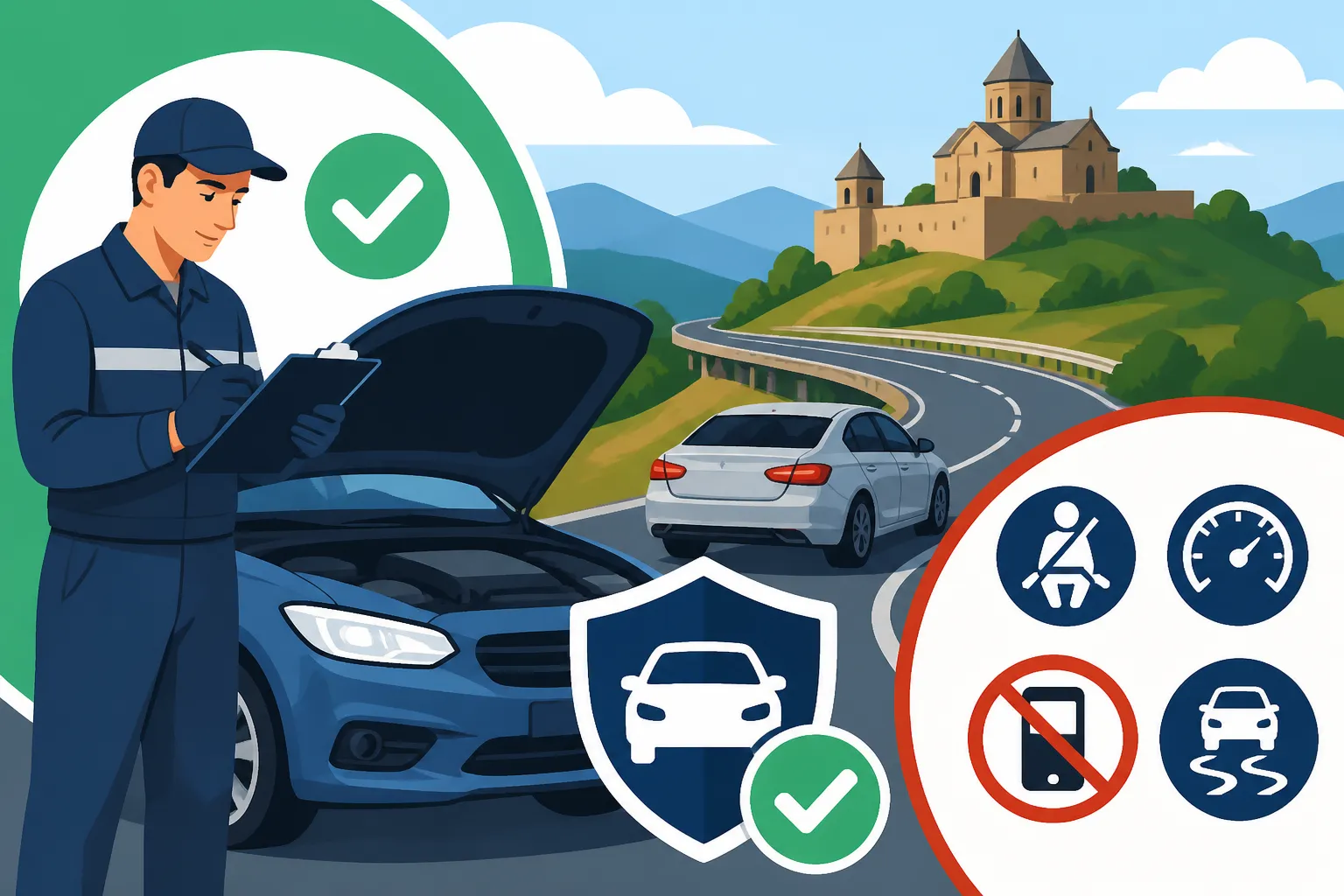
Understanding the Vehicle Inspection and Road Rules in Georgia
Moving to a new country like Georgia, the sheer thought of getting behind the wheel can be daunting enough, let alone grappling with a completely different set of road rules and the seemingly endless loop of administrative requirements for your vehicle. I remember the anxiety myself, trying to figure out if my car was even "legal" and what on earth those road signs meant when I first arrived. This comprehensive guide is here to walk you through the ins and outs of vehicle inspections, Georgian road regulations, and everything else you need to know to drive confidently and legally in this beautiful country.
The Mandatory Technical Inspection for Vehicles in Georgia
Alright, let's dive straight into something that causes a fair bit of head-scratching for new arrivals: the mandatory technical inspection. This isn't just a suggestion; it's a legal requirement designed to ensure vehicles on Georgian roads meet certain safety and environmental standards. For those of us coming from countries with robust annual check-ups, it might feel familiar, but there are always local nuances.
Who Needs an Inspection and When?
Initially, back when Georgia first reintroduced mandatory inspections a few years ago, there was a phased approach. It started with commercial vehicles, then larger passenger vehicles, and eventually, it encompassed almost all private cars. So, if you own a vehicle in Georgia, or even if you plan to import one and register it here, chances are you'll need to get it inspected.
The general rule is that cars manufactured more than 8 years ago need an annual technical inspection. Newer vehicles, typically those up to 8 years old, might have a two-year inspection cycle. This system aims to put older vehicles, which are more prone to wear and tear and higher emissions, under stricter scrutiny. Keep an eye on the official government portals or consult a local expert, as these regulations can occasionally be tweaked. You'll definitely need an inspection when you're first registering a vehicle in Georgia, regardless of its age. It's a key step in ensuring the vehicle is roadworthy from the get-go.
What the Inspection Covers
So, what exactly do they poke and prod at during one of these inspections? It's pretty comprehensive, designed to catch anything that could compromise safety or spew out too many pollutants. Think of it as a full-body health check for your car. They'll meticulously examine your brakes – not just if they work, but how effectively and evenly they perform. Steering components are scrutinised for wear and tear, ensuring your ability to control the vehicle is sound. All your lights, from headlights and indicators to brake lights and reverse lights, must be fully functional and correctly aligned.
Emissions are a big one, especially in urban areas like Tbilisi where air quality is a growing concern. Your vehicle will undergo an exhaust gas analysis to ensure it meets environmental standards. Tires are checked for tread depth, pressure, and any damage, as they are your car's only contact with the road. The vehicle's chassis, suspension, and undercarriage are also inspected for rust, damage, or structural integrity issues. Inside, they'll check seatbelts to ensure they're working correctly and not frayed, and even your windows are checked for cracks or excessive tinting that might impair visibility. If your car fails any of these crucial checks, you'll be given a report detailing the issues. You then have a set amount of time to get the repairs done and bring the vehicle back for a re-inspection, usually at a reduced fee for the re-check. It can be a pain, but it’s for everyone's safety.
Finding an Inspection Centre and the Process
Finding an official technical inspection centre in Georgia is thankfully straightforward. The Public Service Hall is usually a good source of information, or a quick online search for "ავტომობილის ტექნიკური ინსპექტირება" (automobile technical inspection) will point you to accredited centres. These facilities are often well-signposted in major cities.
Once you've chosen a centre, the process generally follows a simple sequence. You might need to book an appointment online or by phone, though some centres accept walk-ins, especially outside peak hours. When you arrive, you'll need your vehicle registration documents, your ID (passport/residence permit), and sometimes proof of payment for the inspection fee. The fee itself can vary slightly but typically hovers around 60 GEL for passenger cars. After payment, your car will go through the various tests. This usually takes about 20-30 minutes, depending on the vehicle and the centre's efficiency. Once completed, if your car passes, you'll receive a technical inspection certificate. Keep this safe, as you'll need it for future inspections and potentially if stopped by traffic police. It's one of those documents that just makes life a little easier when you're driving around in Georgia, especially when dealing with the intricacies of How to Register and License a Car in Georgia.
Deciphering Georgian Road Rules and Regulations
Driving in Georgia can be an experience, to say the least. It's a blend of European standards and unique local driving culture that takes some getting used to. Don't be surprised if you see things that would make you gasp in your home country; just breathe and adapt. Understanding the actual rules, rather than just observing the local driving style, is absolutely critical for your safety and to avoid fines.
Essential Driving Practices for Expats
First things first: Georgia drives on the right-hand side of the road, which is standard across most of continental Europe. If you're coming from the UK, Australia, or another left-hand driving country, this alone requires a significant mental shift. Priority rules, especially at intersections without clear signage, can be a bit ambiguous. Generally, vehicles approaching from the right have priority, but often it feels more like a game of 'who dares to go first'. At roundabouts, the rule is usually that vehicles already in the roundabout have priority, but again, exercise extreme caution and assume others might not yield.
One of the most noticeable aspects of Georgian driving is the assertive, sometimes aggressive, style. Horns are used frequently, not always as a sign of anger, but often as a warning, a greeting, or just to express impatience. Pedestrians, bless their hearts, sometimes treat crosswalks as mere suggestions, so always be prepared for someone to step into the road. Speed limits are pretty standard: generally 60 km/h in urban areas, 90 km/h on intercity roads, and 110 km/h on highways. However, these are often exceeded, and you'll see fixed speed cameras in many places, especially approaching towns. It’s best to stick to the limits, trust me.
Parking Regulations and Challenges
Parking in Georgian cities, especially Tbilisi, is a constant adventure. There are designated paid parking zones, often indicated by blue lines on the road. To pay, you typically use a mobile app (like Tbilisi Parking or Parkline) or a payment terminal found at bus stops or kiosks. You usually pay for a monthly subscription rather than hourly parking in these zones. Failing to pay or parking incorrectly can quickly lead to a fine, or worse, your car being towed.
Beyond the official zones, parking can be haphazard. You'll see cars parked on pavements, in multiple rows, or in seemingly impossible spots. While locals might get away with it, foreigners are often more scrutinised. Double-check signage, be aware of "no parking" signs (sometimes only in Georgian, so learn the basic symbols!), and never block entrances, driveways, or public transport routes. Parking enforcement vehicles with cameras are common in central areas, so a quick stop can easily turn into an unexpected fine. It's part of the charming chaos of city life, but one that can hit your wallet if you're not careful.
Child Safety, Seatbelts, and Mobile Phone Use
Georgia's road rules, like many European countries, are quite clear on safety measures. The use of seatbelts is mandatory for all occupants in a vehicle, both front and rear. This isn't just a suggestion; it's a rule that is increasingly enforced. Forgetting to buckle up can result in a fine.
When it comes to children, the rules are specific and important. Children under 12 years of age or shorter than 135 cm must use an appropriate child restraint system (car seat or booster seat). This means infants need rear-facing seats, toddlers need forward-facing seats, and older children need booster seats until they meet the height and age requirements to use an adult seatbelt safely. This is non-negotiable for their safety, and police do check for compliance.
Distracted driving is also taken seriously. Using a mobile phone while driving, unless it's hands-free, is strictly prohibited. This includes texting, talking, or even fiddling with your GPS without a proper mount. The fines for these infractions are not insignificant and are easily issued by patrol officers or captured by ubiquitous traffic cameras. Keeping your eyes on the road and your hands on the wheel is the best way to avoid trouble and stay safe, especially with the often unpredictable driving conditions.
Navigating Fines, Penalties, and Traffic Enforcement
So, you've made a mistake, or perhaps you just didn't quite understand a particular local custom, and now you have a traffic fine. It happens to the best of us! Understanding how these things work, from common violations to payment processes, is crucial for any expat driving in Georgia.
Common Traffic Violations and Associated Fines
Let's talk about the usual suspects that can land you in hot water. Speeding is probably the most common. As mentioned, there are speed cameras everywhere, especially as you enter and exit towns or on major roads. Fines for speeding generally start from 50 GEL for minor infractions and escalate significantly for more severe speeding or repeat offenses. Parking violations, as discussed, are also very common, with fines typically around 10-50 GEL, sometimes more if your car is towed.
Failure to wear a seatbelt, not using an appropriate child safety seat, and using a mobile phone while driving are all easily spotted and fined, usually around 40-100 GEL. Running a red light or failing to yield at a pedestrian crossing are serious offenses that can incur fines of 100 GEL or more. Driving under the influence of alcohol or drugs carries very severe penalties, including hefty fines (several hundred GEL), license suspension, and even potential imprisonment for repeat offenders. It’s simply not worth the risk, ever.
How Traffic Police Operate and Your Rights
Interacting with Georgian traffic police, or "Patruli," as they're known, is generally straightforward. They are usually professional, though language barriers can sometimes be a challenge. If you're pulled over, remain calm, turn off your engine, and keep your hands visible. They will typically ask for your driver's license, vehicle registration documents, and sometimes your passport or residence permit. If you're using a foreign driver's license, ensure you understand How to Convert or Use a Foreign Driver's Licence in Georgia.
Many fines are issued electronically, either by a patrolling officer using a handheld device or by automated cameras. For camera-issued fines, you often won't know about them until you check online (more on that in a moment). If an officer issues you a fine, they will usually explain the violation and hand you a printed slip. While you have the right to challenge a fine, doing so usually requires legal assistance and a good grasp of Georgian law. It's often simpler to pay, especially if you know you were in the wrong. The good news is, if you pay the fine within 10 days, you typically get a 20% discount. This is a brilliant incentive that can save you a bit of cash, so act fast!
Checking and Paying Fines Online
This is where digital governance in Georgia really shines. You don't have to wait for a letter in the mail to know if you've been fined. You can check for any outstanding traffic violations online. The main portal for this is typically the Ministry of Internal Affairs website or dedicated online services. You'll usually need your vehicle's license plate number and sometimes your personal ID number (if you have a Georgian ID).
Once you input your details, any pending fines will appear. The system will show you the violation, the date, time, location, and the amount due. The process to pay is usually integrated directly into the portal, allowing you to use a debit or credit card. Alternatively, you can pay at bank branches, payment terminals (like ExpressPay or TBC Pay), or at any Public Service Hall. Remember that 20% discount for prompt payment! Ignoring fines is a really bad idea. Unpaid fines accrue late fees, and if they remain outstanding for an extended period, they can lead to more serious consequences, including the impoundment of your vehicle or even difficulties with renewing your residence permit or exiting the country. It’s much easier to just handle them promptly.
Vehicle Insurance and Accident Procedures
Driving without proper insurance in Georgia is not just risky; it's illegal. Understanding the insurance landscape and knowing what to do in case of an accident are paramount for any expat behind the wheel. The rules around mandatory insurance have evolved, so it’s vital to stay up to date.
Mandatory vs. Voluntary Vehicle Insurance
For a long time, only foreign-registered vehicles were legally required to have mandatory third-party liability insurance in Georgia. This covered damage or injury you might cause to another party if you were at fault in an accident. If you're driving a car that still has foreign plates, this is a non-negotiable. You can usually purchase this at border crossings or designated insurance offices near them. Companies like Aldagi and GPI Holding are popular choices for this.
However, for locally registered vehicles, mandatory third-party liability insurance for all drivers was reintroduced for all vehicles, regardless of registration country, in March 2024. This is a significant change, meaning that now, if you own a Georgian-registered vehicle, you must have at least this basic liability coverage. This covers damages you cause to other people's property or injuries you inflict upon them. Beyond this mandatory minimum, you can opt for voluntary comprehensive insurance. This is highly recommended, especially if you have a newer or valuable car. Comprehensive insurance typically covers damage to your own vehicle, theft, fire, and sometimes even roadside assistance. It provides a much greater peace of mind and, while an added expense, can save you a huge headache and significant costs in the long run.
What to Do in Case of an Accident
Nobody wants to be in an accident, but knowing the steps to take can make a stressful situation a little less chaotic. First and foremost, if you are involved in an accident, stop immediately and secure the scene. Turn on your hazard lights, and if safe to do so, place a warning triangle a sufficient distance behind your vehicle. Check if anyone is injured. If there are injuries, or if the damage is significant, or if there's any dispute about fault, call the emergency number 112 immediately. They will dispatch police and, if needed, an ambulance. This is similar to what you'd find in Emergency Medical Care in Georgia: What Every Expat Needs to Know.
Even for minor fender-benders, it's often wise to involve the police for an official report, especially if you have insurance claims to make. Document everything: take photos of the scene, all vehicles involved, and any damage from various angles. Exchange contact and insurance information with the other party (name, phone number, vehicle registration, insurance policy number). Avoid admitting fault at the scene. Once the police arrive, they will assess the situation and create a report. If you have comprehensive insurance, notify your insurer as soon as possible, following their specific procedures for claims. If you only have mandatory third-party liability, the other party's insurer will deal with your claim if they are at fault, or your insurer will deal with theirs if you are at fault.
Roadside Assistance and Emergency Services
Even the most well-maintained vehicles can break down, and Georgian roads can be quite challenging, particularly in mountainous regions. Having a plan for roadside assistance can be a lifesaver. Some comprehensive insurance policies offer roadside assistance as an add-on, which can include towing services, jump-starts, tire changes, or fuel delivery. Check your policy to see if this is included.
If you don't have insurance-based assistance, there are private towing and repair services available in major cities. A quick search on your phone for "ევაკუატორი" (evakuatori – meaning tow truck) will bring up many options, and often locals are quick to offer help or point you in the right direction. For any genuine emergency – an accident with injuries, a major breakdown in a dangerous location, or anything that poses an immediate threat – remember the national emergency number, 112. This single number connects you to police, fire, and ambulance services. Make sure your phone is charged and you have a local SIM card (perhaps even an eSIM from a provider like Airalo for easy data access when you first land) so you can make calls without hassle. Breaking down in the middle of nowhere without connectivity is a nightmare you want to avoid.
Preparing Your Vehicle and Yourself for Georgian Roads
Driving in Georgia isn't just about following rules; it's about preparation. The roads can range from beautifully paved highways to challenging, unpaved mountain passes. Being prepared for anything is key to a smooth and safe journey.
Recommended Vehicle Maintenance and Gear
Before embarking on any significant journey in Georgia, especially outside major cities, a thorough check of your vehicle is prudent. Beyond the mandatory technical inspection, ensure your brakes are in top condition, all fluids are at appropriate levels, and your lights are working. One of the most critical considerations is tires. If you're driving during the colder months, roughly from November to March, winter tires are highly recommended, especially if you plan to travel in mountainous regions or to ski resorts like Gudauri or Bakuriani. While not strictly mandated nationwide for all vehicles (check current regulations as these can change), they significantly enhance grip and safety on icy or snowy roads.
Furthermore, several safety items are either legally required or highly recommended to keep in your vehicle:
- First-aid kit: Essential for minor injuries.
- Fire extinguisher: Small, accessible, and checked regularly.
- Warning triangle: To place behind your vehicle in case of a breakdown or accident.
- Reflective vest: To wear if you need to be outside your vehicle on a road, especially at night.
Having a spare tire (and the tools to change it), a basic toolkit, and even a tow rope can also be incredibly useful, especially if you venture off the beaten path. Georgian roads can sometimes be a bit rough, and being self-reliant for minor issues can save you hours of waiting.
Getting Your Documents in Order
This might sound obvious, but having all your documents readily accessible and up-to-date is non-negotiable. If you're stopped by police, these are the first things they'll ask for.
- Driver's License: Whether it's your foreign license (check if an International Driving Permit is required for your nationality) or your Georgian one, ensure it's valid. This topic is covered in detail in guides like The Complete Guide to Driving in Georgia: Licences, Registration and Rules for Expats (2026).
- Vehicle Registration Certificate: This is your proof of ownership and vehicle details.
- Technical Inspection Certificate: The document you get after passing the mandatory inspection.
- Insurance Policy: Proof of your mandatory third-party liability insurance, and your comprehensive policy if you have one.
- Passport/Residence Permit: Your identification document.
Always carry physical copies of these documents. While digital copies on your phone might be accepted in some situations, having the originals or certified copies is always safer and can prevent unnecessary delays or complications. Keeping them in a secure, waterproof folder in your glove compartment is a good habit.
Navigational Tools and Connectivity
Navigating Georgian roads can be tricky, especially outside of major cities. Road signs are often in both Georgian and Latin script, but in more rural areas, you might only find Georgian. This is where reliable navigational tools become your best friend. Google Maps and Waze are widely used and generally quite accurate for routes, traffic updates, and finding points of interest. Make sure your maps are updated, or even download offline maps for areas with spotty signal.
Good mobile data connectivity is also paramount. Not only for your GPS apps but for emergencies, communicating with family, or even translating signs on the fly. Getting a local SIM card from a provider like Magti, Geocell, or Silknet is cheap and easy, providing good coverage in most populated areas. As an expat, especially when you first arrive, an eSIM from a provider like Airalo can be a fantastic way to ensure you have data from the moment you land, without the hassle of finding a physical SIM. Don't underestimate the comfort of being connected, especially when you're exploring unfamiliar terrain.
Buying and Selling Vehicles as an Expat
The journey of car ownership in Georgia often starts with deciding whether to buy a car locally or import one. Each path has its own set of administrative hurdles, and understanding them beforehand will save you a world of pain.
Understanding the Local Car Market
If you're thinking about buying a car, the Georgian market offers a mix of new and used vehicles. New cars are available through official dealerships (Toyota, Mercedes-Benz, Hyundai, Kia, etc.), but they come with a higher price tag, of course. The used car market is much larger and more active, with a significant number of imported second-hand vehicles, primarily from Japan, Europe, and the US. These are usually more affordable.
You can find used cars through online portals like MyAuto.ge, which is the dominant platform, or through private sellers and smaller dealerships. When buying a used car, always insist on a pre-purchase inspection by an independent mechanic to uncover any hidden issues. The process of transferring ownership is relatively simple and usually done at a Public Service Hall. Both the buyer and seller need to be present with their IDs and the vehicle registration documents. It's a quick process that ensures the vehicle is legally transferred into your name. For a more detailed walkthrough, check out How to Buy a Car as a Foreigner in Georgia.
Importing a Vehicle into Georgia
Bringing your car from your home country to Georgia can be quite complex, but sometimes it makes sense if you have a special vehicle or strong sentimental attachment. However, be prepared for significant customs duties and taxes. These depend on the vehicle's age, engine size, and fuel type. Generally, older vehicles incur higher taxes to discourage the import of polluting cars. There are specific age restrictions on imported vehicles; for instance, cars older than a certain number of years might not be allowed at all, or might face prohibitively high duties.
The process involves customs clearance, valuation, and then payment of taxes. You'll need original documents like proof of ownership, bill of lading, and your passport. It's often recommended to engage a customs broker or an agency specializing in vehicle imports, as the bureaucracy can be a headache. They can guide you through the paperwork, calculations, and the process at the customs terminal. Without their help, you might feel lost in a sea of forms and regulations.
Preparing for a Move or Sale
Eventually, your time in Georgia might come to an end, or you might simply want to upgrade your vehicle. Selling your car as an expat follows much the same process as buying one: you'll likely use MyAuto.ge or sell privately. Ensure all your documents are in order and your technical inspection is up-to-date, as buyers will expect this. The transfer of ownership at the Public Service Hall is swift and final.
If you're leaving Georgia and deciding what to do with your car, you have a few options: sell it locally, or export it. Exporting involves de-registration with the Georgian authorities and then navigating the import regulations of your destination country. This is another area where a moving services company like Sirelo might be able to offer guidance on logistics, especially if you're shipping other belongings. They often have networks that can help with the vehicle side of international relocations. De-registering your vehicle ensures you won't be held responsible for any future fines or liabilities, giving you a clean break.
| Aspect | Technical Inspection | Road Rules (Key Points) | Traffic Fines (Examples) |
|---|---|---|---|
| Frequency | Annually (8+ yrs old), Bi-annually (up to 8 yrs) | Constant adherence | Upon violation |
| What's Checked/Required | Brakes, lights, emissions, steering, tires, etc. | Right-hand drive, seatbelts, child seats, no phone | Speeding, parking, seatbelt, red light, DUI |
| Cost/Penalty | Approx. 60 GEL (inspection) | Safe driving, awareness | 10-100+ GEL (depending on violation) |
| Key Document | Technical Inspection Certificate | Valid Driver's License, Registration, Insurance | Fine receipt |
| Payment/Action | Get repairs for re-inspection | Adapt to local driving style | Pay online or at bank (20% discount if paid in 10 days) |
Disclaimer
The information provided in this guide is intended for general informational purposes only and does not constitute legal, financial, or professional advice. While we strive to keep the information up-to-date and accurate, regulations and procedures in Georgia can change without prior notice. Always consult with official government sources, legal professionals, or relevant experts for the most current and specific advice pertaining to your individual circumstances. We do not assume any liability for any actions taken based on the information contained herein.