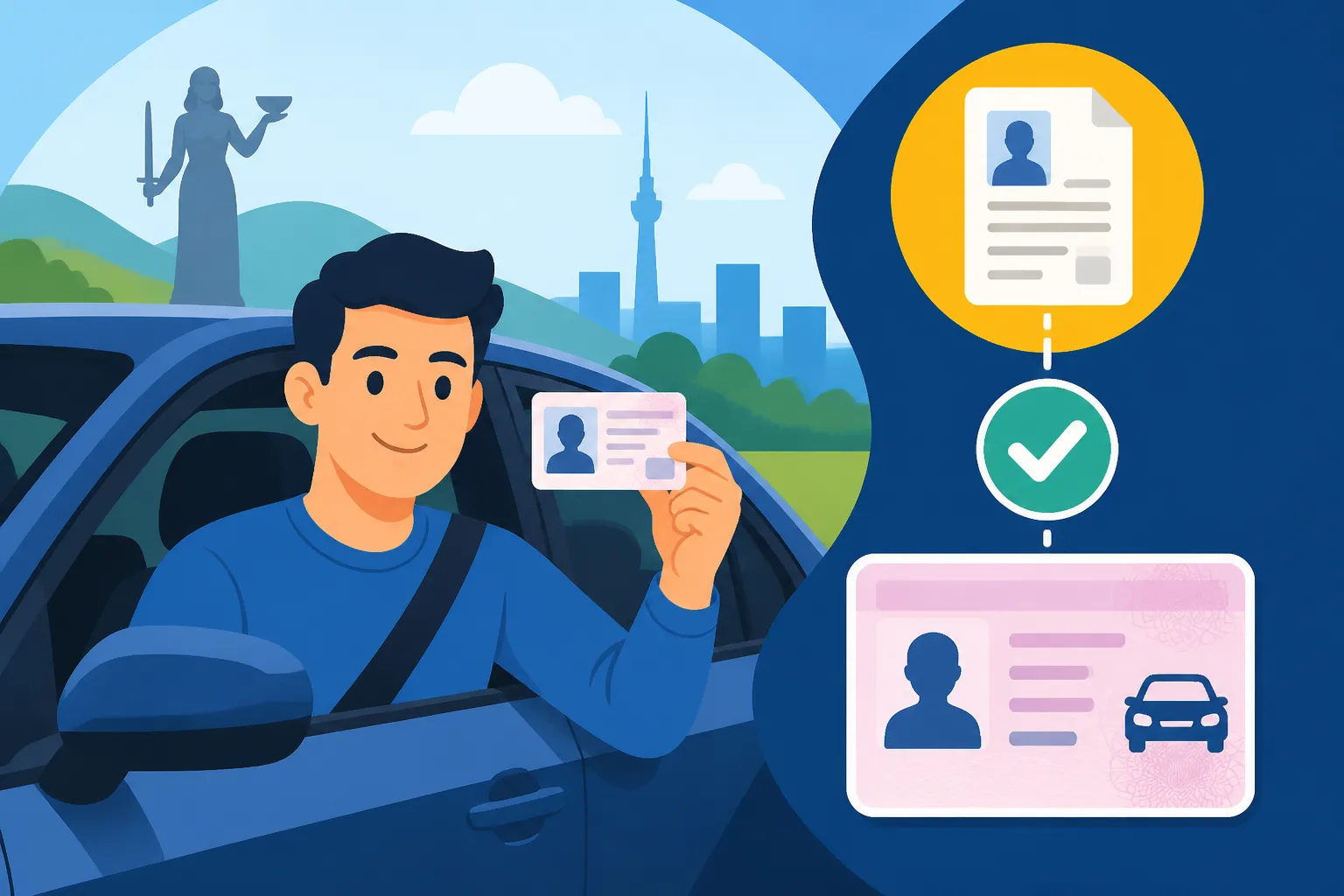
How Do I Get a Driving Licence with My Residence Permit in Georgia?
One of the many small, yet significant, administrative hurdles you'll face when settling into life as an expat in Georgia is figuring out the driving licence situation. It’s not just about knowing the rules; it’s about navigating the Georgian system, which, let’s be honest, can feel like a labyrinth at times. This guide is here to walk you through exactly how to get your Georgian driving licence once you’ve secured that all-important residence permit, cutting through the confusion with real-world advice from someone who’s been there.
Understanding Your Driving Status as a New Expat in Georgia
Before you even think about exchanging or acquiring a new Georgian driving licence, it’s crucial to understand your current legal standing on the roads. Many expats arrive here, especially from countries with visa-free access, assuming they can just drive indefinitely on their home licence. While Georgia is quite generous in many aspects, there are clear rules regarding driving privileges that every long-term resident needs to grasp. Ignoring these can lead to complications you definitely don't want.
The 1-Year Grace Period for Foreign Licenses
Okay, so here's the good news for new arrivals: generally speaking, if you’ve just landed in Georgia, you can drive on your existing foreign driving licence for a period of one year from your date of entry. This applies to most countries whose licences are recognized internationally. It’s a fantastic grace period that allows you to settle in, find your feet, and get a feel for Georgian traffic (which, let me tell you, is an experience in itself!).
However, there's a crucial caveat that often gets overlooked: this one-year period is typically tied to your initial date of entry into the country, not necessarily when your residence permit was issued or when you started driving. So, if you entered on a visa-free stay, drove for a few months, left for a quick trip, and then came back to apply for your residence permit, that one-year clock likely started ticking from your very first entry into Georgia. Keep a close eye on those entry stamps or border crossing records, because the authorities certainly will. It's designed to give tourists and short-term visitors flexibility, but for those of us putting down roots, it's just a temporary bridge.
For instance, imagine you arrived in Tbilisi on January 1st, 2023, on a visa-free stay. You start exploring, loving life. By May, you decide to make Georgia your permanent home and apply for a residence permit. Even if your residence permit is only issued in August 2023, your foreign driving licence theoretically expires for use in Georgia on January 1st, 2024. After that, you are legally required to have a Georgian driving licence. This is why understanding the nuances of your stay, right from How Do I Move to Georgia?, is so important.
When a Georgian License Becomes Mandatory
The moment you become a bona fide resident, especially with a residence permit in hand, the expectation shifts. As mentioned, once that one-year mark from your initial entry passes, your foreign licence is no longer considered valid for use within Georgia. At this point, you absolutely must have a Georgian driving licence. This isn't just a suggestion; it’s a legal requirement, and failure to comply can lead to fines, impoundment of your vehicle, and generally a very unpleasant encounter with the traffic police.
This is where the process of getting your Georgian licence becomes not just a convenience, but a necessity. It’s a clear signal from the Georgian state that you are no longer a transient visitor, but an integrated part of the community, and with that comes adherence to local regulations. Think of it as another step in truly becoming a local. This applies whether you're trying to Register a Car in Georgia or simply driving a rental.
It's also worth noting that some foreign licences, particularly those not in the Latin alphabet or not accompanied by an International Driving Permit (IDP), might face scrutiny even within the one-year grace period. While not strictly illegal, it’s always advisable to carry an IDP alongside your home country’s licence, especially for those first few months. However, the IDP itself does not extend the one-year validity. It merely translates your existing licence into a format understood by international law enforcement.
The Step-by-Step Process to Get Your Georgian Driving Licence
Alright, deep breath. The process for obtaining your Georgian driving licence, particularly if you hold a residence permit, generally involves either converting your existing foreign licence (if your country has a reciprocal agreement with Georgia) or taking the full Georgian driving test. Most expats, unless from a specific list of countries, will find themselves needing to take the tests. This can feel daunting, but it's entirely manageable.
The Public Service Hall: Your Go-To Spot
The Public Service Hall (PSH), or "Service Development Agency" as it's officially known, is your absolute best friend for pretty much any administrative task in Georgia. This includes applying for residence permits, registering businesses, and, yes, getting your driving licence. They are designed to be a one-stop shop, and honestly, they do a pretty decent job, especially compared to the fragmented bureaucracy you might encounter elsewhere. You'll likely become quite familiar with the PSH if you are going through the process of getting The Expat Guide to Getting a Residence Permit in Georgia (2027).
You'll find PSH branches in major cities like Tbilisi, Batumi, and Kutaisi. The Tbilisi branch, located near the Dynamo Arena (Digomi district), is particularly large and efficient. When you arrive, you’ll take a ticket for the "driving licence" service. Waiting times can vary, but generally, they're not too bad if you go during off-peak hours (mid-morning or mid-afternoon, avoiding lunch rush and early mornings).
The key is to arrive prepared. They have information desks, but having all your documents in order before you even get to the counter will save you a world of headache and multiple trips.
Required Documents for Conversion or New Application
This is where many people stumble. The list isn't incredibly long, but any missing piece will send you right back to square one.
Here’s what you’ll generally need:
- Your Residence Permit Card (or proof of application/approval): This is crucial. Your residence permit is what officially grants you the status of a long-term resident, making you eligible for a Georgian driving licence. Make sure it's valid and not expired. If you're still waiting for the physical card, sometimes the approval document can suffice, but always confirm this at the information desk first.
- Your Passport: Your primary form of identification, often required to verify your personal details against your residence permit.
- Your Existing Foreign Driving Licence: If you have one. This is needed regardless of whether you’re converting or taking new tests, as it proves your driving history (or lack thereof).
- A Medical Certificate (Form IV-100/a): This is a standard health check-up form. You’ll need to visit a local clinic or hospital in Georgia to get this. It's a fairly quick check, usually involving a vision test and a doctor confirming you’re fit to drive. Many private clinics offer this specifically for driving licence applications, and they know exactly what form is needed. Expect to pay a small fee for this. It's generally a smooth process, much simpler than How Expats Access Healthcare in Georgia: The Complete Guide (2027).
- Proof of Address: This could be a utility bill in your name, a rental contract, or a document from your landlord. Ensure it clearly shows your Georgian address.
- Your Taxpayer Identification Number (TIN): Also known as a Personal Number or IDN. You would have received this when you registered with the Revenue Service or opened a bank account.
- Payment for Fees: There will be administrative fees for the application, the medical certificate, and potentially for the driving tests themselves. These are usually paid on-site at the PSH via a dedicated bank counter or a self-service machine. Cash and card are usually accepted.
- Translations (if applicable): If your foreign driving licence is not in English or Georgian, you will likely need a notarized translation. The PSH can often arrange this for an extra fee, or you can use a local translation agency.
Important Note for Conversions: If your country does have a reciprocal agreement with Georgia for licence conversion (e.g., Turkey, some former Soviet bloc countries), you might be able to simply exchange your licence without taking the full tests. However, this is relatively rare for Western expats. Always check the most current list of reciprocal countries at the PSH or on the Public Service Development Agency website. If you can convert, it's usually a simpler document check and fee payment process.
The Driving Test: Theory and Practical Explained
For most expats, getting a Georgian driving licence means taking the theory and practical tests. And yes, they are conducted in Georgian.
The Theory Test:
This is a computerized multiple-choice test. You'll be presented with questions about Georgian traffic rules, road signs, and safe driving practices.
- Preparation is Key: There are excellent apps and websites available (many free, some paid) that simulate the exact test environment and contain all the potential questions. Search for "საგზაო მოძრაობის წესები" (road traffic rules) or "მართვის მოწმობის თეორიული გამოცდა" (driving licence theory test). These apps usually have an English option, which is a lifesaver. Practice these relentlessly! The questions are often tricky, and some rules might differ from what you're used to.
- Languages: You can typically choose to take the theory test in Georgian, English, Russian, or sometimes Turkish or Armenian. Make sure to specify your preferred language when you apply.
- Location: The theory test is taken on a computer at the PSH. You’ll usually get a spot on the same day as your application if you pass the document check, or you can schedule it.
The Practical Test:
This is the part that often causes the most anxiety, and for good reason. It's notoriously challenging for many expats.
- The "Closed Course": The practical test in Georgia is conducted on a closed course, not on public roads. This course includes various maneuvers like parallel parking, driving through S-curves, making U-turns, and navigating tight spaces.
- The Car: You will use a standard vehicle provided by the testing center (usually a basic sedan, often a Škoda Rapid or similar). It's always a manual transmission. If you only drive automatics, you'll need to learn to drive a manual for this test.
- No Instructor: There is no instructor in the car with you during the test itself. It’s entirely automated. The car has sensors, and your performance is tracked electronically. A slight bump, an incorrect turn, or crossing a line means a "fail."
- Learning the Course: This is the secret sauce. Many driving schools in Georgia offer specific training for the PSH practical test course. They will take you to actual replica courses or even the real PSH course (during designated practice times) to teach you the exact maneuvers and tricks. This is highly, highly recommended. Trying to wing it is a recipe for multiple failures and frustration.
- Language Barrier: The instructions on the test course are typically given verbally in Georgian. Having some basic Georgian understanding for commands like "მარჯვნივ" (right), "მარცხნივ" (left), "გაჩერდი" (stop) is immensely helpful, or you can ask for a translator to be present, though this needs to be arranged in advance.
Once you pass both the theory and practical tests, you'll receive your new Georgian driving licence, often printed on the spot! It's a huge relief and a moment to celebrate.
Navigating the Challenges: Tips and Tricks from an Expat
Let's be real: getting a driving licence in a foreign country is rarely a walk in the park. Georgia has its own unique flavour of administrative challenge, seasoned with a dash of language barrier and a sprinkle of cultural differences. But don't despair! With a bit of foresight and some expat wisdom, you can navigate it successfully.
Language Barriers and Translator Services
Unless you're a fluent Georgian speaker, the language barrier will be your primary adversary. While the Public Service Hall does have some English-speaking staff, it's not guaranteed, especially at busy times or for more specific queries.
- Bring a Friend: If you have a Georgian-speaking friend or colleague, ask them to come along. Even for just the initial document check, having someone who can communicate fluently can cut down on misunderstandings significantly.
- Professional Translators: For the driving tests, especially the practical one, consider hiring a professional translator. This might seem like an extra expense, but it can save you multiple failed attempts and the associated re-test fees. The PSH can sometimes provide a translator, but again, availability isn't guaranteed, and pre-booking is essential.
- Google Translate (Offline): Always have a reliable translation app on your phone with offline capabilities. It's not perfect, but it can help bridge simple communication gaps for forms or basic instructions.
- Learn Key Phrases: Even just learning "Hello," "Thank you," "Please," and "I don't understand Georgian" can go a long way in showing respect and trying to connect.
The instructions for the practical test on the closed circuit are verbal, so understanding commands like "start," "turn left," "turn right," "stop," and "reverse" in Georgian is absolutely vital. If you can't understand them, you're effectively driving blind, and that's a surefire way to fail.
Understanding the Practical Test Route and Vehicle
This is the biggest hurdle for most foreigners. The practical test is less about general driving ability and more about mastering a very specific set of manoeuvres on a specific course.
- Driving School, Driving School, Driving School!: I cannot stress this enough. Unless you are already intimately familiar with the exact PSH test course layout and have practiced extensively on it, get lessons. Many driving schools in Tbilisi (and other major cities) specialize in preparing students for this test. They often have their own replica courses or can take you to the actual PSH course during designated practice hours. This specialized training is invaluable. They'll teach you the exact points to turn, when to start reversing, and how to use mirrors to avoid hitting markers.
- Manual Transmission: As mentioned, the test car is manual. If you've only ever driven automatics, you need to learn to drive a stick shift. This requires dedicated practice. Don't underestimate this; stalling or struggling with gear changes will cost you points.
- Sensor Awareness: The test is automated. You're not trying to impress a human examiner (though there are staff observing). You're trying to avoid triggering sensors. A tiny bump of a cone or a wheel over a line is an instant fail. The driving schools will teach you how to be precise.
Think of it like learning to navigate a very specific video game level. General driving skills are a prerequisite, but mastering this particular level requires dedicated practice.
Dealing with Bureaucracy and Patience
Georgian bureaucracy, while improving, still requires a healthy dose of patience. Things might take longer than you expect, processes might seem opaque, and you might get conflicting information from different staff members.
- Be Prepared for Multiple Visits: It's rare for everything to go smoothly on the first attempt, especially if you need to take tests. You might need to return for re-tests, or to provide additional documents. Factor this into your schedule.
- Stay Calm and Polite: Frustration is understandable, but losing your temper will not help. A calm, polite, and persistent approach generally yields better results. Georgians often respond well to politeness.
- Double-Check Everything: Before you leave the PSH, double-check all documents, forms, and instructions. If you're told to come back with something, clarify exactly what it is.
- The Power of Coffee: Seriously, bring a good book, some music, or just mentally prepare for some waiting. There’s usually a coffee shop in or near the PSH, so you can always refuel.
Moving to a new country like Georgia comes with its share of administrative headaches, whether it's setting up utilities or sorting out your visa. Having a reliable moving partner, like those listed on Sirelo, can alleviate some of the initial stress of relocation, allowing you to focus on crucial tasks like getting your licence sorted.
Costs, Validity, and Renewal of Your Georgian Driving Licence
Understanding the financial and temporal aspects of your new Georgian driving licence is essential for long-term planning. While Georgia is generally quite affordable, these small fees can add up, and knowing the validity period helps you stay compliant.
Breaking Down the Fees
The costs associated with getting your Georgian driving licence are relatively modest compared to many Western countries, but they aren't negligible.
Here's a breakdown of typical costs (these are approximate and can change, always verify current fees at the PSH):
- Application/Issuance Fee: This is the main fee for the licence itself. It varies depending on the processing speed you choose (standard, expedited). A standard process (which usually takes a few business days for issuance after passing tests) might be around ₾15-20, while same-day expedited service can go up to ₾50-80 or more.
- Medical Certificate (Form IV-100/a): This typically costs around ₾20-40, depending on the clinic.
- Theory Test Fee: Each attempt at the theory test generally costs around ₾20-30.
- Practical Test Fee: Each attempt at the practical test usually costs around ₾40-50.
- Driving School Lessons: This is the most variable cost. A package of lessons specifically for the PSH practical test might range from ₾300-600 or more, depending on the number of hours and the instructor. This is an investment, but often a necessary one to ensure you pass efficiently.
- Translator Services: If you hire an independent translator, expect to pay hourly rates, which can vary widely. If arranged through the PSH, it might be a fixed fee for the test session.
As you can see, multiple failures on the tests can quickly inflate the overall cost, underscoring why good preparation and professional instruction are so valuable. It's good to have a buffer in your finances for unexpected costs, just as it’s wise to consider comprehensive health coverage like that offered by Cigna Global for any unforeseen medical needs as an expat.
Licence Validity and Future Renewals
Once you successfully acquire your Georgian driving licence, it won't last forever.
- Standard Validity: A standard Georgian driving licence is typically valid for 15 years for categories A, B, BE, T, and S. For professional categories (C, CE, D, DE), the validity is usually 5 years. This is a pretty generous validity period compared to many countries that require more frequent renewals.
- Renewal Process: When it's time to renew, the process is generally simpler than the initial application. You’ll usually need your expired licence, passport, residence permit, and a new medical certificate. You'll go back to the Public Service Hall, pay the renewal fee, and often get your new licence on the same day. There's no need to retake the driving tests unless there are specific legal or medical reasons.
- Residence Permit Link: While your driving licence has a long validity, your ability to use it legally as a foreigner is intrinsically linked to your residency status. If your residence permit in Georgia expires and is not renewed, you might face issues. Always ensure your residence permit is current.
Understanding these details allows you to budget effectively and plan for future administrative tasks. Getting your driving licence is one of those big checkmarks on your expat to-do list, granting you freedom and independence on Georgia's roads, so take the time to do it right!
Disclaimer
The information provided in this guide is intended for general informational purposes only and does not constitute legal or professional advice. While we strive to keep the content up-to-date and accurate, regulations and procedures in Georgia can change without prior notice. Expats should always consult with the official Public Service Hall (PSH) or legal professionals for the most current and specific advice regarding their individual circumstances before making any decisions related to driving licences or other immigration matters.