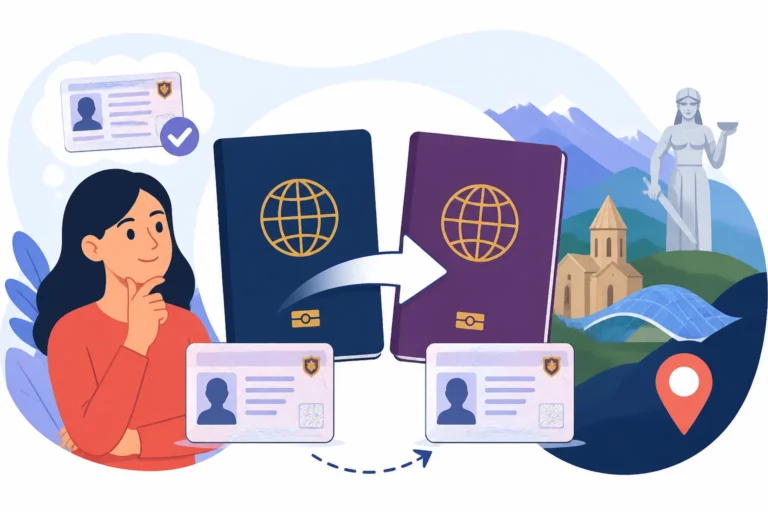
Can I Work Remotely in Georgia on a Visa-Free Stay?
Ah, the age-old question that dances in the minds of so many hopeful expats looking at Georgia's generous visa policy: can you truly work your remote job, digital nomad style, while on a visa-free stay? It's a tempting thought, picturing yourself sipping local wine, tapping away at your laptop in a Tbilisi cafe, all without the bureaucratic headaches of a work visa. This guide is here to untangle the legal grey areas, practical realities, and the official pathways available, so you can make an informed decision and avoid any unwelcome surprises during your stay in this incredible country.
Understanding Georgia's Visa-Free Stay – The Reality for Remote Workers
When you first look into moving to Georgia, the 365-day visa-free policy for citizens of over 90 countries feels like an absolute godsend. It's truly one of the most welcoming immigration policies out there, granting you a full year to explore, settle, and fall in love with the country without the initial scramble for permits. However, the excitement often comes with a bit of a misunderstanding about what that "visa-free" status actually permits you to do, especially when it comes to earning a living.
The 365-Day Rule: What It Really Means for Foreigners
For many nationalities, Georgia allows you to enter and stay for up to 365 days without needing a visa. This is a fantastic opportunity for tourists, visitors, and those looking for a temporary change of scenery. It lets you experience Georgian life, scope out neighbourhoods, and decide if a longer-term move is right for you. But here's the rub: this period is fundamentally intended for visiting, not for establishing a base of operations for employment or business activities within Georgia itself.
Some expats arrive with the mindset that if their income comes from outside Georgia, and they're working for a foreign company, then the Georgian authorities won't care. It’s an understandable assumption, given how widely accepted remote work has become globally. You're not taking a job from a local, you’re not directly selling goods or services on the Georgian market in many cases, so what's the harm? This perspective creates a kind of "don't ask, don't tell" situation, where many simply proceed with their remote work quietly. While this approach has worked for many, it's operating in a largely undefined legal grey area. The visa-free stay simply doesn't explicitly sanction working remotely, even for a foreign employer. It just doesn't explicitly forbid it either, which leaves a lot of room for interpretation and, potentially, risk.
The Line Between "Tourism" and "Work" in Georgian Immigration Law
This is where things get truly blurry for digital nomads. Georgian immigration law, like that of many countries, traditionally distinguishes between a tourist (someone visiting for leisure) and a worker (someone deriving income from activity within the country, or using the country as a base for their work). The visa-free stay falls squarely into the "tourist" category.
Now, if you're occasionally checking emails or having a quick video call with your team back home, that's likely to be seen as incidental to your visit. But if you're regularly clocking 40 hours a week, running a small business, or managing a significant workload from your apartment in Tbilisi, you are, by definition, working from Georgia. The source of your income being foreign doesn't automatically mean your activity isn't considered work conducted within Georgian territory. The critical distinction is that the visa-free policy doesn't grant you a right to work or to establish business activities, even if those activities are directed externally.
Consider a hypothetical scenario: imagine you're a freelance graphic designer working for clients in Europe and North America. You're using your Georgian apartment as your office, paying for local internet, and perhaps even opening a local bank account to manage living expenses. Are you a tourist? Or are you operating a business from Georgia? The nuance here is crucial. While Georgia benefits from your spending, and the authorities might not actively pursue individuals for this specific type of remote work, it's important to understand that you technically lack an official, sanctioned status for conducting regular work activity during your visa-free period. This lack of clear legal standing can lead to unexpected challenges, particularly when dealing with administrative matters that require proof of your legal basis for residency or activity, such as banking or tax inquiries.
Why the "Remotely from Georgia" Program (Digital Nomad Visa) Exists
The very existence of specific programs designed for remote workers should tell you something about the government's perspective on this distinction. Georgia is a forward-thinking country, and they saw the influx of remote professionals. Rather than leaving everyone in a legal limbo, they created official pathways.
The Government's Stance on Remote Work and Foreigners
The Georgian government, with its visionary approach to attracting talent and investment, understands the economic potential of remote workers. They didn't want to leave people guessing or operating in a legal grey area. This foresight led to the creation of the "Remotely from Georgia" program. This program is essentially Georgia's answer to the global digital nomad visa trend, and it's a clear signal: while the 365-day visa-free stay is for visitors, if you intend to actually work from Georgia, even for a foreign entity, they want you to do it officially.
The program's design isn't about penalizing remote workers, but rather integrating them into the formal economy, however lightly, and acknowledging their presence. It allows the government to track statistics, understand the demographics of long-term foreign residents, and potentially benefit from their spending and, in some cases, direct taxation if individuals opt for specific tax statuses. It’s about offering legal clarity and peace of mind for those who choose to make Georgia their temporary remote work base.
Benefits of an Official Remote Work Visa vs. Visa-Free Stay
Opting for the "Remotely from Georgia" program, or one of the other legitimate pathways, brings a host of benefits that a simple visa-free stay simply can't offer. First and foremost, you gain legal clarity. You are no longer wondering if you’re bending any rules or if a future administrative query will catch you off guard. This peace of mind is invaluable, allowing you to focus on your work and enjoy your life in Georgia.
Furthermore, having an official visa or residence permit can significantly ease administrative hurdles. While many foreigners manage to open bank accounts on a visa-free stay, having an official status as a remote worker can make the process smoother, especially with larger institutions like Bank of Georgia or TBC. You have a clear explanation for your presence and income source that aligns with government-sanctioned programs. You might also find it easier to sign long-term rental agreements or engage with other local services that prefer residents with a more formal status.
Another practical benefit is the potential pathway to longer-term residency. While the "Remotely from Georgia" program itself is often for a year, establishing an official presence can be a stepping stone towards other types of residence permits if you decide to make Georgia a more permanent home. Compare this to the visa-free stay, which, by its nature, is temporary and offers no direct path to deeper integration or long-term residency options based on your remote work. It's truly about choosing between a temporary visit and establishing a legitimate, recognized presence for your working life.
Legal & Practical Considerations of Working Remotely on a Visa-Free Stay
Venturing into remote work on a visa-free stay means navigating some critical legal and practical waters, especially concerning taxes and banking. Many newcomers discover these complexities only after they've settled in, leading to unnecessary stress.
Tax Implications and the Territorial Tax System
This is arguably the most significant grey area for remote workers on a visa-free stay. Georgia operates on a territorial tax system, which is incredibly attractive to many expats. In simple terms, this means that if your income is sourced outside of Georgia and you are not conducting business within Georgia (meaning, you don't have local clients, employees, or a registered business entity generating local revenue), that foreign-sourced income is generally not subject to Georgian income tax. Sounds great, right?
However, the devil is in the details, and the concept of "tax residency" is paramount. If you spend more than 183 days in Georgia within any 12-month period, you typically become a Georgian tax resident. As a tax resident, your worldwide income becomes reportable to the Georgian Revenue Service, even though your foreign-sourced income remains exempt from the flat 20% personal income tax. The challenge for someone on a visa-free stay, without a formal work or business permit, is proving to tax authorities (if ever queried) that their activity falls under the "foreign-sourced and exempt" category rather than being considered business activity conducted from Georgia which might lead to different tax obligations or even the need to register as a local entrepreneur.
For a clearer understanding of how this works, especially as you approach or exceed the 183-day mark, it's wise to dive deeper into guides like Tax Residency in Georgia: A Definitive Guide for Expats (2027) or Understanding Income Tax and the Flat 20% Rate in Georgia (2026). While the territorial system is beneficial, relying solely on a visa-free stay for your operational base, without any official work status, could leave you vulnerable to misinterpretations regarding your tax obligations, especially if your remote work could be construed as operating a "permanent establishment" in Georgia.
Challenges with Banking and Administrative Services
Opening a bank account in Georgia is usually a straightforward process for foreigners, and many manage it successfully even on a visa-free stay. Major banks like Bank of Georgia and TBC Bank are familiar with expat clients. However, the global push for stricter Anti-Money Laundering (AML) and Know Your Customer (KYC) regulations means banks are increasingly vigilant about the source of funds and the legal basis of a foreigner's presence and activities.
If you walk into a bank, present your passport, and state that you're a "digital nomad working remotely for a foreign company," you might encounter different responses. Some tellers might simply process your application, others might ask for more documentation (like a foreign employment contract or proof of income), and a few might even deny your application if they perceive your "working" status on a tourist visa as a risk without a formal "Remotely from Georgia" visa or Individual Entrepreneur registration. They might be concerned about the legality of your income generation within the country's jurisdiction.
It's a frustrating situation when you're just trying to manage your finances, and you feel like you're being treated with suspicion. My advice? Always be prepared with your foreign employment contract, bank statements showing regular income, and a clear explanation of your work. However, be aware that you might need to try a few different branches or even different banks to find one that's comfortable with your situation. This often falls into the realm of anecdotal experiences, where one expat has no issues, and another faces significant hurdles. To streamline your banking experience, particularly if you plan a longer stay, learning about The Expat Guide to Opening a Bank Account in Georgia can be incredibly helpful.
Health Insurance and Other Essentials
Whether you're visiting or settling, one thing is non-negotiable in Georgia: health insurance. On a visa-free stay, you have absolutely no automatic access to Georgia's Universal Healthcare Program (UHC). While Georgian healthcare, particularly private clinics, can be quite affordable compared to Western countries, falling ill or having an accident without insurance can quickly deplete your savings. Imagine a minor incident like a broken bone or a nasty stomach bug turning into a financial nightmare.
That's why securing comprehensive private health insurance, ideally an international plan, before you even set foot in Georgia is paramount. Companies like Cigna Global offer excellent coverage specifically designed for expats and digital nomads, ensuring you're protected for emergencies, routine care, and specialist visits. Don't skimp on this; it's one of those things you don't think you need until you desperately do. For a full breakdown of your options, check out Health Insurance in Georgia: Private and International Options Explained.
Beyond health, other essentials like finding suitable accommodation – whether it’s a short-term Airbnb or a longer-term rental – and understanding the local public transport system, are crucial. These practicalities aren't directly tied to your remote work status but are fundamental to a comfortable life here. Having robust plans for these areas, including reliable internet, will make your remote working experience much smoother. For help with finding a place to live, our guide on The Complete Guide to Renting an Apartment in Georgia (2027) is a must-read.
Pathways to Legitimate Remote Work & Residency in Georgia
If the idea of navigating legal grey areas makes you uneasy (and let's be honest, for many, it does!), Georgia offers clear, official avenues to legitimize your remote work and residency. These options provide peace of mind and often unlock further benefits.
The "Remotely from Georgia" Program: The Official Route
For remote professionals looking for an explicit, government-backed status, the "Remotely from Georgia" program is your best bet. Launched in 2020, this initiative was specifically designed to attract digital nomads and remote workers who earn a decent income and wish to live and work from Georgia. It offers a clear, legal framework for your stay and work activities, removing all the ambiguity of a visa-free stay.
To qualify, you generally need to demonstrate a minimum income of $2,000 USD per month for the last 12 months, prove you have health insurance valid for at least six months, and have a clear contract with your foreign employer or proof of freelance work for international clients. The application process, though requiring documentation, is generally straightforward once you gather everything. Successful applicants receive a special visa or residence permit that unequivocally allows them to live and work remotely from Georgia for up to a year, with possibilities for renewal. It’s the closest thing to a "digital nomad visa" that Georgia offers, and it's certainly worth considering if you're serious about making Georgia your remote work base. You can learn all the ins and outs in our detailed guide, Understanding the Digital Nomad and Remotely from Georgia Programme.
Individual Entrepreneur (IE) Status & the 1% Tax Rate
Another incredibly popular and legitimate pathway, particularly for freelancers, consultants, and self-employed remote workers, is to register as an Individual Entrepreneur (IE) in Georgia. This is not strictly a "work visa" but rather a business registration that, when combined with your tax residency, fully legitimizes your income-generating activities from Georgia. The major draw here is the 1% tax rate on turnover for small businesses, applicable on annual revenue up to 500,000 GEL (roughly $180,000 USD, though this can change with exchange rates).
To qualify for this enviable tax rate, you'll need to register with the Georgian Revenue Service, become a tax resident, and declare your business activity. This status allows you to legally operate your business from Georgia, issue invoices, and manage your finances through a local business bank account, all while paying a remarkably low tax rate on your gross income. It’s a game-changer for many, providing not just legal clarity for your work but also significant tax benefits. However, remember this status is for those who are genuinely self-employed or freelancers, not for individuals with traditional foreign employment contracts. The process to get set up is covered comprehensively in How to Register as an Individual Entrepreneur in Georgia and Understanding the Small Business Status and 1% Tax in Georgia (2027). For larger logistical moves once you decide to establish your IE status, companies like Sirelo can be very helpful in coordinating international relocations.
Obtaining a Work Residence Permit
While not directly for remote workers employed by foreign companies, it's worth mentioning that if your plans evolve and you find local employment in Georgia, or wish to establish a more significant business presence requiring local staff, then a work residence permit is the standard route. This permit is tied to an employer in Georgia who sponsors your application, demonstrating that they require your skills and that your employment benefits the local economy.
This path is distinctly different from the remote work scenarios discussed above, as it signifies direct engagement with the Georgian labor market. It’s a more traditional immigration route for those seeking employment within the country, rather than simply working from the country for external clients or employers. Should your career trajectory lead you down this path, our guide on How to Apply for a Work Residence Permit in Georgia will provide all the necessary details.
Here’s a quick overview to help you compare your options:
| Feature | Visa-Free Stay (Remote Work) | "Remotely from Georgia" Program | Individual Entrepreneur (IE) Status | Work Residence Permit |
|---|---|---|---|---|
| Legal Status | Tourist; grey area for work | Official remote worker status | Registered business operator | Employed resident |
| Work Origin | Foreign-sourced income | Foreign-sourced income | Self-employed/Freelance (local or foreign clients) | Local employer |
| Tax Impact | Foreign income generally exempt, but tax residency implications | Foreign income generally exempt, but tax residency implications | 1% turnover tax (up to 500k GEL), or 20% on profit | 20% flat income tax on Georgian salary |
| Banking Ease | Possible, but can face scrutiny | Generally smoother | Easiest for business/income | Generally smooth |
| Residency Path | No direct pathway | Special visa/permit for remote work, renewable | Path to Short-Term Residence Permit | Path to Work Residence Permit |
| Health Ins. | Mandatory private insurance | Mandatory private insurance (6+ months) | Mandatory private insurance | Can be employer-provided or private |
Choosing the right path depends entirely on your specific circumstances, your income source, and your comfort level with legal definitions. What’s clear is that Georgia offers multiple ways for foreigners to legitimately live and work, far beyond the initial 365-day visa-free entry.
Disclaimer
The information provided in this article is for general guidance only and does not constitute legal or tax advice. Laws and regulations in Georgia are subject to change. It is highly recommended to consult with a qualified Georgian lawyer, tax advisor, or immigration specialist for advice tailored to your individual circumstances before making any decisions related to your residency or tax status.