How Do I Renew My Short-Term Residence Permit in Georgia?
Ah, you've successfully navigated the initial labyrinth of getting your first short-term residence permit here in Georgia, and now the clock is ticking for renewal. Believe me, I've been there – that familiar pang of anxiety when you realize the administrative carousel is about to start spinning again. This guide is all about taking the stress out of renewing your short-term residence permit, covering every fiddly bit so you can stay here legally and with peace of mind.
Understanding Your Short-Term Residence Permit in Georgia
First things first, let's make sure we're on the same page about what this permit is and why its renewal is so crucial. It’s not just a piece of paper; it’s your golden ticket to truly living and establishing yourself in this wonderful country.
What is a Short-Term Permit and Why Renew It?
A short-term residence permit in Georgia is your official permission to reside in the country for a period longer than the standard visa-free stay, usually granted for six months to a year. It's often issued for specific reasons like property ownership (if you've invested a certain amount in real estate), starting a business, family reunification, or even for certain types of employment that don't qualify for the regular work permit route. For many of us, it’s the bridge between being a long-term tourist and a fully recognised resident.
The initial joy of receiving that first permit can sometimes make us forget that it's not forever. Renewing it isn't just a formality; it’s about reaffirming your legal right to stay here and showing the Georgian authorities that your reasons for residing in the country are still valid and ongoing. Letting it expire isn't an option unless you plan to leave Georgia for good. Overstaying, even by a day, can lead to fines and even future entry bans, turning what should be a straightforward process into a bureaucratic nightmare. Trust me, you do not want to go down that road. Keep an eye on that expiry date – mark it on every calendar you own! To fully understand the broader context, you might want to look into The Expat Guide to Getting a Residence Permit in Georgia (2027).
Key Eligibility Criteria for Renewal
Now, this is where it gets interesting, and sometimes a little frustrating. The good news is that if you met the criteria for the initial permit, you're likely on the right track for renewal. However, it's not always a rubber stamp operation. The Public Service Development Agency (PSDA) will essentially re-evaluate your eligibility, ensuring that the circumstances under which your first permit was granted are still applicable and that you continue to meet all the requirements.
For example, if your short-term permit was based on property ownership, you absolutely must still own that property. They'll check the public registry. If the property was valued at a certain amount to qualify you for the permit (currently around $100,000 USD at market value, though this can change, so always check the latest official sources), then that value must still be maintained. They're not just looking for static compliance; they want to see continued engagement or justification for your stay.
If your permit was tied to a business, you'll need to demonstrate that your business is still active, generating income, and fulfilling its tax obligations. This means having up-to-date bank statements, tax declarations, and potentially contracts or invoices proving ongoing operations. It’s not enough to simply have registered a company; it needs to be a living, breathing entity. They're trying to prevent people from just registering a shell company to get residency.
Family reunification permits also require ongoing proof of the relationship and the sponsor's continued legal residency and financial stability in Georgia. So, while the initial application hurdles might have felt steep, remember that renewal is about proving sustained commitment to your chosen residency path here in Georgia. For a more detailed look at the types of permits, see Understanding Georgian Residence Permits: Work, Short-Term and Investment (2027).
The Step-by-Step Renewal Process
Alright, let's roll up our sleeves and get into the nitty-gritty of the renewal process. This is where attention to detail really pays off, and a bit of foresight can save you a lot of headaches.
Gathering Your Documents: The Paperwork Mountain
This is often the most daunting part for many expats, and rightfully so. It feels like you're climbing a paperwork mountain! Start early, I cannot stress this enough. Give yourself at least 1-2 months before your current permit expires, especially if you need to retrieve documents from abroad or get official translations done.
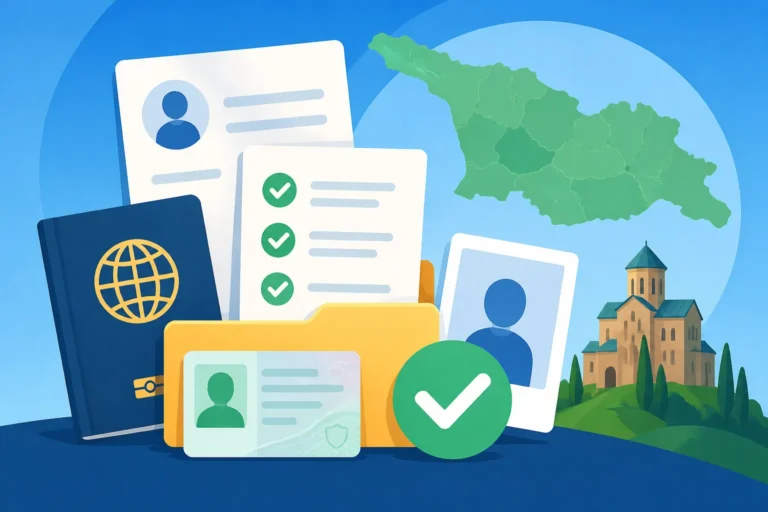
Here’s a breakdown of what you’ll generally need, but remember, always double-check the latest requirements on the Public Service Development Agency (PSDA) website or by calling their hotline, as these can and do change:
- Application Form: This needs to be filled out accurately and completely. You can usually find it online or get a physical copy at the Public Service Hall. Don't leave any blank spaces!
- Passport and Visa Copies: Your valid passport, including copies of all pages with personal data, entry stamps, and your current residence permit. Make sure your passport isn't expiring anytime soon itself; generally, they require at least six months' validity beyond your desired permit length.
- Proof of Legal Basis for Stay: This is the big one, tailored to why you got your original permit:
- Property Owners: An extract from the Public Registry confirming your ownership of real estate valued at the required threshold. The PSDA will verify this, but having a recent extract on hand is always a good idea. For those who obtained their permit this way, understanding How to Get a Residence Permit After Buying Property in Georgia is vital.
- Business Owners/Entrepreneurs: Recent bank statements showing financial activity (often the last 3-6 months), tax declarations proving your business is active and paying taxes, and possibly a business plan or contracts if you're a newer entity. They are particularly keen on seeing consistent, legitimate income. If you're running a business, you might also find How to Register as an Individual Entrepreneur in Georgia useful.
- Family Reunification: Proof of your relationship to the sponsoring family member (marriage certificate, birth certificates), and their valid Georgian residence permit, along with documents proving their financial stability (bank statements, employment contracts).
- Proof of Financial Solvency: Generally, bank statements from a Georgian bank account showing sufficient funds to support yourself for the duration of the permit. The exact amount isn't always explicitly stated but aim for a healthy balance that demonstrates you won't be a burden on the state. Think consistent income, not just a one-time large deposit.
- Proof of Address: A rental agreement or property ownership certificate. This shows you have a stable place to live.
- Passport-Sized Photos: Usually two recent biometric photos.
- Health Insurance: This is a non-negotiable. You'll need proof of valid health insurance that covers you for the entire duration of your renewed permit. It doesn't hurt to have comprehensive coverage. Many expats opt for international providers like Cigna Global because their plans are robust and designed for individuals living abroad, offering peace of mind no matter where you are in the world. It’s a good idea to consider your options carefully, as local plans might be cheaper but sometimes less comprehensive than international ones. For more insights on this, read Health Insurance in Georgia: Private and International Options Explained.
- Official Translations and Notarization: Any documents not in Georgian (like your birth certificate, marriage certificate, or foreign bank statements if they are accepted) must be translated into Georgian by a certified translator and then notarized. This is a crucial step where many people slip up. Do not try to cut corners here; they will reject unofficial translations.
When moving to a new country and keeping track of all these documents, especially across different systems, it can feel overwhelming. Companies like Sirelo specialize in helping people with international moves, and while they might not handle the permit application itself, they can certainly help organize your relocation documents and advise on logistics, making the overall process feel a lot less chaotic.
Submitting Your Application: Public Service Hall or Online?
You generally have two main avenues for submission:
- In-Person at a Public Service Hall: This is often the preferred method for many expats, especially for renewals. You can visit any Public Service Hall (PSH) – the ones in Tbilisi (like the massive one near the Justice House) are usually well-equipped.
- The Process: When you arrive, take a number for "Migration/Residence Permits." Wait for your number to be called, then present your documents to the agent. They will review everything, make copies, and scan originals. Be prepared for them to scrutinize every single paper. If anything is missing or incorrect, they will send you away to fix it. This is why having all your ducks in a row is paramount. They might ask questions about your stay, so be ready to clearly articulate your continued ties to Georgia.
- Pros: You get immediate feedback on your documents, and you can ask questions directly. It provides a sense of security knowing a human has checked your application.
- Cons: Waiting times can be long, and communication can sometimes be a challenge if you don't speak Georgian (though many PSH staff speak English).
- Online Through the PSDA Portal: While it's theoretically possible to submit online, this route is often more complex for renewals, especially if there are any nuances to your case or if they require original document verification.
- The Process: You upload scanned copies of all your documents.
- Pros: Convenience, no waiting in lines.
- Cons: Less personalized feedback, higher chance of rejection due to minor errors or unclear scans. If your application is rejected online, you often have to start from scratch or go in person anyway, wasting precious time.
My personal advice? Unless you're extremely tech-savvy with Georgian bureaucracy, heading to the Public Service Hall is usually the safer bet for renewals. It might take a bit longer on the day, but it minimizes the risk of costly rejections and delays.
Paying the Fees and Waiting Game
Once your application is accepted, you’ll pay the processing fee. The fee structure depends on the processing time you choose:
- Standard (30 days): This is the most common and cheapest option.
- Expedited (20 days, 10 days, or even 5 days): These options are progressively more expensive but can be a lifesaver if you're running close to your permit expiry or have urgent travel plans.
You can usually pay directly at the Public Service Hall via cash, card, or at their self-service payment kiosks. Keep your receipt! It's your proof of payment and often contains a tracking number.
Then comes the waiting game. This is often the hardest part for expats – the limbo period. You've done all you can, and now it's up to the PSDA. They aim to process within the timeframe you paid for, but delays can happen, especially during peak application periods. During this waiting period, your status remains valid as long as you applied for renewal before your current permit expired. If your current permit expires while your renewal is pending, you are legally allowed to remain in Georgia until a decision is made. You should carry proof of your submitted application (the receipt) during this time.
Once a decision is made, you'll receive an SMS notification. If approved, you'll pick up your new residence permit card from the Public Service Hall. If denied, you'll receive a written explanation, and that's when you might need to consult legal counsel. Understanding the Cost and Timeline of the Georgia Residence Permit Process can help you set realistic expectations.
Common Challenges and Troubleshooting
Even with the best preparation, things can sometimes go sideways. Knowing how to react can make all the difference.
Dealing with Delays and Denials
Delays can be incredibly frustrating. You’ve planned your life around that permit, and suddenly you’re in limbo. If the processing time you paid for has elapsed and you haven't heard anything, don't panic, but do take action.
- Follow Up: First, check the status online using your tracking number, if available. If that doesn't yield results, call the PSDA hotline. Be polite but persistent. Sometimes a simple inquiry can push things along.
- Visit the PSH: If phone calls don't work, go back to the Public Service Hall and ask for an update in person. Request to speak to a supervisor if necessary.
- Legal Counsel: If there's a significant delay (e.g., several weeks past the promised date) with no explanation, or if your application is denied, it's wise to consult with a local lawyer specializing in immigration law. They can review your case, communicate with the authorities on your behalf, and help you understand your options, which might include appealing the decision.
Denials are tough, but they're not necessarily the end of the road. The denial letter should clearly state the reason. Common reasons include insufficient documentation, failure to prove financial stability, or the underlying reason for your permit no longer being valid. A lawyer can help you address these specific points for a reapplication or appeal.
Maintaining Status While Awaiting Decision
This is a critical point that causes a lot of anxiety. If you submitted your renewal application before your current short-term residence permit expired, you are legally entitled to remain in Georgia even if your old permit expires before a decision is made on your new application. This is a grace period, effectively. You are not overstaying.
However, during this period, you might face some practical challenges:
- Travel: Traveling outside Georgia while your renewal is pending is generally not advised. While you might be allowed back in, it’s a risk. Your old permit is expired, and your new one isn't issued. Border guards might be confused, and you could face complications. It’s best to wait until you have your new permit card in hand before planning any international trips.
- Proving Residency: For things like opening a new bank account (though you already have one for the permit) or certain official registrations, you might need to show a valid permit. Carry your application receipt and a copy of your expired permit to prove you've applied for renewal. Most official bodies understand this grace period, but it's always better to have proof.
The Importance of Health Coverage During Your Stay
I've mentioned it already, but it bears repeating: having robust health insurance is not just a requirement for your residence permit; it’s an absolute necessity for your peace of mind and well-being here in Georgia. While Georgia has a Universal Healthcare Program (UHC) in Georgia that offers some benefits to residents, it's generally recommended for expats to have private health insurance for comprehensive coverage, especially if you want access to the best private clinics and English-speaking doctors.
When renewing your permit, ensure your health insurance policy covers the entire duration of your requested permit. The PSDA will check this diligently. Many expats choose a global health insurance provider like Cigna Global because they offer flexible plans tailored to international living, providing coverage both within Georgia and potentially if you travel outside the country. This can be invaluable, knowing you’re covered for emergencies, specialist visits, or even if you need to return to your home country for certain treatments. Don't skimp on this, because going without adequate coverage, or opting for a bare-bones policy, can leave you vulnerable to massive out-of-pocket costs if you fall ill or have an accident. For a deeper dive into your options, you'll definitely want to read How to Choose Between Local and International Health Insurance in Georgia.
| Document Category | Specific Document Examples | Important Notes |
|---|---|---|
| Identification | Valid Passport | Minimum 6 months validity beyond requested permit period. Copy of all relevant pages. |
| Application Proof | Completed Application Form | Obtainable at PSH or online. Ensure all fields are filled accurately. |
| Legal Basis for Stay | Public Registry Extract (Property) / Tax Statements (Business) | Must prove continued validity of initial permit reason. Property value still meets threshold. Business is active. |
| Financial Solvency | Georgian Bank Account Statement | Demonstrate sufficient funds for living expenses (last 3-6 months often requested). |
| Accommodation | Rental Agreement / Property Ownership Certificate | Proof of stable residence in Georgia. |
| Health Coverage | Valid Health Insurance Policy | Must cover the entire requested permit duration. International options like Cigna Global are popular. |
| Photographs | 2 Passport-Sized Biometric Photos | Recent, in color, white background. |
| Translations/Notarization | Certified Georgian translations of foreign documents | Any non-Georgian documents (e.g., marriage cert.) require translation and notary stamp. |
| Payment Receipt | Receipt for Renewal Fee | Proof of payment, includes tracking number. |
Disclaimer
The information provided in this guide is for general informational purposes only and does not constitute legal or professional advice. While we strive to keep the information up-to-date and accurate, laws and regulations in Georgia, particularly concerning immigration and residence permits, can change frequently. Therefore, it is essential to consult with the official Public Service Development Agency of Georgia or a qualified Georgian immigration lawyer for the most current and specific advice regarding your individual situation. Reliance on any information in this guide is solely at your own risk.