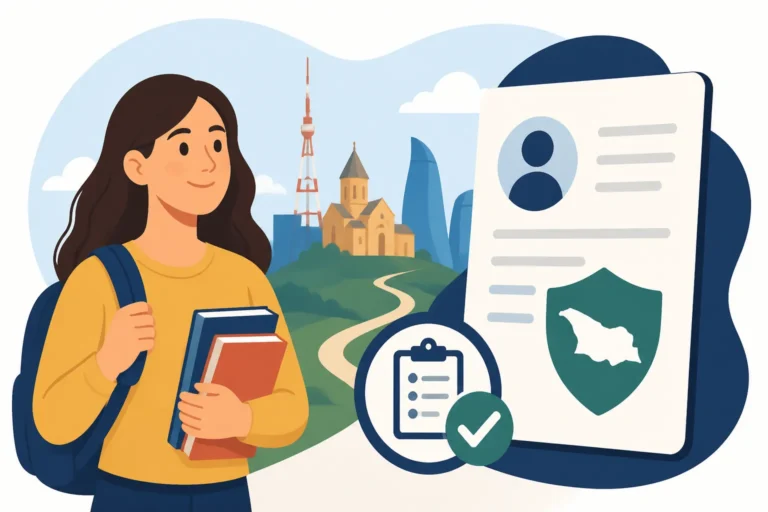
What Are the Requirements for a Family Residence Permit in Georgia?
Bringing your family to Georgia is a deeply personal and often challenging journey, filled with dreams of a new life together but also riddled with the anxieties of bureaucratic hurdles. The process of securing residence permits for your loved ones can feel like navigating a complex maze where every turn presents a new document requirement or an unexpected question. This comprehensive guide is here to demystify the requirements for a family residence permit in Georgia, providing you with clear, empathetic, and actionable advice to ensure your family's smooth transition to their new home.
Navigating the Family Residence Permit Maze: An Overview
When you've decided to make Georgia your long-term home, one of the biggest questions is how to bring your nearest and dearest to join you. It's not just about getting yourself settled; it's about building a life for everyone. Understanding the specific criteria for a family residence permit is the very first, and arguably the most crucial, step. It sets the foundation for everything else that follows, so let's break down who qualifies and what your own status needs to be.
Who Qualifies as a Family Member for Residency?
The term "family member" in the context of Georgian residence permits is usually quite specific, focusing on immediate family ties. Generally, this includes your spouse, your minor children, and in some cases, dependent adult children or even parents if they are genuinely dependent on you. It's not like inviting distant cousins or long-lost friends to come live with you; the Georgian state prioritizes direct lineal relationships.
For your spouse, you'll need a legally recognized marriage certificate. This might seem obvious, but if your marriage took place in another country, it must be properly apostilled or legalized and then officially translated into Georgian. We've seen countless expats caught out by this, thinking a simple copy will do. No, the Georgian authorities are sticklers for authenticated documents. The same goes for your children – their birth certificates are paramount. If your child is adopted, the adoption papers must also follow the same rigorous authentication and translation process. The general rule for children is that they must be minors (under 18) and unmarried. However, there can be exceptions for adult children who are proven to be fully financially dependent on you due to, say, a disability or ongoing full-time education without their own means of support. These cases, however, are often assessed on an individual basis and can require a more substantial body of evidence. Furthermore, while less common, it is sometimes possible to sponsor parents if they are fully dependent on you and cannot care for themselves, but this generally requires a higher bar of proof of dependency and financial stability.
The Foundation: Your Own Residence Status in Georgia
Before you can even dream about bringing your family over, you, as the primary applicant or "sponsor," must already have a stable and valid residence permit in Georgia. This isn't something you can do simultaneously with your family's application; your permit acts as the anchor for theirs. Without your own established legal basis for living in Georgia, their application simply won't have a leg to stand on. Think of it like building a house – you need a solid foundation before you can start adding rooms.
Your residence permit could be based on various grounds: perhaps you have a work residence permit, an entrepreneur permit from running your own business, or even a short-term residence permit based on owning property above a certain value. The type of your permit is important because it demonstrates your legitimate ties to Georgia and your ability to support yourself and your dependents. For instance, if you're on a student permit, sponsoring an entire family might be more challenging due to assumed financial limitations, unless you can provide substantial proof of independent financial resources. The Georgian authorities want to see that you are not only legally allowed to be here but that you are stable enough to take on the responsibility of additional family members. They're looking for proof that you're not just passing through, but are genuinely integrated or integrating into Georgian society and can provide a secure environment for your family. This often includes demonstrating a steady income stream, a place to live, and a clear purpose for your continued stay in Georgia.
Essential Documentation for Family Residence Permits in Georgia
Now, let's talk about the paperwork. This is often where the real headache begins for expats, but a methodical approach can save you a world of stress. The Georgian Public Service Development Agency (PSDA), often referred to as the House of Justice, is incredibly particular about documentation. Anything less than perfect can lead to delays or outright rejection. So, let's roll up our sleeves and dive into the specifics of what you'll need to gather.
Gathering the Personal Papers for Each Family Member
Each family member applying for a residence permit will need their own set of personal documents, alongside those proving their relationship to you. First and foremost, current passports are essential for everyone, and they must have sufficient validity remaining – typically at least six months beyond your intended stay. Expats often forget that little details like a passport nearing expiration can derail an entire application. Alongside this, you'll need recent passport-sized photographs for each applicant, usually 3×4 cm, against a white background. These need to be fresh, not the ones from five years ago when you had a different haircut!
Then come the relationship documents. For your spouse, an original marriage certificate, and for your children, original birth certificates. As I mentioned, these documents must undergo a strict process of authentication. If they were issued in a country that is part of the Hague Apostille Convention, you'll need an apostille stamp on them. If not, they’ll require full consular legalization by the Georgian embassy or consulate in the issuing country, or by the embassy of that country in Georgia, followed by legalization at the Georgian Ministry of Foreign Affairs. Once authenticated, every single one of these foreign documents needs to be officially translated into Georgian by a certified translator in Georgia and then notarized by a Georgian notary. The cost and time for this process can add up, so factor it into your budget and timeline. It's a meticulous process, but it's absolutely non-negotiable for the Georgian authorities. Trust me, I've seen more than one expat face heartbreak because their vital records weren't properly handled. If you're coordinating a move for your entire family, including the often-complicated logistics of document transport and ensuring they reach Georgia safely, services like Sirelo can be incredibly useful for planning and executing the move itself, taking some of that physical burden off your shoulders while you focus on the bureaucratic side.
Proving Financial Means and Accommodation
Beyond simply proving who your family is, you need to demonstrate that you can adequately support them financially and provide suitable accommodation. Georgia wants to ensure that newcomers won't become a burden on the state, especially when it comes to families. This means providing compelling evidence of your financial stability.
You'll need bank statements, ideally from a Georgian bank, showing sufficient funds to cover your family's living expenses for at least the duration of the requested permit. While there isn't one fixed, publicly stated amount, a good rule of thumb is to show at least ₾2,000-₾3,000 (GEL) per month for yourself and approximately ₾1,000-₾1,500 (GEL) for each dependent, maintained consistently over the last few months. This isn't just a snapshot; they'll look for sustained income. For those employed, a letter from your Georgian employer stating your salary and position, along with a copy of your employment contract, will be required. If you're self-employed or an entrepreneur, bank statements from your business account, tax declarations, and a certificate of your individual entrepreneur (IE) status will be necessary to prove your income. It's important to demonstrate that this income is consistent and reliable. For a deeper understanding of the general expenses, you might want to look into "The Complete Guide to Cost of Living in Georgia for Expats (2026)".
Equally important is proof of accommodation. You'll need a rental agreement that is registered with the Public Service Development Agency, or if you own property, a copy of the property ownership certificate (extract from the Public Registry). This document needs to be a valid lease, not just a casual agreement, and it should clearly state the names of the occupants. The size and type of accommodation should also be suitable for the number of people living there; a one-room studio might raise questions if you're trying to house a family of four. For those who have just arrived and are sorting out their utility connections, understanding "The Expat Guide to Setting Up Utilities (Electricity, Water, Gas) in Georgia" can be helpful in showing you have established a proper home base.
Here's a simplified checklist for your reference:
| Document Type | Required For Sponsor | Required For Each Dependent | Notes |
|---|---|---|---|
| Valid Passport | Yes | Yes | Minimum 6 months validity beyond requested permit. |
| Passport Photos | Yes (as sponsor) | Yes | 3×4 cm, white background, recent. |
| Marriage Certificate | N/A | Yes (for spouse) | Apostilled/Legalized & officially translated into Georgian. |
| Birth Certificate | N/A | Yes (for children) | Apostilled/Legalized & officially translated into Georgian. |
| Proof of Kinship | N/A | Yes | (e.g., birth certificate listing parents) |
| Accommodation Proof | Yes | Yes | Rental agreement (registered) or property ownership certificate. |
| Financial Proof | Yes | N/A | Bank statements, employment contract, tax declarations (if IE). |
| Sponsor's Residence | Yes | N/A | Copy of your valid Georgian residence permit. |
| Application Form | N/A | Yes | Completed and signed for each dependent. |
| Medical Insurance | Often Required | Often Required | Though not always explicitly listed, highly recommended. |
The Application Process: Step-by-Step for Family Members
Once you've meticulously gathered all your documents, the next stage is the actual application. This is where you engage directly with the Georgian authorities. It might seem daunting, but knowing the process can help alleviate some of that initial stress.
Where to Apply and What to Expect
All residence permit applications, including those for family reunification, are submitted to the Public Service Development Agency (PSDA), usually at one of their many service centres (often referred to as the House of Justice) located across Georgia. The main branches in Tbilisi, Batumi, and Kutaisi are the most popular choices for expats due to their English-speaking staff and familiarity with foreign applicants. It's always a good idea to book an appointment online beforehand if possible, as walk-in queues can be lengthy, especially in Tbilisi.
When you attend your appointment, ensure you have all original documents, plus good quality photocopies of everything. The officials will review your documents, scan them, and usually return the originals. Be prepared for questions, not just about your family, but about your own life in Georgia, your income, and your intentions. While interviews are not always mandatory for family residence permits, especially for spouses and minor children, officials reserve the right to call applicants for further discussion if anything seems unclear. The application fee is payable at the time of submission, and there are different processing times available (e.g., 30 days, 20 days, 10 days, or even express 5-day options, each with a corresponding higher fee). You'll receive a receipt with a tracking number, which you can use to check the status of your application online. For more detailed instructions on navigating the bureaucratic aspects, check out "How Do I Apply for a Residence Permit from Inside Georgia?".
Crucial Considerations and Potential Roadblocks
Applying for a family residence permit is rarely a straight shot; there are always little things that can trip you up. One critical consideration is the current visa status of your dependents. If they are in Georgia on a visa-free stay, they must apply for the residence permit before their 365-day (or shorter, depending on nationality) visa-free period expires. Overstaying this period, even by a day, can lead to fines and complications for their residence permit application.
Consistency in information across all documents is also paramount. A slight discrepancy in a name spelling, a date, or an address between different official papers can raise red flags and cause delays. Double-check everything before submission. Common reasons for denial include incomplete documentation (the most frequent culprit!), insufficient proof of funds, the sponsor's own residence permit being unstable or nearing expiration, or a rental agreement that isn't properly registered. To minimize these risks, many expats opt to seek professional advice from local lawyers or immigration consultants who specialize in Georgian residence permits. They can provide an invaluable service in ensuring "Understanding Document and Translation Requirements for Georgia Immigration" are met, avoiding common pitfalls and streamlining the process as much as possible. It's an investment that can save you a lot of grief and wasted time in the long run.
Life in Georgia with Your Family Residence Permit
Congratulations! Your family has been granted their residence permits, and you can all finally breathe a sigh of relief. This moment marks the beginning of your shared life in Georgia, but it also comes with a new set of rights, responsibilities, and future considerations.
Rights and Responsibilities as a Resident Family
Once your family members hold their Georgian residence permits, they officially have the right to legally reside in the country for the duration of their permit. This means they can come and go as they please without needing to worry about visa-free stay limits, which is a huge relief for anyone who's had to manage border runs. They also gain access to various services. For example, children can be enrolled in schools, whether public, private, or international. To understand this better, you can refer to "Schools and Education in Georgia: A Complete Guide for Expat Families". While the Universal Healthcare Program in Georgia has specific eligibility criteria, having a residence permit often facilitates access to local healthcare providers, though many expats still opt for private health insurance for comprehensive coverage. Indeed, ensuring your family has adequate medical care is crucial; private options, such as those offered by Cigna Global, are frequently chosen by expat families who desire broader coverage and access to international-standard facilities.
With these rights, however, come responsibilities. The most important is to adhere to the terms of the residence permit. This includes ensuring that the permit is renewed on time, well before its expiration date. You also have a responsibility to inform the Public Service Development Agency of any significant changes, such as a change of address, marital status (though hopefully, that won't change while on a family permit!), or other critical personal details. Ignoring these responsibilities can jeopardize future renewals or even lead to complications with your family's legal status in Georgia.
Looking Ahead: Renewal and Permanent Residency
Your initial family residence permits will likely be issued for a period of six months to one year. This means that renewals will become a regular part of your life in Georgia. The good news is that the renewal process is very similar to the initial application. You'll need to submit updated documents, particularly proof of continued financial stability and accommodation, and evidence that the family relationship remains intact. It's often less stressful than the first application, as you're already familiar with the process and the requirements. Remember to apply for renewal well in advance – typically 30-45 days before expiration – to avoid any last-minute panics. More detailed guidance can be found in "How to Renew Your Residence Permit in Georgia".
For those planning a truly long-term future, there is a path to permanent residency in Georgia for family members. Generally, after holding temporary residence permits for a certain period (often six years), and continuously living in Georgia, your family members may become eligible to apply for permanent residency. This is a significant step, as it grants much greater stability and fewer renewal hassles. The criteria for permanent residency are stricter, requiring a demonstrated strong integration into Georgian society, consistent legal residence, and often a higher bar for financial self-sufficiency. It's a testament to your long-term commitment to building a life in this beautiful country. If this is your ultimate goal, understanding "The Complete Guide to Permanent Residency in Georgia (2026)" early on can help you plan your journey effectively.
Disclaimer
The information provided in this guide is for general informational purposes only and does not constitute legal advice. While we strive to keep the information up-to-date and accurate, immigration laws and procedures in Georgia can change. It is highly recommended that you consult with a qualified Georgian immigration lawyer or the Public Service Development Agency directly for personalized advice regarding your specific situation before making any decisions.