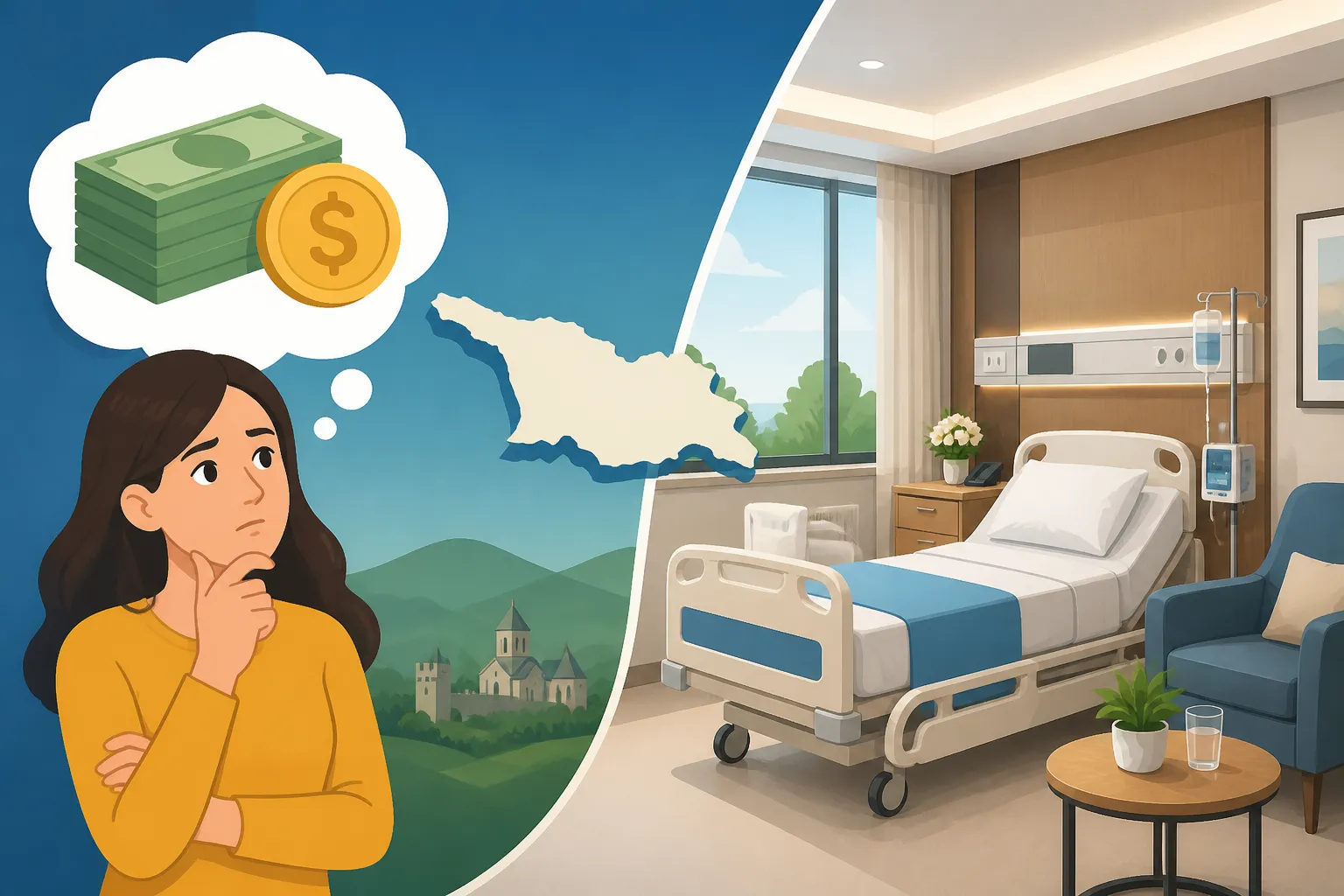
Are Private Hospital Rooms Expensive in Georgia?
Stepping into the healthcare system in a new country can feel like navigating a dense fog, especially when a medical emergency strikes or planned care becomes necessary. One question that often looms large for expats and tourists in Georgia is about the cost and availability of private hospital rooms. We all crave a bit of comfort and privacy during vulnerable times, but the thought of a hefty bill can be a real deterrent. This guide is here to shed some light on what you can expect when it comes to private hospital room expenses in Georgia, helping you prepare and make informed decisions.
Understanding the Landscape of Private Hospitals in Georgia
Let's be honest, when you're an expat, the idea of a bustling public ward, especially if you don't speak fluent Georgian, can be quite daunting. That's where Georgia's private healthcare sector really shines. It's a parallel system offering a different level of comfort and often, more accessible English-speaking staff.
A Glimpse into Georgia's Private Healthcare System
Georgia has a dual-track healthcare system, meaning you have both public, state-funded facilities and a rapidly growing private sector. While the public system aims to provide universal healthcare access, it's often the private clinics and hospitals that attract foreigners due to their modern facilities, shorter wait times, and generally higher standards of comfort and service. These institutions operate on a fee-for-service basis, or through private insurance, which means they're designed with the patient's experience in mind, including the availability of private rooms.
Think of it this way: the public hospitals are functional, they get the job done, but they might not offer the plush surroundings or individual attention you're used to back home. Private hospitals, on the other hand, often feel more akin to hotels, complete with private bathrooms, better meal options, and a quieter environment. This distinction is crucial when you're considering a hospital stay, as it directly impacts your comfort and, yes, your wallet. For a deeper dive into the overall system, you might want to read Public vs Private Healthcare in Georgia: What Expats Need to Know.
Major Private Hospitals Offering Private Rooms
When you're in Tbilisi, you'll find several prominent private hospital groups that are well-regarded by the expat community and often the first choice for those seeking private rooms. These hospitals are typically equipped with advanced technology and boast specialists across various fields.
One of the largest and most well-known networks is Evex Medical Corporation. They have multiple clinics and hospitals across Georgia, including several in Tbilisi like Evex Central Hospital. These facilities are generally quite modern and are known for offering various levels of private rooms, from standard single rooms to more luxurious suites. Another significant player is New Hospitals, which also provides comprehensive medical services and private room options. Then you have Medline and Todua Clinic, both reputable institutions offering high-quality care with private facilities. These hospitals understand that a significant portion of their clientele includes foreigners, and as such, they often have international departments or staff who can communicate in English, which is a huge relief when you're feeling unwell. You can learn more about specific facilities in How to Use Major Hospitals and Clinics in Tbilisi.
These private hospitals aren't just about a private room; they offer a more streamlined experience from admission to discharge, which can be invaluable when you're far from home.
The Cost Breakdown of Private Hospital Rooms in Georgia
Alright, let's get down to brass tacks: what's this going to cost you? The simple answer is, it varies wildly. But let's unpack the factors that drive those costs and give you a more realistic picture.
Factors Influencing the Price Tag
The price of a private hospital room in Georgia isn't a fixed number printed on a menu. Several elements play a significant role in determining the final cost:
- Location of the Hospital: Just like real estate, hospitals in prime city locations, especially in the capital Tbilisi, tend to have higher operating costs, which are naturally passed on to the patient. A private room in a smaller city like Kutaisi or Batumi might be slightly less expensive.
- Reputation and Facilities of the Hospital: A brand-new hospital with state-of-the-art equipment and a reputation for top-tier specialists will command higher prices for its private rooms compared to an older, less renovated facility.
- Type of Private Room: Not all private rooms are created equal. You might find options ranging from a standard single room with a private bathroom to a "VIP suite" that includes a separate sitting area, better amenities, and perhaps even a dedicated nurse. Naturally, the more luxurious the room, the higher the price.
- Length of Stay: This one's obvious, but crucial. A one-night stay for observation will be far less than an extended recovery period after a major surgery. Some hospitals might offer a slightly reduced daily rate for longer stays, but don't count on it.
- Services Included: Does the room rate include meals for a companion? Are there specific nursing services tied to private rooms? Sometimes, extra perks are bundled in, while other times, they are add-ons.
- Time of Year/Demand: While not as pronounced as in the tourism industry, high demand during certain periods (e.g., flu season) could subtly affect availability and, in rare cases, pricing, though typically hospital pricing is more stable.
What You Can Expect to Pay: A Realistic Overview
Based on general observations and what expats share, the cost of a private hospital room in Georgia is considerably less than what you would pay in Western Europe, North America, or even many parts of Asia. However, it's still a significant expense if you're footing the bill entirely out-of-pocket.
For a basic private room in a reputable Tbilisi private hospital, you might expect to pay somewhere in the range of 100 to 300 GEL per night (approximately $35 to $110 USD, as of late 2024/early 2025). This is a rough estimate and can go higher, sometimes up to 500-800 GEL or more for premium suites or rooms with specialized equipment (e.g., in an ICU setting). In comparison, a semi-private room or a bed in a general ward would naturally be significantly cheaper, or in some public hospital scenarios, potentially covered by the state's universal healthcare for eligible residents, though often with less comfort.
It's vital to remember that this "room rate" is just one part of the overall medical bill. It's like checking into a hotel; the room is one cost, but then there's room service, laundry, and all those other little extras that add up.
Beyond the Room: Hidden Costs and Additional Charges
This is where many expats get caught out. That seemingly affordable private room rate is just the tip of the iceberg. Your total hospital bill will encompass a wide array of other charges:
- Consultation Fees: Every doctor's visit, specialist consultation, or check-up during your stay will have its own fee.
- Procedures and Surgeries: This is often the largest component. The cost of the actual medical procedure, be it a minor intervention or a major surgery, will be billed separately.
- Medication: All prescription drugs, IV fluids, and any other pharmaceutical supplies used during your stay will be added to your bill.
- Diagnostics: X-rays, MRI scans, CT scans, blood tests, urine tests, ultrasounds – every diagnostic service comes with its own price tag. These can quickly accumulate, particularly for complex cases. For an idea of general costs, check out The Cost of Healthcare in Georgia: A Complete Breakdown for Foreigners (2026).
- Medical Supplies: Bandages, syringes, gloves, catheters, and any other disposable medical supplies used will be itemized.
- Anesthesia Fees: If a procedure requires anesthesia, the services of the anesthesiologist and the cost of the anesthetic agents will be charged.
- Physiotherapy/Rehabilitation: If your recovery requires any post-operative therapy, these sessions will be additional.
- Food and Beverages: While standard meals are usually included in the room rate, any special requests or extra snacks might be charged.
- Companion Stay: If a family member wants to stay overnight in your private room, there might be an additional fee for their bed and meals.
- Doctor's Fees: Sometimes these are distinct from the hospital's facility fees, particularly for independent specialists who practice at the hospital.
It's absolutely essential to get a detailed breakdown or an estimate for the entire expected course of treatment, not just the room, to avoid nasty surprises. Always ask for an itemized bill.
Here’s a simplified look at potential costs:
| Item/Service | Typical Cost Range (GEL) | Notes |
|---|---|---|
| Standard Private Room (per night) | 100 – 300 | Basic single room with private bathroom |
| Premium Private Room/Suite (per night) | 300 – 800+ | Larger room, extra amenities, potentially dedicated lounge area |
| General Ward/Shared Room (per night) | 50 – 150 | Often covered by UHC for residents; less privacy |
| Doctor Consultation (single visit) | 50 – 150 | Initial assessment, follow-up, or specialist visit |
| Basic Blood Test Panel | 50 – 200 | Varies greatly by specific tests ordered |
| X-Ray (single area) | 40 – 100 | E.g., chest X-ray |
| MRI Scan (single area) | 250 – 700+ | Depending on hospital and specific body part |
| Minor Surgery (outpatient) | 500 – 2500+ | e.g., removal of a skin lesion, depends on complexity and anesthesia |
| Major Surgery (inpatient) | 3000 – 15000+ | Highly variable, depends on type of surgery, duration, and post-op care |
| Medications (daily average) | 20 – 100+ | Varies wildly based on condition and required drugs |
| Companion Bed/Meals (per night) | 30 – 80 | If permitted and available |
Note: These figures are approximate and can fluctuate based on the specific hospital, the complexity of the medical condition, and current exchange rates. It's always best to confirm directly with the chosen medical facility.
Navigating Payment and Insurance Options for Expats
Dealing with medical bills is stressful enough without the added layer of being in a foreign country. For expats, having a plan for payment, especially for private facilities and private rooms, is absolutely critical.
Private Health Insurance: Your Best Ally
This cannot be stressed enough: private health insurance is your best friend in Georgia. While the country does have a Universal Healthcare Program (UHC), its coverage for expats can be limited or subject to certain conditions based on your residence status. For peace of mind and access to the comfort of a private room, private insurance is almost a necessity.
You have two main routes:
- Local Georgian Private Insurance: Companies like GPI Holding and Aldagi offer comprehensive plans designed for residents of Georgia. These plans are often quite affordable by international standards and generally cover a good portion of private hospital stays, including private rooms, depending on your chosen plan. They have direct billing agreements with most private hospitals, simplifying the process.
- International Health Insurance: Providers like SafetyWing offer flexible plans that are excellent for digital nomads and expats who might split their time between Georgia and other countries, or simply prefer global coverage. While they might require you to pay upfront and then claim reimbursement, the peace of mind of having coverage that travels with you is invaluable. Many international plans will also cover private hospital room costs, again, depending on your specific policy.
When choosing a plan, it's crucial to compare coverage details. Look specifically for:
- Inpatient Coverage: Does it cover hospital stays, including room and board?
- Outpatient Coverage: What about doctor visits and diagnostics outside of a hospital stay?
- Emergency Coverage: What's covered if you need urgent care?
- Deductibles and Co-pays: How much will you need to pay out of pocket before insurance kicks in?
- Network of Hospitals: Does the insurer have direct billing agreements with the private hospitals you prefer?
Don't just assume; read the fine print. Understanding your policy is key to avoiding financial surprises. For more detailed information on options, check out Health Insurance in Georgia: Private and International Options Explained or How to Choose Between Local and International Health Insurance in Georgia.
Out-of-Pocket Expenses and Budgeting
Even with the best private insurance, you might still face out-of-pocket expenses due to deductibles, co-pays, or services not fully covered by your plan. If you choose to forgo private insurance (which, as an expat, I strongly advise against for anything more than minor issues), then every single cost, including that private room, will be entirely your responsibility.
Budgeting for healthcare in Georgia means:
- Having an Emergency Fund: Keep a readily accessible fund for unexpected medical costs. This is just good practice, whether you're insured or not.
- Negotiating (Carefully): In some private clinics, for specific procedures, there might be a little room for negotiation, especially if paying in cash, but don't expect it for standard room rates or emergencies.
- Understanding Payment Plans: Ask hospitals if they offer payment plans for larger bills. Some might, but it's not a given for foreigners.
The Value Proposition: Is a Private Room Worth It?
This is a personal decision, but for many expats, the answer is a resounding yes, if their budget or insurance allows.
Pros of a Private Room:
- Privacy: This is the biggest advantage. You have your own space, allowing for quiet recovery, personal conversations with doctors, and visits from loved ones without disturbing others.
- Comfort: Generally, private rooms are more comfortable, often with better bedding, furniture, and private bathrooms.
- Reduced Infection Risk: While hospitals take precautions everywhere, a private room naturally reduces your exposure to other patients' germs.
- Personalized Care: While the medical care quality isn't necessarily higher, the environment often feels more conducive to attentive nursing.
- Better Rest: Without the constant beeps, conversations, and movements of a shared ward, you're much more likely to get the rest you need for recovery.
Cons of a Private Room:
- Cost: Clearly, this is the main drawback. The added expense can be significant, especially for prolonged stays or if you're paying out-of-pocket.
- Isolation (for some): While privacy is a pro, some individuals might find a private room isolating, preferring the camaraderie of a shared space.
Ultimately, the peace of mind, privacy, and comfort offered by a private room can significantly improve your hospital experience, making it a worthwhile investment for many.
Practical Advice for Expats Seeking Private Hospital Care
Navigating a medical situation in a foreign country requires a bit of proactive planning and assertiveness. Here's how to make the experience as smooth as possible.
Researching Hospitals and Getting Quotes
Don't wait until you're already feeling unwell. If you know you'll be in Georgia for an extended period, or if you have a pre-existing condition, do your homework early.
- Identify Reputable Hospitals: Ask other expats, join online forums, and read reviews for private hospitals in major cities like Tbilisi or Batumi. Look for hospitals known for catering to foreigners.
- Contact Hospitals Directly: The best way to get accurate cost estimates for private rooms and procedures is to call or email the international patient services department (if they have one). Be specific about the type of room you're interested in and ask for an itemized estimate for your anticipated treatment.
- Compare Options: Don't settle for the first quote. If time permits, compare prices and services between a few different private hospitals. This might save you a considerable amount. This process is similar to how you would How Do I Choose a Hospital in Tbilisi?.
- Understand What's Included: As mentioned before, always clarify what is and isn't included in the room rate and the overall cost estimate.
Communicating Your Needs and Preferences
Language barriers can be a huge source of anxiety during a medical emergency.
- English-Speaking Staff: Most major private hospitals in Tbilisi will have English-speaking doctors and nurses, especially in their international departments. However, it's always a good idea to confirm this upfront. If English isn't widely spoken by the staff directly assigned to you, ask if an interpreter can be provided or if a family member can translate.
- Advocate for Yourself: Don't be afraid to ask questions, clarify instructions, and express your concerns. You are your own best advocate. If you're unsure about a treatment, medication, or billing item, speak up.
- Medical Records: Keep a digital and physical copy of your important medical history, allergies, and current medications. This can be critical for doctors who don't know your background.
Preparing for Your Stay: What to Pack and Expect
If you know you're headed for an inpatient stay, a little preparation can go a long way.
- Essentials: Pack comfortable clothes, toiletries, any personal medications you take regularly, and a good book or entertainment. Hospitals usually provide basic necessities, but personal items always make a stay more bearable.
- Comfort Items: A cozy blanket, your own pillow, or noise-canceling headphones can make a world of difference in a hospital environment, even in a private room.
- Power Bank/Chargers: Don't forget chargers for your phone, tablet, or laptop.
- Important Documents: Keep your passport, residence permit (if applicable), and insurance details handy. These will be needed for admission and billing.
- Expect Variations: While private hospitals aim for consistency, standards can still vary. Be prepared for slight cultural differences in care delivery or communication styles.
In summary, private hospital rooms in Georgia are generally not "expensive" when compared to Western countries, offering a more affordable yet comfortable option for expats. However, they are a definite upgrade in cost from public or shared rooms, and the total bill for care can still be substantial. Arming yourself with good private health insurance, like a plan from SafetyWing, and knowing what to expect is the best way to ensure a smooth and stress-free experience should you need medical care in Georgia. Remember, your health and peace of mind are worth investing in.
Disclaimer
The information provided in this article is intended for general guidance and informational purposes only, and does not constitute professional medical, financial, or legal advice. Healthcare costs and policies in Georgia are subject to change. Readers should always consult with qualified professionals for advice tailored to their specific circumstances. We do not endorse any specific medical facility or insurance provider, and individuals should conduct their own research and due diligence.