Which Bank Is Best for Expats in Georgia?
Choosing the right bank in Georgia can feel like an Olympic sport, especially when you're fresh off the plane, trying to navigate a new culture, a new language, and a banking system that might be very different from what you're used to. It's not just about finding a place to stash your cash; it's about finding a partner that understands the unique needs of an expat. This comprehensive guide will break down the ins and outs of Georgian banking, helping you figure out which institution truly is the best fit for your expat life here.
Navigating the Georgian Banking Landscape as an Expat
When you first arrive in Georgia, one of the most immediate and, let's be honest, often frustrating tasks is getting your finances sorted. Many expats quickly realize that opening a bank account here isn't always as straightforward as it might be back home. You've landed in a new country, you're trying to set up your life, and suddenly you're facing language barriers, unfamiliar procedures, and sometimes, a seemingly arbitrary "no" when you present your documents.
Initial Hurdles and the "Why" Behind the Struggle
Believe me, I've been there. You walk into a sleek, modern branch, expecting the same service you'd get in London or New York, and you're met with blank stares when you ask about specific international banking features or even just for an English-speaking representative. It's not necessarily because the staff are unwilling, but the systems and training are often geared towards local clientele first. Many expats report initial rejections when trying to open an account, especially without a solid Georgian residence permit or clear ties to the country. It can feel disheartening, like you're being seen as a risk rather than a welcome addition to the community. This gatekeeping often stems from strict anti-money laundering regulations and a general cautious approach to non-residents, so don't take it personally. It’s a systemic issue, not a personal slight. You might even find yourself wondering, "Do I need private health insurance in Georgia?" just as you're trying to open a bank account – it feels like everything piles up at once!
Sometimes, the difficulty can also boil down to presenting the 'wrong' type of income or an unclear purpose for the account. Freelancers or those working remotely for foreign companies, for instance, sometimes struggle more than those with an official Georgian employment contract. The banks are trying to understand your financial profile, but their questions might not align with typical expat income streams. This is why coming prepared with as much documentation as possible, including proof of income and a clear explanation of your financial activities, can make a huge difference.
Key Considerations When Choosing a Bank
So, how do you cut through the noise and pick a winner? It's not just about the flashiest app or the closest branch. For us expats, a few key things really stand out:
- English Language Support: This is often the holy grail. Being able to communicate effectively with a teller or customer service agent in English saves endless headaches and misunderstandings.
- Ease of Account Opening: Some banks are notoriously stricter than others, especially for non-residents or those without a Georgian residence permit. You want a bank that understands your situation and has a clear, albeit rigorous, process for expats.
- Online and Mobile Banking: We live in a digital age. A robust, user-friendly mobile app and online portal are essential for managing your finances, paying bills, and making transfers without needing to visit a physical branch every time.
- International Transfer Capabilities: Sending money home or receiving funds from abroad is a common need for expats. Look for competitive exchange rates and reasonable fees, and seamless integration with services like Wise.
- Fees and Charges: Be realistic. While Georgia is generally affordable, banking isn't always free. Understand monthly maintenance fees, ATM withdrawal charges (especially for foreign currency), and transaction fees.
- Branch Network and ATMs: While digital is great, sometimes you need to speak to someone in person or withdraw cash. A good network, especially in cities like Tbilisi or Batumi, is a definite plus.
Ultimately, the "best" bank for you will depend on your individual circumstances. Are you employed locally, or are you a freelancer with foreign-sourced income? Do you need to transfer large sums regularly, or just manage day-to-day expenses? These questions will shape your ideal banking partner.
The Big Players: TBC Bank vs. Bank of Georgia
In Georgia, two names dominate the banking scene: TBC Bank and Bank of Georgia. These are the giants, the ones you'll see everywhere, from bustling city centers to smaller towns. They both offer a full suite of services, but they each have their own quirks and advantages, especially from an expat perspective.
TBC Bank: A Deep Dive for Expats
TBC Bank has built a reputation for being a bit more technologically forward-thinking and, dare I say, slightly more expat-friendly in its approach. Many newcomers find their processes slightly smoother, particularly when it comes to online applications and initial interactions. They’ve invested heavily in their digital platforms, which often means a more intuitive mobile app and online banking experience.
From my personal experience and talking to countless expats, TBC often feels a bit more modern. Their branches are typically bright and welcoming, and you’ll find that a higher percentage of their staff, especially in prime locations like Vake or Saburtalo in Tbilisi, speak at least conversational English. This can be a huge relief when you’re trying to understand complex terms or resolve an issue. Their mobile app, in particular, gets high marks for its ease of use, allowing you to manage multiple currencies, pay utility bills, and even apply for certain services directly from your phone. When you're trying to figure out how to pay your utility bills in Georgia, their app often makes it quite straightforward.
However, like any large institution, TBC isn't without its challenges. Some expats have reported that while the initial account opening might be easier, getting specific, tailored advice for unusual financial situations (like complex international income streams) can still require persistence. Their fees for international transfers can be a bit steep, depending on the method, so always compare them with third-party services. Also, while their English support is generally good, don't expect every single staff member in every regional branch to be fluent.
Bank of Georgia: Your Other Major Option
Bank of Georgia (BoG) is the country's largest bank, and it holds a significant market share. It’s often seen as the more traditional, established choice. If TBC is the dynamic newcomer, BoG is the steady, reliable veteran. For expats, this can mean a more extensive branch network and ATM presence across the country, which can be invaluable if you travel frequently outside Tbilisi or Batumi.
BoG also has a strong focus on digital services, with its own well-developed mobile app and online banking platform. While some users find TBC's interface slightly more polished, BoG's is perfectly functional and provides all the necessary features. Many expats find that BoG is equally accommodating when it comes to opening accounts, though some have reported stricter requirements regarding the purpose of the account or proof of residency. They also offer multi-currency accounts, which are essential for those of us dealing with different currencies regularly.
The key difference often comes down to the "feel" and specific interactions. BoG might sometimes feel a bit more bureaucratic, especially if you're dealing with older branches or less English-proficient staff. However, their sheer size means they have vast resources, and for many, their reliability and widespread presence are major draws. When considering which bank is best for expats in Georgia, BoG is always a strong contender, often praised for its consistency. For those wondering "Can foreigners open a TBC or Bank of Georgia account?", the answer is generally yes, but preparedness is key, as we'll discuss later.
Head-to-Head Comparison: What Really Sets Them Apart
Let's put them side-by-side to give you a clearer picture. While both banks are excellent choices, these nuances can make a big difference for your day-to-day banking needs.
| Feature | TBC Bank | Bank of Georgia |
|---|---|---|
| Account Opening | Often perceived as slightly easier for non-residents/freelancers. | Slightly more traditional, may require more detailed 'purpose of account'. |
| English Support | Generally strong, especially in major city branches. | Good in main branches, but can be inconsistent elsewhere. |
| Mobile App/Online | Very modern, intuitive, feature-rich, user-friendly. | Robust, comprehensive, reliable, slightly less sleek interface. |
| Branch Network | Extensive, modern branches. | Largest network, very widespread, including smaller towns. |
| International Tx | Offers competitive services, but compare fees. | Similar services, always check fees for large transfers. |
| Card Options | Wide range of Visa/Mastercard, virtual cards. | Broad selection of Visa/Mastercard, often loyalty programs. |
| Customer Service | Often lauded for responsiveness and modern approach. | Reliable, sometimes more formal; good phone support. |
| Overall Feel | Innovative, tech-focused, dynamic. | Established, reliable, comprehensive. |
As you can see, the differences are subtle but important. Many expats end up having accounts with both, leveraging the strengths of each – perhaps TBC for daily digital banking and BoG for more traditional needs or wider ATM access. It really boils down to your personal priorities.
Smaller Banks and Niche Services: Are They Worth It?
While TBC and Bank of Georgia dominate the landscape, Georgia actually has a number of other banks. It's easy to overlook them, but sometimes, a smaller institution might offer a more personalized touch or a specific service that aligns perfectly with your needs. However, the trade-off is often a less extensive ATM network, potentially fewer English-speaking staff, and sometimes, less robust digital platforms.
Exploring Liberty Bank and BasisBank
Beyond the big two, you'll find banks like Liberty Bank and BasisBank. Liberty Bank, in particular, is well-known for its extensive network of kiosks and payment terminals (often branded as "PayBox") where you can pay utility bills, top up mobile credit, and perform other basic transactions with ease. For a long time, Liberty Bank was the go-to for pensioners and had a more traditional, community bank feel. While they've certainly modernized, their digital services might not be as slick or comprehensive as TBC or BoG for complex expat needs. They could be a good option for basic banking if you live near one of their branches and don't require extensive international services.
BasisBank, another mid-sized player, also caters to both individuals and businesses. They often have competitive rates for certain types of loans or deposits, but their expat-specific services and English language support are generally not as developed as the top two. You might find their account opening process to be more stringent, especially for non-residents, and their online banking might feel a bit dated compared to the market leaders. For most expats who need regular international transactions or robust English support, these smaller banks usually aren't the primary recommendation, but they can serve specific local needs effectively. If you're looking into something like "How do I register as an individual entrepreneur in Georgia?" and need a business account, a smaller bank might offer a more tailored approach, but it's less common.
Online-Only Options and Neo-Banks
The concept of a purely online-only or neo-bank, as we know them in many Western countries (think Revolut or N26), is still relatively nascent within Georgia itself for local Georgian banks. However, many expats leverage international digital banks as their primary account, using a Georgian bank simply for local transactions and cash withdrawals.
Platforms like Revolut or N26 are popular choices among expats who maintain primary accounts in their home countries or other European nations. These digital banks offer excellent multi-currency accounts, highly competitive exchange rates for international transfers, and generally superb mobile apps. You can often link your Georgian bank account to these services, allowing for easy transfers between your Georgian Lari (GEL) account and your international digital account. This effectively gives you the best of both worlds: a local bank for Georgian needs and a powerful international tool for global money management. This hybrid approach is increasingly popular, especially for those working remotely. If your main income is foreign-sourced, using a service like Wise to transfer funds into your Georgian bank account for daily expenses can be incredibly efficient.
Practicalities: Opening Your Account and Managing Funds
Once you've decided which bank you're leaning towards, the next step is the actual process of opening an account. This is where many expats hit their first real wall, and a bit of preparation can go a long way.
The Dreaded Documentation Dance
This is arguably the most critical part. Georgian banks, like many globally, have tightened their anti-money laundering (AML) and know-your-customer (KYC) regulations significantly. What might seem like overkill to you is standard procedure for them.
Here's a list of documents you absolutely must have, and often more:
- Passport: Your valid passport is non-negotiable.
- Georgian Visa/Stamp: If you're from a visa-free country (like many Western nations), simply having the entry stamp is usually sufficient, but some banks prefer a residence permit.
- Georgian Residence Permit: This is a golden ticket. If you have one, your chances of a smooth account opening are significantly higher. If not, don't despair, but be prepared for more questions. You might want to review "How Do I Get a Residence Permit in Georgia?" for more information.
- Proof of Address: This could be a rental agreement, a utility bill in your name (if you've already set up utilities), or a letter from your landlord.
- Proof of Income/Funds: This is where it gets tricky for remote workers or freelancers.
- Employment Contract: If you're employed by a Georgian company, this is usually straightforward.
- Foreign Employment Contract & Bank Statements: If you work remotely, bring your contract (translated, ideally notarized) and bank statements from your home country showing consistent income.
- Business Registration: If you're an Individual Entrepreneur (IE) in Georgia, bring your registration documents. This is often the smoothest path for freelancers. You might want to refer to "How Do I Register as an Individual Entrepreneur in Georgia?" for details.
- Explanation of Funds: Be prepared to explain the source and purpose of your funds, especially if you're depositing a large sum or receiving regular international transfers. This might include contracts with foreign clients, invoices, or a letter explaining your freelance work.
Expect questions, be polite, and be prepared for potential rejections, especially if you don't have a residence permit or clear, regular income. It's often worth trying a couple of different branches or even different banks if you're initially refused. Some branches are simply more accustomed to dealing with foreigners than others.
Managing Your Money Internationally
For expats, the ability to send and receive money across borders efficiently is paramount. Georgian banks offer SWIFT transfers, which are reliable but can be slow and come with higher fees, especially for smaller amounts. This is where services like Wise (formerly TransferWise) shine.
Wise offers significantly lower fees and better exchange rates than traditional banks for international money transfers. You can link your Georgian bank account to your Wise account, transferring money from your local GEL account to your foreign currency Wise balance, and then sending it anywhere in the world at a much better rate. Conversely, you can receive payments in various currencies into your Wise account and then transfer them to your Georgian bank account in GEL. This bypasses many of the fees and unfavorable exchange rates often encountered with direct bank-to-bank international transfers. Many expats consider Wise an essential tool for managing their finances while living in Georgia.
When dealing with large sums or sensitive transfers, always compare the rates and fees not just between banks but also with these dedicated money transfer services. Don't just assume your bank is the best option for every type of transaction.
Common Banking Services Expats Need
Beyond simply holding your money, you'll need a suite of services to manage your daily life:
- Online and Mobile Banking: We've touched on this, but it's crucial. You'll use it for everything from checking your balance to paying bills (gas, electricity, water, internet), transferring money between accounts, and sometimes even ordering food or booking taxis through integrated services.
- Debit Cards: Visa and Mastercard are universally accepted in Georgia. You'll get a local debit card with your account, which works at ATMs and POS terminals everywhere. Some banks offer premium cards with perks, but a basic debit card is usually sufficient.
- Multi-Currency Accounts: Both TBC and Bank of Georgia offer accounts where you can hold GEL, USD, EUR, and sometimes GBP or other currencies. This is incredibly useful for expats who earn in one currency and spend in another, allowing you to manage currency fluctuations more effectively.
- ATMs: Both major banks have extensive ATM networks. While most ATMs are free to use within your own bank's network, watch out for fees if you use another bank's ATM or withdraw foreign currency.
- Bill Payments: The ability to pay your utility bills directly through your online banking or mobile app is a lifesaver. Ensure your chosen bank offers this seamless service. You might even find your bank linked to various local payment services, making life much easier.
Beyond the Account: Customer Service and Language Support
The experience of banking isn't just about the features; it's profoundly shaped by the people and systems behind them. For expats, this often boils down to how easily you can get help when you need it, and in a language you understand.
English-Speaking Staff: A Game Changer
Let's be honest: while we all try to learn Georgian, complex financial discussions are tough in a foreign language. Finding English-speaking staff can turn a stressful situation into a manageable one. Both TBC and Bank of Georgia have recognized the growing expat community and have made efforts to staff their central branches and call centers with English speakers.
In Tbilisi, especially in popular expat areas like Vake, Saburtalo, or even parts of Vera, you'll generally find tellers and customer service representatives who can communicate in English. The same goes for the main branches in Batumi. However, venture into smaller towns or less central branches, and the level of English proficiency can drop significantly. This means if you have a complicated issue, it might be worth making a trip to a larger branch or calling their dedicated English-speaking customer service lines (which both major banks generally offer). Don't hesitate to ask for an English speaker immediately upon entering a branch or calling their helpline; they are usually happy to redirect you.
It's also worth noting that "English-speaking" can range from basic transactional English to fluent conversational English. For simple tasks like depositing cash or paying a bill, basic English is fine. For understanding interest rates, investment options, or resolving a dispute, you'll want someone with a higher level of fluency. This is where the digital aspect becomes even more critical; if you can do most things online, you minimize the need for complex in-person interactions.
Online and Mobile Banking Experience
In today's world, your bank's app and online portal are essentially your primary branch. A good digital experience is paramount for expats who might not always be physically near a branch or who prefer to manage their finances on the go.
Both TBC Bank and Bank of Georgia offer highly functional mobile apps that are available in English. They allow you to:
- Check balances and transaction history: Essential for keeping track of your spending.
- Make local transfers: Send money to friends or pay invoices within Georgia.
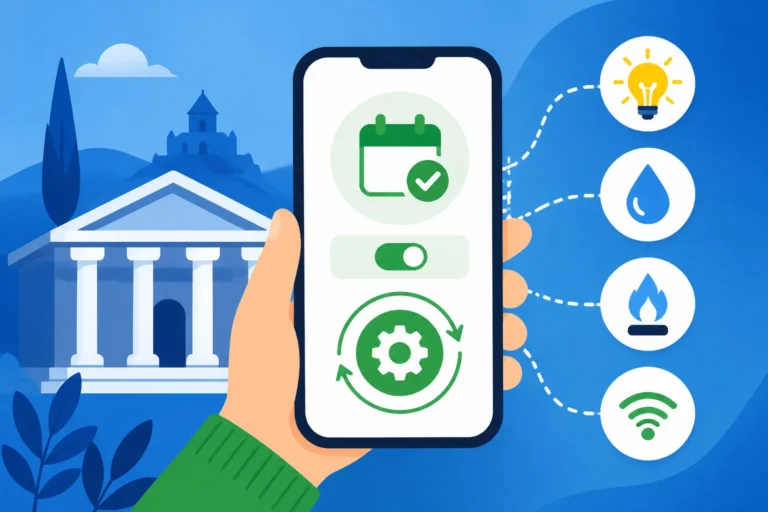
- Pay utility bills: Gas, electricity, water, internet, and even mobile top-ups are typically integrated. This is a huge convenience and often why expats say "How Do I Set Up Electricity After Moving to Georgia?" is one of the first things they need help with.
- Manage cards: Block/unblock cards, set spending limits, and order new ones.
- View statements: Access your monthly statements digitally.
- Open new sub-accounts or multi-currency accounts: Often done directly through the app.
TBC's app often receives slightly higher praise for its modern interface and user-friendliness, while Bank of Georgia's is robust and reliable, albeit sometimes feeling a bit more traditional. Both are constantly updated with new features and security enhancements. Familiarizing yourself with these apps upon account opening will save you countless trips to the bank and make managing your Georgian finances much smoother.
Important Caveats and Ongoing Considerations
Living in Georgia as an expat means being adaptable, and that certainly applies to banking. Things can change, rules can be updated, and what worked for one person might not work for another.
The Ever-Changing Landscape
Georgia is a developing country, and its financial sector is constantly evolving. Banking regulations, fees, and even the services offered can change. What was true a year ago might not be accurate today. For instance, the ease with which non-residents could open accounts has fluctuated over time, often becoming stricter in response to global financial trends. Always check the most current information directly with the banks or reliable expat forums before making decisions.
Keep an eye out for news regarding changes in tax laws as well. Understanding Taxes in Georgia for Expats (2026) is crucial, as banking and tax residency are often intertwined. The Revenue Service portal, which is thankfully available in English, is your friend here.
Staying Informed and Protected
As an expat, you're sometimes a target for scams or misunderstandings due to language barriers. Always be vigilant.
- Security: Never share your online banking passwords or card PINs with anyone. Be wary of suspicious emails or calls claiming to be from your bank.
- Read the Fine Print: When signing any documents, especially for loans or complex services, try to get a clear translation and understand all the terms and conditions.
- Keep Records: Maintain copies of all important banking documents, especially account opening forms, contracts, and any correspondence.
- Know Your Rights: While consumer protection laws in Georgia might not be as robust as in some Western countries, knowing the basics can help you if a dispute arises. Most banks have an internal complaints process.
- Community Knowledge: Leverage expat groups and forums on social media. Other expats have often faced similar issues and can offer valuable, up-to-date advice or warnings about specific banking experiences.
Ultimately, choosing a bank in Georgia involves a bit of research, a dash of patience, and a willingness to adapt. While there's no single "best" bank for everyone, TBC Bank and Bank of Georgia consistently come out on top for their comprehensive services and efforts to cater to the international community.
Disclaimer
The information provided in this guide is intended for general informational purposes only and does not constitute financial, legal, or professional advice. Banking policies, regulations, and services in Georgia can change frequently. While we strive to provide accurate and up-to-date information, readers should always verify details directly with the respective banks and, if necessary, seek independent professional advice before making any financial decisions. The author and publisher are not liable for any actions taken based on the information presented herein.