How Much Does It Cost to Wire Money to Georgia?
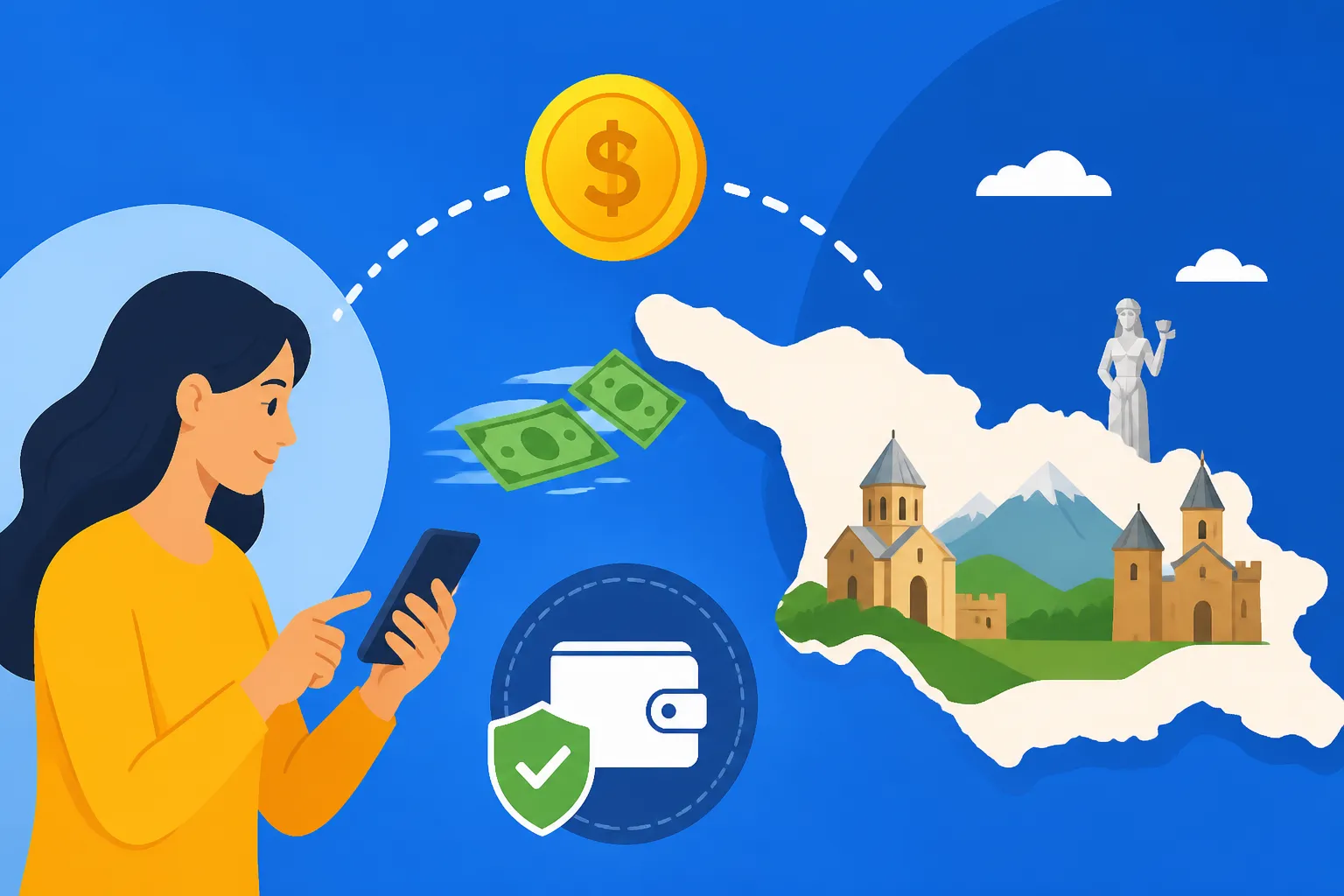
The moment you decide to move your life, or even just some of your hard-earned cash, across borders to a place like Georgia, the question of how to move your money safely and affordably becomes a big one. It's not just about getting money from point A to point B; it's about navigating a maze of bank fees, exchange rates, and sometimes, outright confusion. You've worked hard for that money, and you don't want to see a big chunk of it vanish into the ether of transfer charges. This guide is here to untangle the complexities of wiring money to Georgia, breaking down the true costs and helping you make informed decisions.
Understanding the Different Ways to Wire Money to Georgia
When you're looking to send money to Georgia, you might think a bank transfer is your only option. Oh, if only it were that simple! In reality, the financial landscape has evolved quite a bit, and there are several distinct avenues you can take, each with its own set of advantages, drawbacks, and, crucially, costs. As an expat, you're looking for reliability, speed, and transparency, and not every method delivers equally on all fronts.
Traditional Bank Transfers: The Old-School Approach
Ah, the classic bank wire transfer. For many years, this was pretty much the only way to send significant sums of money internationally. You walk into your bank branch, fill out some forms, and off your money goes, theoretically. In Georgia, major banks like TBC Bank and Bank of Georgia are very much part of this global SWIFT network, which is the system that facilitates these international transfers.
The process usually involves sending money from your bank account in your home country to a Georgian bank account. You'll need the recipient's full name, address, bank name, account number (IBAN), and the SWIFT/BIC code of their Georgian bank. Sounds straightforward, right? Well, the reality can often feel like anything but. Banks typically charge a flat fee for sending money internationally, and sometimes a percentage of the amount. But here's the kicker: it’s not just your bank charging. There are often intermediary banks involved in the SWIFT network, especially if your home bank doesn't have a direct relationship with the recipient's bank in Georgia. Each of these intermediary banks might take a cut, often without you even realizing it until the money arrives short. Then, the Georgian bank receiving the money might also charge a "receiving fee." So, what starts as a seemingly simple transfer can end up costing you several layers of fees, slowly eroding the amount your recipient actually gets.
From an expat perspective, while traditional bank transfers offer a sense of security due to the established banking infrastructure, they are often the slowest and most expensive option. Funds can take anywhere from 3 to 7 business days to arrive, sometimes even longer if there are public holidays or weekends involved in either country. And if you're trying to send a large amount, say to purchase property or make a significant investment, the security might be appealing, but the cost and lack of transparency on the journey of your money can be incredibly frustrating. It's a method that works, but it's far from optimized for the modern expat's need for efficiency and cost-effectiveness. When considering your overall finances in this country, understanding How Georgia's Tax System Works: Territorial Taxation Explained (2027) can provide valuable context.
Online Money Transfer Services: The Modern Solution
This is where the game really changed for expats. Online money transfer services have sprung up to challenge the traditional banking model, promising lower fees, better exchange rates, and significantly faster transfer times. Services like Wise (formerly TransferWise), Revolut, Remitly, and others have become staples for expats worldwide, and Georgia is no exception.
What makes these services stand out is their approach to international transfers. Instead of using the slow and expensive SWIFT network for every transaction, they often operate on a local-to-local basis. For example, if you send money from your UK bank account to a Georgian bank account via Wise, your money typically goes into Wise's local UK bank account. Then, Wise sends the equivalent amount from its local Georgian bank account to your recipient's TBC Bank or Bank of Georgia account in Georgian Lari (GEL). This clever system bypasses most international transfer fees and intermediary banks, resulting in quicker and cheaper transfers.
The fees with these services are generally transparent: you'll see exactly how much you're paying upfront, including any conversion fees and the exchange rate being applied. Many of them pride themselves on offering the mid-market exchange rate, or very close to it, unlike traditional banks that often add a significant markup. Transfers can often be completed within minutes or a few hours, depending on the currencies and banks involved. For those who frequently move money for rent, bills, or family support, this speed and transparency are invaluable. If you're looking to open an account here, a guide like The Expat Guide to Opening a Bank Account in Georgia could be very useful. For those wondering about the national currency, Understanding the Lari (GEL) and Foreign Currency Accounts in Georgia offers more details.
Of course, there are still considerations. Some services have daily or monthly transfer limits, and while generally reliable, customer service experiences can vary. However, for most day-to-day expat financial needs in Georgia, these online platforms are a vastly superior choice to traditional banks in terms of both cost and convenience.
Cryptocurrency and Peer-to-Peer Options
While perhaps not the go-to for everyone, it's worth a mention that cryptocurrency offers another, albeit more volatile and complex, avenue for moving money. If both the sender and receiver are comfortable with crypto, you could convert your currency into a stablecoin (like USDT) or a major cryptocurrency (like Bitcoin or Ethereum), send it to a recipient's crypto wallet, and then they can convert it back to Georgian Lari using a local exchange or a peer-to-peer (P2P) platform.
The fees here can be highly variable, consisting of network transaction fees (which can fluctuate wildly depending on network congestion) and exchange fees when converting to/from fiat currency. The biggest caveat, however, is the inherent volatility of cryptocurrencies, even stablecoins can de-peg or face liquidity issues. Also, the regulatory landscape for crypto in Georgia, while generally progressive, is still evolving. This method offers unparalleled speed if everything goes smoothly, but it comes with a higher degree of risk and requires a certain level of technical savvy that not everyone possesses. For the average expat just trying to pay their rent, it's likely an unnecessary complication. However, if you're involved in the digital economy or looking into alternative investment, it's a possibility.
Breaking Down the Costs: What You Actually Pay
It’s easy to look at a quoted fee for a money transfer and think that’s the whole story. As an expat living in Georgia, you quickly learn that the devil is always in the details, especially when it comes to money. The actual cost of wiring money to Georgia is rarely just one simple number. It’s a mosaic of different charges, some upfront, some hidden, and some dependent on how quickly you need your money to move.
Exchange Rates: The Hidden Fee
This, my friends, is often the biggest sneaky cost in international money transfers. When you send money in one currency (say, USD, EUR, or GBP) to be received in Georgian Lari (GEL), a currency conversion has to happen. Traditional banks, and sometimes even less transparent online services, will offer you an exchange rate that is significantly worse than the "mid-market rate." The mid-market rate is the true rate at which banks trade currencies with each other, without any markup. It's the rate you see on Google or Reuters.
When your bank offers you an exchange rate of, say, 2.65 GEL for 1 USD when the mid-market rate is actually 2.70 GEL, that difference of 0.05 GEL per dollar is effectively a hidden fee. It might seem small, but on a transfer of, say, $1,000, that's a $50 difference in how much GEL your recipient gets. Over time, these hidden markups can add up to hundreds or even thousands of dollars annually. This is why services like Wise explicitly state they use the mid-market rate and clearly show their small, transparent fee separately. Always compare the rate you're being offered against the current mid-market rate before initiating a transfer. This awareness is key to truly understanding The Cost of Healthcare in Georgia: A Complete Breakdown for Foreigners (2026), for example, as conversion rates can impact any big payment.
Transfer Fees: Fixed, Percentage, or Both
Beyond the exchange rate, there are the explicit transfer fees, and these come in various forms:
- Sender Fees: This is the most common and visible fee, charged by your sending bank or transfer service. It can be a fixed amount (e.g., $20 per transfer) or a percentage of the amount being sent (e.g., 0.5% of the total). Some services might even combine both, with a small fixed fee plus a percentage for larger amounts.
- Receiver Fees: Yes, even receiving money can sometimes cost you. Certain Georgian banks might charge a small fee (e.g., 5-10 GEL) for incoming international wire transfers. This is less common with online transfer services where the local payout often avoids this, but it's a possibility with traditional SWIFT transfers. Always check with the recipient's bank in Georgia if they charge incoming international transfer fees.
- Intermediary Bank Fees: This is the black hole of international transfers. As mentioned earlier, with SWIFT transfers, if your bank doesn't have a direct relationship with the recipient's bank, your money might pass through several correspondent banks. Each of these banks can deduct a fee (typically $10-$30) for their service. The frustrating part is that these fees are often unpredictable and can only be known after the money has been sent, leading to your recipient getting less than you intended. This is almost entirely avoided by modern online transfer services.
Table: Illustrative Cost Comparison for Sending $1,000 to Georgia (GEL)
| Feature/Service | Traditional Bank Transfer (SWIFT) | Online Money Transfer (e.g., Wise) |
|---|---|---|
| Sender Fee | $25 – $50 (fixed) | $5 – $10 (fixed or small percentage, clearly stated) |
| Exchange Rate Markup | ~1-3% above mid-market rate (hidden) | ~0% (mid-market rate) |
| Intermediary Bank Fee | $10 – $60 (unpredictable, often deducted from amount) | $0 (local transfers avoid this) |
| Receiver Fee (Georgia) | ~5 – 15 GEL (approx. $2-$5) | $0 (for most local payouts) |
| Total Estimated Cost | $40 – $115+ (can vary widely) | $5 – $15 (transparent and predictable) |
| Transfer Speed | 3-7 business days | Minutes to a few hours (sometimes 1-2 business days) |
Note: These are illustrative costs. Actual fees and rates vary by bank, service, amount, and fluctuating market conditions.
Speed vs. Cost: The Trade-Offs
It's a universal truth in finance: speed usually costs more. If you need money to arrive in Georgia yesterday, you'll likely pay a premium.
- Standard Transfers: These are the most economical, usually taking a few business days with traditional banks or a few hours to a day with online services. They utilize the most cost-efficient routes.
- Express/Priority Transfers: Some banks and even some online platforms offer expedited services for an additional fee. This might guarantee next-day delivery or faster processing. While useful in an emergency, it's generally best to plan ahead to avoid these extra charges. For urgent situations, like a medical emergency, knowing What Is the Emergency Phone Number in Georgia? is far more critical than worrying about transfer fees.
For expats, the sweet spot is often the standard transfer via an online service like Wise. You get good speed (often within hours) for a transparent and reasonable fee, without the hefty markups or hidden charges of traditional banks.
Choosing the Right Service for Your Needs
Navigating the waters of international money transfers to Georgia can feel like a game of 'pick your poison' if you're not careful. But with a bit of insight, you can choose the best route for your specific situation. As someone who's had to send and receive money from various corners of the globe while living here, I've learned that there's no single "best" option for every scenario. It really boils down to what you're sending, how fast it needs to get there, and who's on the receiving end.
Factors to Consider: Amount, Urgency, and Recipient
Before you even think about hitting that "send" button, take a moment to consider these three critical factors. They will guide you towards the most appropriate and cost-effective solution.
1. The Amount You're Sending:
This is a big one. For smaller amounts, say under $1,000 or €1,000, the fixed fees of traditional banks can eat a significant chunk out of your transfer. Imagine paying a $30 sending fee on a $200 transfer – that's 15% gone right off the top! This is where online money transfer services truly shine. Their percentage-based fees or very low fixed fees make them incredibly economical for smaller, frequent transfers, like paying for your monthly rent in Tbilisi or sending money to a friend. If you're managing your budget, understanding How Much Does It Cost to Live in Tbilisi per Month? can help you gauge regular transfer needs.
On the flip side, for very large sums – we're talking tens of thousands of dollars or more, perhaps for a property purchase or a major investment – a traditional bank transfer, despite its higher fees, might sometimes offer a perceived sense of security. Though honestly, with the strong regulatory oversight and encryption of modern online services, this "security" is often more psychological than practical. For substantial transfers, the difference in exchange rates between banks and online services becomes even more pronounced. A 1% markup on $50,000 is $500, which is a lot to lose just for feeling a bit more traditional. Always scrutinize the exchange rate closely for large sums. For those looking to invest, How Much Does It Cost to Buy an Apartment in Tbilisi? details some of the larger transfers you might make.
2. The Urgency of the Transfer:
Life happens, and sometimes you need money to arrive in Georgia now. Maybe it's an unexpected medical bill, or a friend needs help. If time is of the essence, paying a little extra for a faster service might be worth it.
- Instant/Near-Instant: Many online money transfer services, including Wise, offer transfers that complete in minutes or a few hours, especially between common currency pairs and during banking hours. This speed comes from their local payout system.
- Next-Day/1-2 Business Days: Most online services will complete transfers within this timeframe as their standard offering.
- 3-7 Business Days: This is typical for traditional SWIFT bank transfers, which are notoriously slow due to multiple intermediaries and manual processing steps.
If you’re planning, always go for the cheaper, slower option if it still meets your deadline. But for genuine emergencies, prioritize speed. Just remember that "express" options with traditional banks can be astronomically expensive. For broader financial planning, especially for newcomers, resources like How Do I Get Health Coverage as a Newcomer in Georgia? are also important.
3. The Recipient's Access and Preferences:
Who are you sending money to in Georgia, and how easily can they access it?
- Bank Account Holders: Most people in Georgia, especially expats, will have a bank account with TBC Bank or Bank of Georgia. This is the easiest and most common way to receive money. Both traditional and online services can send directly to these accounts.
- Cash Pickup: Some services, particularly those focused on remittances (e.g., Western Union, MoneyGram), offer cash pickup options. While convenient for recipients without bank accounts or in very rural areas, these often come with higher fees and less favorable exchange rates.
- Mobile Wallets/Cards: While not as prevalent in Georgia for international transfers as in some other countries, some emerging services might offer direct loading to mobile wallets or debit cards. Check if this is an option and if your recipient uses such a service.
Always confirm the recipient's exact bank details (Full Name, Bank Name, IBAN, SWIFT/BIC code) to avoid delays or rejected transfers. A single digit mistake can send your money on a wild goose chase, or worse, back to you with additional fees incurred.
Practical Tips for Minimizing Costs
Okay, so you've weighed your options. Now, let’s talk about how to keep as much money as possible in your pocket and out of the banks' coffers. Trust me, every GEL counts when you’re building a life as an expat.
- Always Compare Exchange Rates: This is your number one weapon against hidden fees. Don't just accept the rate your bank quotes. Open up a search engine, type in "USD to GEL exchange rate," and look at the mid-market rate. Then compare that to what your chosen service is offering. Even a small difference can add up. Services like Wise are transparent about their rates and show you exactly what you're paying and what your recipient will get. They really champion that mid-market rate.
- Understand All Fees Upfront: Before you commit, the service should clearly display all fees. If it doesn't, that's a red flag. Be aware of both sending and potential receiving fees. Remember the multi-layered fees of SWIFT transfers versus the transparent, consolidated fees of online platforms.
- Consider Sending Larger, Less Frequent Transfers: For smaller, regular expenses, this might not be practical. But if you're saving up or making larger payments, consolidating several smaller transfers into one larger one can save you on fixed fees. For instance, instead of sending $200 four times a month, send $800 once. The fixed fee only applies once. This strategy is also useful for managing your Taxes for Expats efficiently, as fewer transactions might mean less administrative work.
- Avoid Cash Conversions at Airports: This isn't strictly a wire transfer tip, but it's crucial for anyone managing money internationally. Airport currency exchange kiosks offer some of the worst rates imaginable. Plan your cash needs in advance or use a local ATM (preferably one associated with your Georgian bank, if you have one, or a bank with low international fees) for cash withdrawals upon arrival.
- Look into Multi-Currency Accounts: If you frequently deal with multiple currencies, opening a multi-currency account with an online provider like Wise or Revolut, or even with some Georgian banks, can be a game-changer. These accounts allow you to hold funds in different currencies and convert them when the exchange rate is favorable, or simply use them without repeated conversion fees. This can significantly reduce costs over time. A guide on How to Open a Multi-Currency Account in Georgia could be very helpful.
- Factor in Potential Delays: While online services are fast, always give yourself a buffer, especially for critical payments. Bank holidays in either country or unusual banking hours can affect transfer times. Don't leave rent payment to the absolute last minute, just in case!
By following these tips, you'll be well on your way to saving money and reducing stress when wiring funds to your new home in Georgia.
Disclaimer
The information provided in this article is intended for general informational purposes only and does not constitute financial, legal, or professional advice. While we strive to provide accurate and up-to-date information, financial regulations, exchange rates, and service fees in Georgia can change rapidly. Always consult with a qualified financial advisor, tax professional, or the specific service provider for the most current and personalized advice. We recommend verifying all fees and exchange rates directly with your chosen service before initiating any transfer.