How to Enrol Your Child in a School in Georgia
Ah, the school run. Just when you think you’ve got a handle on your new life in Georgia, the daunting task of finding the right school and actually getting your child enrolled hits you like a ton of bricks. It's a journey many expat parents dread, filled with confusing procedures, language barriers, and the constant worry of making the best choice for your little ones. But don't you fret! This comprehensive guide is here to walk you through every step of enrolling your child in a school in Georgia, from understanding your options to navigating the paperwork, and even helping them settle into their new academic life.
Understanding Georgia's Diverse School Landscape for Expat Families
Moving to a new country often means rethinking everything, and education is certainly no exception. Georgia offers a mix of educational systems that can feel a bit overwhelming at first glance, especially if you're used to a very different structure back home. It's not just about finding a school; it's about finding the right school that fits your child's needs, your family's budget, and your long-term plans here.
The Lay of the Land: Public, Private, and International Options
When you first arrive, you’ll quickly realize Georgia’s education system isn’t a one-size-fits-all model. You essentially have three main paths to consider: the public school system, local private schools, and international schools. Each comes with its own set of advantages, disadvantages, and, let’s be honest, bureaucratic hoops to jump through. Public schools are a viable option, often free, but typically operate solely in Georgian. Local private schools might offer a blend, sometimes with enhanced facilities or English-language programs, but still adhere largely to the national curriculum. Then there are the international schools, often the first port of call for many expat families, which follow foreign curricula and teach primarily in English. We’ve already gone into a lot of detail about this in our guide to Understanding the School System (Public, Private, International) in Georgia, so consider that a must-read!
Curriculum and Language of Instruction
This is often the make-or-break factor for expat parents. In Georgian public schools, the curriculum is set by the Ministry of Education and Science of Georgia, and all instruction is in Georgian. While this can be an incredible immersion experience for children, it's also a significant challenge, particularly for older kids who might struggle with the language barrier. Many parents find themselves wondering if their child will just flounder. Local private schools may offer some subjects in English or provide intensive language support, but the core national curriculum usually remains. International schools, however, are designed specifically for expatriate families, offering curricula like the International Baccalaureate (IB), British, or American systems, all taught in English. This consistency can be a huge relief, especially if you anticipate moving again in a few years, as it provides continuity in their education.
Age and Grade Level Placement
Determining where your child fits into Georgia's school system requires a bit of understanding about their academic year structure. In Georgia, children typically start primary school around age six. The Georgian academic year generally runs from mid-September to early June, with holidays sprinkled throughout. When enrolling, schools will consider your child's age and previous schooling records. For instance, if your child is coming from a system where the academic year starts in January, there might be a slight adjustment period or discussion about which grade level is most appropriate. It’s not always a straightforward transfer, so be prepared to advocate for your child’s placement based on their previous learning. This can be one of those initial headaches that make you wish you'd never left home!
Navigating the Public School System: What Expats Need to Know
For many, the public school system in Georgia is an attractive option due to its affordability and the opportunity for deep cultural and linguistic immersion. However, it's important to go in with your eyes wide open, as there are distinct differences and challenges compared to what many Western expats might be accustomed to.
Eligibility and Residence Requirements
Before you even think about forms, you need to understand the fundamental eligibility. Generally, any child legally residing in Georgia is entitled to attend a public school. This means your child needs to have some form of legal residence – usually a residence permit. Without it, the process becomes significantly more complicated, if not impossible. We've written a detailed guide on The Expat Guide to Getting a Residence Permit in Georgia (2027), which is crucial reading to ensure your family's legal status is sorted well in advance. Schools will often require proof of address within their catchment area, so where you live can dictate which public school your child attends. This can be a tricky part, as some areas might have better-regarded public schools than others, making your choice of neighbourhood even more important. It can feel like a chicken-and-egg situation: you need a home for school, but you want a school before you commit to a home!
The Enrolment Process: A Step-by-Step Guide
The actual enrolment process for public schools involves a few distinct stages and often requires a fair bit of patience and persistence. First, you'll need to contact the specific school you're interested in, usually by visiting them directly. Online portals are improving, but personal interaction is often still key. You’ll be asked to provide an array of documents, including your child's birth certificate (translated and notarized), their passport, your passport and residence permit, and proof of address. You'll also likely need medical records, including vaccination certificates. Then comes the registration period, which is usually in the spring for the upcoming academic year, though schools often have provisions for latecomers or those arriving mid-year. The Ministry of Education and Science often announces specific dates on their website, so keep an eye out. Expect multiple visits to the school and possibly to the local education authority. Using a local fixer or a Georgian-speaking friend to assist can significantly ease this process – trust me, it’s worth it to avoid endless loops of "come back tomorrow."
Understanding the Georgian Curriculum and Language Barrier
Once enrolled, the main hurdle for many expat children will be the language. The Georgian public school curriculum is robust, covering subjects like Georgian language and literature, mathematics, history, geography, sciences, and arts. However, if your child arrives without Georgian language skills, the initial period can be incredibly tough. While some schools might offer basic language support, it’s rarely as comprehensive as dedicated ESL (English as a Second Language) programs found in international schools. Parents often find themselves investing in private Georgian language tutoring to help their children catch up. It’s a huge commitment, both for you and your child, and it requires immense emotional support from the family. It's easy to underestimate how profoundly difficult it can be for a child to navigate lessons, make friends, and participate in class when they don't understand the language.
The World of Private and International Schools: Options for Your Child
For many expat families, especially those with limited Georgian language skills or those seeking a curriculum aligned with their home country, private and international schools offer a more familiar and often less stressful route. Tbilisi, in particular, has a growing number of reputable options, though they come at a cost.
Why Choose Private or International? (Pros and Cons)
The advantages of private and international schools are often clear: English as the primary language of instruction, internationally recognized curricula (IB, British, American), smaller class sizes, and a diverse student body. For children who’ve moved frequently, the consistency of an international curriculum can be incredibly reassuring, allowing for smoother transitions between countries. These schools also often boast better facilities, a wider range of extracurricular activities, and teachers with international teaching experience. However, the biggest drawback is undoubtedly the cost. International school fees can be substantial, often ranking among the highest expenses for expat families. You'll definitely want to check out our detailed piece on How Much Are International School Fees in Tbilisi? to get a realistic picture. On the flip side, local private schools can be a middle ground, sometimes offering a more local experience with some English instruction, but generally at a lower price point than international behemoths. It’s a balance between familiarity, cost, and the level of integration you want for your child.
Application Process and Admission Criteria
The application process for private and international schools is typically more structured and competitive than for public schools. It usually begins with an online application, followed by submitting a raft of documents: academic transcripts from previous schools, birth certificates, passports, vaccination records, and sometimes even student essays or parent statements. Many schools require an entrance exam or an assessment to determine your child's academic level and English proficiency. You might also have an interview, either in person or via video call. It's often a multi-stage process that can take weeks, if not months, to complete. Popular schools, like the British International School of Tbilisi or QSI International School of Tbilisi, often have waiting lists, so applying well in advance of your desired start date is crucial. Don't underestimate the time commitment; it's a marathon, not a sprint. If you're coordinating a move, consider using a service like Sirelo to manage the logistics of getting your family and belongings settled while you tackle school applications.
Costs and Financial Considerations
Let's not beat around the bush: international school fees can be eye-watering. They typically include tuition fees, enrolment fees (often non-refundable), facility development fees, and sometimes charges for uniforms, textbooks, and extracurricular activities. Annual tuition for a single child can range from several thousand to over ten thousand US dollars, depending on the school and grade level. It’s a significant financial commitment that many expat families factor into their overall budget for living in Georgia. Our guide to The Complete Guide to Cost of Living in Georgia for Expats (2026) will give you an idea of how these costs stack up against other expenses. Some companies offer education allowances for expat employees, so if you’re relocating for work, check your employment package. Otherwise, you’ll need to budget meticulously. Local private schools, on the other hand, can be considerably more affordable, perhaps a few hundred dollars per month, making them a more accessible option for some families.
Essential Paperwork and Bureaucracy: Getting Your Child Enrolled
This is where the real fun begins, or rather, where the paperwork often feels like it's trying to trip you up at every turn. Georgian bureaucracy has its own unique rhythm, and understanding what documents are genuinely needed, and how they need to be prepared, is half the battle.
Essential Paperwork You'll Need
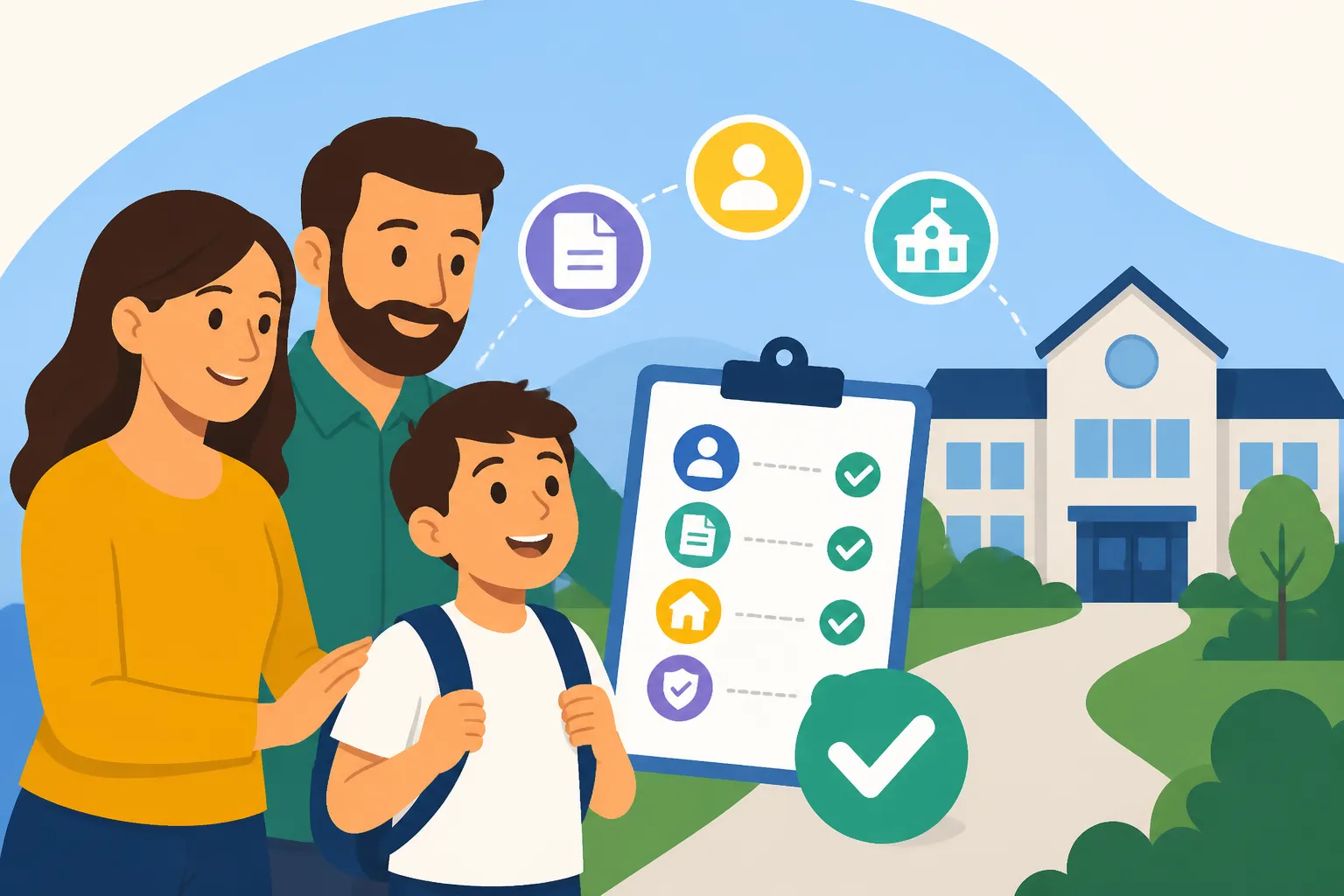
Regardless of whether you choose a public or private institution, there’s a core set of documents you’ll need for your child's school enrolment in Georgia. Expect to gather:
- Your child's birth certificate: The original, plus translated and notarized copies.
- Your child's passport: And copies of all relevant visa and entry stamps, or their Georgian residence permit.
- Your passport and residence permit: As the legal guardian, you’ll need to prove your own legal status.
- Previous academic records: Transcripts, report cards, or school certificates from their last school.
- Medical records and vaccination certificates: Georgian schools are serious about health, so bring a detailed record, which might also involve getting a local medical check-up. This might also involve Understanding Childhood Vaccination Schedules in Georgia.
- Proof of address in Georgia: A rental agreement or property ownership certificate.
- Application forms: Provided by the school itself.
- Photos: Passport-sized photos of your child.
It's always a good idea to have multiple copies of everything, both original and translated. Over-preparing is always better than under-preparing when dealing with Georgian administration.
Translation and Notarization: Don't Skip This Step
This is probably one of the most frustrating but critical parts of the process. Most documents issued outside Georgia will need to be officially translated into Georgian and then notarized by a Georgian notary public. This isn't something you can usually do yourself, even if you’re fluent. You’ll need to find a certified translator and then take the translated documents to a notary. Sometimes, you might even need an apostille from your home country, especially for birth certificates or marriage certificates if they are foundational documents for your child’s identity or your legal guardianship. This can add significant time and cost to the enrolment process, so factor it in. It's a common point of frustration, where you spend hours running between translation offices and notary desks, feeling like you’re just pushing paper around.
Navigating Recognition of Foreign Qualifications
While it’s less common for primary and secondary school enrolment, some private or international schools, or even the Ministry of Education for public school placement validation, might require a formal recognition of your child's prior schooling from abroad. This is essentially an equivalency process to ensure their previous education meets Georgian standards. The National Center for Educational Quality Enhancement (NCEQE) is the body responsible for this. While most schools will handle grade placement based on age and transcripts, don't be surprised if this additional step is requested. It’s another layer of bureaucracy that can slow things down, so inquiring early with your chosen school about their specific requirements regarding foreign qualifications is highly advisable.
Easing the Transition: Supporting Your Child's Start in a Georgian School
Getting your child enrolled is a huge milestone, but the journey doesn't end there. The real work begins as your child adapts to a new environment, a new language, and a new culture. This transition can be exhilarating for some and incredibly challenging for others.
Bridging the Language Gap
If your child is attending a public school, the language barrier will be their biggest hurdle. Even in international schools, while the primary instruction is English, they’ll be immersed in a new linguistic soundscape outside the classroom. Encourage them to learn basic Georgian phrases from day one. Apps, online resources, and private tutors can be invaluable. Even simple greetings and common classroom instructions can make a world of difference to their confidence. Role-play situations at home, practice new vocabulary, and celebrate every small linguistic victory. For younger children, language acquisition is often faster and more natural, but older children might experience frustration and isolation. Remind them that it’s okay to struggle and that learning a new language is a superpower they’re developing. Staying connected to home and their friends and family from afar can also help – a reliable eSIM from Airalo for your phone ensures you're always connected, ready to call home or look up a translation.
Cultural Adaptation in the Classroom
Beyond language, Georgian classrooms might have different teaching styles, classroom dynamics, and cultural norms. Direct participation might be less common than in some Western schools, or respect for teachers might be demonstrated differently. Encourage your child to observe, ask questions (to you or their teacher, if comfortable), and be open to new ways of learning and interacting. Discuss these differences with them, validating any feelings of confusion or discomfort they might have. Lunchtime routines, playground games, and school events will all have a Georgian flavour. Sharing your own experiences of adapting to Georgian culture can help them feel less alone in their journey. For instance, explaining why certain holidays are celebrated or why people might interact in a particular way can demystify aspects of their new school life.
Finding Support Networks for Your Child and Yourself
No one said moving abroad with kids was easy, and you’ll need your own support network too. Look for expat parent groups in Tbilisi or Batumi. These communities often share invaluable tips, recommendations, and emotional support. For your child, encourage them to join extracurricular activities, sports clubs, or art classes. These can be fantastic avenues for making friends outside the immediate classroom setting and finding common ground with peers. Building a network of friends, both Georgian and international, will be crucial for their happiness and sense of belonging. Don't forget, if you’re trying to find an ideal spot with good schools and amenities, our guide to How Do I Find Family-Friendly Neighbourhoods in Tbilisi? can be a great starting point for your research.
Post-Enrolment: Staying Involved and Ensuring Success
Enrolment day is just the beginning. To truly thrive, your child will need ongoing support and you'll need to stay connected with their school and the broader expat community. Being an engaged parent in a foreign school system has its own unique flavour of challenges and rewards.
Beyond the Classroom: Extracurriculars and Social Life
Georgian schools, both public and private, often have a range of extracurricular activities. These can vary from sports like football and basketball to chess clubs, dance groups, and art circles. Encourage your child to try something new or continue a passion they had before moving. These activities are golden opportunities for them to integrate, make friends outside their immediate class, and build confidence. It's often through shared hobbies that real friendships blossom, transcending language barriers. For older children, social events, school trips, and even volunteering can provide a sense of purpose and belonging. Remember, Georgia is a welcoming place, and these activities are often where children feel most at home. If you're pondering childcare for younger siblings or after-school care, do check out How Much Does Childcare Cost in Georgia?.
Monitoring Academic Progress and Parental Involvement
Even if you're not fluent in Georgian, staying connected with your child's teachers is vital. Schedule regular meetings, and if needed, ask for a translator to be present. Many international schools have parent-teacher associations (PTAs) or similar groups that are great for networking and understanding school policies. For public schools, it might require a bit more proactivity on your part. Ask about their progress, any areas of difficulty, and how you can support their learning at home. Remember, your involvement sends a powerful message to your child that their education matters, especially during a time of significant change. Don't be afraid to ask for help or clarification; Georgian teachers are generally very supportive of foreign families.
Dealing with Challenges and Seeking Additional Help
It's completely normal for children to face challenges when adjusting to a new school system in a foreign country. This could manifest as academic struggles, social difficulties, or even emotional issues. Be patient, observant, and proactive. If you notice persistent issues, communicate immediately with the school. They often have experience with international students and can offer support or suggest resources. This might include extra tutoring, counselling services, or simply a teacher who can provide a little extra guidance. Maintaining open lines of communication with your child is paramount; create a safe space for them to express their feelings and frustrations. Sometimes, it’s just a rough patch, and other times, it might signal a need for more intensive intervention. Remember, there are always solutions, and you are not alone in navigating these complexities.
| Feature / Aspect | Public Schools (Georgian) | Private & International Schools (English/Other) |
|---|---|---|
| Language of Instruction | Primarily Georgian | English, French, German, etc. |
| Curriculum | National Georgian Curriculum | IB, British, American, other national curricula |
| Fees | Generally free for legal residents | Significant tuition and enrolment fees |
| Eligibility | Legal residence in Georgia, proof of address | Admission testing, previous academic records, legal residence |
| Class Size | Can be larger | Generally smaller |
| Facilities | Varies widely, can be basic | Modern facilities, extensive extracurriculars |
| Teacher Demographics | Primarily Georgian teachers | International and local teachers, often with international experience |
| Integration | High cultural and linguistic immersion | Diverse international student body, familiar systems |
| Main Challenge for Expats | Language barrier, cultural differences | High cost, potential waiting lists |
| Residence Permit Required? | Yes, for long-term enrolment | Yes, generally for long-term enrolment |
Ultimately, enrolling your child in a school in Georgia is a deeply personal decision, fraught with the usual expat uncertainties but also rich with potential for growth and unique experiences. Whether you choose the immersive path of a public Georgian school or the familiar embrace of an international institution, being prepared, patient, and proactive will be your best assets. And remember, you're not just finding a school; you're helping your child build a new life in a fascinating new country.
Disclaimer
The information provided in this guide is for general informational purposes only and does not constitute legal, financial, or educational advice. While we strive to keep the content up-to-date and accurate, regulations and procedures in Georgia can change. We recommend verifying all information with official sources, relevant educational institutions, or qualified local professionals before making any decisions related to your child's schooling or residency in Georgia.