Can I Bring My Parents to Live in Georgia?
Moving to Georgia as an expat is a journey in itself, full of bureaucratic hurdles and cultural nuances, but bringing your loved ones, especially your elderly parents, adds another layer of complexity. Many of us dream of having our families closer, but the reality of securing a residence permit for parents in Georgia isn't always straightforward. This guide will walk you through the practicalities, the documents, and the expectations, based on what I and other expats have learned the hard way.
Understanding the Landscape for Parent Residency in Georgia
Let's be honest, the idea of having your parents join you in Georgia sounds wonderful. You picture family dinners, shared holidays, and the comfort of having them nearby. However, the legal framework for dependent parents to obtain a residence permit in Georgia is often misunderstood and can be quite challenging compared to, say, sponsoring a spouse or children. It's not impossible, but it requires a very clear understanding of what the Georgian authorities are looking for.
The Reality of Family Reunification for Parents
Georgia’s immigration laws are primarily geared towards attracting skilled labor, investors, or individuals who can contribute economically, and fostering immediate family unity (spouses, minor children). When it comes to extended family, especially elderly parents, the path isn't as clearly defined or as easily accessible as it might be in some Western countries. The key type of permit you’ll be looking at is a variation of the family reunification residence permit, but the definition of "dependent" can be quite strict. Unlike minor children who are automatically considered dependents, parents often need to demonstrate a higher degree of reliance on their child (you) for their financial and physical well-being. This isn't just a simple statement; it often requires concrete proof.
Initial Hurdles and What to Expect
The first hurdle is often perception. Many expats assume that if they have a stable job and a residence permit themselves, bringing their parents will be a formality. This is rarely the case. Expect detailed scrutiny of your financial capabilities and your parents' current situation. The Georgian Public Service Development Agency (PSDA) wants to ensure that any new resident will not become a burden on the state, which is a fair expectation from any sovereign nation. This means demonstrating sufficient funds, adequate housing, and a genuine, provable need for your parents to reside with you. Don't be surprised if the process feels intrusive at times; it's just part of their due diligence. It's vital to gather all your paperwork and truly understand what they're asking for, which is a common theme when trying to navigate The Expat Guide to Getting a Residence Permit in Georgia.
Eligibility Criteria for Parent Residence Permits
To successfully apply for a parent's residence permit, you really need to tick a lot of boxes. This isn't a "nice to have" list; these are non-negotiable requirements that the Georgian authorities will meticulously verify.
Defining 'Dependence' in the Georgian Context
This is arguably the most critical aspect. For parents to qualify under family reunification, they must be demonstrably dependent on you, their child, for support. This isn't merely about wanting to live together; it's about proving that your parents cannot sustain themselves independently, either financially or due to health reasons requiring your direct care.
For financial dependence, you'll need to provide evidence that you have been consistently providing significant financial support to your parents from Georgia, or that they have no other means of income or assets to support themselves in their home country. This could mean bank statements showing regular transfers, notarized affidavits from your parents stating their financial situation, or proof of their inability to work due to age or disability. It's a high bar, and simply saying "I support my parents" won't cut it. They might even look into whether there are other adult children in the parents' home country who could provide support, and why they aren't.
If the dependence is primarily due to health or physical care needs, medical certificates from certified doctors, both from their home country and potentially from Georgia after an initial visit, would be essential. These documents must clearly outline the medical condition, the level of care required, and ideally, state that this care can only be adequately provided by you in Georgia. Remember, the Georgian system is thorough, and you need concrete evidence. This level of detail is something you'll encounter across all permit types, as detailed in Understanding Georgian Residence Permits Work Short-Term and Investment.
Financial Requirements and Guarantees
As the sponsoring child, your financial stability is paramount. The Georgian authorities need to be confident that you can support your parents without them relying on state aid. This typically involves demonstrating a stable and sufficient income. While there isn't one official, publicly stated minimum income figure that fits every case, it's generally understood that your income should be substantially above the average wage in Georgia, enough to comfortably support yourself and each parent you wish to sponsor. We're talking about proving you have enough funds to cover their housing, food, healthcare, and any other living expenses.
You will need to provide your Georgian bank statements, employment contract, and possibly tax returns to show your consistent income. Furthermore, you will need to guarantee that you will be financially responsible for them. This guarantee needs to be notarized and submitted as part of the application. It's a significant commitment. Many expats find it helpful to consult with a local lawyer specializing in immigration to understand the precise financial thresholds and how best to present their financial solvency. Just as with How to Sponsor Your Spouse and Children for a Georgia Residence Permit, robust financial proof is key.
Accommodation and Integration Proof
Another crucial piece of the puzzle is demonstrating that your parents will have suitable accommodation in Georgia. This means providing proof of ownership of a sufficiently large property or a long-term rental agreement that explicitly includes your parents as residents. The living space needs to be adequate for everyone residing there, adhering to local standards. For instance, a small studio apartment for you and two parents won't likely be accepted.
Beyond physical accommodation, the authorities may also consider the broader integration aspect. While not explicitly codified for parent permits, demonstrating a plan for their integration into Georgian society can strengthen your case. This could involve enrolling them in Georgian language classes (even basic ones), showing proximity to cultural or community centers, or explaining how they will spend their time. For elderly parents, having access to healthcare is also a major concern, and you'll need to consider how they will navigate a new health system. This is a critical area, and researching Health Insurance in Georgia Private and International Options Explained is highly recommended.
The Application Process Step-by-Step
Navigating the application process for a parent's residence permit can feel like a full-time job. It’s tedious, requires immense patience, and attention to detail.
Gathering the Mountain of Documents
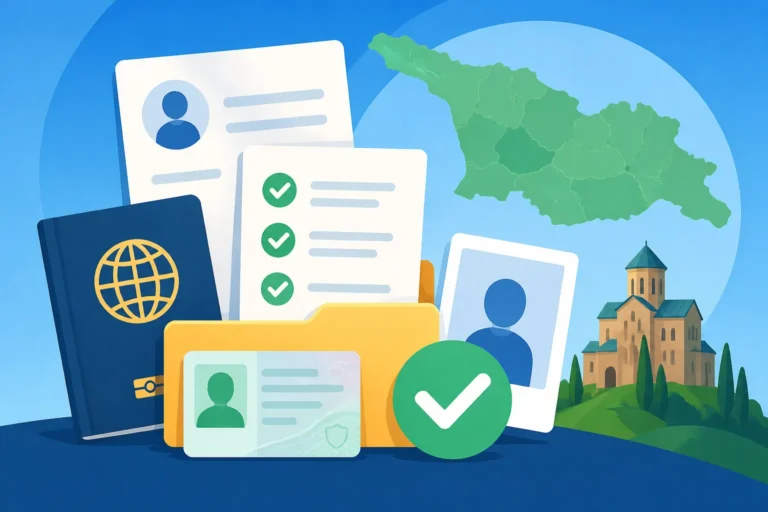
This is where the real work begins. You'll need an exhaustive list of documents, both from you (the sponsor) and your parents. While the PSDA website provides a general list, the nuances for dependent parents often require additional supporting evidence.
For You (the Sponsor):
- Your valid Georgian residence permit and passport.
- Proof of sufficient income (bank statements, employment contract, tax declarations).
- Proof of accommodation (property deed or rental agreement).
- A notarized letter of guarantee for your parents' financial support.
- Your birth certificate, proving your relationship with your parents. This must be apostilled and translated into Georgian.
For Your Parents:
- Their valid passports.
- Their birth certificates (also apostilled and translated).
- Marriage certificate (if applicable, for both parents).
- Proof of financial dependence (bank statements showing lack of income, proof of asset ownership if any, notarized affidavit stating dependence).
- Medical certificates outlining any health conditions necessitating your care (if applicable), translated and notarized.
- Police clearance certificates from their country of origin.
- A recent photograph.
- Proof of previous addresses (sometimes requested).
It's absolutely crucial that all foreign-issued documents are apostilled in their country of origin, and then officially translated into Georgian and notarized in Georgia. Seriously, do not skip these steps. Missing even one stamp or signature can lead to delays or outright rejection. This often leads expats to research How to Get Your Documents Apostilled for Georgia Immigration.
Here’s a simplified table of typical documents:
| Document Type | Required for Sponsor (You) | Required for Parent(s) | Notes |
|---|---|---|---|
| Passport | Yes | Yes | Valid, with enough blank pages |
| Residence Permit (Your) | Yes | N/A | Your current Georgian permit |
| Birth Certificate | Yes | Yes | Proving familial relationship. Apostilled & translated. |
| Marriage Certificate | N/A | Yes (if applicable) | For both parents. Apostilled & translated. |
| Proof of Income | Yes | N/A | Bank statements, employment contract. |
| Proof of Accommodation | Yes | N/A | Property deed or rental agreement for adequate space. |
| Notarized Guarantee | Yes | N/A | Your commitment to financial support. |
| Financial Dependence | N/A | Yes | Bank statements, affidavits of no income/assets. |
| Medical Certificates | N/A | Yes (if applicable) | Detailing health needs, translated & notarized. |
| Police Clearance | N/A | Yes | From their country of residence. Apostilled & translated. |
| Photo | N/A | Yes | Recent passport-sized photo. |
Submitting Your Application and the Waiting Game
Once you have everything in order, you'll submit the application at a Public Service Hall (PSH) or an authorized agency. It’s highly advisable to go in person, ideally with your parents, if they are already in Georgia on a visa-free stay. Be prepared for potential questions and requests for additional documents on the spot. The officials at the PSH are generally helpful but strictly adhere to procedures.
The processing time for a residence permit can vary significantly. While official timelines might be stated, anecdotal evidence from expats suggests it can range from a few weeks to several months. This is a period of anxious waiting, so it's best to prepare for the longer end of the spectrum. You can check the status online, but don't expect daily updates. It's truly a test of patience, a common experience for those applying for The Expat Guide to Getting a Residence Permit in Georgia. During this time, your parents should maintain their legal status in Georgia, whether on a visa-free stay or another visa type.
What Happens After Approval (or Denial)
If, after all that effort, your application is approved, congratulations! Your parents will be granted a temporary residence permit, usually for one year initially. You will then need to take them to the PSDA to collect their residence card. This card is their official ID in Georgia and must be carried at all times. Remember that this permit will need to be renewed annually, which means repeating much of the documentation process, especially regarding continued financial dependence and accommodation. Keeping track of renewal dates is crucial, as forgetting can lead to serious issues, something you'll want to avoid when you're looking into How to Renew My Residence Permit in Georgia.
If, however, the application is denied, don't despair immediately. The denial letter should state the reasons for rejection. You typically have a short window (usually 10 working days) to appeal the decision. This is where a good immigration lawyer becomes invaluable. They can review the denial, help you address the shortcomings, and prepare a stronger appeal. Sometimes it's a simple missing document, other times it's a more fundamental issue with proving dependence or financial capacity.
Important Considerations and Long-Term Planning
Bringing your parents to Georgia is a long-term commitment that extends far beyond just getting the residence permit. You need to think about their quality of life, access to services, and financial security in the years to come.
Healthcare and Insurance for Elderly Parents
This is a monumental concern, and frankly, it's one of the biggest responsibilities you'll shoulder. While Georgia has a Universal Healthcare Program (UHC), it's important to understand that new foreign residents often don't immediately qualify for full benefits, and even then, UHC has its limitations, often requiring co-pays and not covering all specialist care or medications fully. For elderly parents, particularly those with pre-existing conditions, relying solely on UHC could be inadequate.
Private health insurance is almost a necessity. You'll need to research comprehensive plans that cover elderly individuals, preferably with international coverage, as local Georgian plans might have limitations or higher premiums for older applicants or those with specific medical needs. Providers like Cigna Global offer robust international health insurance options that can be tailored to expat families, including older dependents. Be prepared for potentially higher premiums, especially if your parents have chronic conditions. It's critical to understand what's covered for routine check-ups, specialist visits, hospitalizations, and prescription medications. Getting a clear picture of The Complete Guide to Healthcare in Georgia for Expats (2027) is paramount.
You'll also need to consider practical access to doctors. Finding English-speaking doctors, especially specialists, outside of Tbilisi can be a challenge. Even in Tbilisi, wait times for popular specialists can be long. Think about how you'll manage appointments, prescriptions, and any emergencies. Understanding Emergency Medical Care in Georgia What Every Expat Needs to Know is vital, and you'll want to ensure your parents are set up to access help if needed.
Social Integration and Community Support
Moving to a new country can be isolating for anyone, but particularly so for elderly individuals who might not speak the local language or have established social networks. Consider how your parents will spend their days. Are there expat communities they can connect with? Are there local senior centers or activities, even if language is a barrier? Tbilisi, Batumi, and Kutaisi have varying degrees of expat presence and facilities.
Learning some basic Georgian phrases will definitely help, even if just for daily interactions at the market or with neighbors. Encourage them to engage, even in small ways. The expat community in Georgia is growing, and there are various groups on social media platforms where you might find support networks or activities suitable for older expats. If your parents are moving from a country with a large established social circle, helping them build a new one will be a crucial part of their well-being in Georgia.
Finally, think about the logistics of the move itself. While the focus here has been on the legal side, the actual physical move requires careful planning. Moving companies like Sirelo can help compare options for shipping belongings, but preparing your parents for the emotional and practical aspects of relocating is just as important. It’s a huge transition, and having your support through every step will make all the difference.
Disclaimer
The information provided in this guide is for general informational purposes only and does not constitute legal, financial, or immigration advice. Immigration laws and procedures in Georgia can change rapidly. It is highly recommended to consult with a qualified Georgian immigration lawyer or the Public Service Development Agency for the most up-to-date and personalized advice regarding your specific situation before making any decisions.