How to Use the Metro and Public Transport in Tbilisi
Stepping off the plane and into the vibrant chaos of Tbilisi, one of the first things that hits many expats is the sheer adventure of figuring out how to get around. The public transport system here can feel like a riddle wrapped in an enigma, especially when you're used to something totally different back home. But don't you worry, because this comprehensive guide is going to strip away all that confusion, helping you master the Metro, buses, and marshrutkas like a seasoned local.
Getting Started with Public Transport in Tbilisi
Navigating a new city's transport system is always a bit of a learning curve, and Tbilisi is no exception. While it might seem a little intimidating at first glance, especially with the unique script on signs, the core of the system is surprisingly efficient and affordable once you get the hang of it. Your first step to becoming a Tbilisi transport pro is getting your hands on the magic key to the city's network.
The MetroMoney Card: Your Key to the City
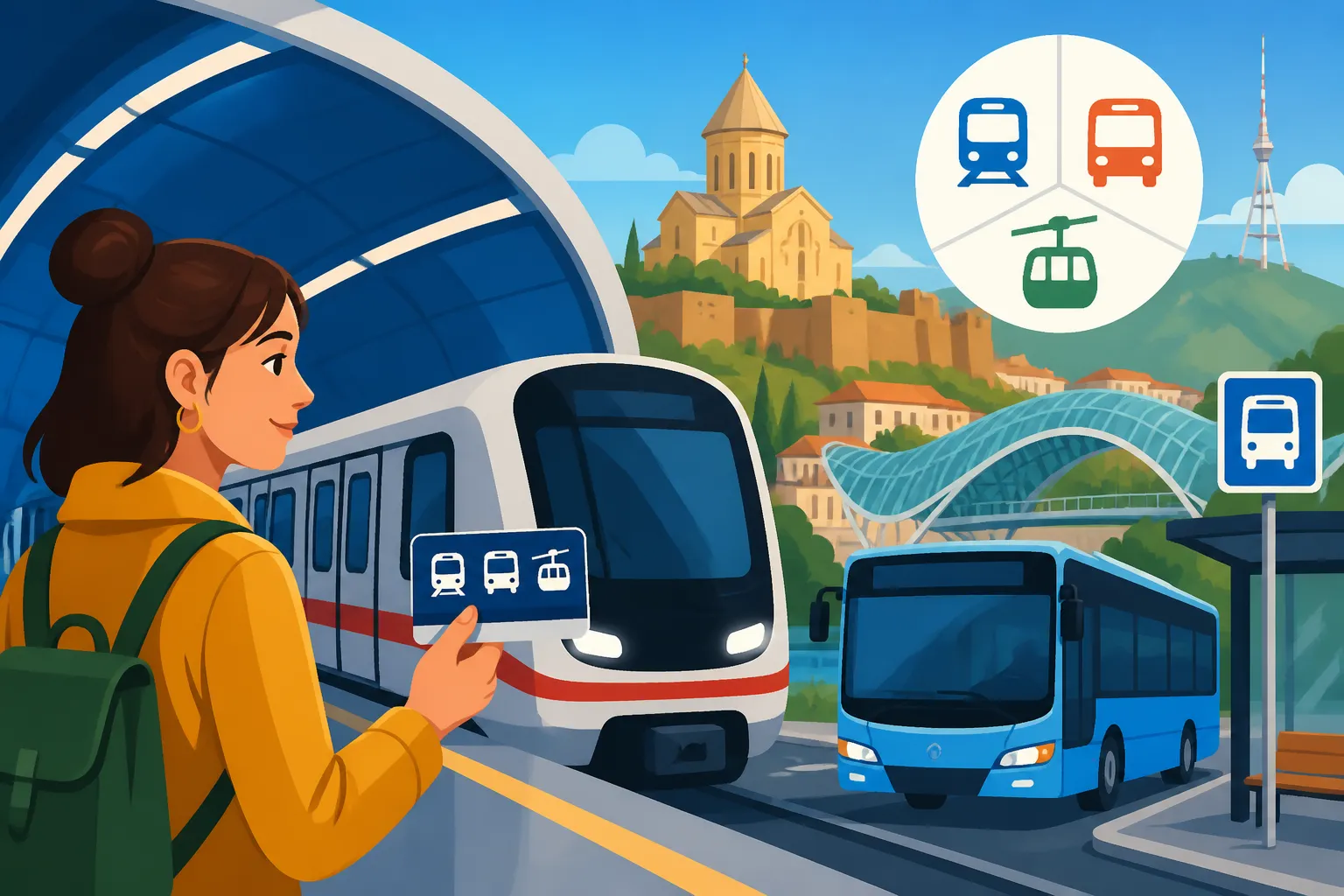
Forget fumbling for exact change or buying single-use tickets every time you want to ride. The MetroMoney Card is an absolute lifesaver and a non-negotiable item for anyone looking to use Tbilisi's public transport. This little blue card is your passport to seamless travel on the Metro, city buses, and even the cable car to Narikala Fortress.
You can easily purchase a MetroMoney Card at any Metro station ticket booth. Just head to the window, ask for a "MetroMoney Card" (or simply "kartu," pronounced kar-too), and hand over about 2 GEL for the card itself. Then, you can top it up with whatever amount you need. I usually put 10-20 GEL on mine at a time, just enough to not have to worry about it for a week or two, but not so much that I'm carrying a huge balance if I misplace it. The process is quick, and while English might be limited, pointing to the card and then indicating an amount on your fingers or a calculator app usually does the trick. You can also load it at certain express payment terminals found in many shops and on street corners, though these sometimes have a small service fee.
One brilliant feature of the MetroMoney Card is that you can use a single card for multiple people traveling together. Just tap the card once for each person entering the system. This is particularly handy if you’re out with friends or family and don't all want to buy individual cards. Just remember to tell the person behind you how many taps you're doing, or wait for them to tap if they have their own card! It's worth noting that if you're eventually leaving Georgia for good, you can actually get your 2 GEL deposit back for the card, along with any remaining balance, at the main ticket office at Liberty Square Metro Station, assuming the card is in good condition.
Understanding Fares and Transfers
The beauty of the MetroMoney Card isn't just its convenience; it's also how it streamlines the fare system. A single ride on the Metro, a city bus, or even the Narikala cable car costs just 1 GEL. This is incredibly budget-friendly, especially when you consider how far it can take you.
What's truly revolutionary for getting around efficiently is Tbilisi's transfer system. Once you tap your MetroMoney Card for your first journey, you have 90 minutes to make unlimited transfers between the Metro and buses (and vice versa) without paying an additional fare. That's right, free transfers! This means you can hop on a bus, get off at a Metro station, ride the Metro a few stops, and then switch to another bus to reach your final destination, all for that initial 1 GEL, provided it's all within that 90-minute window. This system is a dream come true for exploring different parts of the city without constantly worrying about costs piling up. It encourages you to mix and match your transport modes, making your journey more flexible. Just make sure you tap your card every time you enter a new mode of transport or pass through a Metro turnstile, even if it's a free transfer – the system simply won't deduct another fee if you're within the time limit.
Navigating the Tbilisi Metro System
The Tbilisi Metro is often described as the city's lifeline, and it's not hard to see why. It’s fast, generally reliable, and bypasses the often-congested street traffic above ground. For many expats, it becomes their preferred mode of transport, especially during peak hours. If you're looking for an efficient way to zip across the city, getting familiar with the Metro is essential. For more general advice on settling in, consider reading our guide on The Complete Guide to Moving to Georgia: Your First 90 Days (2027).
Metro Lines and Key Stations for Expats
Tbilisi currently has two main Metro lines, both of which are crucial for getting around:
-
Akhmeteli-Varketili Line (Red Line): This is the city’s oldest and longest line, running from the northern outskirts (Akhmeteli Theatre) all the way down to the southeastern suburb of Varketili. Many of the city's most central and expat-friendly areas are along this line.
- Rustaveli: A major hub, right on Rustaveli Avenue, close to many cultural sights, cafes, and shops.
- Liberty Square: The absolute heart of the city, perfect for accessing the Old Town, countless restaurants, and the main tourist information point.
- Marjanishvili: A bustling area known for its vibrant theatre scene, cafes, and proximity to areas like Fabrika.
- Station Square (Sadguris Moedani): This is where both Metro lines intersect, and it's also the main railway station, making it a crucial interchange for those arriving or departing by train.
-
Saburtalo Line (Green Line): This line serves the Saburtalo district, a more residential and business-oriented part of Tbilisi. It's especially useful if you live or work in this area.
- Medical University: Key for accessing the university area and nearby clinics.
- Delisi: Another central Saburtalo station, with good connections to various parts of the district.
- Station Square (Sadguris Moedani): As mentioned, this is the transfer point between the two lines, making it easy to switch if your destination is on the Saburtalo line.
The Metro stations themselves are quite deep, and the escalators are famously long and fast – hold on tight! Don’t be surprised by the Soviet-era architecture in many of the older stations; they're quite a sight to behold. Trains run frequently, usually every 5-10 minutes, and even more often during peak hours. You'll find journey planners like Google Maps are quite accurate for Metro timings, and they can show you how to easily navigate between key residential areas like those discussed in The Best Places to Live in Georgia for Expats: A Complete Guide (2027).
Metro Etiquette and Practical Tips
Riding the Tbilisi Metro is generally a straightforward experience, but a few unwritten rules and tips can make your journey smoother and more pleasant. First off, be prepared for crowds during rush hour, typically from 8:00 AM to 10:00 AM and 5:00 PM to 7:00 PM on weekdays. Personal space becomes a luxury at these times, so just embrace the squeeze!
When using the escalators, remember the universal rule: stand on the right, walk on the left. This keeps the flow moving for those in a hurry. Inside the train, it's customary to offer your seat to elderly people, pregnant women, or those with young children. You'll notice that many Georgians are quite polite in this regard. While the train announcements are in Georgian, many newer trains and key stations also have English announcements, which is a huge help. Even if you don’t catch the announcement, looking for the station name written in both Georgian and Latin script on the platforms will guide you.
The Metro is generally safe, but like any crowded public space, it's wise to be mindful of your belongings. Keep your bags zipped and close to you, especially in crowded carriages. You'll also find the Metro stations and trains are kept remarkably clean, a testament to civic pride. One final tip: try to avoid the very first or last carriage if you're particular about space during peak times, as they tend to be the most crowded. And remember, Metro doors close quickly! Don't try to squeeze in at the last second.
Exploring Tbilisi by Bus and Minibus (Marshrutka)
While the Metro is fantastic for speed, the bus and marshrutka networks truly offer the veins and capillaries of Tbilisi's public transport system, reaching almost every nook and cranny of the city. They might seem more complex at first glance, but they open up a whole new world of exploration beyond the Metro lines.
The Extensive Bus Network
Tbilisi's yellow (and increasingly green, electric) city buses are a crucial part of daily life. They cover extensive routes, connecting residential areas to city centers, business districts, and even smaller suburbs that the Metro doesn't reach. For those living a bit further out, understanding the bus system is key to managing your daily commute and exploring the city effectively. Living in certain areas of Tbilisi, especially outside the immediate Metro radius, often means relying on buses for your daily travels. Many expats choose to rent apartments in these well-connected neighborhoods; if you're still looking for a place, our guide on How Much Does It Cost to Rent an Apartment in Tbilisi in 2026? might be useful.
The best way to navigate the bus system is by using a reliable mapping app. Google Maps is excellent here, providing real-time bus locations, estimated arrival times, and detailed route information. Simply input your destination, select the public transport option, and it will tell you which bus to take, where to catch it, and when it's arriving. The bus stops are clearly marked with a yellow sign (or green for the new electric ones), displaying the numbers of the buses that stop there and their main destinations. All modern buses have digital displays inside showing the next stops in both Georgian and English, so you can track your journey without stress. Remember to tap your MetroMoney Card upon entry. You'll find validators near both the front and middle doors.
The Unique Marshrutka Experience
Ah, the marshrutka. These distinctive yellow minibuses are a true Georgian experience, often a source of both frustration and affection for expats. They are privately operated, follow semi-fixed routes, and are known for their speed, flexibility, and sometimes rather… exuberant driving style. Unlike buses, marshrutkas don’t typically have scheduled stops; you hail them from the side of the road, and you tell the driver where you want to get off.
Using a marshrutka for the first time can feel like diving into the deep end. The best way to identify the correct marshrutka is by looking at the numbers and destination names displayed on their windshields – usually in Georgian, but some have Latin script or simply a number. Apps like Google Maps can sometimes indicate marshrutka routes, but their real-time accuracy can vary. The most common method involves a bit of trial and error and asking locals. Don't be afraid to wave your hand at an approaching marshrutka with the right number; if they have space, they'll pull over.
Once inside, payment is usually made to the driver when you get off, or sometimes passed forward through other passengers. A ride typically costs 1 GEL, similar to buses and Metro. To signal your stop, a simple "Gaacheret, tu შეიძლება" (ga-a-chereht, too sheh-eedz-leh-ba), meaning "Stop, please," usually works. Or, just say the name of your destination loud and clear. Be prepared for a potentially crowded ride, with passengers often squeezing in. Marshrutkas are fantastic for reaching areas not served by the Metro or main bus lines, often taking more direct and quicker routes through smaller streets. They are a bit more chaotic than the organized bus system, but they offer unparalleled coverage and are deeply integrated into the city's transport fabric.
Other Public Transport Options and Essential Apps
While the Metro, buses, and marshrutkas form the backbone of Tbilisi's public transport, there are other important modes and tools that can make your life as an expat much easier. Knowing about these alternatives and keeping the right apps on your phone can save you a lot of time and hassle. For broader connectivity, especially when you’re out and about, having a local SIM card with a good data plan is crucial. If you're a newcomer and unsure how to get this set up, take a look at our article on How to Set Up Internet and Mobile Service in Georgia. In the interim, for those just arriving, a global eSIM provider like Airalo can be a game-changer for instant connectivity without needing a physical SIM, allowing you to hit the ground running with navigation apps and communication.
Taxis and Ride-Hailing Apps
Sometimes, you just need to get somewhere quickly, comfortably, and perhaps late at night when other options are less frequent. This is where taxis and ride-hailing apps come in. While you'll see plenty of older, unofficial taxis on the street, especially around tourist hotspots, I strongly advise against hailing them directly. They are notorious for overcharging foreigners and often don't use meters.
Instead, stick to ride-hailing apps. The two dominant apps in Tbilisi are Bolt and Yandex Go. Both are extremely reliable, affordable, and operate similarly to Uber in other parts of the world. You simply enter your destination, see the fare upfront, and pay through the app or in cash directly to the driver. This eliminates language barriers and the worry of being ripped off. A typical short ride across the city center might cost anywhere from 5 to 15 GEL, depending on distance and time of day. Bolt also offers different service tiers, like more comfortable cars or even electric vehicles, if you're willing to pay a little extra. For comparing costs and living expenses, particularly in the capital, our piece on How Much Does It Cost to Live in Tbilisi per Month? provides useful context.
Cable Cars and Funiculars for Tourists
Beyond daily commuting, Tbilisi also offers some unique modes of transport that double as fantastic tourist attractions. The Narikala Cable Car is perhaps the most famous. It connects Rike Park (on the east bank of the Mtkvari River, near the Peace Bridge) to the Narikala Fortress and the Mother of Georgia statue. It's a quick, scenic ride, offering breathtaking panoramic views of the Old Town. This journey also costs 1 GEL and can be paid for with your trusty MetroMoney Card.
Another iconic option is the Mtatsminda Funicular, which takes you up to Mtatsminda Park, perched high above the city. While technically public transport, its primary purpose for many is recreation and access to the park's amusement rides and stunning viewpoints. The funicular has its own separate payment card, which you can purchase at the lower station. A ride up offers equally spectacular vistas, especially at sunset. These are not everyday commuting options for most, but they're wonderful for exploring Tbilisi's unique geography and enjoying its beauty.
Indispensable Apps for Getting Around
In the modern age, your smartphone is arguably your most powerful tool for navigating any new city. Tbilisi is no exception. Here are the apps that every expat should have installed:
- Google Maps: Absolutely essential. Provides public transport routes (Metro, bus), walking directions, and even often real-time bus tracking. Its accuracy for Metro and bus times is generally excellent.
- Tbilisi Transport Company (TTC) App: This is the official app for Tbilisi public transport. It offers real-time bus and Metro schedules, route maps, and even information about MetroMoney card balance. While primarily in Georgian, it’s still very useful once you get familiar with the icons and layout.
- Bolt & Yandex Go: As discussed, these are crucial for reliable and affordable taxi services. Having both gives you options, as sometimes one might have better availability or pricing in specific areas or during peak times.
- Airalo (or your local eSIM provider's app): Staying connected is paramount. Whether it's to look up directions, call a taxi, or translate a sign, mobile data is a must. Airalo provides eSIMs for Georgia, offering immediate internet access upon arrival, which is invaluable before you manage to get a local SIM.
Common Challenges and Solutions for Expats
Even with all the tools and knowledge, moving to a new country and navigating its urban landscape throws up its own set of unique challenges. Tbilisi, with its distinct language and cultural nuances, will undoubtedly test your patience at times. But trust me, you're not alone in these struggles, and there are ways to overcome them. For a deeper dive into the overall cost of living and how it compares across different Georgian cities, our guide to Understanding the Cost of Living Differences Across Georgian Cities can give you some perspective.
Language Barriers and Signage
One of the most immediate hurdles you'll face is the Georgian language and its unique script. While Tbilisi is quite tourist-friendly, and many younger Georgians speak English, signage on public transport is predominantly in Georgian. This can be daunting, especially when trying to decipher station names or bus routes. Many bus destinations are simply numbers and a destination name in Georgian only.
The best solution here is proactive preparation. Always cross-reference street names and destinations on Google Maps. The app will show you the Georgian script alongside the Latin transliteration, which helps you learn to recognize key places. For Metro stations, most have Latin script alongside Georgian, but it’s good to familiarize yourself with the sounds of key stations you use frequently. Don't be shy to ask for help! Georgians are generally very friendly and willing to assist, even if there's a language barrier. A simple "Inglisuri?" (Do you speak English?) or pointing to a map on your phone can work wonders. Having a translation app like Google Translate with offline Georgian language packs downloaded is also a godsend, allowing you to quickly translate signs or communicate basic questions.
Navigating Rush Hour and Crowds
Tbilisi is a bustling city, and its public transport reflects that, especially during peak commuter hours. The Metro, in particular, can get incredibly crowded, feeling a bit like a game of human Tetris. Buses too can fill up quickly, making it hard to find a seat or even stand comfortably. This can be a shock if you're from a less densely populated area or if you're used to very spacious public transport.
The key to navigating rush hour without losing your cool is a combination of strategy and patience. If you have the flexibility, try to schedule your journeys outside the busiest times (generally 8-10 AM and 5-7 PM on weekdays). If you can’t avoid it, brace yourself for the crowds and understand that it's just part of city life. Keep your belongings secure, and don't expect too much personal space. Standing near the doors can make getting off easier, but also means you'll be in the thick of the crowd. Sometimes, choosing a slightly longer bus route that avoids the Metro during peak times can actually save you stress, even if it adds a few minutes to your journey. Remember, everyone else is just trying to get where they need to go, so a little understanding goes a long way.
Finally, for those planning a long-term stay or considering buying property, understanding how public transport impacts daily life is crucial when choosing where to settle. Areas with excellent Metro or bus links often command different rental prices, as discussed in How Do I Find an Apartment Near the Metro in Tbilisi?.
| Transport Type | Cost (GEL) | Speed | Coverage | Comfort | Flexibility (Stops) | Notes |
|---|---|---|---|---|---|---|
| Metro | 1 | Very Fast | Limited | Good | Fixed | Best for long distances, avoids traffic, frequent trains, can be crowded at rush hour. |
| Bus | 1 | Moderate | Extensive | Variable | Fixed | Good for local travel, real-time tracking via apps, often less crowded than Metro. |
| Marshrutka | 1 | Fast | Very Extensive | Low (often crowded) | Flexible (hail & stop) | Reaches areas buses/Metro don't, quicker routes, chaotic but efficient, ask driver to stop. |
| Bolt/Yandex | 5-20+ | Fast (traffic permitting) | Door-to-Door | High | On-demand | Convenient, good for late nights or specific destinations, pricier than public transport. |
Disclaimer
Please remember that while I strive to provide the most current and accurate information based on my experience and available resources, regulations, prices, and services in Georgia can change. Always verify critical information with official sources or local experts. This guide is for informational purposes only and should not be taken as legal or financial advice.