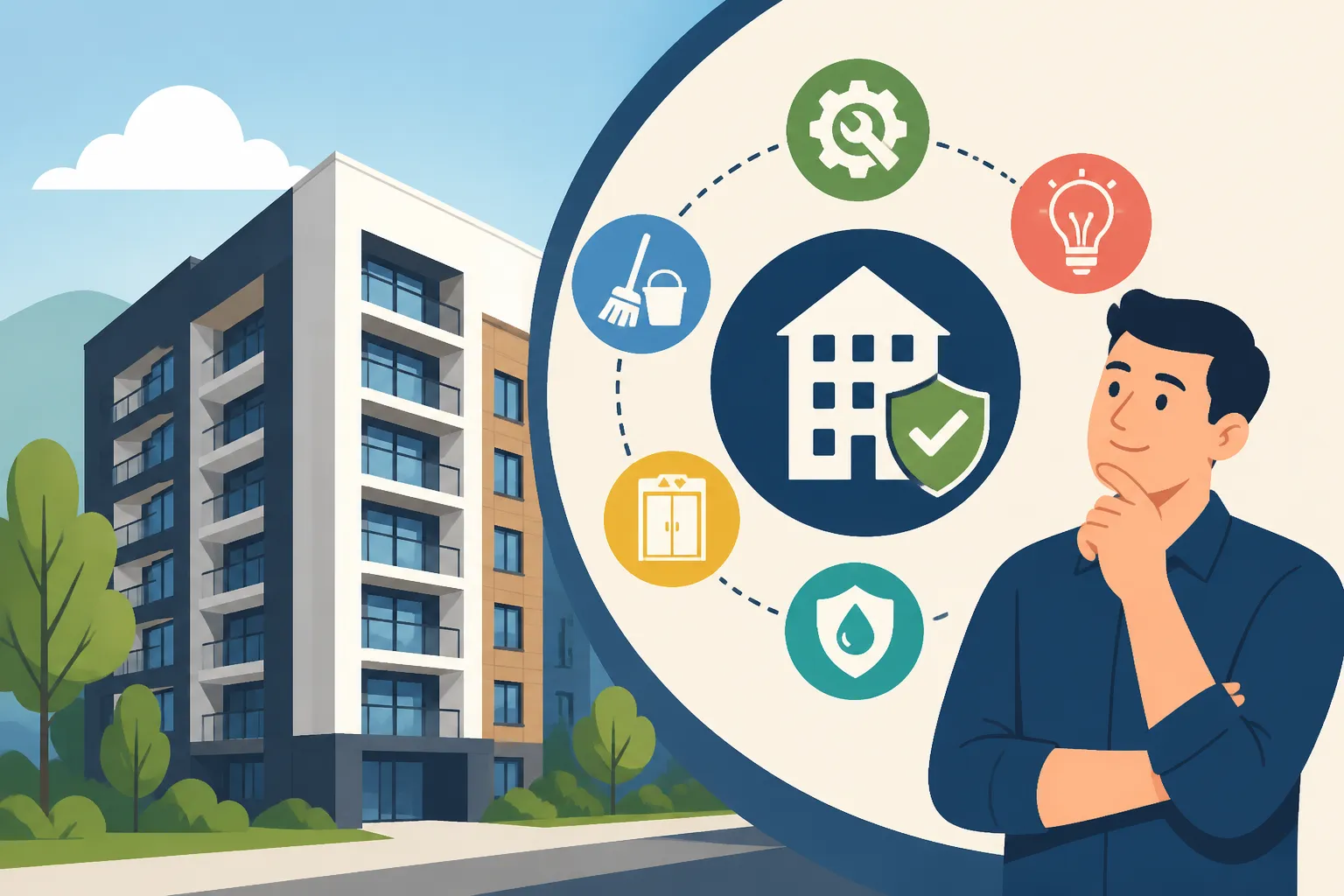
Understanding Building Maintenance Fees for Apartments in Georgia
One of the trickiest things about settling into an apartment in Georgia, especially when you’re fresh off the plane, isn’t always the rent itself, but the opaque world of additional costs – particularly those pesky building maintenance fees. It's not uncommon for expats to sign a lease, happily thinking they've got their budget sorted, only to be hit with unexpected charges for communal services. This guide is here to shed some light on what these fees are, what they cover, how they're calculated, and how you can navigate them without tearing your hair out.
What Exactly Are Building Maintenance Fees in Georgia?
When you’re looking at apartments in Georgia, particularly in cities like Tbilisi or Batumi, you’ll quickly learn that "rent" often doesn't encompass everything. What might seem like a straightforward monthly payment can quickly grow once you factor in utilities, and then, the often-mysterious "maintenance fees." These aren't always glaringly obvious in online listings or even when discussing with a landlord who might assume you already know about them.
Beyond the Rent: Unpacking the "Komunalebi" Concept
Let's start with a term you'll hear a lot: komunalebi (კომუნალური). In its broadest sense, this Georgian word refers to utility payments – electricity, water, gas, and sometimes even internet. However, in common usage, and for many older buildings, this term often also informally encompasses collective charges for shared building services. It’s a bit of a catch-all, which can be incredibly confusing for foreigners used to itemized bills for everything. You might pay your individual electricity bill directly, but the "common electricity" for the stairwell lights? That’s likely part of the komunalebi or a separate, less formal collection. It’s vital to understand that this isn’t just about your apartment’s consumption; it’s about the building as a whole.
The ambiguity around komunalebi is a prime source of expat frustration. You might find a great apartment, budget for the listed rent and estimated utilities, and then discover there's an additional, sometimes significant, amount due for things you didn't even know existed. This is why it’s so important to dig deeper and ask very specific questions, which we'll get into later. Think of it as the unwritten rules of shared urban living here – they’re not always formalized, but they absolutely exist.
The Local Context: Why These Fees Exist
The history of apartment buildings in Georgia plays a huge role in how these fees are structured today. Many older residential blocks, particularly those built during the Soviet era, weren't designed with a formal building management structure. Residents were largely responsible for collective upkeep, often on an ad-hoc basis. If the elevator broke, residents would pool money for repairs. If the entrance needed painting, someone might organize a collection. This informal, community-driven approach still persists in many older buildings, meaning fees can be unpredictable and based on consensus rather than a fixed monthly charge.
However, Georgia has seen a massive boom in new construction over the last two decades. Modern, often high-rise apartment complexes now dot the skylines of Tbilisi, Batumi, and other major cities. These newer developments do typically come with formal building management, often referred to as a Homeowner Association (HOA) or simply a management company. These entities are responsible for maintaining the building, its amenities, and common areas, and they charge mandatory, usually fixed, monthly fees for their services. This is where you’ll find a much clearer, but often higher, structure for maintenance costs. The shift from informal collective responsibility to formalized corporate management marks a significant difference in how you'll encounter these fees, and understanding the context of your building’s age is your first clue.
What Do Building Maintenance Fees Typically Cover?
Okay, so we know these fees exist, and they can be a bit of a mixed bag. But what exactly are you paying for? The scope of what’s covered can vary wildly depending on whether you’re in an older block or a brand-spanking-new development. Let’s break down the usual suspects.
Common Area Upkeep and Cleaning
This is perhaps the most universally understood component of building maintenance fees, though its execution can be wildly inconsistent. In both old and new buildings, a portion of the fee typically goes towards keeping the shared spaces tidy.
- Stairwells and Lobbies: This includes cleaning, sweeping, and sometimes even minor repairs or painting. In older buildings, you might see a cleaner come once a week, or perhaps residents take turns, or it only happens when someone complains enough. In modern buildings, it's usually a regular, professional service.
- Elevator Maintenance and Cleaning: If your building has an elevator, there will definitely be costs associated with its upkeep, electricity, and periodic technical inspections. The reliability of this service, and the promptness of repairs, often directly correlates with the professionalism of the building management. Trust me, getting stuck in an elevator in a foreign country is not an experience you want, so this is one fee you really want to ensure is being properly allocated.
- Garbage Collection: While your individual apartment might have a separate bill for household waste, many buildings have collective bins or chute systems, and the management fee might cover the costs associated with the upkeep of these communal disposal areas or specific collection services.
- Exterior Grounds: If there’s a courtyard, small garden, or parking area outside the building, its maintenance (e.g., sweeping, minor landscaping, snow removal in winter) will also fall under these fees.
The frustrating part often comes when you're paying a fee, but the services feel inconsistent or non-existent. You might be staring at a dirty stairwell wondering where your money is going. This is a common expat gripe and highlights the importance of asking pointed questions about service delivery before committing to a rental.
Utility Services for Shared Spaces
Beyond the cleaning, there are utility costs that aren't tied to your apartment's meter but are essential for the building's functionality. These are often pooled and distributed through the maintenance fees.
- Common Area Electricity: This covers the lights in the hallways, stairwells, lobbies, and sometimes exterior building lights. If your building has an elevator, its electricity consumption is a significant part of this. Imagine you're coming home late at night, fumbling for your keys in the dark – a well-lit common area is a small but mighty comfort!
- Water for Shared Facilities: While less common than electricity, some buildings might have shared water expenses for things like communal garden irrigation, or even basic cleaning if not covered under individual apartment usage.
- Heating for Common Areas: This is rarer, especially in older buildings which usually don't heat common areas at all. However, some newer, higher-end complexes might include heating for lobbies or communal spaces during the colder months, which will naturally factor into the maintenance fees. This is a luxury, but one that adds significantly to your monthly outlay.
These shared utility costs often go unnoticed until they're missing. A dark hallway or a perpetually out-of-order elevator can quickly make you realize the value (or lack thereof) you're getting from your maintenance payments.
Building Security and Amenities
This is where the divide between older and newer buildings becomes most apparent, and where maintenance fees can skyrocket. Modern developments often boast a range of features designed to attract tenants and offer a higher standard of living.
- Security Services: Many contemporary buildings, especially in more upscale areas, include 24/7 security personnel, CCTV surveillance, or controlled access systems (e.g., key cards, intercoms). These services provide peace of mind but come at a significant cost, directly reflected in the maintenance fees.
- Recreational Amenities: This is the big differentiator. If your building has a gym, swimming pool, sauna, children’s playground, dedicated parking garage, or a communal rooftop terrace, maintaining these facilities will be a major part of your monthly fee. These are fantastic perks, offering a great quality of life, but they are never free. You’ll find these kinds of fees in places like the modern towers popping up along the river in Tbilisi or beachfront developments in Batumi.
- Concierge Services: Some high-end residential buildings might even offer concierge services, further increasing the monthly maintenance charge. This can be anything from parcel reception to basic administrative assistance.
When considering a modern apartment, remember that while these amenities are attractive, they represent a recurring cost that you'll be paying whether you use them daily or not. It's an important factor in understanding the true cost of living in Georgia.
How Are Maintenance Fees Calculated and Collected?
The lack of a standardized national system for calculating and collecting maintenance fees can be one of the most bewildering aspects for newcomers. It’s not like signing up for an internet package where prices are clearly advertised; this is often much more bespoke and, at times, arbitrary.
Square Footage, Number of Residents, or Flat Rate?
You might encounter a few different approaches to how these fees are tallied up, and understanding the method can help you gauge fairness (or lack thereof).
- Per Square Meter: This is a common method in newer, formally managed buildings. You'll pay a certain amount per square meter of your apartment. So, a larger apartment will naturally incur higher maintenance fees. This method is often seen as equitable because those with more property contribute more to its upkeep. For example, you might hear of a rate like 0.50 GEL per square meter, meaning a 70 sqm apartment pays 35 GEL.
- Per Person/Resident: Less common for general building maintenance but sometimes used for specific services like garbage collection in older buildings or for shared water bills. This can feel less fair if you're a single person in a large apartment, paying the same as a family of four in a similar-sized unit.
- Flat Rate Per Apartment: Many older buildings and some simpler new ones might simply charge a fixed monthly amount per apartment, regardless of size or number of occupants. This is the easiest to understand but can feel unfair to those in smaller units. For instance, every apartment might be asked to contribute 50 GEL per month.
- Ad-Hoc Collections: In very old, informally managed buildings, especially for unexpected repairs (like a broken main water pipe or a non-functioning intercom), residents might be asked to contribute a one-off sum as needed. This can be particularly frustrating as it's unpredictable and often requires a neighborhood meeting or a 'representative' going door-to-door.
The key takeaway here is that there's no single rule. You must ask explicitly how the fees are calculated for the specific apartment you’re interested in. Without this clarity, you're essentially signing a blank cheque for future expenses.
The Role of Building Management and Homeowner Associations
The organization behind the collection and disbursement of these fees also differs greatly and significantly impacts transparency and accountability.
- Modern Complexes: Formal Management: In almost all new apartment buildings, there’s a designated building management company or a formal Homeowner Association (HOA). These entities are typically responsible for everything: collecting fees, arranging cleaning, managing security, overseeing amenity maintenance, and handling repairs. They often have an office on-site or nearby, and you might receive regular invoices or statements (though these might be in Georgian, so keep your translation app handy!). These formal structures often mean higher fees, but usually, a more reliable and consistent service. You'll typically find transparent financial reporting, although it might take some effort to get and understand it.
- Older Buildings: Informal Systems: This is where things get truly Georgian! Many older buildings lack a formal management structure. Decisions about common area maintenance, minor repairs, or hiring a cleaner are often made informally by a group of residents, or sometimes a single elected (or self-appointed) building elder. Collection might be done by a neighbor knocking on doors, or a sign posted in the hallway asking for contributions. There’s often less transparency, no formal invoicing, and decisions can sometimes feel arbitrary. If you're looking at a charming old building, you might find yourself navigating these community dynamics. For expats, this can be especially challenging due to language barriers and unfamiliarity with local customs.
Payment Methods and Potential Pitfalls
Once you know the amount, how do you actually pay? This, too, has its local quirks.
- Payment Terminals: For formally managed buildings, fees (and often utilities) can often be paid through the ubiquitous payment terminals like Paybox or Express Pay found throughout Georgia. You'll typically need an apartment number or a specific service code to make the payment. This is generally straightforward and provides a receipt.
- Direct to Management/Landlord: In less formal arrangements, especially in older buildings, you might pay the fees directly to the building manager, a designated resident, or your landlord (who then forwards it). If you're paying your landlord, ensure they provide you with proof of payment for the maintenance fees, not just your rent.
- Bank Transfer/Direct Debit: Some modern complexes might offer bank transfer options or even direct debit, which is convenient but less common for smaller, informal collections.
A significant pitfall is the lack of clear documentation. Always, always, always get a receipt for any payment you make. If you’re paying cash to a neighbor for the stairwell light fund, it might feel awkward, but try to get a signed note or at least a text message confirmation. Miscommunication or a lack of clear receipts can lead to disputes down the line, and you don’t want to be caught out claiming you paid when you have no proof. Navigating these small, everyday administrative tasks can be quite a hurdle, but staying connected with an eSIM from a provider like Airalo can at least keep your translation apps and communication channels open.
Navigating Maintenance Fees as an Expat Tenant
For expats, the world of building maintenance fees in Georgia can feel like walking through a linguistic and bureaucratic maze. It's not always upfront, and asking the right questions is your best defense against unexpected costs and frustrations. Don’t be shy – this is your money we’re talking about!
Essential Questions to Ask Before Signing a Lease
This is your battle plan before you commit to anything. Seriously, pull out this list and don't take "don't worry about it" for an answer. When you’re looking at properties, perhaps with the help of a local real estate agent, remember to explicitly discuss these points. If you're using a platform to compare moving companies, like Sirelo, to get your belongings here, that's one less headache, but the housing details are still on you.
Here are the crucial questions:
- "What exactly is included in the monthly rent?" Get a clear, unambiguous answer. Don’t assume anything.
- "Are there any additional monthly building maintenance fees or communal charges separate from my personal utilities (electricity, water, gas, internet)?" This is the golden question. Frame it carefully to distinguish it from your own apartment's utility consumption.
- "If so, what are these fees called locally (e.g., komunalebi or something else), and what do they typically cover?" Make them spell it out for you. Is it cleaning? Elevator? Security? Gym access?
- "How much are these fees, on average, per month?" Ask for a concrete number or a very clear range. If they say "it varies," press them for an average or a maximum.
- "Who is responsible for paying these fees – me, the tenant, or the landlord?" In many cases, these are considered the tenant's responsibility, but sometimes they are included in the rent or paid by the landlord for certain services. Clarify this explicitly.
- "How are these fees calculated (per square meter, flat rate, per person)?" Understanding the calculation method can help you verify the amount.
- "How and when are these fees paid?" Do you pay directly to a building manager, through a payment terminal, or do you pay your landlord, who then handles it? Is it due at the same time as rent?
- "Can I see a recent bill or statement for these fees?" This provides concrete proof and shows you’re serious. If it’s an informal system, ask for an estimate based on the last few months.
- "Who do I contact if there’s an issue with a common area service (e.g., elevator out of order, no cleaning)?" This helps you understand the reporting structure.
Get everything in writing, preferably as an addendum to your rental contract or in clear communication with your landlord. A vague verbal agreement is almost useless if a dispute arises. Remember that a comprehensive rental contract is key to avoiding future issues.
Common Disagreements and How to Resolve Them
Even with the best preparation, issues can arise. Knowing how to approach them can save you a lot of grief.
- Unexpected Increases: This is a classic. You’ve budgeted for X, and suddenly it’s X+Y. First, calmly ask for an explanation and justification for the increase. Was there a new service added? A major repair? In a formally managed building, there should be a reason. In informal settings, it might be harder to get a clear answer.
- Services Not Rendered: You’re paying for cleaning, but the stairwell hasn’t been touched in weeks. Or the advertised gym is perpetually closed. Document the issue (photos, dates). Then, contact your landlord first. They are your primary point of contact and, often, have a better relationship with the building management or other residents. Clearly state the problem and what you expect.
- Disputes Over Responsibility: Sometimes it’s unclear whether a specific repair is covered by maintenance fees or is an individual landlord/tenant responsibility. For instance, is a leaky pipe in the wall covered by the building, or is it your landlord’s problem? Your rental contract should ideally clarify these points, but if it doesn't, your landlord is the first person to discuss it with.
- Language Barriers: This compounds every problem. Even if you have a basic grasp of Georgian, discussing nuanced maintenance issues can be tough. Use translation apps, or if it’s a serious issue, ask a Georgian friend or colleague to help you translate, or consider hiring a local assistant or lawyer for complex problems.
The golden rule here is clear, calm communication, always starting with your landlord. Avoid letting problems fester, as they rarely resolve themselves. Understanding tenant and landlord rights in Georgia can also be a useful reference point.
Comparing Maintenance Fees: Old vs. New Buildings
The type of building you choose for your apartment in Georgia has a massive impact on the structure, transparency, and cost of your maintenance fees. It's often one of the biggest trade-offs expats face when deciding where to live.
Older Buildings: Lower Base, Higher Variability
When you rent in an older, often charming, Soviet-era building, your experience with maintenance fees will typically be characterized by lower fixed costs but potentially higher unpredictability.
- Lower Fixed Monthly Fees: For basic services like elevator electricity and minimal common area cleaning, you might pay anywhere from 30-80 GEL per month. This is often significantly less than what you’d pay in a modern complex. These fees are usually just for the essentials, reflecting the more spartan amenities of such buildings.
- Ad-Hoc Repairs and Collective Payments: The trade-off for lower fixed fees is the potential for unexpected, larger payments for major repairs. If the roof needs fixing, or the main water pump gives out, residents might be asked to contribute a one-off sum. This can be hundreds of GEL, and you’ll have little control over when it happens or how it’s managed.
- Less Organized, More Community-Driven: Decision-making can be informal, based on neighborhood meetings (which you probably won't be able to attend or understand) or the initiative of a few residents. While this can foster a sense of community, it can also lead to inconsistencies or delays in addressing issues.
- No Fancy Amenities: Don't expect gyms, pools, or 24/7 security. The maintenance fees reflect this lack of premium features. If you're someone who prefers simplicity and lower recurring costs, and you don't mind occasional communal fundraising for repairs, an older building might appeal. Just be sure to find out what exactly is included in the rent and what might pop up as an extra charge.
Modern Developments: Higher Costs, More Services
On the flip side, newer apartment complexes, often built with expats in mind, offer a more structured, service-rich environment, but at a higher price point.
- Significantly Higher Fees: Expect monthly maintenance fees in modern buildings to range from 100-300+ GEL, sometimes even more for luxury properties with extensive amenities. These fees are mandatory and are a non-negotiable part of your monthly housing expense.
- Comprehensive Services and Amenities: These higher fees pay for a full suite of services: 24/7 security, professional cleaning of all common areas, prompt elevator maintenance, gym access, pool upkeep, and sometimes even concierge services. You're paying for convenience, comfort, and peace of mind.
- Professional Management: These buildings almost always have formal management. This means clearer rules, more consistent service delivery, and usually a more transparent (if sometimes complex) invoicing system. You generally know what you’re paying for, even if the amount is higher.
- Predictable, But Non-Negotiable: While the fees are higher, they are usually predictable, meaning fewer unexpected large costs for general building maintenance. However, they are also less flexible. You pay the fee whether you use the gym or not, or if you feel the cleaning isn't up to scratch.
Choosing between an old and a new building really comes down to your budget, priorities, and tolerance for potential unpredictability. Both have their charms and their challenges when it comes to those elusive maintenance fees. If you're comparing rental properties in Tbilisi or Batumi, you'll see this contrast very clearly.
| Feature | Older/Soviet-Era Buildings | Modern/New Developments |
|---|---|---|
| Typical Monthly Fee | 30-80 GEL (for basic services) | 100-300+ GEL (for comprehensive services & amenities) |
| What's Covered | Elevator electricity, stairwell lights, basic cleaning, ad-hoc repairs | 24/7 security, professional cleaning, elevator maintenance, gym/pool access, parking, common area utilities |
| Management Style | Informal, community-driven, resident committees, ad-hoc collections | Formal building management, Homeowner Association (HOA), professional service providers |
| Transparency | Low; often verbal agreements, informal collections, few records | Moderate to High; formal invoices, clearer breakdown of services (though often in Georgian) |
| Predictability | Low; potential for unexpected, large one-off payments for repairs | High; fixed monthly fees, fewer sudden large expenses for general building upkeep |
| Amenities | Few to none (e.g., basic elevator) | Extensive (e.g., gym, pool, security, parking, concierge) |
| Pros for Expats | Lower base costs, more authentic local living | More services, higher comfort, better security, predictable costs |
| Cons for Expats | Unpredictable extra costs, language/communication barriers, less formal accountability | Higher monthly expense, less flexibility on services, potentially less "local" feel |
Disclaimer
The information provided in this guide is intended for general informational purposes only and does not constitute legal, financial, or professional advice. While we strive to provide accurate and up-to-date information, local regulations, practices, and costs in Georgia can change rapidly. Always consult with relevant local professionals, such as real estate agents, legal advisors, or financial consultants, for advice tailored to your specific situation. Reliance on any information in this guide is solely at your own risk.