How to Choose a Mobile and Internet Provider in Georgia
Moving to Georgia, whether for a short adventure or a long-term stay, is exciting, but let's be real – the initial setup can feel like navigating a maze blindfolded. One of the first things you’ll probably desperately need, right after finding a place to sleep, is a reliable way to stay connected. Figuring out mobile and internet providers in a new country, especially one where the local language can be a significant barrier, can be incredibly daunting. This guide is here to walk you through everything you need to know about choosing the best mobile and internet provider for your needs in Georgia, ensuring you stay connected without the headache.
Understanding Georgia's Telecommunications Landscape
Before you dive into plans and prices, it's really helpful to get a lay of the land. Georgia’s telecommunications market, while smaller than some global giants, offers a robust selection, particularly in urban areas. You'll find a mix of well-established local players and, for internet, some smaller, more regional options. Understanding who the major players are and what they generally offer will give you a solid foundation as you start making your choices. It's not just about signal bars; it's about customer service, payment options, and how easily you can navigate their systems as a foreigner.
Major Mobile Network Operators MNOs
When it comes to mobile services in Georgia, three names dominate the scene: MagtiCom, Silknet (which acquired Geocell a few years back), and Cellfie (formerly Beeline). These three pretty much control the mobile market, and you'll find expats and locals alike fiercely loyal to one or the other, often based on personal experience or where they happen to live. MagtiCom is often touted as having the widest coverage, especially outside the main cities. If you plan to explore the mountains or venture into more remote regions, many will tell you Magti is the way to go. Their network has a reputation for being reliable, though sometimes their pricing can be a tad higher than the competition.
Then there's Silknet, which absorbed Geocell. They've invested heavily in infrastructure and offer competitive plans. For those living primarily in Tbilisi, Batumi, or Kutaisi, Silknet's coverage and speeds are generally excellent. You'll often hear people debating which one has the best coverage outside Tbilisi; my personal experience and that of many expat friends suggests that while Magti might edge it out in truly rural areas, Silknet is perfectly adequate for most travel destinations. Lastly, Cellfie, previously known as Beeline, tends to be the budget-friendly option. They offer very attractive rates, particularly for data, and their service in major urban centers is usually quite good. However, if your travels take you far off the beaten path, Cellfie's coverage can sometimes be spotty. Many expats start with Cellfie due to its affordability and then switch if their needs change or they find the coverage insufficient for their lifestyle. It’s worth noting that all three offer 4G LTE, and 5G is slowly but surely being rolled out in central areas of Tbilisi.
Internet Service Providers ISPs
For home internet, the options also tend to coalesce around the big two: Silknet and MagtiCom. These giants aren't just about mobile; they're also the primary providers of fiber optic internet across the country. Silknet, in particular, has a very extensive fiber network and often offers some of the fastest speeds. They're reliable, and their customer service, while still a "Georgian experience" (patience is key!), is generally responsive. MagtiCom also provides strong fiber optic services, often bundling them with TV packages. Their fiber network is also quite robust, especially in the larger cities. The choice between Silknet and MagtiCom for home internet often comes down to who has fiber installed in your specific building or neighborhood, and what promotional offers are available at the time you sign up.
Beyond these two, you might encounter smaller, localized ISPs, particularly in specific apartment complexes or newer developments. Sometimes your landlord will already have an existing contract with one of these, which can be convenient but might limit your choices if you prefer a different provider. For instance, NewNet is another provider that operates in certain areas, offering competitive speeds. However, their coverage is far from universal. When you're looking for an apartment, it's always a good idea to ask the landlord or real estate agent which internet providers are available in that building, as getting a new line installed from scratch can be a lengthy process. This becomes particularly relevant when you're trying to How to Sign a Rental Contract and Pay a Deposit in Georgia, as the rental agreement might influence your setup process.
Choosing Your Mobile Plan: What Expats Need to Consider
Selecting a mobile plan isn't a one-size-fits-all situation, especially for expats whose usage patterns might differ significantly from locals. You're likely relying on data for navigation, communication with family back home, and general information gathering. Thinking through your priorities will save you a lot of grief and money down the line.
Coverage and Network Reliability
This is paramount. What good is a cheap plan if you can't get a signal where you live, work, or travel? While all major providers offer decent coverage in Tbilisi and other big cities, the differences become noticeable when you venture out. If you're planning weekend trips to Kazbegi, Kakheti, or exploring the Black Sea coast, checking coverage maps is a wise first step. However, I've found that real-world experience often trumps theoretical maps. Ask fellow expats in online forums or local groups about their experiences. Someone living in the Old Town might have a fantastic signal with Silknet, while someone in Vake could swear by Magti.
Another aspect of reliability is speed. While 4G/LTE is standard, the actual speeds can vary depending on network congestion. This is less of an issue in Georgia compared to some more densely populated countries, but it’s still something to be aware of if you rely on your phone for heavy streaming or mobile hotspot use. As 5G slowly rolls out in prime locations like Freedom Square or Rustaveli Avenue in Tbilisi, those speeds will only increase, but for now, 4G is the workhorse. My advice is to consider how critical constant, high-speed connectivity is for your daily life. If you're a digital nomad, this could be a deal-breaker. For those just needing to call a local taxi via Bolt or track a bus route, the differences might be negligible.
Data, Calls, and SMS Packages
Georgian mobile providers offer a range of packages, typically combining data, local calls, and SMS. The trend, much like globally, is towards data-heavy plans, which is great for expats. You'll usually choose between prepaid (pay-as-you-go) and postpaid (monthly contract) options. For newcomers, prepaid is often the easiest entry point. You simply buy a SIM card, top it up with credit, and then activate a package. This gives you flexibility without being tied down by a contract, which is a huge plus when you're still figuring things out.
MagtiCom and Silknet both have user-friendly apps that allow you to monitor your data usage, top up, and activate new packages. Cellfie also has an app, and their "weekly" or "monthly" bundles are particularly popular for their value. For example, you can often get generous data allowances (e.g., 20-30GB) for a very reasonable price, sometimes with unlimited local calls. If you're just arriving and need immediate connectivity without committing to a local SIM card, you might consider an eSIM service like Airalo. It allows you to get online as soon as you land, which is a lifesaver for ordering a taxi or looking up directions, and you can then take your time choosing a local provider. It’s a fantastic interim solution that removes a lot of initial stress. When choosing a package, always check if local calls are unlimited, or if there's a certain number of minutes included, and if SMS messages are truly relevant for you in an era of messaging apps. Most expats rely almost entirely on data for communication.
Roaming and International Calls
One of the biggest money pits for expats is often international communication. While your Georgian SIM will allow you to make local calls and use data within the country, calling internationally or using your Georgian SIM abroad (roaming) can get expensive quickly. For international calls to family and friends, popular VoIP apps like WhatsApp, Viber, Telegram, and Zoom are your best friends. As long as you have data or Wi-Fi, these apps offer free or very low-cost communication. Don't even bother with traditional international calling packages unless you absolutely have to, as the rates are usually prohibitive.
If you plan to travel outside Georgia frequently, consider dedicated international SIMs or, again, an eSIM service like Airalo for your travels. Using your Georgian SIM for roaming, even for short trips to neighboring countries, is generally not cost-effective. It's almost always cheaper to get a local SIM in the country you're visiting or rely on a global eSIM. The convenience of being instantly connected when you land in a new country without hunting for a local SIM store is invaluable, and services like Airalo cater specifically to this pain point for frequent travelers. Remember, keeping your primary Georgian number active usually means just topping up occasionally, even if you’re using another service for international travel.
Navigating Home Internet Options in Georgia
Once you’ve sorted your mobile, home internet is the next big hurdle. For most expats, a stable, fast home internet connection is essential, whether for remote work, streaming entertainment, or simply staying in touch. The options range from robust fiber to more temporary solutions, each with its own quirks.
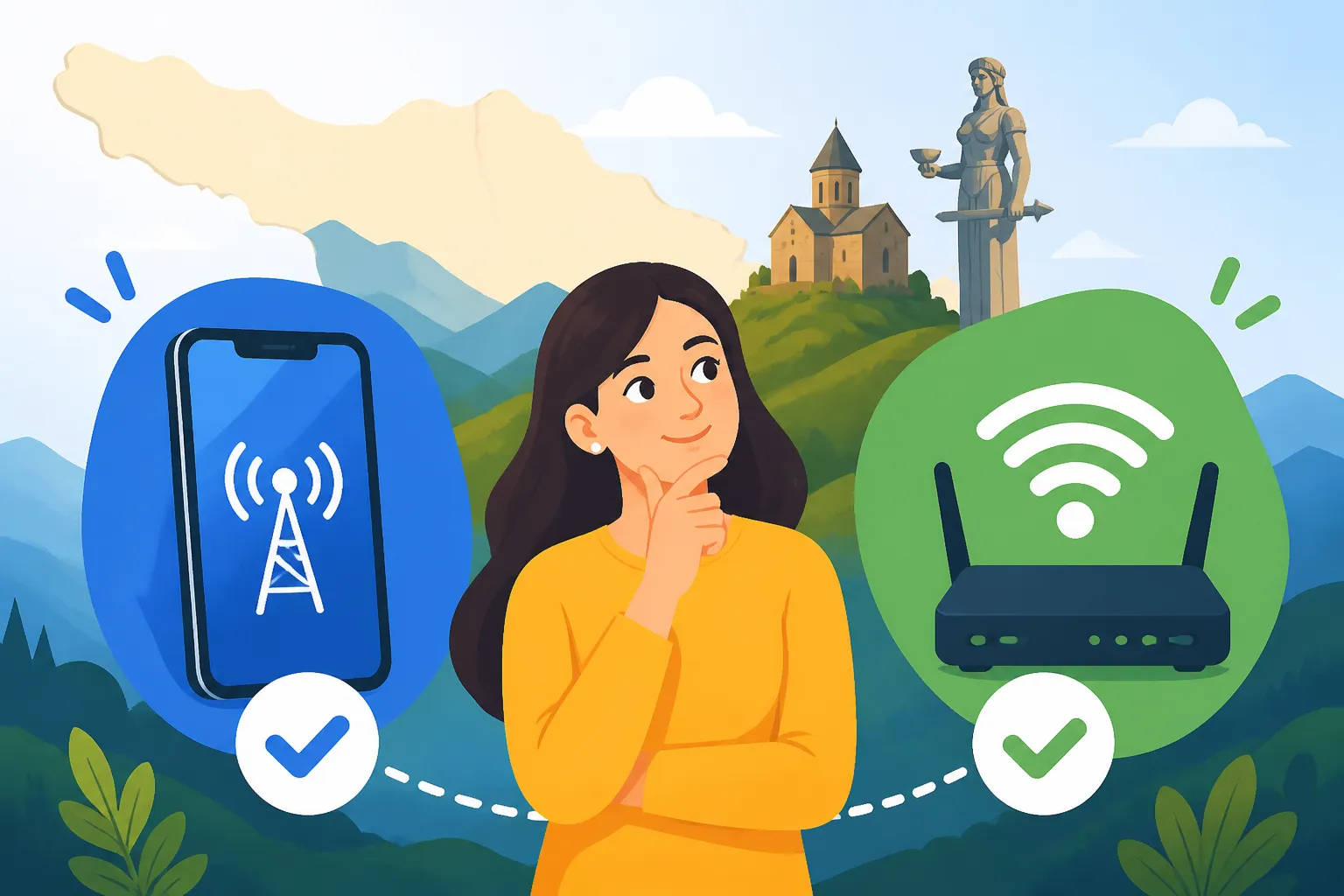
Fiber Optic vs. DSL vs. Mobile Internet
For most urban dwellers in Georgia, fiber optic internet is the gold standard. It offers superior speeds and reliability compared to older technologies like DSL. Most modern apartment buildings in Tbilisi, Batumi, and Kutaisi are already wired for fiber, making installation relatively straightforward. Fiber plans from Silknet and MagtiCom typically offer speeds ranging from 20 Mbps up to several hundred Mbps, more than enough for multiple users, streaming in 4K, and video calls. If fiber is available where you live, it’s almost always the best choice.
DSL (Digital Subscriber Line) is becoming less common but might still be an option in older buildings or more rural areas where fiber hasn't reached yet. It uses traditional phone lines and is significantly slower and less reliable than fiber. Honestly, unless you have no other choice, I'd steer clear. The third option is mobile internet, which can come in handy as a backup or temporary solution. This involves using a mobile hotspot device (often called a "dongle") or simply tethering from your phone. While convenient and easy to set up, mobile internet isn't usually suitable as a primary home internet solution for long-term use due to potential data caps, slower speeds, and higher costs compared to fixed-line fiber. However, for a very short stay or if you're in a location with no fiber access, it can be a lifesaver. This is especially useful for those who might be relying on a temporary accommodation solution as part of their The Complete Guide to Moving to Georgia Your First 90 Days.
Installation and Setup Process
Once you've chosen a provider, the installation process usually involves a technician visit. This is where patience truly becomes a virtue. You'll need to schedule an appointment, and while providers are generally good about showing up, timing can be flexible. Expect a window, not a precise minute. The technician will typically run the fiber optic cable into your apartment, install a modem/router, and ensure the connection is working. The whole process usually takes a few hours.
A key point here is the language barrier. While some technicians, particularly in Tbilisi, might speak a little English, it's not guaranteed. Having a Georgian-speaking friend, a local real estate agent, or even your landlord present can make a huge difference in ensuring everything goes smoothly. They can help communicate your needs, like where you want the router placed or any specific concerns about wiring. It's not uncommon for expats to feel a bit lost during this process, so don't hesitate to ask for help from your local contacts. Ensuring everything is set up correctly from the start can prevent future headaches, so don't rush the process or hesitate to ask questions, even if it requires a translation app.
Contract Lengths and Termination
Most home internet plans in Georgia come with contract terms, typically 12 or 24 months. These contracts usually include clauses for early termination fees. Before signing anything, read the contract carefully – and I mean carefully. If your Georgian isn't up to par, get it translated by a trusted source or have a local friend review it for you. Understanding the terms, including monthly fees, potential price increases after promotional periods, and cancellation policies, is crucial. If you anticipate moving frequently or only plan to stay in Georgia for a short period, look for providers offering shorter contract terms or month-to-month options, although these often come at a slightly higher price.
Sometimes, landlords might already have an existing internet contract for their property, which you can simply take over. While convenient, this might mean you're stuck with a provider or plan you wouldn't have chosen yourself. Weigh the convenience against your specific needs. If you decide to terminate your contract early, expect to pay a penalty. These fees are usually clearly outlined in the contract, so avoid surprises by knowing them upfront.
Getting Connected: Step-by-Step for Newcomers
Alright, you've done your research, picked your provider, and now it's time to actually get connected. This part can feel a bit like wading through bureaucracy, but with the right documents and a bit of preparation, it's perfectly manageable.
Required Documents and Registration
For a mobile SIM card, the process is generally straightforward. You'll need your passport. That's usually it. You walk into any of the provider's shops (MagtiCom, Silknet, or Cellfie), present your passport, choose your plan, and they'll activate your SIM on the spot. Your SIM card will be registered in your name, which is important for security and legal reasons. Don't buy an unregistered SIM from a street vendor, as this can lead to issues later on.
For home internet, the requirements are a bit more extensive. You'll typically need:
- Your passport.
- Your rental agreement (for proof of address).
- Sometimes, your Taxpayer Identification Number (TIN), which you would have obtained when you How Do I Register with the Revenue Service in Georgia?. While not always strictly necessary for basic internet, having it can streamline things.
- The apartment owner's ID or permission might also be required if you're signing up for a new installation, especially if the landlord wants to be linked to the service.
It’s always a good idea to bring physical copies of all these documents, as well as digital versions on your phone. Better safe than sorry when dealing with administrative tasks in Georgia!
Language Barriers and Assistance
This is perhaps the biggest hurdle for many expats when setting up services. While customer service representatives in the main branches of MagtiCom and Silknet in central Tbilisi often speak English, it's not guaranteed, especially in smaller towns or less prominent branches. This can lead to frustration when you're trying to explain your needs or understand contract details.
My top tip here is to come prepared. Write down exactly what you want (e.g., "I need a mobile SIM with 20GB data and unlimited local calls for one month") in both English and Georgian using a translation app. Better yet, bring a Georgian friend along, or ask your real estate agent to accompany you for an hour. Many expat communities on Facebook or Telegram also have volunteers or offer advice on which specific branches or staff members are known to be English-friendly. Don't be afraid to politely ask if there's someone who speaks English available. Remember, a little patience and a friendly smile go a long way.
Managing Your Account and Payments
Once you're set up, managing your mobile and internet accounts is relatively easy. All major providers offer mobile apps (available on iOS and Android) that allow you to check your balance, monitor data usage, activate new packages, and pay bills. These apps are generally available in both Georgian and English, making them incredibly user-friendly.
For topping up your mobile credit or paying internet bills, Georgia has an extensive network of payment kiosks. You'll see these "TBC Pay" or "Liberty Bank" branded machines everywhere – in supermarkets, pharmacies, metro stations, and on street corners. They're typically multi-lingual and allow you to pay cash or card for a huge range of services, including utility bills (like your internet), mobile top-ups, and even parking fines. Simply select your provider, enter your phone number or subscriber ID, and make the payment. You can also pay online through your bank’s app if you’ve set up How to Open a Bank Account at a Georgian Bank as a Foreigner. Many expats find using these kiosks incredibly convenient, as they’re ubiquitous and efficient. For your home internet, many providers offer direct debit options, so you don't have to remember to pay each month.
Common Expat Pitfalls and Pro Tips
Even with the best preparation, unexpected issues can pop up. Knowing what to look out for and having a few insider tips can make your life a lot easier, helping you avoid unnecessary stress and expense.
Understanding Promotional Offers and Hidden Fees
Providers, like anywhere in the world, love to entice new customers with promotional offers: discounted rates for the first few months, extra data, or bundled services. These can be genuinely good deals, but it's crucial to understand the terms and conditions. Often, the price will revert to a higher standard rate after a promotional period (e.g., 3 or 6 months). Always ask: "What is the price after the promotional period ends?" and "Are there any hidden fees or charges I should be aware of?" This proactive approach can prevent nasty surprises on your bill.
Also, be clear about data caps. While many mobile plans offer generous data, ensure you understand what happens if you exceed it – will you be charged extra, or will your speed simply throttle down? For home internet, clarify installation fees (sometimes waived with a contract), router rental costs, and any potential charges for service calls. Sometimes, an initially attractive price can become less appealing once all the details are factored in. This is why a thorough comparison, perhaps even noting it down in a table, is highly recommended.
Comparing Packages and Bundles
With several providers vying for your business, it pays to compare. Don't just go with the first offer you see. Create a simple spreadsheet or even just a mental checklist of what's most important to you:
- Mobile: Data allowance, local call minutes, international call rates (if applicable), network coverage in your specific areas, monthly cost, contract length.
- Home Internet: Download/upload speeds, reliability, monthly cost, installation fees, contract length, bundled options (e.g., TV).
Consider what your actual usage looks like. If you barely make calls but stream constantly, a data-heavy plan is key. If you're a heavy gamer or work from home, speed and reliability for your internet are non-negotiable. Don't be swayed by features you won't use. Sometimes, providers offer bundles for mobile and internet services if you get both from them. These can be good value, but compare them against separate plans too. Think about your entire relocation journey; services like Sirelo, a moving platform, offer tools and resources for various aspects of moving, and while they don't directly compare Georgian telecoms, they highlight the importance of factoring all these setup costs into your overall The Complete Guide to Cost of Living in Georgia for Expats. Having a clear picture of your needs and budget will help you avoid overspending or ending up with inadequate service.
What to Do If You Encounter Issues
Despite your best efforts, sometimes things go wrong. Your internet might cut out, your mobile data stops working, or you might have a billing query. Here’s a basic approach:
- Check the basics: Is your router plugged in? Is your phone in airplane mode? (You'd be surprised how often this fixes things!)
- Restart devices: A simple restart of your phone or router can resolve many minor glitches.
- Check provider apps/websites: Often, providers will announce network outages or planned maintenance on their apps or social media pages.
- Contact customer service: This is where the language barrier can be most frustrating. Try calling their English-speaking support lines if available. If not, be prepared to use a translation app or ask a Georgian friend to call on your behalf. Keep records of your calls (date, time, who you spoke to, what was discussed).
- Visit a physical store: For complex issues, sometimes a face-to-face interaction at a main branch is best. Again, bring a translator if possible.
- Expat communities: Online expat groups are invaluable resources. Someone else has probably faced the same issue and can offer advice or recommend a solution. They can also share experiences about specific How to Find an English-Speaking Doctor in Georgia, and the general consensus on problem-solving with local services.
Remember that while customer service in Georgia may operate differently from what you're used to, persistence and politeness usually pay off.
Provider Comparison Table
Here's a quick overview of the main mobile and internet providers to help you get started:
| Provider | Strengths | Weaknesses | Best For |
|---|---|---|---|
| MagtiCom | Widest mobile coverage, reliable fiber internet, good app. | Slightly higher prices, customer service can be slow. | Expats prioritizing extensive mobile coverage (especially outside cities) and reliable home internet. |
| Silknet | Excellent mobile and fiber internet speeds in urban areas, competitive bundles. | Coverage can be less robust in remote regions. | Urban expats, those seeking high-speed fiber, good value data bundles. |
| Cellfie (Beeline) | Very affordable data packages, great for budget-conscious users in cities. | Limited coverage in very rural areas, fewer English-speaking support staff. | New arrivals, budget travelers, those primarily staying in major cities, data-heavy users on a budget. |
Remember, this is a general guide. Your personal experience may vary based on your specific location and usage.
Disclaimer
The information provided in this article is for general guidance only and is based on current understanding of laws and practices in Georgia. Telecommunication services, pricing, and regulations can change frequently. While every effort has been made to ensure accuracy, this information should not be considered professional advice. We recommend verifying all details with the respective service providers or a local expert before making any decisions.