The Expat Guide to Public Transport in Georgia
Navigating public transport in a brand-new country can feel like solving a complex puzzle, especially when you're still figuring out local customs, the language, and where on earth that bus actually goes. It's totally normal to feel a bit overwhelmed when you first arrive, wondering how you'll get around without a car. This comprehensive guide is here to demystify public transport in Georgia, offering expats like us a realistic, in-depth look at everything from the bustling Tbilisi Metro to the ubiquitous marshrutkas that crisscross the country.
Understanding Georgia's Public Transport Landscape
When you first land in Georgia, you'll quickly realize that getting around is quite different from what you might be used to back home. Forget the perfectly timed, meticulously signposted systems of Western Europe or North America. Here, it’s a vibrant, sometimes chaotic, but ultimately efficient network that connects people across cities and regions. For an expat, understanding this landscape isn't just about saving money; it's about truly integrating into the local rhythm of life. You'll quickly see how vital these services are for locals, and embracing them will be a significant part of your Georgian adventure.
The Big Picture: Cities and Regions
Georgia is a country of diverse landscapes, from the Black Sea coast to the towering Caucasus Mountains, and its public transport system reflects this. Major cities like Tbilisi, Batumi, and Kutaisi have their own well-developed urban transport networks, primarily consisting of buses, minibuses (marshrutkas), and in Tbilisi's case, a metro. Venture outside these urban centres, and the reliance shifts heavily towards marshrutkas and intercity buses, which serve as the lifelines for smaller towns and villages. The capital, Tbilisi, naturally boasts the most extensive and modern infrastructure, being the economic and cultural heart of the nation. It's where most expats tend to settle initially, making its transport system your first major conquest.
The regional disparities are quite noticeable. While Tbilisi's metro runs on a predictable schedule, a marshrutka in a remote region might only depart once it's full. This means a lot more flexibility and patience are required when planning journeys outside the main hubs. For example, if you're planning to head up to the Svaneti region or explore the monasteries in Kakheti, you'll likely rely on shared marshrutka rides from designated stations or markets rather than a formal bus terminal with detailed schedules. It's part of the charm, honestly, but it definitely demands a different mindset for route planning.
Common Modes of Transport Across Georgia
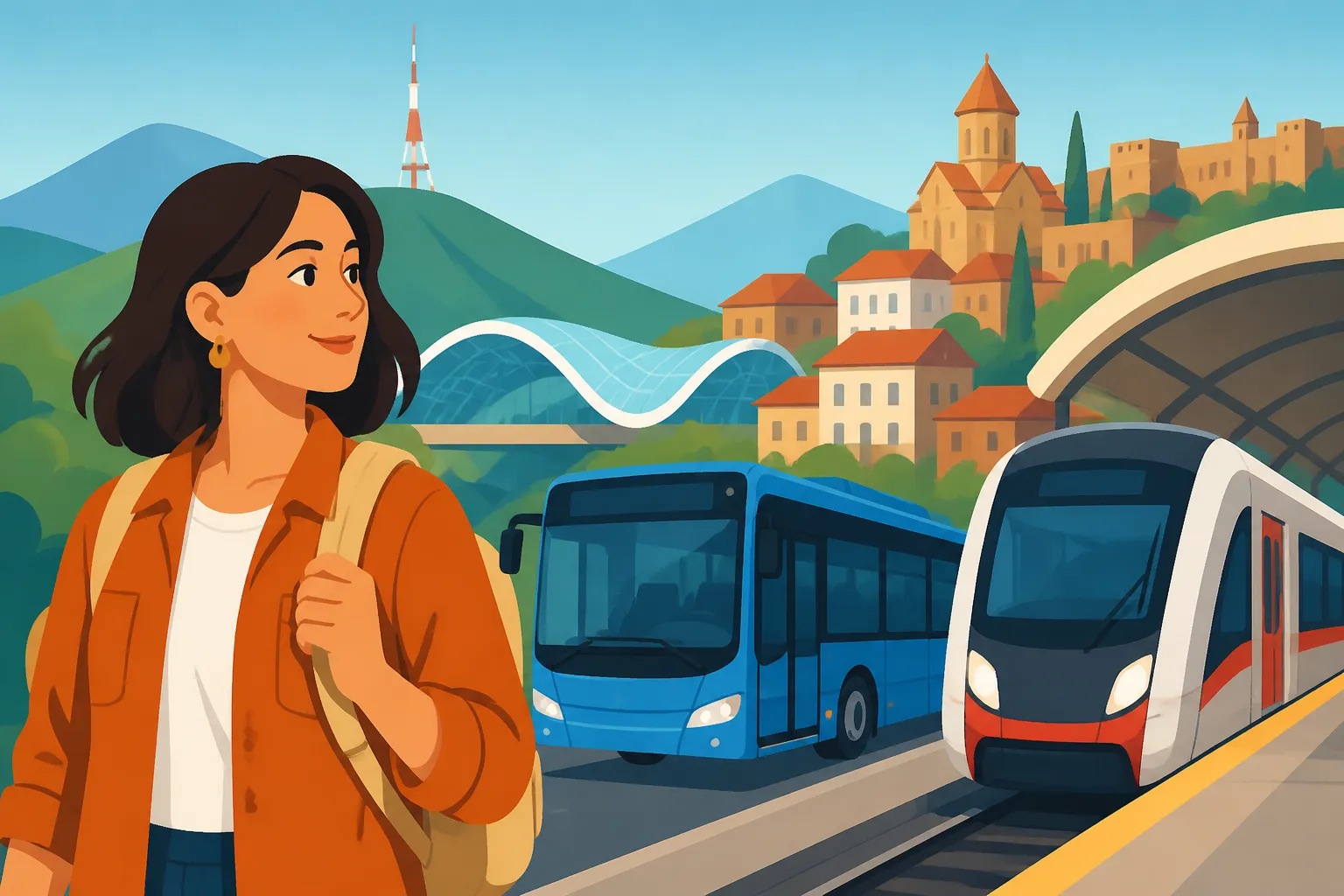
So, what are your chariots here in Georgia? Primarily, you'll encounter four main types of public transport: the Metro, city buses, marshrutkas, and trains. Each has its own quirks, benefits, and drawbacks. The Metro, exclusive to Tbilisi, is fast, cheap, and surprisingly deep underground – a relic of the Soviet era. City buses are widespread, modernizing rapidly in Tbilisi, and cover extensive routes. Then there are the marshrutkas, the ubiquitous yellow (and sometimes white or blue) minibuses that are everywhere, from local city routes to long-haul intercity journeys. Finally, trains offer a more comfortable, albeit less frequent, option for longer distances, particularly between major cities like Tbilisi, Batumi, and Kutaisi.
You might be surprised by the sheer number of marshrutkas. They are the backbone of both urban and intercity travel, a flexible and often very quick way to get around, even if they sometimes feel a bit like a rollercoaster ride. When I first arrived, I was terrified of them, convinced I'd get lost or end up in the wrong city. But after a few brave attempts, I realised they are incredibly efficient once you get the hang of asking locals or the driver for your destination. It's a rite of passage for any expat here. Knowing how to use these different modes effectively is key to unlocking Georgia and truly experiencing it beyond the main tourist spots.
Why Public Transport Matters for Expats
For us expats, embracing public transport isn't just about saving money on taxis, although that's a huge bonus. It's about freedom. Owning a car in Georgia comes with its own set of challenges, from navigating the often-haphazard driving styles to dealing with parking and maintenance. Opting for public transport means you don't have to worry about these headaches. You can enjoy a glass of Georgian wine with dinner without fretting about driving, and you'll experience the city or region in a much more authentic way. Plus, it's an excellent way to practice your Georgian or Russian phrases and interact with locals.
Think about it: imagine commuting every day. If you live in central Tbilisi, relying on the Metro or buses means you're almost always on time, avoiding the notorious city traffic. For those of us who came here without a concrete job offer, or who are self-employed, managing our finances is crucial. Public transport is incredibly affordable, making a significant difference to your monthly budget compared to constantly hailing taxis. For insights into overall living costs, you might find our guide on The Complete Guide to Cost of Living in Georgia for Expats (2026) quite useful. It highlights how these small daily savings add up, contributing to a more comfortable life here.
Tbilisi: The Hub of Georgian Public Transport
Tbilisi is where most expats start their Georgian journey, and for good reason. It’s a bustling capital with a dynamic energy, and its public transport system, while it might initially seem a bit wild, is surprisingly comprehensive and efficient once you get the hang of it. From the deep underground metro to the increasingly modern bus fleet and the ever-present marshrutkas, Tbilisi offers a multitude of ways to zip across the city. Understanding how to navigate it will save you countless lari and give you a genuine feel for the city's pulse.
Navigating the Tbilisi Metro System
The Tbilisi Metro is a lifesaver, especially during rush hour. It’s comprised of two lines: the Akhmeteli-Varketili Line (red line) and the Saburtalo Line (green line). The red line is the main artery, connecting the city from north to south, passing through key areas like Didube (where many intercity marshrutkas depart), Station Square (a major transport hub), Rustaveli Avenue, and Liberty Square. The green line, while shorter, is crucial for accessing areas like Saburtalo, which is home to many businesses and residential buildings popular with expats. Both lines intersect at Station Square, making transfers straightforward.
The stations themselves are often quite grand, with a distinct Soviet architectural style. Be prepared for long escalators – some of the deepest in the world! To use the Metro, you'll need a Metromoney card, which is easily rechargeable. A single ride is remarkably cheap, making it the most economical way to traverse significant distances. Don't worry if your Georgian isn't perfect; station names are displayed in both Georgian and English, and there are digital screens on platforms indicating the next train. During peak hours, trains run every few minutes, so you're rarely left waiting long. For those new to the city, figuring out how to get to key landmarks is a breeze with the Metro.
Tbilisi Buses and Marshrutkas Minibuses
Beyond the underground, Tbilisi's surface transport is dominated by its bus network and marshrutkas. The city buses have undergone a significant transformation in recent years, with many old, polluting vehicles replaced by new, blue, and increasingly electric models. They cover an extensive network, reaching almost every corner of the city, and offer a comfortable ride. Like the Metro, buses also require the Metromoney card for payment, which you tap as you enter the bus. Finding your route is easier than ever, thanks to apps like Google Maps and Moovit, which are surprisingly accurate for bus timings and routes here.
Marshrutkas, however, are a different beast. These privately-owned minibuses follow fixed routes but operate with a unique flexibility. You can flag them down almost anywhere along their route, and you pay the driver directly, often as you exit. While some marshrutkas now accept the Metromoney card, many still prefer cash, so it’s always wise to have small bills (like 50 tetri or 1 lari coins) on hand. They are quicker than buses because they don't have designated stops and will pull over on demand, but they can also be crowded and driven with a certain… enthusiasm. It's an experience, for sure! For a deeper dive into the specifics of these networks, check out our guide on Understanding the Tbilisi Metro, Marshrutka and Bus Networks.
Payment Systems: Metromoney Card and Beyond
The Metromoney card is your golden ticket for public transport in Tbilisi. This rechargeable plastic card is essential for the Metro, buses, and the Rike Park cable car. You can purchase one for a small fee (currently 2 GEL) at any Metro station ticket counter. To load it with funds, simply use the self-service machines found in all Metro stations and at many bus stops, or go to a ticket window. These machines are usually multilingual, with English options available. It’s super convenient, as one card can be used for multiple people, you just tap it multiple times.
While the Metromoney card is king for the city's official transport, marshrutkas often still rely on cash. It’s a very Georgian habit to hand your fare to the person closest to the driver, who then passes it forward, with change making its way back the same way. Always have small denominations ready for these instances. Occasionally, you might encounter drivers who accept card payments via a small POS terminal, but this is still the exception rather than the rule. Having a robust mobile plan with a local Georgian SIM card is incredibly helpful for accessing payment apps or checking bus schedules, so consider picking up an eSIM from services like Airalo when you first arrive to ensure you're always connected.
Beyond Tbilisi: Public Transport in Other Major Cities
While Tbilisi might be the bustling capital, Georgia offers so much more to explore, and its other major cities have their own charm and transport systems. Moving beyond the capital requires a slight adjustment in how you perceive public transport, as the scale and options might differ. However, the core principles remain: efficiency, affordability, and a healthy dose of Georgian improvisation.
Batumi's Bus Network and Coastal Charm
Batumi, Georgia's vibrant Black Sea resort city, offers a more relaxed pace than Tbilisi, but its public transport network is still robust and highly functional. The main mode of transport within Batumi is its extensive bus system. These modern, often green-and-white buses cover most areas of the city and its immediate surroundings. Similar to Tbilisi, you'll need a reusable transport card to pay for your fares. Batumi has its own dedicated card, often called a Batumi Card, which can be purchased and recharged at bus stops or dedicated kiosks. A single ride is very economical, making it easy to get from the beach boulevard to the old town or the Botanical Garden.
Unlike Tbilisi, Batumi doesn't have a Metro or the same density of marshrutkas for internal city travel, though intercity marshrutkas certainly serve it. The city is also quite walkable, especially the central areas, so you might find yourself relying on public transport less frequently for short distances. However, for getting to the airport, the railway station, or farther-flung attractions like the Gonio Fortress, the bus system is indispensable. Using Google Maps here is fairly reliable for bus routes and estimated times, which helps immensely for planning your day.
Kutaisi: Getting Around the Imereti Capital
Kutaisi, often considered the historical heart of Georgia and home to its second-busiest international airport, offers a public transport experience that feels a bit more traditional. The primary mode of internal transport here is a network of city buses and marshrutkas. While the buses are being updated, you'll still encounter a mix of older and newer vehicles. Cash is more commonly accepted on both buses and marshrutkas for local travel within Kutaisi, though some newer buses might have card readers. It's always a good idea to have small change ready.
Intercity marshrutkas play a huge role in Kutaisi, connecting it to virtually every corner of Western Georgia. The main marshrutka station is near the central market, a vibrant hub of activity where you can catch a ride to destinations like Mestia, Zugdidi, or even back to Tbilisi. Navigating Kutaisi's transport is slightly less formal than Tbilisi or Batumi. There isn't a single, unified payment card system for all public transport modes. This means relying on cash and direct interactions with drivers is more common. It's part of Kutaisi's charm, reflecting a more local, community-focused way of life.
Regional Connections and Intercity Travel
Beyond the main urban centres, Georgia’s public transport truly shines in its ability to connect even the most remote areas. Marshrutkas are the absolute champions here. From the main bus stations in Tbilisi (Didube and Ortachala), Batumi, and Kutaisi, you can find marshrutkas heading in almost any direction across the country. These services are frequent, affordable, and often much faster than formal intercity buses because they typically don't have scheduled stops. They just go.
For example, if you want to visit the ancient cave city of Vardzia from Tbilisi, you’d first take a marshrutka from Ortachala to Akhaltsikhe, and then another local marshrutka from Akhaltsikhe to Vardzia. It’s a multi-leg journey, but entirely manageable and a fantastic way to see the country. Always aim to get to the marshrutka station early for longer journeys, especially if you have luggage, as space can be limited. While you might occasionally see larger intercity buses for very popular routes, the marshrutka remains the most flexible and widely used option for regional travel, truly acting as the arteries of Georgian public life. If you're moving your whole life here, perhaps with a service like Sirelo, you'll soon realize how integral these small vehicles are for daily errands and weekend getaways alike.
Marshrutkas: The Unsung Heroes (and Challenges) of Georgian Travel
Ah, the marshrutka. If there's one mode of transport that truly embodies the Georgian spirit – efficient, a little bit wild, and deeply woven into daily life – it's the marshrutka. These ubiquitous minibuses are something you'll either grow to love or tolerate with a weary sigh. Either way, as an expat in Georgia, you simply can't avoid them, especially if you plan on exploring beyond the well-trodden paths of Tbilisi.
What Exactly is a Marshrutka?
A marshrutka (მარშრუტკა) is essentially a shared taxi or minibus that follows a semi-fixed route. They look like vans, often yellow in Tbilisi, but can be other colours elsewhere. They're privately owned and operated, which gives them a degree of flexibility that larger bus systems don't have. They don't always stop at designated bus stops, but rather pick up and drop off passengers almost anywhere along their route – you just need to signal the driver. This "hail-and-ride" system can be confusing at first, but it's incredibly convenient once you get the hang of it.
Marshrutkas serve both urban routes within cities and, more importantly, intercity and regional routes connecting towns and villages across Georgia. In urban settings, they often supplement the main bus lines, reaching narrower streets or areas less served by larger vehicles. For intercity travel, they are often the only direct public transport option, operating from central bus terminals or designated departure points. They fill up quickly, and once full, they depart, meaning there isn't always a strict schedule, especially for less frequent routes. It's truly a test of your patience and adaptability!
How to Catch and Use a Marshrutka
Catching a marshrutka can feel like a sport. For urban routes, stand on the side of the road where you expect your marshrutka to pass, and when you see one approaching that matches your route number (often displayed on the front window), wave your hand clearly. Don't be shy! When it stops, hop in. For intercity routes, you'll go to a marshrutka station, like Didube in Tbilisi. Here, you'll find dozens of marshrutkas, each with a sign (usually in Georgian) indicating its destination. Don't worry if you can't read Georgian; just say the name of your destination to a driver or any local, and they'll point you to the correct vehicle. Once you find your marshrutka, simply get in and wait for it to fill up before it departs.
Payment is typically made directly to the driver, either upon boarding or, more commonly, when you exit. If you’re seated far from the driver, you pass your fare (usually 1-2 GEL for urban, more for intercity) to the person in front of you, who then passes it to the next, and so on, until it reaches the driver. Your change comes back the same way. When you want to get off, simply say "Gaacheret aq!" (Stop here!) or "Gaacheret, tu sheidzleba" (Stop, please) or even just a simple, loud "Stop!" Most drivers understand. It's a system built on trust and collective responsibility, and it works surprisingly well.
The "Marshrutka Experience": Pros and Cons
The marshrutka experience is unique. On the "pro" side, they are incredibly frequent, flexible, and affordable. For many routes, they're faster than buses because they don't stick to formal stops. They can take you to places that larger buses or trains simply don't reach, opening up a world of exploration. You'll also get a true slice of Georgian life, listening to local conversations, music, and seeing the country from a local's perspective. It's an immersive cultural experience, for better or worse!
However, there are "cons." They can be incredibly crowded, especially during peak hours, and personal space is a luxury you might not always have. The driving can be… spirited, to say the least, and while Georgian drivers are generally skilled, if you're prone to motion sickness, be prepared. Luggage space for intercity routes can also be an issue; sometimes your bags might end up on the roof or stuffed precariously in the back. Furthermore, language barriers can be a challenge if you need to ask specific questions about your destination or route, as drivers may not speak English. Yet, even with these challenges, marshrutkas are an undeniable part of the Georgian transport fabric, and mastering them is a badge of honour for any expat.
Payment Methods and Practicalities for Expats
Getting around Georgia's public transport system is generally very affordable, which is a huge bonus for expats managing their budgets. However, the payment methods aren't always uniform, varying slightly between cities and modes of transport. Understanding these nuances will save you time, confusion, and awkward moments fumbling for change.
The All-Important Metromoney Card and Where to Get It
As we've touched upon, the Metromoney card is indispensable for Tbilisi's public transport. It's a durable, reusable plastic card that you can buy at any Metro station ticket booth. The initial cost is a small, non-refundable fee (around 2 GEL). Once you have it, you can load it with funds using either the multilingual self-service machines at Metro stations and many bus stops, or by visiting a ticket counter. These machines usually accept cash and sometimes bank cards. The beauty of the Metromoney card is its simplicity and efficiency; a single tap on the card reader grants you access to the Metro, city buses, and even the cable car in Rike Park connecting to Narikala Fortress.
One useful tip is that if you're visiting Batumi, its local transport card (Batumi Card) functions in a very similar way. While not universal across all cities, having the relevant city-specific card for major hubs makes your daily commutes incredibly smooth. Make sure to keep your card topped up, especially before a long day of exploring, as you don't want to get stuck without fare. It's far less stressful than constantly digging for exact change.
Cash, Cards, and Digital Payments
While the Metromoney card rules Tbilisi, cash is still very much alive and well across Georgia's transport system. For marshrutkas, especially outside Tbilisi or on older routes within the capital, having small bills and coins (50 tetri, 1 GEL, 2 GEL) is crucial. Drivers often prefer exact change or small denominations, as they might not always have ample change for larger bills. You'll quickly learn the subtle art of passing your fare forward in a crowded marshrutka!
Debit and credit cards are widely accepted at Metro station top-up machines and for purchasing the Metromoney card itself. However, direct card payments on buses (outside Tbilisi's modern fleet) or marshrutkas are rare. Digital payment apps linked to local banks are becoming more popular, but primarily for retail, not typically for public transport. This means that a combination of a loaded Metromoney card and a stash of small cash denominations is your best bet for hassle-free travel across Georgia. Remember that you can use your bank card at ATMs for cash withdrawals, but make sure to use local banks like TBC Bank or Bank of Georgia to avoid excessive fees.
Apps and Resources for Real-Time Information
In an age where information is power, leveraging technology can significantly enhance your public transport experience in Georgia. For Tbilisi especially, Google Maps is surprisingly accurate for bus and Metro routes, timings, and estimated journey durations. It integrates live tracking for many bus routes, allowing you to see exactly where your bus is and how long until it arrives. Moovit is another popular app that provides similar detailed information for urban transport networks in both Tbilisi and Batumi.
For intercity travel, predicting marshrutka departure times can be more art than science. While there aren't many real-time tracking apps for marshrutkas (as they often depart when full), websites like Travel by Marshrutka (a non-official but useful resource) or simply asking locals at the bus stations can give you good estimates. It's also incredibly helpful to have a local Georgian SIM card or an eSIM from providers like Airalo to ensure you always have internet access for these apps. Being able to quickly look up a route or translate a sign on the fly can turn a potentially stressful situation into a minor inconvenience. Knowing How Do I Set Up a Mobile Phone Plan in Georgia? will be very beneficial for your early days here.
| Mode of Transport | Primary Payment Method | Availability in Tbilisi | Availability Outside Tbilisi |
|---|---|---|---|
| Metro | Metromoney Card | High (2 lines) | N/A (Tbilisi only) |
| City Buses | Metromoney Card | High | Medium (Batumi, Kutaisi) |
| Marshrutkas (Urban) | Cash (some Metromoney) | High | High |
| Marshrutkas (Intercity) | Cash | High (from main stations) | High |
| Trains | Cash/Card (at station/online) | Low (main station) | Medium (specific routes) |
| Cable Cars | Metromoney Card | Low (Rike Park) | Low (e.g., Borjomi) |
Tips for Stress-Free Travel and Safety on Georgian Public Transport
Navigating a new country's transport system can be a steep learning curve, and Georgia is no exception. While generally safe and efficient, a few pointers can make your journeys smoother and more enjoyable. As an expat, you'll want to quickly adapt to local norms and be prepared for minor hiccups.
Language Barriers and Communication Hacks
Georgian is a unique language, and while many younger Georgians, especially in Tbilisi, speak English, you'll encounter situations where communication might be a challenge, particularly with marshrutka drivers or older locals. Don't let this deter you! Learning a few key phrases can go a long way. "Gamarjoba" (Hello), "Madloba" (Thank you), "Rogor khart?" (How are you?), and most importantly, "Gaacheret aq!" (Stop here!) will serve you well. Writing down your destination in Georgian script or showing it on your phone is also incredibly effective.
Body language and pointing are universal. If you're unsure which marshrutka to take, simply say the name of your destination to a local at the station, and they'll usually point you in the right direction. Google Translate is your best friend, allowing you to quickly translate signs or have basic conversations. Remember, Georgians are generally very friendly and eager to help, even if they don't speak your language. A smile and a "Madloba" can bridge many gaps.
Staying Safe and Aware
Public transport in Georgia is generally very safe, but like anywhere, common sense and situational awareness are key. Pickpocketing can occur in crowded areas, especially on busy Metro trains or marshrutkas, so always keep an eye on your belongings. Keep your wallet in a front pocket and your bag secure. Avoid flashing expensive items or large sums of cash. It's always a good idea to research crime rates for expats in Georgia, though they are generally very low.
When traveling late at night, especially alone, stick to well-lit areas and more formal transport like the Metro (which usually runs until midnight or 1 AM) or reputable taxis. While marshrutkas can run late, they might not always be the safest option late at night if you're in an unfamiliar area. Trust your gut; if a situation feels off, it probably is. Overall, you'll find Georgia to be a welcoming and safe country, and its public transport reflects that.
Accessibility and Special Considerations
For those with mobility challenges, Georgia's public transport system, particularly the Metro, can be quite challenging. Many Metro stations lack elevators or modern escalators, relying on long, steep escalators from the Soviet era. Buses are gradually becoming more accessible, with newer models often featuring ramps, but this isn't universal. Marshrutkas, by their very nature, are not designed for accessibility, often requiring a step up and offering limited space inside.
If you're traveling with small children or large luggage, consider off-peak hours for the Metro and buses to avoid the crush. For intercity travel with significant luggage, you might find trains or hiring a private driver more comfortable than a crowded marshrutka. Always plan ahead if you have specific accessibility needs, as facilities are still developing in many areas. However, don't be surprised if locals jump in to help you carry a stroller or luggage up stairs; Georgian hospitality (Georgian "Khariskhiani stumartmoqvaebi") often extends to spontaneous acts of kindness in these situations.
Intercity and Regional Travel: Connecting Georgia
Georgia is a country ripe for exploration, from its stunning mountain ranges to its ancient monasteries and vibrant cities beyond Tbilisi. Relying on public transport for intercity and regional travel is not just feasible but often the most authentic and economical way to experience the country. While it demands a bit more flexibility and patience, the rewards are immense.
Trains: A Scenic (But Limited) Option
Georgian Railways offers a comfortable, albeit limited, network connecting major cities. The main routes include Tbilisi to Batumi (often via Kutaisi) and Tbilisi to Zugdidi (connecting to Mestia via marshrutka). The modern Stadler trains, particularly on the Tbilisi-Batumi route, offer a very pleasant experience with comfortable seating, air conditioning, and often Wi-Fi. This is a fantastic option for a scenic journey, especially along the Rioni River en route to the Black Sea.
Booking train tickets can be done online through the Georgian Railways website or in person at major train stations in Tbilisi (Station Square), Batumi, or Kutaisi. It's advisable to book in advance, especially during peak season or for popular routes, as tickets can sell out. The downside is that the train network doesn't cover as many destinations as marshrutkas, and frequencies are lower. However, for a relaxing journey between key cities, it's often preferable to the faster, but more cramped, marshrutka experience.
Intercity Buses and Marshrutkas: Your Mainstays
For the vast majority of intercity and regional travel, marshrutkas and occasionally larger intercity buses will be your primary modes of transport. As mentioned, Tbilisi has two main marshrutka stations: Didube for routes heading north and west (e.g., Kazbegi, Kutaisi, Mestia, Borjomi) and Ortachala for routes heading east and south (e.g., Kakheti region, Armenia border, Vardzia). These stations are bustling hubs, often chaotic but efficiently organised by the drivers themselves.
Marshrutkas typically depart when full, so there's no fixed schedule. For popular routes, this could mean a departure every 15-30 minutes. For less frequent routes, you might wait longer. Always confirm the destination with the driver. Fares are remarkably cheap, calculated based on distance, and paid directly to the driver in cash. Buses, though less frequent than marshrutkas, offer a more structured and sometimes more comfortable option for popular routes like Tbilisi-Batumi. They usually depart from dedicated bus terminals (like Ortachala in Tbilisi) and have fixed schedules. Choosing between a bus and a marshrutka often comes down to comfort versus speed and flexibility.
Planning Longer Journeys: Resources and Expectations
Planning a longer journey in Georgia requires a bit of research and a flexible mindset. Online resources can give you a general idea of routes and estimated travel times, but always factor in potential delays, especially for marshrutkas. Google Maps can plot routes but may not always show all marshrutka options. It's often best to get to the main marshrutka station early in the morning for longer trips, as departures are more frequent then.
Expect your journey to be an experience in itself. Marshrutka drivers often make quick stops for food, toilet breaks, or to pick up parcels for people along the way – it's all part of the service! Embrace it as an opportunity to see more of Georgian life unfolding before your eyes. While planning, remember to allocate extra time, especially if you have connecting transport. For example, if you're taking a marshrutka from Tbilisi to Mestia, it's an approximately 8-9 hour journey, so don't plan anything immediately after arrival. This approach will help you maintain a stress-free travel experience across this beautiful country. If you're pondering where to settle, our guide on How to Choose Between Tbilisi, Batumi and Kutaisi to Live In? delves into how transport links influence liveability in different cities.
Disclaimer
The information provided in this guide is for general informational purposes only and is subject to change. While we strive to keep the content up-to-date and accurate, public transport systems, rules, and prices in Georgia can evolve. It is always recommended to verify specific details, such as schedules, fares, and payment methods, with local authorities or reliable sources before making your travel plans.