How Do I Get My Residence Permit Card After Approval in Georgia?
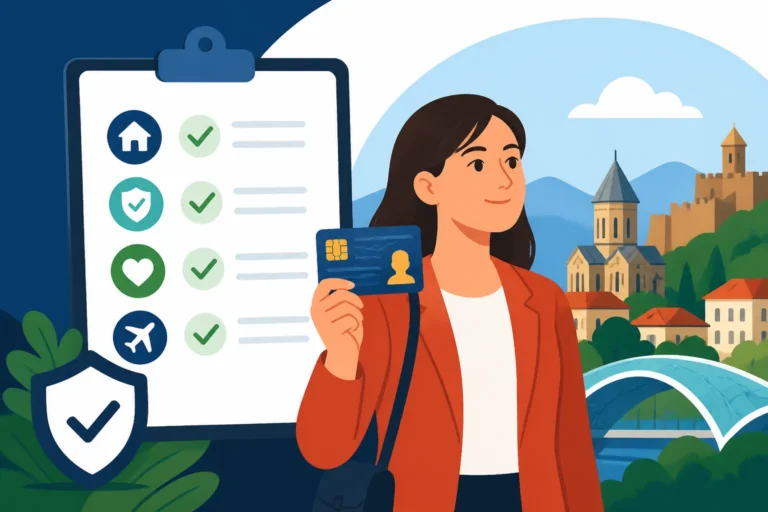
Oh, the sheer relief when that long-awaited residence permit application finally gets approved in Georgia! You've navigated the paperwork, the appointments, the waiting game… but then, a new question pops up: "Okay, so how do I actually get the physical card now?" It’s a common point of confusion, a final hurdle that can feel surprisingly opaque after all the administrative hoops you've already jumped through. This comprehensive guide is here to walk you through every step of collecting your Georgian residence permit card once it’s been approved, helping you understand the process, what to expect, and what to do next so you can finally feel settled.
The Elusive Approval: What Happens First?
After what often feels like an eternity, the Public Service Development Agency (PSDA) finally makes a decision on your residence permit application. This is the moment you’ve been dreaming of, the green light for your longer-term stay in this beautiful country. But how exactly do they tell you? And what does that notification actually entail?
Receiving Your Notification of Approval
Typically, you'll receive notification of your residence permit approval in one of two ways: via SMS or email. If you provided both contact methods during your application, you might even get both! This message will usually be quite concise, stating that your application has been approved and that your card is ready for collection, or that it will be ready within a specified timeframe. Sometimes, it might direct you to check the Public Service Hall (PSH) portal for more details.
It's crucial to understand that this notification is not your residence permit. It's simply the confirmation that your application was successful. The physical card, which is your actual proof of legal residency, still needs to be collected. Many expats make the mistake of thinking the SMS means they're all set, only to realize there's another step. Keep an eye on the PSDA website or the online portal you might have used to track your application, as sometimes a status change appears there even before you receive a direct message. Patience, my friend, is a virtue you'll learn quickly living in Georgia!
Understanding the Approval Letter or Document
In some cases, especially if your application involved more complex circumstances, you might receive a more formal approval letter, either digitally or physically, before the card is printed. This document will outline the specifics of your approved permit: the type (e.g., work, short-term based on property, family reunification), its validity period, and your personal details. While exciting, remember this letter is also not the permit itself. It's essentially your official "permission slip" to receive the card. Always keep a digital and physical copy of this approval letter, as it might be useful as a temporary proof of status if your card collection is delayed for any reason. For example, if you need to quickly show your approved status to a potential landlord or employer while waiting for the plastic, this document can bridge the gap.
Your Mission: Collecting the Physical Card
Once you've received that coveted approval notification, the next step is the actual collection of your residence permit card. This is where you'll interact with the Public Service Hall (PSH) again, a place that becomes quite familiar to expats in Georgia.
Heading to the Public Service Hall (PSH)
The Public Service Hall is essentially a one-stop shop for various government services in Georgia, designed for efficiency and convenience. It's where you submitted your application, and it's where you'll collect your card. You can go to any branch, but for Tbilisi residents, the massive PSH near Liberty Square is the most common choice due to its central location and capacity. Other larger cities like Batumi and Kutaisi also have their own well-equipped branches.
When you arrive, you'll need to take a number for the "Passport, ID Card, and Migration Services" section. The PSH can get incredibly busy, especially during peak hours (mid-morning to early afternoon). Waits can be long, so try to go early in the morning or later in the afternoon if possible to avoid the longest queues. Bring a book, fully charge your phone, and mentally prepare for a wait – it’s just part of the Georgian administrative experience!
What Documents to Bring for Collection
This is crucial. You don't want to make a wasted trip. Always bring:
- Your valid passport: This is your primary identification, and it must be the same passport you used for your application.
- The application receipt: That little slip of paper you got when you first submitted your application? Don't lose it! It usually has a unique ID number that links back to your file.
- The approval notification (SMS or email): While not always strictly required for collection if they can find your file by passport, having it on hand can speed things up, especially if there's any confusion.
- Your old residence permit (if applicable): If you're renewing an existing permit, they will likely ask for your old card to cancel it.
Sometimes they might ask for your biometric photo again, but usually, it's not necessary as they would have taken it during the initial application. Just in case, having a spare passport-sized photo isn't a bad idea, though it's rare.
| Document Type | Purpose | Required for Collection |
|---|---|---|
| Valid Passport | Primary identification | Yes |
| Application Receipt | Reference to your application file | Highly Recommended |
| Approval Notification | Proof of approval (SMS/Email) | Recommended |
| Old Residence Permit | Cancellation (for renewals) | Yes (if renewing) |
| Power of Attorney | For proxy collection | Yes (if applicable) |
Proxy Collection: Can Someone Else Pick It Up?
In certain circumstances, you might be able to have someone else collect your residence permit card on your behalf. This is known as proxy collection. However, it's not straightforward and often involves additional layers of bureaucracy. The person collecting on your behalf would need a legally notarized Power of Attorney (POA) document, specifically stating that they are authorized to collect your residence permit card from the Public Service Hall.
This POA must be properly translated into Georgian and potentially apostilled, depending on where it was issued. Frankly, it's a hassle. Unless you absolutely cannot make it yourself, I strongly advise against proxy collection. It adds complexity, potential delays, and additional costs for notarization and translation. It's one of those things that sounds good in theory but can be a real headache in practice. Save yourself the stress and plan to collect it personally if at all possible.
Beyond the Plastic: Activating Your New Life
Congratulations! You’ve got the card in your hand. That plastic rectangle is more than just an ID; it's your key to living a more settled life in Georgia. But the journey doesn't quite end there. There are a few essential steps to take to truly "activate" your new status.
Double-Check All Details Immediately
As soon as that card is handed over, and before you even leave the PSH counter, please inspect every single detail on it. Check your name, surname, date of birth, passport number, the permit type, and most importantly, the validity period. Are there any typos? Is the expiration date correct according to your approval?
Reports from expats describe those who, in their excitement, just grabbed the card and left, only to realize weeks later that their name was misspelled or the validity period was shorter than expected. Correcting errors after you've left the PSH can be a monumental headache, often requiring another application process and more waiting. Don't let your relief turn into regret; take those extra 30 seconds at the counter to verify everything.
Registering Your Address and Updating Records
With your residence permit card in hand, you'll need to officially register your address in Georgia, if you haven't already. This is usually done at the Public Service Hall as well, or sometimes at local community centers. While you might have initially provided an address for your application, having the residence permit card often solidifies your ability to properly register your long-term address. This step is important for various administrative reasons, including tax purposes and receiving official mail.
Additionally, your residence permit is often required to solidify your standing with local banks. If you opened an account as a non-resident, your bank (like TBC or Bank of Georgia) will likely need to update your file with your new residence permit details. This is crucial for maintaining your account and for any future financial services you might need, such as applying for a loan or certain investment products. Your residence status also significantly affects matters such as how you handle income tax and your overall financial obligations. For more details on this, you might want to look into topics like Understanding Income Tax and the Flat 20% Rate in Georgia (2026).
Essential Next Steps: Health, Utilities, and More
Now that you're a proper resident, several practical matters become much smoother.
- Healthcare and Insurance: Your residence permit can open doors to better or more affordable local health insurance plans, or at least solidify your status for using private clinics. If you're relying on international providers like Cigna Global, it's still good practice to update them with your new residency details, as it can affect claims or coverage in certain cases. Understanding Health Insurance in Georgia: Private and International Options Explained is a vital next step. Your residence status deeply impacts How Your Residence Status Affects Health Coverage in Georgia, so make sure to get this sorted quickly. For a broader overview, consider reading The Complete Guide to Healthcare in Georgia for Expats (2027).
- Utilities: Setting up utilities like electricity, water, and gas might have been done already with a rental contract, but your residence permit officially confirms your long-term presence, which can be helpful for establishing accounts or proving your identity if any issues arise. For a deeper dive into this, check out The Expat Guide to Setting Up Utilities (Electricity, Water, Gas) in Georgia.
- Driving License: If you plan to drive long-term, your residence permit will be necessary for converting your foreign driver's license to a Georgian one, or for getting a local license.
- Tax Registration: If you plan to work or set up a business, you’ll need to register with the Revenue Service. Your residence permit will be a key document for this process. You can learn more about How to Register with the Revenue Service in Georgia. For those looking to go freelance, the residence permit is also a prerequisite for options like How to Register as an Individual Entrepreneur in Georgia.
- Overall Relocation: Getting your residence permit is a huge milestone in your overall relocation journey. It's often one of the last big pieces of paperwork. If you're still in the throes of moving your life, resources like Sirelo can be incredibly helpful for managing logistics and finding trusted movers. This permit really cements your legal right to stay, allowing you to focus on truly settling in. Don't forget, there are many other steps to fully embrace your new life here, as detailed in The Complete Guide to Moving to Georgia: Your First 90 Days (2027).
When Things Go Sideways: Troubleshooting & Solutions
Even with careful planning, things don’t always go smoothly. What if your card is delayed, lost, or has an error? Don't panic; there are procedures for these situations.
What to Do If Your Card Is Delayed
If you've received approval but weeks have passed beyond the estimated collection date (or the date mentioned in your notification), it’s natural to feel frustrated. The first step is usually to check the online status tracker provided by the Public Service Hall, if you have an application number.
If the online status doesn't clarify anything, or if it indicates it's ready but you haven't received notification, your best bet is to visit a Public Service Hall in person. Bring all your original application documents and your passport, and explain the situation to one of the consultants. Sometimes there's a backlog, a technical glitch, or simply an oversight in sending the notification. They can look up your file directly and tell you the exact status or even print it on the spot if it's ready. A gentle but persistent follow-up is often necessary in these situations.
Lost or Stolen Residence Permit Card
Losing your residence permit card can feel like a disaster, but it's a fixable problem. If your card is lost or stolen, here’s what you need to do:
- Report it to the police: Especially if it was stolen. Get a police report. This document will be crucial for your replacement application.
- Visit the Public Service Hall: As soon as possible, head to the PSH. You'll need to apply for a replacement card. This usually involves:
- Submitting a new application form for a lost/stolen card.
- Providing your passport and any existing copies of your original permit.
- The police report (if applicable).
- Paying a fee for the replacement.
- Possibly taking a new biometric photo.
The process for a replacement can take some time, similar to an initial application, so try to be prepared for another waiting period. During this time, carry your passport with you at all times as proof of your identity and original visa status (if you have one).
Incorrect Information on Your Card
Discovering an error on your freshly collected residence permit card is incredibly annoying, but as mentioned, it’s vital to catch it early. If you didn't notice it at the counter, return to the Public Service Hall immediately. Explain that there's an error on your newly issued card.
You will likely need to:
- Present your passport and the incorrect residence permit card.
- Fill out a form detailing the error.
- Provide any supporting documents that prove the correct information (e.g., your birth certificate, marriage certificate, or correct passport details).
If the error was clearly made by the PSDA, they usually correct it without an additional fee. However, if they deem the error was due to incorrect information provided by you during the application, you might incur a fee. Again, the turnaround time for a corrected card can vary, so be prepared for a short wait. It reinforces the importance of that double-check at the counter!
Moving to Georgia, especially as an expat, means navigating a blend of excitement and administrative hurdles. Getting your residence permit card after approval is a significant step towards truly making this country your home. While the process can sometimes feel a bit like a treasure hunt, armed with this information, you're well-prepared to secure that precious plastic and move forward with your Georgian adventure!
Disclaimer
The information provided in this guide is for general informational purposes only and does not constitute legal, financial, or immigration advice. While we strive to keep the information up-to-date and correct, processes and regulations in Georgia can change without prior notice. It is always recommended to consult with official government sources, legal professionals, or immigration specialists for the most current and accurate information pertaining to your individual situation.