How Reliable Is Public Transport in Georgia?
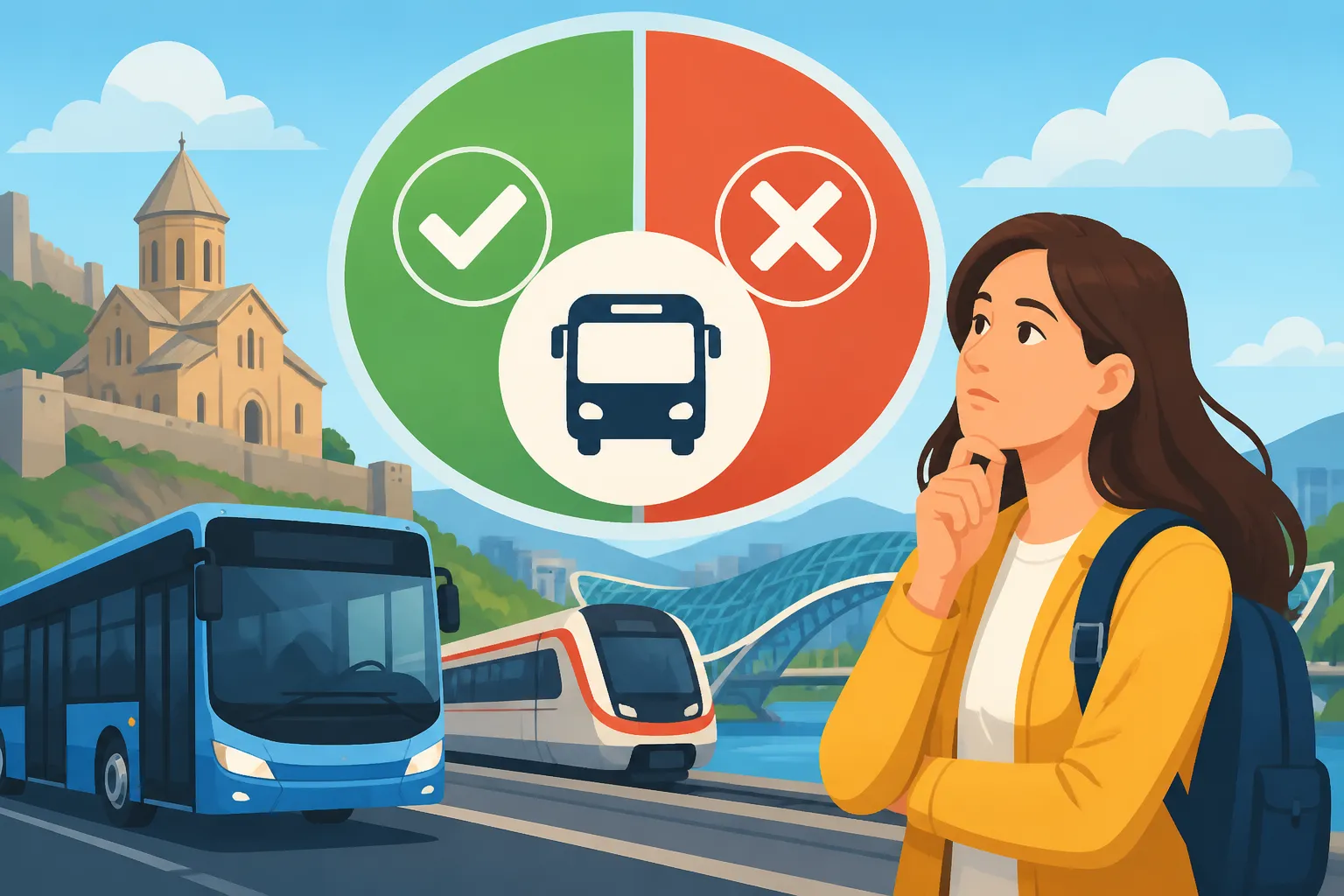
Moving to a new country always throws up a few curveballs, and trying to figure out the local public transport system can often feel like solving a Rubik's Cube blindfolded. In Georgia, it’s no different. You might be wondering, "Just how reliable is public transport here?" Well, let me tell you, it's a mixed bag of charming chaos and surprising efficiency, heavily dependent on where you are and what mode you choose. This guide is here to unravel the mysteries of getting around Georgia, from the bustling streets of Tbilisi to the scenic routes connecting smaller towns, giving you an expat's honest take on what to expect.
Navigating the Georgian Public Transport Landscape
When you first arrive, especially in a big city like Tbilisi, the sheer variety of public transport can be a bit overwhelming. But once you get the hang of it, you’ll find that Georgia's system, while not always perfect, is remarkably comprehensive and incredibly affordable. It’s a core part of daily life here, deeply ingrained in the rhythm of the cities and towns.
The Backbone of Urban Commuting: Buses, Marshrutkas, and Metro
Let's talk about the workhorses of Georgian urban transport. In Tbilisi, you've got a fantastic blend: the metro, city buses, and the ubiquitous marshrutkas (those yellow or white minibuses). The metro is a godsend – it's clean, efficient, and, crucially, underground, meaning it largely bypasses the notorious surface traffic. It runs primarily through the central areas, connecting major hubs and residential districts. During peak hours, trains are frequent, sometimes every few minutes, but even off-peak, you rarely wait long.
City buses, especially in Tbilisi, have seen significant upgrades over the years. Many are modern, often Mercedes-Benz models, some even electric. They cover a much broader network than the metro, extending into every nook and cranny of the city. You'll find their schedules are generally reliable, although they can, of course, get caught in traffic, just like any road vehicle. Then there are the marshrutkas. Oh, the marshrutkas. These private minibuses are Georgia's wild cards. They’re everywhere, running on fixed routes but with a distinctly flexible approach to stops and timing. They’ll pick up and drop off passengers almost anywhere along their route, often with a quick shout or hand signal. For many expats, the initial experience of a packed marshrutka, speeding through traffic while you try to decipher the next stop, can be quite an adventure, to say the least. They fill the gaps where buses or the metro don't reach, offering unparalleled directness, but often at the cost of personal space and comfort.
In other major cities like Batumi and Kutaisi, the metro is non-existent, so buses and marshrutkas shoulder the entire public transport burden. Batumi has invested heavily in modernizing its bus fleet, making it quite pleasant to get around the coastal city. Kutaisi, being smaller, relies on a more traditional, slightly less polished system of buses and marshrutkas. The underlying principle remains: these vehicles keep the country moving, connecting communities from the smallest village to the largest metropolis.
Payment Systems and Accessibility
Paying for transport in Georgia is generally straightforward, but it helps to know the local quirks. In Tbilisi, your best friend will be the MetroMoney card. This rechargeable card works on the metro, city buses, and the Rike Park cable car. You can buy and top it up at any metro station or at special kiosks around the city. It’s convenient, ensures you always have the right fare, and offers a slightly cheaper fare per ride compared to single-use tickets, which are gradually being phased out. Having a MetroMoney card definitely makes life easier, almost as essential as having a reliable internet connection through something like How Do I Set Up a Mobile Phone Plan in Georgia?. In Batumi, they have a similar rechargeable card system for buses, which you can purchase and top up at designated points.
For marshrutkas, however, it's often a cash-only affair, and having small denominations (lari, or GEL) is absolutely key. Drivers usually don't carry much change, and fumbling for a large note when everyone's waiting can be awkward. Just pass your money forward to the driver, or often, to another passenger who will pass it forward for you – it's a very Georgian communal gesture. Many modern payment solutions are emerging, and apps are a significant help in urban areas. Using apps to track bus movements or hail a taxi through services like Bolt or Yandex Go, which require reliable mobile data, can be incredibly useful. This is where something like an Airalo eSIM comes in handy for newcomers, giving you instant connectivity without hunting for a physical SIM card.
On the accessibility front, Georgia is still developing. While newer city buses in Tbilisi and Batumi are often low-floor and equipped with ramps for wheelchairs or strollers, the metro system, being older, has limited accessibility. Many stations rely on long escalators, and not all have elevators. Marshrutkas are almost universally inaccessible for those with mobility issues, featuring high steps and tight interiors. This is a common frustration for expats with young children or those requiring mobility aids, a reality that often needs to be factored into decisions like How Much Does It Cost to Rent an Apartment in Tbilisi in 2026? based on proximity to accessible transport.
Reliability by City and Mode of Transport
The truth is, the reliability of public transport in Georgia isn't uniform. It's a tale of two cities, or rather, a tale of the capital versus the rest, and then a story of different transport types within those areas.
Tbilisi's Integrated (Mostly) System
Tbilisi, being the capital and largest city, naturally boasts the most developed and generally most reliable public transport network. The metro system is, without a doubt, the most dependable mode. Its trains run on a dedicated, underground track, completely immune to traffic jams. You can set your watch by the metro during rush hour. It’s an absolute lifesaver for commuting between key areas like Rustaveli, Liberty Square, and the larger residential districts. Understanding How Do I Use the Metro in Tbilisi? is one of the first things I recommend to anyone moving here.
Buses in Tbilisi are also quite reliable, especially with the newer fleet. The official Tbilisi Transport Company app allows you to track buses in real-time, which is a game-changer. This means you’re not left guessing when the next bus will arrive; you can see exactly where it is on the map. However, buses are susceptible to Tbilisi's infamous traffic. During peak hours (roughly 8-10 AM and 6-8 PM), a 15-minute bus ride can easily stretch to 40 minutes. This is where the metro truly shines.
Marshrutkas in Tbilisi, while incredibly numerous and covering almost every street, are less predictable. Their routes are somewhat fluid, and drivers often wait until the minibus is full before departing from termini, meaning wait times can vary wildly. Once on the road, they are fast, often aggressively so, and less concerned with sticking to a strict schedule than with getting from A to B as quickly as possible, collecting as many fares as possible along the way. While they serve as crucial connectors, relying solely on a marshrutka for a time-sensitive appointment can be a gamble.
Here's a quick comparison of urban transport modes in Tbilisi:
| Mode of Transport | General Reliability | Frequency (Peak/Off-Peak) | Coverage | Cost (Approx. GEL) | Comfort |
|---|---|---|---|---|---|
| Metro | High | Very High / High | Central | 1.00 | High |
| City Bus | Medium-High | High / Medium | Extensive | 1.00 | Medium-High |
| Marshrutka | Medium | Variable | Ubiquitous | 1.00-1.20 | Low-Medium |
Batumi, Kutaisi, and Beyond
Moving beyond Tbilisi, the public transport landscape shifts. Batumi, as Georgia's second-largest city and a popular tourist destination, has a commendable bus system. Its newer, often electric, buses are comfortable and cover the city's main arteries and beach areas effectively. The traffic here is less intense than in Tbilisi, so bus schedules are generally more reliable. Marshrutkas still play a significant role, particularly for reaching areas slightly outside the main city grid or for intercity travel.
Kutaisi, while smaller, also relies on a network of buses and marshrutkas. The system is functional but less extensive and modernized compared to Tbilisi or Batumi. For those considering How to Choose Between Tbilisi, Batumi and Kutaisi to Live In?, transport options will be a major factor in daily convenience.
The real adventure begins with intercity transport. Long-distance travel between Georgian cities and towns is predominantly handled by marshrutkas. These services operate from designated bus stations (or "Didube," the informal marshrutka station in Tbilisi that feels like its own bustling city). While there are some larger coaches for popular routes (e.g., Tbilisi to Batumi), marshrutkas are the bread and butter. Their reliability in terms of departure can be a bit 'Georgian' – they often leave when full, not strictly at a set time, although major routes have more frequent departures. Once they leave, they are generally quick, albeit with stops for passengers and sometimes a quick break for the driver. Booking ahead isn't usually necessary for marshrutkas, but it’s wise to arrive a bit early, especially for popular routes or during holidays. For those just beginning their journey in Georgia, figuring out these nuances is part of the broader challenge outlined in The Complete Guide to Moving to Georgia: Your First 90 Days (2027).
The Expat Experience: Pros, Cons, and Practical Tips
As someone who’s been navigating Georgia's public transport for years, I can tell you it's an experience unlike anywhere else. It has its brilliant moments and its head-scratching ones.
The Upsides: Affordability and Extensive Reach
Let's start with the positives, because there are many. First and foremost, public transport in Georgia is astonishingly cheap. A single ride on the metro or a city bus in Tbilisi will cost you just 1 GEL, which is less than 40 US cents. Marshrutka fares are similar, usually 1 GEL to 1.20 GEL within cities, and intercity trips are incredibly budget-friendly compared to taxi services or owning a car. This affordability is a huge factor in why The Complete Guide to Cost of Living in Georgia for Expats (2026) often highlights how expats can manage their budgets. For many, public transport is the cheapest way to commute, as detailed in What Is the Cheapest Way to Commute in Tbilisi?.
Secondly, the sheer reach of the public transport network is impressive. While the metro is confined to Tbilisi, the combination of buses and especially marshrutkas means you can get almost anywhere. From major cities to remote mountain villages, there’s usually a marshrutka route that can take you there, or at least get you pretty close. This extensive network means that even if you don’t have a car, you can explore a huge part of the country. This is great for new arrivals who might not yet be ready for Driving in Georgia: Licences, Registration and Rules for Expats (2027). It’s also a fantastic way to immerse yourself in local life, rubbing shoulders with Georgians from all walks of life. The daily commute becomes a cultural experience in itself.
The Downsides: Comfort, Congestion, and Language Barriers
Now for the realistic part. Comfort can be a major issue, particularly on older marshrutkas. These vehicles are often not designed for long trips or comfortable commutes. They can be cramped, sometimes lacking proper ventilation or air conditioning in the summer. During peak hours, standing room only is the norm, and you'll become very familiar with your fellow passengers, whether you want to or not. While newer buses are better, even they can become uncomfortably crowded.
Traffic congestion is another significant challenge, especially in Tbilisi. The city's roads are often snarled, turning what should be a short bus or marshrutka ride into a lengthy ordeal. If punctuality is paramount, relying solely on surface transport during rush hour can lead to considerable stress and delays. This is an unavoidable part of city life here, and something you learn to factor into your travel plans.
Then there's the language barrier. While many younger Georgians, especially in Tbilisi, speak English, this isn’t always the case with bus or marshrutka drivers, or older passengers. Trying to confirm a stop or ask for directions can be challenging if you don't speak Georgian or Russian. This is where having a reliable translation app on your phone (and a working data plan, perhaps with an Airalo eSIM for fresh arrivals) becomes incredibly valuable. It's a common expat frustration, and sometimes you just have to trust you're heading in the right direction! This difficulty also extends to finding local services, highlighting the need to understand resources like How to Find an English-Speaking Doctor in Georgia.
Tips for a Smoother Ride
Having lived through the public transport learning curve myself, here are a few hard-won tips to make your experience much smoother:
- Embrace the MetroMoney Card: If you're in Tbilisi, get one immediately. It simplifies payments and reduces stress.
- Download the Apps: The official Tbilisi Transport app (for buses and metro tracking) and apps like Yandex Go and Bolt (for taxis when public transport fails or for convenience) are indispensable. For navigation, Google Maps is usually quite good, but the local apps often have more up-to-date public transport routes.
- Learn Basic Georgian Phrases: "Gamarjoba" (hello), "Madloba" (thank you), and knowing how to say your destination, or at least point to it on a map, will go a long way. Knowing "gaachere" (stop) is crucial for marshrutkas.
- Have Small Change: Always carry 1 GEL coins or small notes for marshrutkas. It avoids awkward situations and keeps things moving.
- Avoid Peak Hours if Possible: If your schedule allows, try to travel outside of the 8-10 AM and 6-8 PM windows, especially if you're using buses or marshrutkas. This will save you from excessive crowding and traffic delays.
- Consider Your Location Carefully: When choosing where to live, think about your proximity to a metro station if you plan to rely heavily on public transport. Areas well-served by the metro can drastically cut down on commute times and stress. This is a key consideration when reviewing The Best Places to Live in Georgia for Expats: A Complete Guide (2027).
- Be Prepared for the Unexpected: Marshrutkas might take a slightly different route than expected, or a bus might be delayed. Patience is a virtue here.
- Internal Linking: Understanding the Networks: For a deeper dive into the inner workings of Tbilisi's system, check out Understanding the Tbilisi Metro, Marshrutka and Bus Networks.
- Relocation Logistics: For bigger moves, like settling into your new place, local transport reliability will impact logistics. Services like Sirelo can help you plan your international move, but once you're on the ground, local transport will be vital for everything from grocery runs to exploring your new neighborhood.
In conclusion, public transport in Georgia, especially in its major cities, is reliable enough to get by, particularly if you learn to navigate its quirks. The metro is a dependable workhorse, buses are increasingly efficient, and marshrutkas, while a wild ride, are incredibly effective at covering every corner. It's affordable, extensive, and an integral part of the Georgian experience. You'll probably develop a love-hate relationship with it, but ultimately, it will get you where you need to go.
Disclaimer
The information provided in this guide is for general informational purposes only and does not constitute professional advice. While we strive to keep the information up-to-date and accurate, transport schedules, routes, and regulations in Georgia can change. Always check the latest information from official sources or local transport providers.