Is It Cheaper to Get Dental Work Done in Georgia?
Let's be real, one of the first things that pops into your head when you move to a new country, or even just plan an extended trip, is "what about my teeth?" Dental care, in particular, can be a massive headache and an even bigger hit to your wallet back home. You've heard whispers that Georgia offers more affordable options, and I'm here to tell you, those whispers are often true. This guide is going to deep-dive into whether getting your dental work done here in Georgia is genuinely cheaper, what you can expect in terms of costs and quality, and how to navigate the system to keep your smile bright and your bank account happier.
The General Landscape of Dental Costs in Georgia
When I first arrived in Georgia, one of my friends was facing a rather hefty bill for a root canal back in Western Europe. He looked into getting it done here almost as a joke, but the quote he received literally made his jaw drop – in a good way! It's not just a myth; Georgia genuinely offers significantly lower prices for dental care compared to many Western European countries, North America, and even some parts of Asia. This isn't necessarily a reflection of lower quality, but rather a different economic structure, lower overheads for clinics, and a very competitive local market.
A Comparison with Western Countries
Let's talk numbers, or at least the general scale of them. Imagine paying hundreds, sometimes thousands, for a single crown or a complex filling in your home country. Here in Georgia, you can often expect to pay a fraction of that. For instance, a basic cleaning that might set you back €80-€150 in Europe could be closer to €30-€50 in Tbilisi. This isn't a small difference; for major work like dental implants, the savings can easily run into the thousands, making a trip here specifically for dental tourism a very real and financially attractive option for many. It's a game-changer for those who've been putting off necessary work due to exorbitant costs elsewhere.
Factors Influencing Dental Pricing
Now, it's not a one-size-fits-all situation. While Georgia is generally cheaper, prices can still vary quite a bit from one clinic to another. Several factors come into play:
- Location: Clinics in prime, expat-heavy areas of Tbilisi, like Vake or Saburtalo, tend to have slightly higher prices than those tucked away in quieter districts or smaller cities like Kutaisi or Batumi. Still, even the priciest clinics in Tbilisi are often more affordable than their Western counterparts.
- Clinic Reputation and Specialization: A well-established clinic with a team of highly specialized dentists, state-of-the-art equipment, and a strong track record, especially one catering to international clients, might charge a bit more. However, this premium often comes with the added comfort of English-speaking staff and familiar standards of service.
- Technology and Materials: The type of materials used for fillings, crowns, or implants plays a role. High-quality ceramic crowns will naturally cost more than metal-ceramic ones. Similarly, clinics using the latest digital X-ray technology or 3D scanning might have slightly higher base prices.
- Urgency of Treatment: While not a massive factor, emergency appointments can sometimes incur a slightly higher fee, as is common worldwide. However, Georgia’s system is often more flexible, and you might find it easier to get a same-day appointment for urgent issues compared to struggling to get in to see a dentist in your home country for weeks.
Breaking Down Common Dental Procedures and Their Costs
Let's get specific, shall we? Understanding the typical price ranges for various procedures can help you budget and make informed decisions. Keep in mind these are general estimates and can fluctuate based on the factors mentioned above, as well as the specific clinic and dentist.
Routine Check-ups and Cleanings
This is where the savings often start for many expats. Regular preventative care is crucial, and it’s surprisingly affordable here.
- Consultation/Check-up: Many clinics offer a free initial consultation, especially if you plan to get work done. Otherwise, a general check-up without any treatment might cost around 20-50 GEL.
- Professional Cleaning (Scaling & Polishing): This is one of the most popular and cost-effective procedures. You can expect to pay anywhere from 80-150 GEL for a thorough cleaning. Some premium clinics might charge up to 200 GEL, especially if they use advanced airflow polishing techniques. This is substantially less than what you’d pay in many Western countries, where it could be 150-300 GEL or more.
Fillings and Extractions
Life happens, and sometimes a cavity or a stubborn tooth needs attention. Here’s what you might encounter.
- Composite Fillings (White Fillings): The cost for a composite filling largely depends on its size and complexity. A small filling might be 80-120 GEL, while a larger, more intricate one could go up to 200-300 GEL. This is again quite reasonable when compared to countries where a single composite filling can easily exceed €100-€200.
- Tooth Extractions: Simple extractions for a visible, non-impacted tooth are relatively inexpensive, often in the range of 100-250 GEL. More complex extractions, like wisdom teeth removal, especially if impacted or requiring surgical intervention, will naturally cost more, possibly 300-600 GEL or higher, depending on the difficulty and whether it involves a specialist. This is still a far cry from the several hundred euros or dollars you'd pay in many other places.
- Root Canal Treatment: This procedure can be quite intimidating both for the tooth and the wallet. In Georgia, a root canal (endodontic treatment) on a single-rooted tooth might cost 300-600 GEL, while multi-rooted teeth could range from 500-1000+ GEL. This often doesn't include the final filling or crown needed afterwards, so be sure to get a full treatment plan. Compare this to upwards of €500-€1000 in the West, and the savings become very apparent.
More Complex Procedures: Crowns, Bridges, and Implants
These are the big-ticket items where Georgia truly shines as a dental tourism destination. The savings can be profound, making otherwise unaffordable treatments accessible.
- Dental Crowns: Crowns are typically used to cover and protect a damaged tooth.
- Metal-Ceramic Crowns: These are a more budget-friendly option, often costing around 300-500 GEL per crown.
- Zirconia or E.max Crowns (All-Ceramic): These are higher quality, more aesthetic, and durable options. They generally range from 600-1200 GEL per crown. Considering these can easily cost €600-€1500+ in other countries, the value here is incredible.
- Dental Bridges: Used to replace one or more missing teeth, bridges involve crowning adjacent teeth. The cost will be calculated per unit (each crown in the bridge). So, a 3-unit bridge might involve the cost of three crowns.
- Dental Implants: This is perhaps the most significant area of savings. A single dental implant, including the implant screw (often from reputable international brands like Straumann or Nobel Biocare) and the abutment, but before the crown, can range from 1000-2500 GEL. The final crown on the implant would be an additional cost, similar to regular crowns. All in, a complete single implant (including the crown) could be in the range of 1800-3500 GEL. In many Western countries, a single implant can cost €2000-€5000 or more. This is why many people travel to Georgia specifically for implants.
Here’s a quick overview table to give you a rough idea of costs in Georgian Lari (GEL) and a comparison to Western prices:
| Procedure | Estimated Cost in Georgia (GEL) | Equivalent in approx. EUR (1 EUR ≈ 3 GEL) | Typical Western Cost (EUR) |
|---|---|---|---|
| General Consultation | 20 – 50 | 7 – 17 | 50 – 150 |
| Professional Cleaning | 80 – 150 | 27 – 50 | 80 – 200 |
| Composite Filling (small-med) | 80 – 200 | 27 – 67 | 100 – 300 |
| Simple Tooth Extraction | 100 – 250 | 33 – 83 | 150 – 400 |
| Root Canal (single-rooted) | 300 – 600 | 100 – 200 | 300 – 800 |
| Zirconia Crown | 600 – 1200 | 200 – 400 | 600 – 1500+ |
| Dental Implant (per unit) | 1000 – 2500 | 333 – 833 | 2000 – 5000+ |
Please note: These are estimates and subject to change.
Finding Quality Dental Care as an Expat in Georgia
The lower prices are certainly appealing, but what about quality? This is often the biggest concern for expats, and rightfully so. You don't want to compromise your health just to save a few Lari. Thankfully, Georgia has a growing number of modern dental clinics that adhere to international standards.
English-Speaking Dentists and Clinics
Finding a dentist who speaks English is definitely a top priority for most foreigners. The good news is that in Tbilisi, especially in the more central areas, it's becoming increasingly common. Many clinics actively market to expats and digital nomads, and their staff, from receptionists to the dentists themselves, often have excellent English skills.
When you're looking, I'd suggest starting your search in areas like Vake, Saburtalo, and Vera in Tbilisi. These neighborhoods host many of the city's more modern and internationally-oriented clinics. A quick search online for "English speaking dentist Tbilisi" will yield several promising results. Don't hesitate to call ahead, ask about the languages spoken, and even schedule a consultation to gauge their communication skills and the clinic's overall professionalism. Word-of-mouth recommendations from other expats in local Facebook groups are also gold. Many expats rave about the services at clinics like Tbilisi Dental Clinic or Smile Line for their professional approach and English-speaking staff.
If you're wondering how to find and register with a clinic or doctor in Georgia, that's a whole other adventure, but rest assured, dentists are usually more straightforward to access than general practitioners.
Navigating the Quality vs. Cost Equation
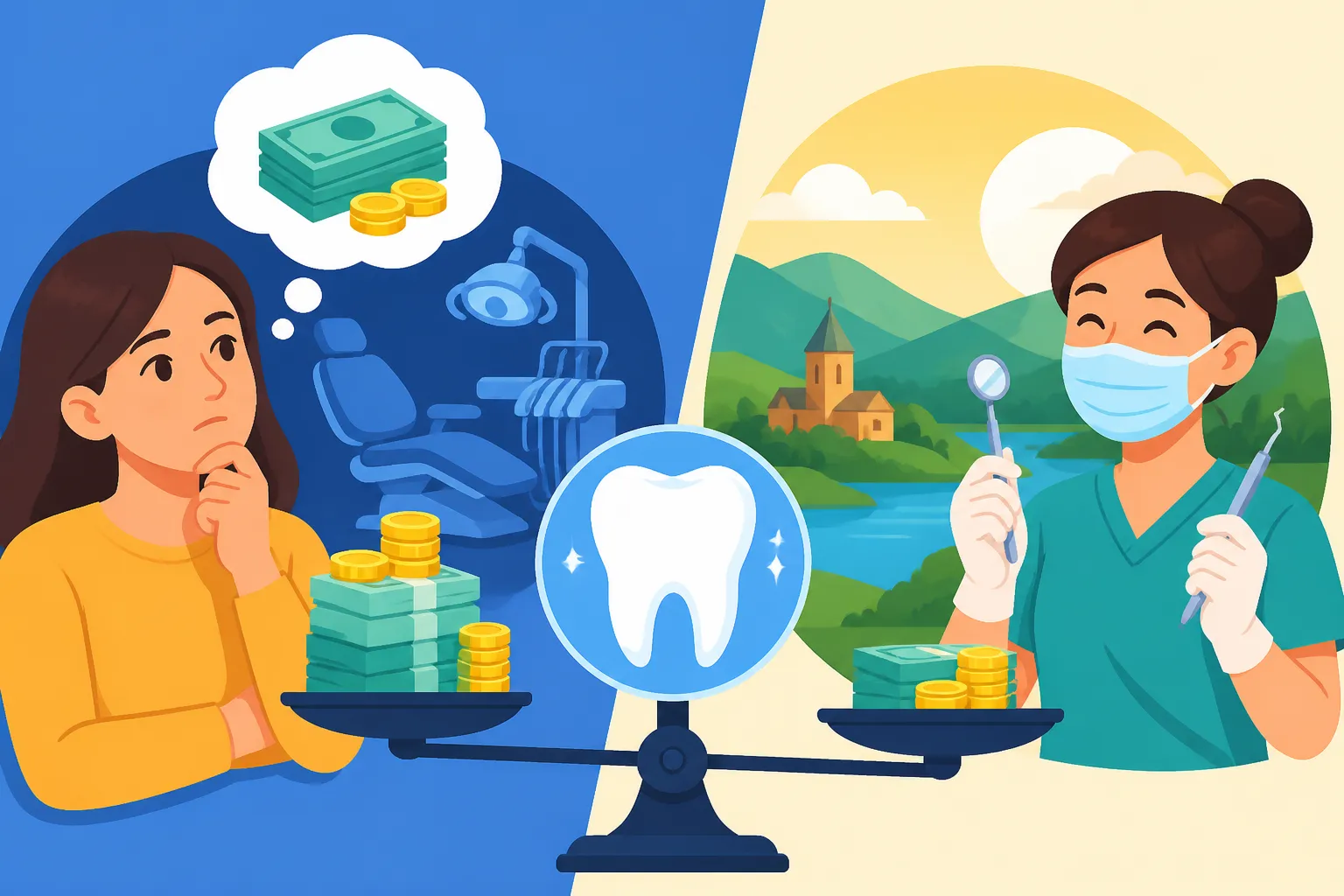
This is the tricky part. While you can save a lot, you still want to ensure you're getting good care. My advice? Don't automatically go for the absolute cheapest option you find. Instead, aim for clinics that offer a good balance of affordability and demonstrable quality.
Here’s how to assess it:
- Clinic Appearance and Hygiene: Does the clinic look clean, modern, and well-maintained? This is usually a good indicator.
- Equipment: Do they use up-to-date equipment? Digital X-rays, intraoral cameras, and modern sterilization techniques are good signs.
- Transparency: Do they provide a detailed treatment plan and clear breakdown of costs upfront? Avoid places that are vague about pricing.
- Reviews: Check online reviews from other expats. Google reviews, local expat forums, and social media groups can offer valuable insights.
- Professionalism: How do they handle your questions? Do they seem knowledgeable and empathetic? A good dentist will explain procedures clearly and ensure you feel comfortable.
Remember, a cheap price isn't a red flag in Georgia per se, but extremely low prices for complex procedures should still make you ask questions.
How Health Insurance Plays a Role (or Doesn't)
This is a big one, as dental coverage can be a complete nightmare, no matter where you are in the world. Georgia is no exception. Most local health insurance plans for expats offer very limited, if any, dental coverage.
Local Private Health Insurance and Dental Coverage
If you have local private health insurance in Georgia, you'll need to scrutinize your policy carefully. Many standard plans will only cover emergency dental work, such as an acute infection, severe pain, or an accident that results in tooth damage. Routine check-ups, cleanings, fillings, crowns, and certainly cosmetic procedures are rarely included. If they are, it's usually as a small add-on package with very low annual limits, sometimes only covering a percentage of the cost.
So, while having general health insurance is vital (and you can find great info on How to Buy Private Health Insurance After Moving to Georgia), don't rely on it for your regular dental needs. You’ll almost certainly be paying out of pocket for most dental work.
International Health Insurance and Dental Benefits
Some international health insurance plans do offer more comprehensive dental coverage, but again, it’s not standard and usually comes at a premium. You’ll typically find it in higher-tier plans or as an optional add-on.
Let's consider a brand like SafetyWing. While SafetyWing is fantastic for travel medical insurance and offers some emergency medical benefits, its standard Nomad Insurance typically does not include routine dental care, check-ups, or extensive procedures like fillings, crowns, or implants. It’s designed for medical emergencies, not elective or routine dental work. They do have a "Nomad Health" product which is more like comprehensive health insurance and might offer dental add-ons, but you'd need to check their specific policy details very carefully. The general rule of thumb with most international travel or expat insurance is that routine dental care is either excluded or has very strict limitations and waiting periods.
Therefore, for most dental treatments in Georgia, whether you have local or international health insurance, prepare to pay for it directly. The good news is that even without insurance, the out-of-pocket costs are still significantly lower than what you'd find in many other countries.
Practical Tips for Dental Tourists and Expats
Navigating dental care in a new country can feel like a maze, but a few smart strategies can make it a breeze.
Getting Quotes and Second Opinions
This is absolutely crucial, especially for more complex or expensive procedures like crowns, bridges, or implants. Don't settle for the first quote you get.
- Shop Around: Visit 2-3 different reputable clinics. Many will offer a free initial consultation, sometimes including an X-ray.
- Get a Written Treatment Plan: Always ask for a detailed, written treatment plan that outlines the diagnosis, proposed procedures, materials to be used, and the itemized cost for each step. This prevents misunderstandings and unexpected charges.
- Compare: Use these written plans to compare not just the total price, but also the specific recommendations and materials. Sometimes a slightly higher quote might be for a superior material or a more comprehensive approach.
For example, if you're looking into getting an MRI scan for something else, you might also find that How Much Does an MRI Scan Cost in Georgia in 2026? is considerably less than you expect, reinforcing the general affordability of medical services.
Aftercare and Follow-Up Considerations
While the upfront cost is attractive, think about the long-term.
- Complex Procedures and Travel: If you're coming to Georgia specifically for extensive dental work, plan your trip to allow for sufficient healing time and any necessary follow-up appointments. Dental implants, for instance, often require multiple stages over several months. You might need to return or have a plan for follow-up care if you're not a resident.
- Communication for Aftercare: Ensure you have clear instructions for aftercare and know who to contact if you experience any issues post-procedure. A good clinic will provide this proactively.
- Long-Term Relationships: If you're an expat living here, try to build a relationship with a trusted clinic for your ongoing care. Having a "home base" for your dental needs makes everything much easier down the line. It's similar to how you would choose How Do I Choose a Hospital in Tbilisi? for general medical needs, you want a place you trust.
Ultimately, yes, it is generally much cheaper to get dental work done in Georgia, especially when comparing it to North America, Western Europe, or Australia. The key is to do your homework, communicate clearly, and not be afraid to seek out multiple opinions to find a clinic that offers both excellent quality and great value. You'll likely walk away with a healthier smile and a much healthier bank balance!
Disclaimer
The information provided in this article is intended for general guidance and informational purposes only. While we strive to provide accurate and up-to-date content, dental costs and regulations in Georgia can change. It is always recommended to consult with multiple qualified dental professionals and insurance providers directly for personalized advice, treatment plans, and the most current pricing. This article should not be considered a substitute for professional medical or dental advice.