Understanding Health Coverage for the Self-Employed in Georgia
Moving to Georgia and diving into the vibrant world of self-employment is an exciting venture for many expats. You’ve likely got your head buzzing with ideas for your business, navigating the tax system, and finding your perfect spot in Tbilisi or Batumi. But amidst all this entrepreneurial zeal, there's one crucial aspect that often gets overlooked, or worse, completely misunderstood: your health coverage. Many self-employed expats arrive here assuming universal healthcare will cover them, or that they can simply wing it, only to find themselves in a precarious situation when a medical need arises. This guide is here to untangle the complexities of health coverage for self-employed individuals in Georgia, ensuring you understand your options and can make informed decisions to protect yourself.
The Unique Healthcare Landscape for Self-Employed Expats in Georgia
When you're self-employed in a new country like Georgia, the healthcare system can feel like a labyrinth. You don't have an employer's HR department guiding you through the ins and outs, nor do you typically benefit from the automatic enrollments that come with traditional employment. This independent path, while freeing, places the responsibility of securing adequate health coverage squarely on your shoulders. It's a fundamental difference from many Western countries where state-funded or employer-mandated insurance is common, and understanding this distinction is your first critical step.
Dispelling Myths About Universal Healthcare (UHC) for Self-Employed Expats
One of the biggest misconceptions many expats arrive with is the idea that Georgia’s Universal Healthcare Program (UHC) will automatically cover them. It's an easy assumption to make, given the name, but the reality is quite different for foreigners, especially those who are self-employed. The UHC system primarily serves Georgian citizens, particularly those who are socially vulnerable, pensioners, children, students, and state employees. For expats who are not formally employed by a Georgian entity and paying into specific social security schemes, or who do not fall into certain vulnerable categories, the UHC often provides very limited, if any, direct coverage.
This means that as a self-employed individual, you cannot rely on the Georgian state to cover your medical bills if you fall ill or have an accident. While emergency services might be provided initially at public hospitals, you will almost certainly be billed for the costs, and without insurance, these can quickly escalate. It’s a common and rather harsh awakening for many, highlighting the urgent need for a proactive approach to your health coverage from day one. You can learn more about how Georgia's healthcare system works and the nuances between public and private options to get a clearer picture.
The Reality of Being Uninsured as a Freelancer
Let’s be brutally honest: being uninsured as a self-employed expat in Georgia is playing with fire. The dream of entrepreneurial freedom can quickly turn into a financial nightmare if you face a significant medical event. A simple visit to a private clinic for a severe flu could cost you upwards of 150-200 GEL for consultations, diagnostics, and prescriptions. Imagine a broken bone requiring surgery, or a more serious condition necessitating hospitalisation. These situations can easily run into thousands, or even tens of thousands, of Georgian Lari.
Without insurance, you are entirely responsible for these costs out of your own pocket. This isn't just about the financial burden; it's also about access to quality care. While Georgia has a growing number of excellent private clinics and hospitals, many will require upfront payment or proof of insurance before providing extensive treatment. Being uninsured can lead to delays in receiving necessary medical attention, stress, and a significant drain on your hard-earned savings. It negates the very financial freedom you sought through self-employment. The bottom line is, healthcare in Georgia is not free for residents without the right coverage, and this is especially true for the self-employed.
Understanding Your Primary Options: Private Health Insurance
Given that Georgia's universal healthcare system doesn't typically extend comprehensive coverage to self-employed expats, your most viable and sensible path to securing your health is through private health insurance. This is where you become your own advocate, choosing a plan that fits your specific needs, budget, and lifestyle in Georgia. You have a couple of main routes to consider: local Georgian providers or international insurance companies. Each has its own set of pros and cons that you’ll need to weigh carefully.
Local Georgian Private Insurance Providers
Georgia has several reputable local insurance companies that offer various health plans. These providers are well-versed in the local healthcare landscape and often have direct billing agreements with many clinics and hospitals within Georgia. Companies like Aldagi or GPI Holding are prominent players in the Georgian market. Their plans can sometimes be more budget-friendly than international options, especially if you're primarily concerned with coverage within Georgia's borders and plan to stay mostly local.
However, there are a few things to keep in mind. While some policies might offer basic English support, the primary language of communication for policy documents and claims can often be Georgian. This might present a challenge if your Georgian language skills aren't up to scratch. Furthermore, the networks of hospitals and clinics they cover are, by design, focused on Georgia. If you frequently travel outside of Georgia and want your health coverage to travel with you, a local plan might fall short. It's crucial to scrutinise their outpatient, inpatient, and specialist care provisions to ensure they meet your expectations.
International Health Insurance Solutions
For many self-employed expats, particularly digital nomads and those with a more transient lifestyle, international health insurance often provides a better fit. These plans are specifically designed for individuals living and working abroad, offering a broader range of benefits and features that cater to the expat experience. The major advantage here is portability; your insurance travels with you, offering coverage not just in Georgia but often worldwide (excluding your home country or certain regions, depending on the policy).
One popular option among the digital nomad and self-employed community is SafetyWing. They offer a product tailored for remote workers and nomads, providing comprehensive medical coverage that is global and flexible. Plans from providers like SafetyWing are typically designed with English-speaking customer service, clear policy documents, and a straightforward claims process. This can be a huge relief when you're dealing with a medical issue in a foreign country. While international plans might sometimes appear more expensive at first glance, the global coverage, ease of use, and peace of mind they offer often justify the investment, especially if you foresee yourself travelling frequently or potentially moving to another country in the future. To dive deeper into making an informed choice, consider reading about how to choose between local and international health insurance in Georgia.
Key Considerations When Choosing a Plan
Deciding on a health insurance plan isn't a one-size-fits-all situation, especially when you’re self-employed. It requires a thoughtful assessment of your personal health needs, financial situation, and lifestyle. You need to look beyond just the monthly premium and delve into the specifics of what a policy truly offers. Skimping on this research now could lead to significant regret and financial strain down the line.
Coverage Scope: What's Really Covered?
This is perhaps the most critical aspect to scrutinise. Don't just assume "full coverage" means everything. Most policies have tiers of coverage, and what might be standard in your home country could be an add-on or excluded here. You need to thoroughly understand what is included for outpatient services (doctor visits, diagnostic tests), inpatient services (hospital stays, surgeries), emergency care, and specialist consultations. Check if the plan covers dental care, optical care, and maternity care if these are relevant to your current or future needs.
Furthermore, pay close attention to pre-existing conditions. Many policies have waiting periods or exclusions for conditions you had before you signed up. If you have a chronic illness, it’s imperative to find a policy that acknowledges and covers it, even if it means a higher premium. For instance, a basic plan might cover accident and acute illness but leave you high and dry for ongoing physiotherapy or mental health support. If you are regularly flying in and out of Georgia for work, a plan like SafetyWing offers continuous coverage that adapts to your mobile lifestyle, a key feature for many self-employed individuals. Understanding The Complete Guide to Healthcare in Georgia for Expats (2026) will help you identify what services you might need most frequently.
Cost vs. Value: Decoding Premiums, Deductibles, and Co-payments
The cost of health insurance isn't just the monthly or annual premium. You need to factor in deductibles, co-payments, and out-of-pocket maximums. The deductible is the amount you have to pay yourself before your insurance starts covering costs. A higher deductible usually means a lower premium, but also a higher initial out-of-pocket expense if you need care. Co-payments are fixed amounts you pay for certain services (e.g., 20 GEL for a doctor's visit), even after your deductible is met.
It’s about striking a balance. A cheap plan with a very high deductible and minimal coverage might seem appealing until you face a significant medical bill. Conversely, a premium plan with comprehensive coverage and a low deductible might stretch your budget unnecessarily if you're generally healthy. As a self-employed individual, managing your finances is key, and healthcare costs are a significant part of that. Look at the total potential cost for a hypothetical medical event and decide what level of risk you are comfortable with. For a detailed look at potential expenses, check out How Much Does Private Health Insurance Cost in Georgia in 2026?
Network of Hospitals and Doctors
The best insurance plan in the world is useless if you can't access care conveniently. Check the insurance provider’s network of affiliated hospitals and clinics in your area of residence in Georgia, be it Tbilisi, Batumi, or elsewhere. Do they have direct billing agreements with these facilities, or will you need to pay upfront and claim reimbursement? Direct billing is always more convenient as it reduces your administrative burden and immediate financial outlay.
For expats, the availability of English-speaking medical professionals within that network is often a major concern. Many private clinics in larger cities cater to foreigners, but it’s wise to confirm this upfront. Some international providers, like SafetyWing, offer resources to help you find English-speaking doctors within their network, which is a massive relief when you're feeling unwell and navigating a foreign medical system. Consider also the quality and reputation of these facilities. This due diligence ensures that when you need care, it’s not only covered but also accessible and understandable. Knowing how to find an English-speaking doctor in Georgia can save you a lot of stress.
The Application and Management Process
Once you’ve done your research and identified a few promising health insurance options, the next step is actually applying and understanding how to manage your policy. As a self-employed individual, you're responsible for initiating this process and ensuring all paperwork is in order. It's not always as straightforward as it might seem, but with a bit of preparation, it’s certainly manageable.
Required Documents and Eligibility
For most private health insurance providers in Georgia, whether local or international, you'll need to provide certain documents to prove your identity, residence status, and sometimes, your income. Typically, this includes a copy of your passport, your Georgian residence permit (if you have one, or proof of legal stay), and proof of address. For self-employed individuals, there might be additional requirements to confirm your income or business activity, although this is more common with local providers than with international ones like SafetyWing, which focus more on your travel/residency status.
If you’ve registered as an Individual Entrepreneur in Georgia, having those registration documents handy can be useful. The key is to demonstrate that you are legally residing in Georgia (or are a legitimate digital nomad) and that you have the means to pay the premiums. Always check the specific eligibility criteria for each policy, as some might have age restrictions or requirements regarding the length of your stay in Georgia. Don't be shy about contacting their customer service with any questions before you submit your application.
Renewals, Claims, and Customer Support
Managing your insurance policy throughout the year is just as important as the initial application. Pay close attention to your policy’s renewal date. Many providers will send reminders, but as a self-employed person, it’s your responsibility to ensure continuous coverage. Lapses in insurance can be incredibly risky. When it comes to making a claim, understanding the process is paramount. This includes knowing what documents are required (medical reports, invoices, receipts), how to submit them (online portal, email, post), and the typical reimbursement timeline.
For many expats, the quality of customer support is a deal-breaker. Can you communicate effectively with them in English? Are they responsive? Is the claims process transparent and efficient? This is where international providers often shine, offering dedicated multilingual support channels. Companies like SafetyWing pride themselves on user-friendly online platforms and accessible customer service, which can make a world of difference when you’re unwell and need to focus on recovery, not battling bureaucracy. Familiarise yourself with how to claim reimbursement from private insurance in Georgia to be prepared.
Navigating Specific Medical Needs as Self-Employed
Being self-employed means you're often juggling many roles, and navigating medical needs adds another layer of complexity. You don't have an employer to guide you through sick leave policies or help with referrals. You are the sole manager of your health and, by extension, your business. Understanding how to handle various medical situations will empower you to seek timely and appropriate care without unnecessary stress.
Emergency Care and Hospital Stays
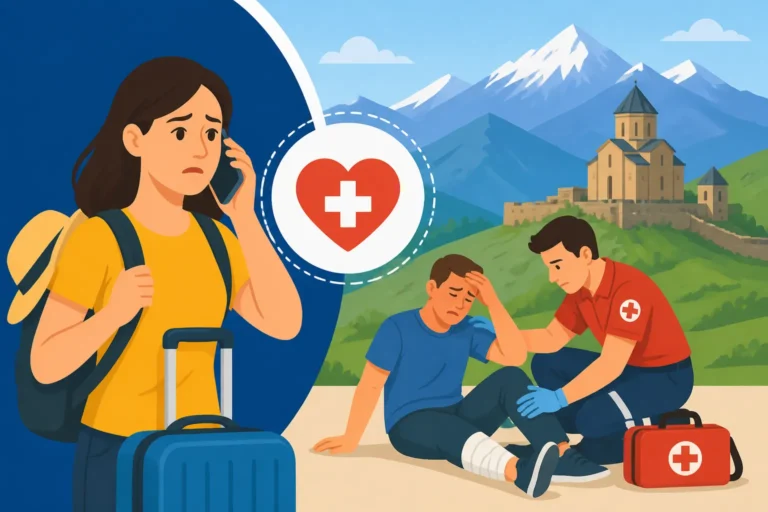
In a medical emergency in Georgia, the first port of call is usually to dial 112 for an ambulance, or head directly to the nearest emergency room. Regardless of your insurance status, emergency medical care should theoretically be provided to stabilise your condition. However, once the immediate crisis is over, the financial implications come into play. If you have private insurance, the hospital will typically verify your coverage, and if they have a direct billing agreement, your insurance should cover eligible costs as per your policy.
Without insurance, or with a policy that has a high deductible, you will be expected to pay for all services rendered. This includes ambulance transport, ER consultations, diagnostic tests, and any subsequent hospitalisation or surgery. Public hospitals, while often less expensive than private ones, still charge for services for those not covered by UHC, and the level of English-speaking staff might be limited. Private hospitals, such as Evexx Medical Corporation or Medalpha, offer excellent facilities and often more English-speaking staff, but their costs are considerably higher. This is where a robust international health insurance plan like one from SafetyWing can provide significant peace of mind, ensuring you have access to the best care without financial worry during a critical time. For more information, please read Emergency Medical Care in Georgia: What Every Expat Needs to Know.
Routine Check-ups and Specialist Referrals
One of the often-overlooked aspects of self-employment is the lack of structured wellness programs or easy access to routine health screenings that many traditional employment packages offer. As a self-employed expat, you need to proactively schedule your routine check-ups and understand how specialist referrals work. Most private insurance plans will cover general practitioner (GP) visits and often offer benefits for annual health checks. You can usually book an appointment directly with a GP at a private clinic.
If a GP determines you need to see a specialist (e.g., a dermatologist, cardiologist, or endocrinologist), they will provide a referral. Your insurance policy will dictate whether these specialist visits are covered, and if so, to what extent (e.g., a certain number of visits per year, or up to a specific monetary limit). It’s always best to confirm with your insurance provider before seeing a specialist to avoid any surprises. Many expats find private clinics in Tbilisi, such as MediClub Georgia, to be very accommodating with English-speaking staff and a wide range of specialist services.
Prescription Medications and Pharmacy Access
Georgia has a well-developed pharmacy system, and you’ll find numerous pharmacies like PSP and GPC throughout cities and towns. Many common medications are available, and some antibiotics can even be purchased over-the-counter without a prescription, though this practice is becoming more regulated. For stronger medications, you will need a prescription from a licensed Georgian doctor.
The cost of prescription medications can vary significantly. Some generic drugs are quite affordable, while others, particularly imported or specialised medications, can be expensive. Your private health insurance plan may cover a portion or all of your prescription drug costs, often after a co-payment or subject to certain limits. Always keep your receipts for medications if you plan to claim reimbursement. Understanding the pharmacy system and buying medicines in Georgia is essential for managing your health effectively.
Practical Advice and Next Steps
Taking control of your health coverage as a self-employed expat in Georgia is a vital part of your overall well-being and business success. It’s not a one-time decision but an ongoing commitment to staying informed and prepared. Here's some final practical advice to help you navigate this important aspect of your expat journey.
Budgeting for Healthcare Costs
As a self-employed individual, you are your own financial planner. It’s crucial to incorporate healthcare costs into your monthly or annual budget. This isn't just about the monthly premium for your chosen health insurance. You also need to budget for potential out-of-pocket expenses, such as deductibles, co-payments, and any treatments not fully covered by your policy. Think about an emergency fund specifically for medical contingencies. Even with good insurance, unexpected costs can arise, or you might need to cover expenses upfront before reimbursement.
A good rule of thumb is to have at least three to six months of living expenses saved, with a portion of that dedicated to potential medical emergencies. Consider the average cost of a doctor's visit, a dental check-up, or basic lab tests, and allocate funds accordingly. Being proactive with your financial planning for healthcare prevents stress and ensures you can access the care you need without compromising your business or personal finances. For a complete breakdown, refer to The Cost of Healthcare in Georgia: A Complete Breakdown for Foreigners (2026).
Seeking Professional Guidance
While this guide provides a comprehensive overview, every individual's situation is unique. If you have complex health needs, a significant family history of illness, or a particularly intricate financial setup as a self-employed person, it might be beneficial to seek professional guidance. This could involve consulting with an independent insurance broker who specialises in expat health insurance in Georgia, or a financial advisor familiar with the Georgian market.
These professionals can offer personalised advice, help you compare policies from various providers (both local and international, including flexible options like SafetyWing), and ensure you understand all the fine print. They can also assist with the application process and provide support with claims if needed. Investing in expert advice upfront can save you considerable time, money, and stress in the long run, ensuring you have the most appropriate and robust health coverage for your self-employed life in Georgia. Don't underestimate the value of expert local knowledge when it comes to something as critical as your health. For those looking to fully understand their self-employment status, a guide like How to Register as an Individual Entrepreneur in Georgia can provide foundational knowledge.
| Feature / Consideration | Local Georgian Private Insurance | International Health Insurance (e.g., SafetyWing) |
|---|---|---|
| Primary Coverage Area | Primarily within Georgia | Worldwide (often excluding home country) |
| Portability | Limited outside Georgia | Excellent, travels with you |
| Language Support | Primarily Georgian, some English | Primarily English, often multilingual |
| Network | Local Georgian clinics/hospitals | Global network, may include Georgian facilities |
| Digital Nomad Focus | Generally not tailored | Specifically designed for remote workers/nomads |
| Flexibility | Varies by provider | High, flexible monthly plans often available |
| Claims Process | Local procedures, can be in Georgian | Streamlined, often online, English support |
| Cost Range (Monthly) | Generally lower for basic plans | Can be higher, but competitive for global coverage |
| Complexity for Expats | Higher due to language/local focus | Lower due to expat-centric design |
Disclaimer
The information provided in this guide is for general informational purposes only and does not constitute medical, financial, or legal advice. While we strive to keep the information up-to-date and accurate, healthcare regulations, insurance policies, and prices in Georgia can change. Always consult with a qualified insurance professional, healthcare provider, or legal expert for advice tailored to your specific situation. Reliance on any information in this guide is solely at your own risk.