How to Handle a Medical Emergency While Travelling from Georgia
That sudden jolt of panic when you’re far from home and a medical emergency hits? It’s a fear every expat knows, especially when you’ve settled into life in Georgia but are off exploring new horizons. You're no longer just dealing with Georgia's healthcare system; you're now navigating an entirely new one. This comprehensive guide is here to walk you through exactly what to do, how to prepare, and what to expect if you face a medical crisis while traveling from Georgia, ensuring you’re as ready as you can be.
The Harsh Reality of Medical Emergencies Abroad
Let's be brutally honest here: a medical emergency in a foreign country is a whole different ballgame than a mishap back home or even right here in Georgia. It’s not just about getting sick; it’s about a cascade of problems from language barriers to astronomical costs, all while you’re at your most vulnerable. Ignoring the potential for this kind of crisis is a gamble you really don’t want to take.
Why "Just Winging It" Isn't an Option
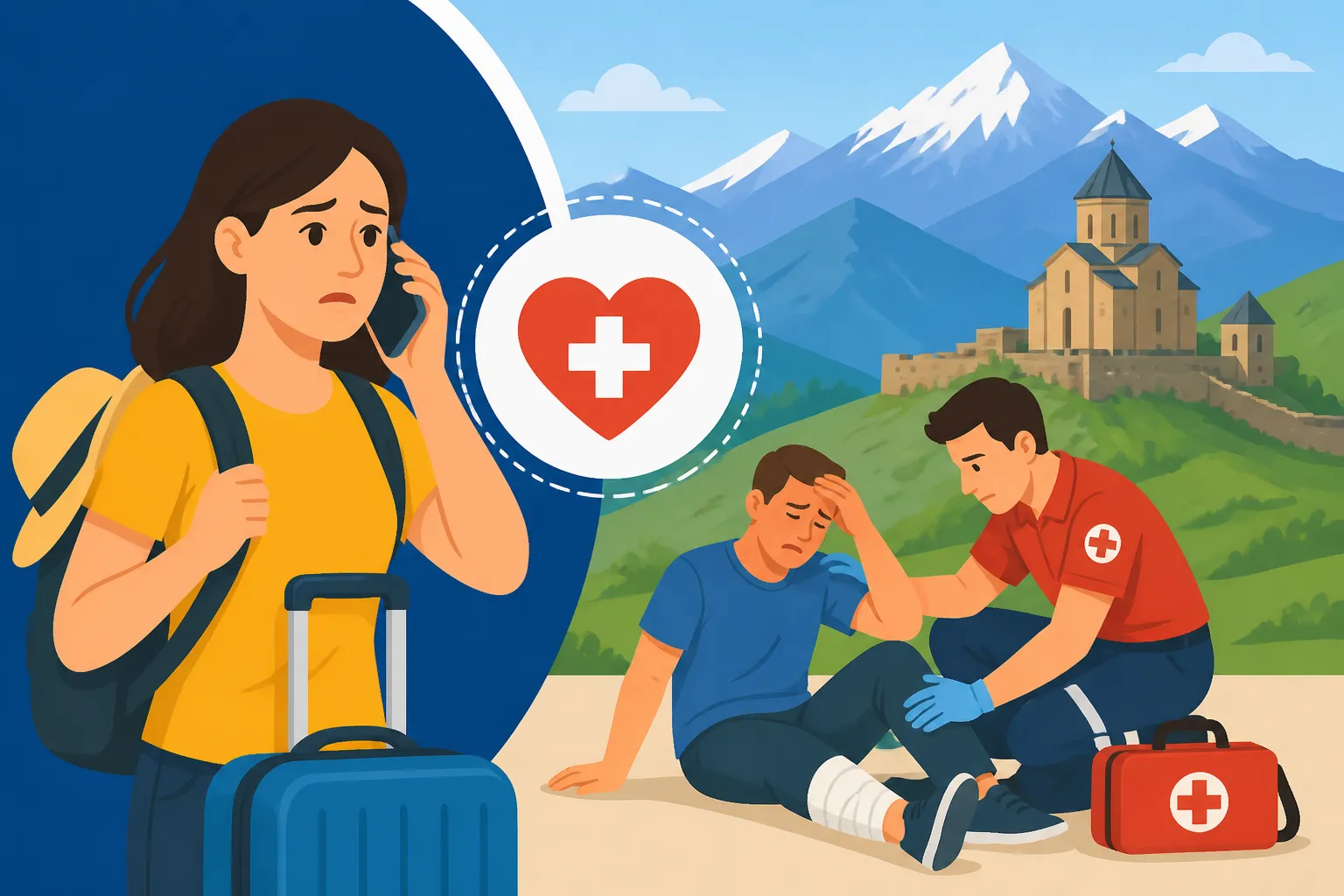
When you're hit with an unexpected illness or injury while traveling, especially somewhere new after departing from Georgia, the last thing you want to be doing is scrambling for solutions. The systems are different, the language might be foreign, and the immediate assistance you’re used to simply won’t be there. Imagine breaking a bone in a remote part of Turkey or developing a sudden, severe infection in Thailand. Who do you call? Will they understand you? How much will it cost?
Many expats in Georgia, especially those used to the relatively affordable private healthcare options here, might assume a similar scenario applies worldwide. This is a dangerous assumption. Healthcare costs can skyrocket rapidly outside of Georgia, particularly in Western Europe, North America, or even more developed Asian countries. A simple doctor’s visit could turn into an emergency room bill in the thousands, and a necessary surgery could easily reach tens or even hundreds of thousands. Without a plan, you could find yourself in serious financial and logistical distress, far from your support network in Georgia.
Common Scenarios Expats Face
As an expat constantly on the move, you're more susceptible to a range of travel-related health issues. Perhaps you’re enjoying a short break from Tbilisi in Armenia and suddenly experience severe food poisoning that requires hospitalization. Or maybe you've flown home to visit family, and a pre-existing condition, usually managed fine in Georgia, flares up unexpectedly in a country where you don't have local healthcare access.
Consider scenarios like a sudden allergic reaction to unfamiliar food, an accidental fall that leads to a concussion, or even catching a severe respiratory illness that demands immediate medical intervention. These aren't just minor inconveniences; they can be life-threatening and incredibly costly. What about a car accident in a neighboring country? The complexities of dealing with local authorities, medical staff, and potentially your insurance provider simultaneously, all while in pain or distress, are overwhelming. This is precisely why preparation is not just recommended, but absolutely essential.
Your Absolute Must-Have: Travel Health Insurance
If there’s one piece of advice I can give you as a seasoned expat, it’s this: never travel from Georgia without comprehensive travel health insurance. It's not an optional extra; it's a non-negotiable safety net. While you might be covered by a local plan like those discussed in Health Insurance in Georgia: Private and International Options Explained while residing in Georgia, these plans almost certainly won't protect you once you cross the border.
Understanding What Good Coverage Looks Like
Good travel health insurance isn't just about covering a doctor's visit. It’s about robust protection against the kind of catastrophic financial and medical events that can derail your life. When you’re looking at policies, you need to dig deep into the details. Does it cover emergency medical evacuation, meaning if you’re in a remote area or a country with substandard care, they’ll transport you to a better facility or even back to Georgia? Does it include medical repatriation, which covers the cost of bringing you home if you're seriously ill or injured? These are often the most expensive parts of a medical emergency abroad and can easily cost tens of thousands of dollars.
Look for policies with high coverage limits – preferably in the millions – for medical expenses. Check if it covers pre-existing conditions (often with certain stipulations or waiting periods), which is critical if you manage a chronic illness. Also, consider additional benefits like trip interruption, lost luggage, and accidental death and dismemberment. Providers like SafetyWing are well-known among digital nomads and expats for offering flexible, comprehensive plans that are designed for continuous travel and often include benefits like emergency medical, evacuation, and even some limited travel benefits. They really understand the unique needs of people who are often moving between countries. It's truly a different beast than just understanding How Georgia's Health System Works: Universal Healthcare and Private Care Explained.
The Pitfalls of Inadequate Insurance
This is a common pitfall: expats thinking their credit card travel insurance is enough, or opting for the cheapest policy with minimal coverage, only to face devastating consequences. Imagine a scenario where you have a sudden appendicitis attack in Spain. The surgery, hospital stay, and follow-up could easily run into five figures. If your insurance only covers $10,000, you’re on the hook for the rest. This isn’t just about money; it’s about the stress and emotional toll it takes when you’re recovering from a serious medical event and simultaneously dealing with massive debt.
Worse still, some policies have extremely strict exclusions. Adventure sports, certain high-risk activities, or even simply traveling against government advice can invalidate your coverage. If you’re not careful, you might discover too late that the broken leg you sustained while hiking in the Himalayas isn't covered because the policy excludes "mountain climbing above X altitude." Always read the fine print. Don't let your eagerness to explore cheap flights from Georgia overshadow the necessity of proper medical protection. Understanding The Cost of Healthcare in Georgia: A Complete Breakdown for Foreigners (2026) might make you feel comfortable with local costs, but don't let that lull you into a false sense of security about international travel.
Activating Your Policy: A Step-by-Step Guide
The moment an emergency strikes, or as soon as it's safe to do so, your first call (after local emergency services, if necessary) should be to your travel insurance provider. Don't wait until after you've been seen by a doctor or admitted to a hospital. Many policies require pre-authorization for significant treatments, surgeries, or hospital stays. Failing to get this approval can result in your claim being partially or fully denied.
Keep your policy number, the emergency contact number for your insurer, and your passport details readily accessible. When you call, clearly explain the situation: what happened, where you are, what medical attention you’ve received or need, and the contact information for the medical facility. The insurance company's assistance team can often provide invaluable support, from arranging direct billing with hospitals (which saves you from paying out-of-pocket and waiting for reimbursement) to coordinating language support or even connecting you with local medical providers. This proactive approach significantly reduces your stress and the potential for financial headaches down the line.
Pre-Departure Prep: Beyond Packing Your Bags
Preparing for a trip from Georgia isn't just about packing clothes and booking flights. When it comes to health, especially knowing you'll be outside Georgia's familiar systems, a robust pre-departure checklist is your best defense against unforeseen medical woes. Think of it as your medical flight plan.
Essential Documents and Information You Need
Before you even step out the door in Tbilisi, gather all your critical medical and identity documents. This means not just your passport and visa, but also physical and digital copies of your travel insurance policy, your emergency contacts (both family and your local doctor in Georgia), and a concise summary of your medical history.
For your medical history, think about creating a small, laminated card or a digital file accessible on your phone, containing key information: your blood type, known allergies (especially to medications), chronic conditions (like diabetes or asthma), current medications, and any significant past surgeries or medical events. Crucially, have this information translated into the language of your destination country if possible, or at least a widely understood language like English, even if your destination isn't primarily English-speaking. I always carry a little medical emergency card in my wallet – it’s a small thing that could make a huge difference in an unconscious state. You can also refer to our guide on Emergency Medical Care in Georgia: What Every Expat Needs to Know for ideas on what information is universally important.
Medications and Medical History
This is where a lot of expats get caught out. If you take prescription medication regularly, do not, I repeat, do not assume you can easily get refills in another country. Always carry enough medication to last your entire trip, plus a buffer of a few extra days, just in case of travel delays. Keep medicines in their original, labeled containers to avoid issues with customs.
Even more importantly, get a letter from your doctor in Georgia. This letter should explain what medications you're taking, why you're taking them, and the generic names of the drugs. This is vital for two reasons: firstly, it helps with customs if questioned about controlled substances, and secondly, if you do need a refill or medical attention, a local doctor in your destination will understand your regimen. Different countries have different rules and names for medications, as you'll find out if you read up on Prescription Medications and Pharmacies in Georgia: The Complete Guide. What's over-the-counter here might be prescription-only elsewhere, and vice-versa. Having that doctor's note can literally be a lifesaver.
Researching Your Destination's Healthcare
You've done your research on where to eat and what to see, but have you looked into what happens if you get sick? Before traveling from Georgia, take a few minutes to research the healthcare system of your destination country. What's their emergency number? Is it 112 like in Georgia, or something else entirely? What are the prominent hospitals and clinics, especially those with international departments or English-speaking staff?
Understanding whether the country primarily relies on public or private healthcare, and what your options are as a foreigner, can save precious time in an emergency. For example, some countries might have excellent public hospitals, but access for non-residents without local insurance can be complicated or expensive. Knowing this beforehand allows you to direct yourself or be directed to the most appropriate facility. This preparation aligns with the proactive approach we often discuss for navigating healthcare, similar to understanding How to Choose Between Local and International Health Insurance in Georgia for your stay here.
What to Do When an Emergency Strikes
Okay, the worst has happened. You’re abroad, you're sick or injured, and panic is starting to set in. Take a deep breath. Having a clear head and a plan, even a mental one, can make all the difference. Your preparation now comes into play.
Immediate Steps to Take
First and foremost, ensure your immediate safety. If you've had an accident, move yourself or others out of harm's way if it's safe to do so. Then, call the local emergency services immediately. Don't hesitate. In many countries, the universal emergency number is 112, but this isn't always the case, so your pre-trip research on your destination's specific emergency number is critical. Clearly state your location and the nature of the emergency. If there's a language barrier, try to find someone nearby who can translate, or use a translation app.
While waiting for help, try to remain calm. If you're with someone, delegate tasks – one person calls for help, another tries to contact your insurance, and another gathers your medical documents. If you're alone, focus on getting help first, then reaching out to your support network and insurance provider. Remember, medical staff in an emergency will focus on stabilizing you, not on your insurance details, so don't feel pressured to have all the answers right away.
Communicating with Medical Professionals
This can be one of the biggest challenges. Even if you speak some of the local language, medical terminology is complex. Have your medical information card or document ready. Point to allergies, list medications. If no one speaks your language, try to use a translation app on your phone, or if your insurance company offers a translation service, utilize it. Some international hospitals, especially in major tourist hubs, will have English-speaking staff, but don't count on it.
Be clear and concise about your symptoms and medical history. Don't withhold information, even if it feels embarrassing. Every detail can be crucial for an accurate diagnosis and effective treatment. If you’re able, ask for a written diagnosis and details of the treatment plan. This will be invaluable for your insurance claim later. Even when dealing with healthcare in Georgia, communication can sometimes be tricky, let alone in a new country.
Involving Your Insurance Provider Early
As mentioned before, this is paramount. Once the immediate emergency is being handled and you're stable, or as soon as practically possible, contact your travel insurance provider. Give them the details of what happened, where you are, and the name and contact information of the medical facility. They are not just there to pay bills; they are your advocate.
Your insurer, particularly a global provider like SafetyWing, often has a network of preferred hospitals and clinics and can communicate directly with the medical staff, handle billing, and coordinate any necessary transfers or follow-up care. They might even have a local representative who can come to your aid. Getting them involved early ensures you're following their procedures, maximizing your chances of a smooth claim process, and getting the most appropriate care without undue financial burden. It’s like having a personal assistant for your medical crisis – something truly comforting when you're a long way from home and your established doctors in Georgia.
Navigating Post-Emergency Logistics
So, the immediate crisis has passed, and you’re on the mend. Great! But the journey isn't over. Now comes the often-tedious but critical task of managing the aftermath, from gathering records to filing claims and planning your next steps. This phase demands patience and meticulousness.
Managing Medical Records and Follow-Up Care
Before you leave the medical facility, ensure you obtain copies of all your medical records. This includes doctor’s notes, test results (blood work, X-rays, scans), discharge summaries, and prescriptions. If possible, ask for these in English or the most internationally recognized language, in addition to the local language. These documents are vital for your insurance claim, for any follow-up care you might need, and for updating your primary care physician back in Georgia or your home country.
Once you’re discharged, you’ll need to figure out your follow-up care. Does your condition require continued treatment or monitoring in the country you’re in, or is it safe to travel back to Georgia for further care? Your insurance provider can often help coordinate this, advising on whether it’s better to stay put for a few more days, or arranging your return. Remember, getting copies of everything is key for processes like How to Claim Reimbursement from Private Insurance in Georgia, even if your emergency happened abroad.
The Claims Process: Don't Get Bogged Down
This is where all your diligent record-keeping pays off. Filing a claim with your travel insurance can be a detailed process, but it’s manageable if you have all your ducks in a row. You will need:
- Your policy number.
- The exact dates of your trip and the incident.
- A detailed account of what happened.
- All medical reports, including diagnosis, treatment received, and prognosis.
- All original receipts for medical expenses, transportation (ambulance, taxis to clinics), and prescriptions.
- Contact information for the attending physicians and the hospital.
- Any police reports if the incident involved an accident.
Be prepared for some back-and-forth communication. Insurance companies might ask for additional information or clarification. Respond promptly and keep a log of all your communications, including dates, names of agents, and what was discussed. Patience is key here. While a company like SafetyWing aims to make this as smooth as possible, it’s still an administrative process that requires your attention.
Returning to Georgia or Moving On
Depending on the severity of your medical emergency, your return to Georgia might need special considerations. If you had a serious injury or surgery, you might be advised against flying for a period, or you might need a medical escort. Your travel insurance, particularly comprehensive plans from providers like SafetyWing, often covers these arrangements, but it requires careful coordination.
If you are fit to travel, consider how you’ll manage the journey. Do you need extra legroom, wheelchair assistance, or specific support at airports? Inform your airline in advance. Upon returning to Georgia, schedule a follow-up with your local doctor or specialist to ensure your recovery is on track and to transfer your foreign medical records into your Georgian health file. This is also a good time to reassess your overall health coverage, perhaps diving deeper into options like What Is the Best Private Health Insurance for Expats in Georgia? for your long-term needs.
Local Resources and Support for Expats in Georgia
Even though we're talking about emergencies outside Georgia, your life here is intertwined. The knowledge and network you build as an expat in Georgia can be surprisingly helpful when preparing for, or recovering from, a medical emergency abroad.
Before You Go: Leveraging Your Georgian Network
When you're preparing for international travel from Georgia, think about the resources you have right here. Your primary care doctor in Tbilisi, for example, can provide those essential medication letters and advice on traveling with specific conditions. If you've got good local health insurance in Georgia, which we encourage all expats to consider, it's worth checking if they offer any limited travel assistance, even if it's not full medical coverage. While this local insurance won't cover major expenses abroad, their customer service might offer guidance or connect you with partner providers in other countries. For instance, if you're exploring How to Get Health Coverage as a Newcomer in Georgia, ask about how any local benefits might extend to limited international travel.
Also, consider that while Georgia's emergency services are efficient, Understanding Emergency Numbers (112) and Ambulance Care in Georgia familiarizes you with processes that might be mirrored, albeit differently, in other nations. This institutional knowledge from your expat life in Georgia can be mentally preparing.
Connecting with Expat Communities for Advice
The expat community in Georgia is a treasure trove of shared experiences and advice. Before you travel, reach out to fellow expats in online forums or social groups. Ask if anyone has experience with medical emergencies in your destination country, or if they have recommendations for international travel insurance providers. You'll be surprised by the practical tips you can get, from local clinic recommendations in Istanbul to insights on navigating pharmacies in Baku. This collective wisdom can highlight potential issues you might not have even considered and offer solutions that come from real-world situations, not just brochures.
What if You Need to Get Back to Georgia for Care?
In some dire situations, after an emergency abroad, the best course of action might be to return to Georgia for ongoing treatment or recovery, especially if you have a strong support system or specific medical relationships here. This is called medical repatriation, and it’s typically an extremely expensive process that involves specialized medical transport, possibly even an air ambulance. This is precisely where comprehensive travel insurance, from a reliable provider like SafetyWing, becomes absolutely indispensable.
These policies will cover the logistics and costs of bringing you back to a hospital near your home in Georgia, ensuring you receive continuous care in a familiar environment. Without such coverage, you could be facing hundreds of thousands of dollars in expenses, a sum few individuals can absorb. So, when considering your travel insurance, ensure medical repatriation is a clear and robust feature. Don't leave your options for Understanding How to Choose a Hospital in Georgia for treatment in the air.
| Feature | Basic Travel Insurance (Often Included with Credit Cards) | Comprehensive Travel Health Insurance (e.g., SafetyWing) |
|---|---|---|
| Emergency Medical Expenses | Limited coverage (e.g., $10,000 – $50,000) for accident/illness | High coverage limits (e.g., $250,000 – $1,000,000+) |
| Emergency Medical Evacuation | Often limited or not included | Robust coverage, including air ambulance if medically necessary |
| Medical Repatriation | Rarely included | Included, arranging transport back to your home country/Georgia |
| Pre-existing Conditions | Usually excluded | Often covered with specific conditions or waiting periods |
| Hospital Stays | May have daily limits or co-pays | Generally comprehensive, may include direct billing |
| Outpatient Visits | May have deductibles, limits | Comprehensive, including doctor visits, tests, prescriptions |
| Trip Interruption/Cancellation | Often included, but benefits can be low | Generally comprehensive, including travel delays, lost luggage |
| Dental Emergencies | Minimal, if any, coverage | Limited coverage for acute pain/accidents |
| 24/7 Assistance Line | May be available, but scope of help varies | Dedicated medical assistance team, multi-lingual support |
| Direct Billing | Rare | Often available with network providers, reducing out-of-pocket costs |
Disclaimer
The information provided in this guide is for general informational purposes only and does not constitute medical, legal, or financial advice. While we strive to offer accurate and up-to-date guidance for expats in Georgia and those traveling from it, circumstances can change rapidly. Always consult with qualified professionals, including your insurance provider, medical doctors, and legal experts, for advice tailored to your specific situation. Travel insurance policies and healthcare systems vary significantly by country and provider, so thoroughly review your policy documents and research your destination's specific requirements.