How Do I Enrol My Child in School in Georgia?
Moving your family to a new country like Georgia is an adventure, but let’s be honest, finding the right school for your children can feel like deciphering an ancient scroll in a language you don’t quite speak yet. The worry about curriculum, language barriers, and whether your child will adapt can weigh heavily on any expat parent. This guide is here to untangle that process, offering a veteran expat’s perspective on how to successfully enrol your child in school in Georgia, step by painstaking step.
Understanding the Georgian Education Landscape
Before you even start looking at specific schools, it’s crucial to wrap your head around Georgia’s education system. It’s likely different from what you’re used to, and understanding these nuances will help you make informed decisions that are right for your family. This isn't just about finding a building; it's about finding a learning environment where your child can thrive.
Public, Private, and International Schools: What Are Your Options?
Georgia offers a trio of educational paths, and each comes with its own set of advantages, disadvantages, and, let’s be frank, potential headaches for expat families.
Public Schools: These are government-funded and follow the national Georgian curriculum. The primary language of instruction is, as you might guess, Georgian. For some expat families, especially those committed to fully integrating into Georgian culture and language, public schools can be a fantastic, free option. Your child will quickly become fluent in Georgian, which is an invaluable skill for long-term residency. However, if your child doesn’t already speak Georgian, the initial transition can be incredibly challenging. Teachers might not speak English, and the curriculum itself, while robust, may not align with educational systems found in Western countries, which can be a concern if you anticipate moving again or if your child will eventually attend university abroad. Extracurricular activities might be more limited compared to what you’d find in schools in your home country, often focusing on traditional sports or cultural clubs.
Private Schools: These institutions also largely follow the Georgian national curriculum but are privately funded. They often offer smaller class sizes, better facilities, and sometimes a slightly more modern approach to pedagogy. Some private Georgian schools might offer limited English language support or specific programs designed to help non-Georgian speakers. While they do come with tuition fees, these are generally much more affordable than international schools. This can be a good middle-ground if you want your child to learn Georgian and be immersed in the local system but prefer better resources or a more individualized approach than public schools might offer. Still, the core language of instruction remains Georgian, so the initial linguistic hurdle persists.
International Schools: Ah, the expat parent's comfort blanket! International schools are designed with global families in mind. In Georgia, these are predominantly located in Tbilisi. They typically offer recognized international curricula like the International Baccalaureate (IB), the British Curriculum (IGCSE, A-Levels), or the American Curriculum. The language of instruction is almost always English, making the transition much smoother for children who don't speak Georgian. These schools often boast diverse student bodies, state-of-the-art facilities, and a wide range of extracurricular activities, from sports to arts and academic clubs. The downside? The cost. Tuition fees at schools like the QSI International School of Tbilisi, the British International School of Tbilisi, or the American Academy in Tbilisi can be substantial, often running into the tens of thousands of dollars per year. For many, however, the familiarity of the curriculum and the ease of transition for children make it a worthwhile investment, especially if you plan to move countries again or if your child is nearing university age. Understanding the nuances of Understanding the Cost of International and Private Schools in Georgia is key here.
Age and Grade Placement in Georgia
The Georgian education system defines school starting ages and grade levels in a specific way, and it’s good to be prepared for how your child’s current grade might translate. Generally, children start primary school (Grade 1) at age 6. The school year typically runs from mid-September to mid-June.
When enrolling, schools will generally look at your child's age first, but they will also consider their previous academic records. For international schools, they are usually quite adept at placing students from various systems, often requiring placement tests to ensure the child is in the most appropriate grade level both academically and socially. Public and private Georgian schools might be less flexible, sometimes requiring your child to repeat a year or attend a bridging program if their Georgian language skills or previous curriculum aren't up to par. It's a system that, while logical from their perspective, can sometimes feel a bit rigid when you're coming from a different educational background. Don't be afraid to ask for a clear explanation of how they determine grade levels, especially if your child's birthday falls on a cut-off date.
Key Differences from Western Education Systems
Beyond language, there are some fundamental differences you might notice between Georgian schools and those in many Western countries. Public and private Georgian schools often have a more traditional, teacher-centric approach to learning. Rote memorization can play a larger role, and classroom participation might be less emphasized than in more progressive Western models. Critical thinking and project-based learning are certainly present, but perhaps introduced at different stages or with different methodologies.
School days in Georgian public schools tend to be shorter, particularly for younger children, often ending in the early afternoon. Extracurriculars, while available, might not be as varied or as extensive as what you might find in some international or private schools back home. The emphasis is very much on core academic subjects. For parents accustomed to a vast array of sports teams, drama clubs, and after-school programs, this can be a noticeable shift. Conversely, for children who might find long school days draining, this could be a positive aspect. These differences are not inherently good or bad, but they are important to be aware of as you assess what learning environment will best suit your child’s personality and educational needs.
The Practicalities of Enrollment: A Step-by-Step Guide
Once you've got a handle on the types of schools available, it's time to roll up your sleeves and tackle the actual enrollment process. This is where the Georgian administrative system, with its fondness for specific documents and procedures, comes into play. It requires patience, meticulous organization, and sometimes, a deep breath or two.
Document Gathering: Your Expat Paper Chase
This is often the most daunting part, as it involves a stack of papers and often, translations and notarizations. Don't underestimate this step; missing even one document can cause significant delays.
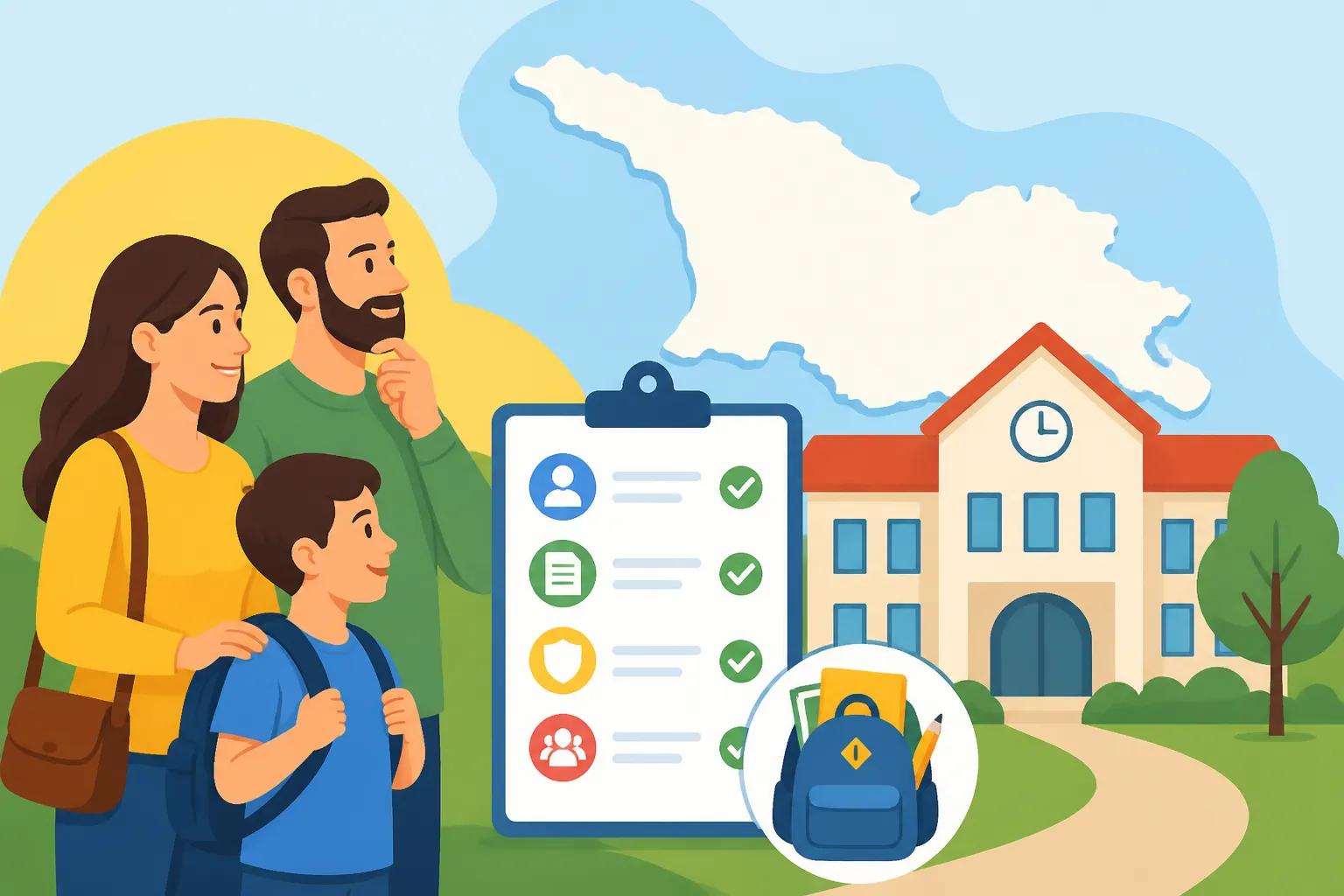
Here’s a general checklist, but always confirm with your chosen school as requirements can vary:
- Child’s Passport and Visa/Residence Permit: A copy of your child's passport bio-page and their current visa or The Expat Guide to Getting a Residence Permit in Georgia (2027) is always required. This proves their legal status in the country.
- Parents’ Passports and Residence Permits: Your legal status as parents in Georgia is also essential. Make sure these are up-to-date.
- Child’s Birth Certificate: This is a fundamental document. If it's not in Georgian, it will need to be translated and notarized.
- Official Academic Transcripts/Reports: You'll need records from your child's previous school, showing their performance, attendance, and the curriculum followed. These typically need to be officially translated into Georgian and sometimes apostilled or legalized by the Georgian Embassy/Consulate in your home country (or through the Ministry of Foreign Affairs in Georgia if you bring them here). This step often catches expats off guard, so plan ahead!
- Health Records and Vaccination Card: Schools will require proof of your child's health status and an up-to-date vaccination record. Georgia has its own Understanding Childhood Vaccination Schedules in Georgia, so you might need to get some additional shots or obtain an official medical exemption if certain vaccines are not part of your home country's schedule. You’ll often need to visit a local clinic for a medical check-up to confirm your child is fit for school and doesn't pose a health risk to others. How to Find an English-Speaking Doctor in Georgia can certainly help with this, as navigating a local clinic for a medical check-up in a new language can be a bit of an adventure!
- Proof of Address in Georgia: A rental contract or property ownership document is usually sufficient. This confirms you live within a reasonable distance or in the correct school district for public schools. For families who are still settling in, this can be tricky.
- Application Form: Each school will have its own application form, which you’ll need to complete thoroughly.
- Photos: Passport-sized photos of your child, usually a couple of them.
A little tip from experience: always make multiple copies of everything and keep them organized. The paperwork can be overwhelming, but being prepared makes a huge difference. You might find services like Airalo useful for staying connected with school administrators or translators while you're running around with documents – a reliable eSIM means you're never without data to look up crucial information or translate on the fly.
Navigating Applications for Different School Types
The application process itself will vary significantly depending on whether you're aiming for a public, private, or international school.
Public Schools: For public schools, enrollment typically goes through a centralized system, often managed at the municipal level or through the Ministry of Education. You usually register your child based on your residential address. The process can sometimes involve long waits, especially in desirable districts, and the application materials will almost exclusively be in Georgian. You'll likely need the help of a Georgian speaker or a professional translator to navigate the forms and communication with school staff. The key challenge here, beyond the language, is often finding space and ensuring your child can genuinely integrate without a strong grasp of Georgian. Some public schools in larger cities like Tbilisi or Batumi may have specific programs for foreign students, but these are not universal.
Private and International Schools: This is generally a more streamlined process, especially for international schools, which are accustomed to dealing with foreign families. You’ll usually start by contacting the admissions office directly. They will provide an application package, which often includes an application form, a list of required documents, and details about entrance examinations. Many international schools require students to sit for assessments in English, Math, and sometimes other subjects, to gauge their academic level and ensure they can cope with the curriculum. There might also be an interview, either for the child or for the parents, to assess fit and expectations. Deadlines are important, especially for popular schools, so it's wise to apply well in advance, ideally months before the start of the academic year. These schools also charge application fees and often a non-refundable registration fee upon acceptance. For comprehensive details on options and costs, you might find Schools and Education in Georgia: A Complete Guide for Expat Families a valuable resource.
Health Checks and Vaccinations: A Mandatory Step
Regardless of the school type, your child will need to undergo a medical examination and present an up-to-date vaccination record. This isn't just a formality; it's a genuine requirement to ensure the health and safety of the entire school community.
- The Medical Check-up: This typically involves a visit to a pediatrician or a general practitioner who will assess your child's overall health. They'll check things like vision, hearing, height, weight, and general physical condition. This is usually done at a local clinic. Many private clinics in Tbilisi, such as Evex Medical Corporation or Medea, have departments equipped to handle such checks and may even have English-speaking staff. It's often a straightforward process once you've found the right clinic.
- Vaccination Records: You'll need to present your child's vaccination card or a detailed record from your home country. The Georgian doctor will compare this against the national vaccination schedule. If your child is missing any required vaccinations, you'll be advised to get them. If certain vaccines are not given in your home country or if you have specific medical exemptions, you'll need to discuss this with the Georgian medical professional to obtain an official certificate. It's a bureaucratic step but a necessary one to ensure your child's enrollment can proceed without a hitch.
Remember, navigating the Georgian healthcare system for the first time can be a learning curve. Understanding The Complete Guide to Healthcare in Georgia for Expats (2027) will be immensely helpful.
Choosing the Right Fit for Your Family
After all the paperwork and official visits, the most important decision remains: which school is truly the best fit for your child and your family’s unique circumstances? This isn't just about academic rigor; it’s about environment, happiness, and integration.
Factors to Consider Beyond the Curriculum
When you’re weighing your options, especially between public, private, and international schools, think deeply about what matters most to your child and your family.
- Language Support: This is paramount. If your child doesn't speak Georgian, how much support will the school provide? Will they be thrown into the deep end, or will there be dedicated language classes or a bilingual program? For younger children, language immersion can be faster, but for older kids, it can be a significant barrier to academic progress and social integration.
- Curriculum Alignment: If you anticipate future moves or university applications outside Georgia, an internationally recognized curriculum (IB, British, American) might be a safer bet. If Georgia is your long-term home, the Georgian national curriculum is perfectly viable.
- Location and Commute: Tbilisi traffic can be horrendous. Consider the school’s proximity to your home or your workplace. A shorter commute means less stress for everyone. Finding family-friendly neighbourhoods in The Best Places to Live in Georgia for Expats: A Complete Guide (2027) often involves considering school zones.
- Cost: This is usually the biggest deciding factor. International schools are expensive, private Georgian schools are mid-range, and public schools are free. Make sure you factor in not just tuition but also uniforms, books, school trips, and any additional fees. For a clearer picture of living expenses, consult The Complete Guide to Cost of Living in Georgia for Expats (2026).
- School Culture and Values: Does the school emphasize academics, arts, sports, or a holistic approach? Does it align with your family's values? Some schools are more traditional, while others are more progressive. Try to get a feel for the overall atmosphere.
- Class Sizes and Teacher-Student Ratio: Smaller classes can mean more individualized attention, which can be particularly beneficial for children adjusting to a new system or language.
- Facilities and Resources: Libraries, science labs, sports fields, art studios – what kind of facilities does the school offer? Are they well-maintained and accessible?
- Extracurricular Activities: If sports, music, drama, or other clubs are important to your child’s development and social life, check what’s on offer.
Visiting Schools and Talking to Other Expats
Don’t just rely on websites or brochures. Schedule visits to the schools you’re seriously considering. An in-person visit gives you a much better feel for the environment, the staff, and the students. Pay attention to how teachers interact with children, the cleanliness of the facilities, and the general mood. Ask specific questions about expat integration, language support, and how they handle bullying or disciplinary issues.
Connecting with other expat parents is an invaluable resource. Join expat groups on social media, attend expat meetups, or ask for parent contacts through the school’s admissions office. Other parents have been through exactly what you're experiencing and can offer honest insights into specific schools, teachers, and the overall expat school experience in Georgia. They can share practical tips on everything from finding uniforms to navigating school events. Remember, services like Sirelo often provide community forums or blogs that can connect you with others who have made a similar move, offering a wealth of anecdotal wisdom beyond the logistics of moving boxes.
Dealing with the Waiting Game and Potential Hurdles
Once applications are submitted, be prepared for a waiting game. International schools often have specific admissions cycles and may have waiting lists, especially for popular grades. Public and private Georgian schools might operate on a more rolling basis but can still have capacity issues.
Common hurdles can include:
- Document Delays: Translations and notarizations can take time, and occasionally, a school might request an additional document you weren’t expecting.
- Full Enrollment: The desired grade might simply be full. Always have a backup plan, even if it’s a temporary homeschooling solution while you await a spot or explore other options.
- Placement Test Results: If your child struggles with a placement test, the school might recommend a different grade level or suggest additional support, which could impact your decision.
- Communication: Sometimes, there can be communication gaps, especially with non-international schools, due to language differences or varying administrative styles. Be proactive in following up, but always remain polite and patient.
The process of enrolling your child in a school in Georgia, while sometimes challenging, is ultimately navigable. With careful planning, thorough research, and a good dose of patience, you'll find a welcoming environment where your child can continue their educational journey as you all settle into your new Georgian life.
Comparison of School Types for Expats
| Feature | Public Georgian Schools | Private Georgian Schools | International Schools (e.g., QSI, British School, American Academy) |
|---|---|---|---|
| Language of Instruction | Georgian (primary) | Georgian (primary), some limited English support | English (primary), often offer multiple languages |
| Curriculum | Georgian National Curriculum | Georgian National Curriculum | IB, British, American, or other international curricula |
| Cost (Annual Tuition) | Free | Moderate (starts from ~$2,000 – $6,000 USD) | High (starts from ~$10,000 – $25,000+ USD) |
| Typical Expat Use | For families committed to deep cultural immersion, Georgian language acquisition | For those seeking local immersion with enhanced facilities, often bilingual families | Majority of expat families, especially short-term or those with older children |
| English Language Support | Minimal to non-existent | Limited, varies by school | Extensive support for non-native English speakers |
| Facilities & Resources | Varies, can be basic to modern | Generally good, often better than public | Excellent, often state-of-the-art |
| Extracurriculars | Limited, focus on traditional activities | Moderate, wider range than public | Extensive, wide variety of sports, arts, clubs |
| Integration Challenge | High, due to language barrier | Moderate to high, depending on language support | Low, designed for international students |
| Future Mobility | Less direct transferability to non-Georgian systems | Less direct transferability | High, globally recognized curricula for easy transfer |
Disclaimer
The information provided in this guide is intended for general informational purposes only and does not constitute legal, financial, or educational advice. While every effort has been made to ensure accuracy, the rules and regulations regarding school enrollment in Georgia can change. We strongly recommend consulting official government sources, the specific schools you are interested in, or professional educational consultants for the most current and personalized advice.