What Is the Best Internet Provider in Georgia?
Alright, so you’ve just landed in Georgia, probably feeling a mix of excitement and that familiar expat bewilderment. One of the first things you realize, right after figuring out how to buy bread or navigate a marshrutka, is that reliable internet isn't just a luxury – it's your lifeline. From staying connected with loved ones back home to getting work done or streaming your favorite shows after a long day of exploring, a good internet connection is non-negotiable. This guide is here to cut through the confusion and help you figure out what is the best internet provider in Georgia for your unique needs.
Understanding Georgia's Internet Landscape
Let's be honest, trying to set up utilities in a new country can feel like navigating a labyrinth designed by someone who hates foreigners. You’re often faced with language barriers, unfamiliar processes, and a general sense of "how does anything even work here?". Internet in Georgia is no exception, but once you understand the lay of the land, it becomes much clearer. The good news is that Georgia generally boasts decent internet infrastructure, especially in major cities like Tbilisi and Batumi, with fibre optics becoming increasingly common.
Major Players: Who's Who in Georgian Telecom
When you start asking around about internet providers, two names are going to come up again and again: MagtiCom and Silknet. These are the undisputed giants of the Georgian telecommunications industry, covering a vast majority of the market. Think of them like the big competitors in your home country, constantly vying for customers with similar, but subtly different, offerings. While they dominate, there are also smaller, regional players, but for most expats, focusing on the big two is the most practical starting point. They have the most extensive coverage, the most comprehensive service packages, and, crucially, a higher likelihood of English-speaking support.
It's a bit like choosing between Coca-Cola and Pepsi; both are good, but you might develop a preference. Many expats simply go with whichever provider is already wired into their chosen apartment, which is often a practical decision given the installation nuances. However, understanding their core differences can save you a headache later.
Types of Internet Connections Available
When you dive into the specifics, you'll find a few common types of internet connections here in Georgia, each with its own pros and cons for an expat.
Fibre Optic Internet (FTTH/FTTB): This is the gold standard and what most people are looking for. Fibre-to-the-home (FTTH) or fibre-to-the-building (FTTB) offers incredibly fast speeds and high reliability, perfect for streaming, gaming, and remote work. If you're wondering, Can I Get Fibre Internet Anywhere in Georgia?, the answer is often "yes" in urban centers, but less so in very rural areas. Both MagtiCom and Silknet offer extensive fibre networks, particularly in Tbilisi and Batumi. When you're looking at apartments, it's worth asking if it's already wired for fibre from one of these providers, as it can simplify the installation process immensely.
DSL (Digital Subscriber Line): This older technology uses traditional copper telephone lines. While generally slower than fibre and more susceptible to distance limitations, it's still available in some areas, particularly older buildings or regions where fibre hasn't been fully rolled out. For most expats, especially those relying on stable, high-speed connections for work, DSL isn't the ideal choice if fibre is available.
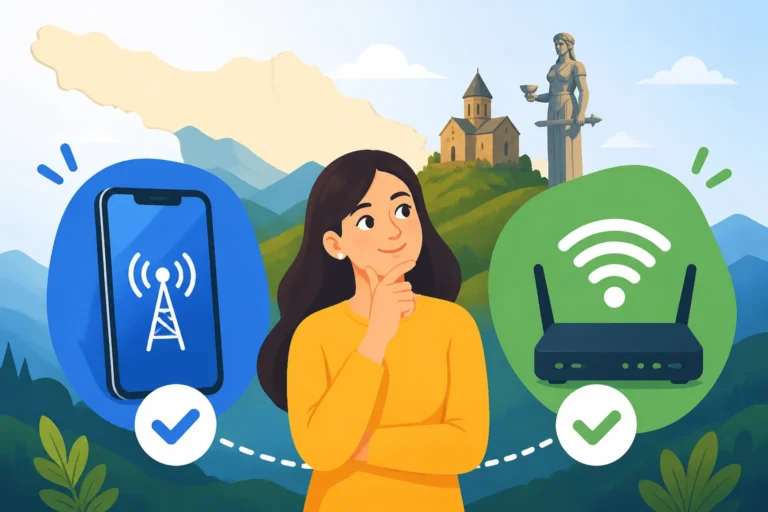
Mobile Internet (4G/5G): Don't forget about mobile data! For those who are constantly on the go, or perhaps just need a temporary solution while settling in, mobile internet is a fantastic option. Georgia has excellent 4G coverage in most populated areas, and 5G is slowly expanding in Tbilisi. You can get a local SIM card relatively easily, and use it with a portable hotspot device or directly in your phone. This can be a lifesaver when you first arrive and haven't yet figured out How Do I Set Up a Mobile Phone Plan in Georgia?. Companies like MagtiCom and Silknet also offer robust mobile networks, alongside others like Cellfie (formerly Beeline). Sometimes, having a good mobile data plan can even serve as a backup if your fixed-line internet ever goes down, which, let's face it, happens everywhere.
The Expat Experience: Common Challenges and Expectations
Moving here, you might expect everything to be as streamlined as in your home country, but Georgia has its own way of doing things. The process of setting up internet can be surprisingly quick, sometimes even on the same day if your apartment is already wired. However, preparing for potential hiccups is just smart expat living.
One of the biggest hurdles can be the language barrier. While the major providers do have English-speaking staff in their main branches, especially in Tbilisi, you might encounter less English proficiency when dealing with technical support over the phone or with installation technicians. Patience is truly a virtue here. Having a Georgian friend or even using a translation app for simple communication can be incredibly helpful. It’s definitely not like calling customer service in London or New York! You might find yourself needing a Georgian speaker to help you out, or visiting a physical branch in person, as telephone support can sometimes be a test of endurance. Remember how to ask "do you speak English?" in Georgian – "inglisuri ikitxebit?" – it goes a long way.
Another thing to manage is expectations regarding customer service response times. While generally improving, don't expect instant gratification. If your internet goes down, getting a technician out might take a day or two, especially outside of peak hours. This is where having a reliable mobile data plan, perhaps through an eSIM provider like Airalo, can really save the day in a pinch, ensuring you're never fully disconnected.
Deep Dive into Georgia's Top Internet Providers
Now let’s get into the nitty-gritty of the main contenders. These two giants essentially run the show, and understanding their unique characteristics will be key to making your choice.
MagtiCom: The Big Name and Its Offerings
MagtiCom is often considered the premium provider in Georgia. They're known for their wide coverage, particularly strong mobile network, and generally reliable fibre optic internet. If you ask ten expats, at least half will probably tell you they're with Magti.
Their internet packages typically offer a range of speeds, from quite standard to very fast, suitable for heavy users and those working from home. They often have bundled packages that include mobile services, home internet, and TV, which can be convenient and sometimes more cost-effective if you plan to use all three. The quality of their fibre internet is generally high, with good stability.
However, this quality often comes at a slightly higher price point compared to some competitors. While not exorbitant by Western standards, it's something to consider if you're on a tight budget, especially when thinking about The Complete Guide to Cost of Living in Georgia for Expats (2026). MagtiCom's customer service, while having English options in main branches and a dedicated hotline, can still involve wait times and the occasional communication challenge. Their physical service centers are usually well-staffed and efficient, so if you have a complex issue, an in-person visit is often the most effective route. They're trying hard to cater to the growing expat community, and their website even has English language options, which is a big plus.
Silknet: Georgia's Other Telecommunications Giant
Silknet is the other major player, a strong competitor to MagtiCom, and widely used across the country. They also offer a comprehensive suite of services including fibre internet, mobile communication, and TV. Many people choose Silknet because they perceive it as slightly more budget-friendly, or simply because it’s the default provider in their building.
Silknet's internet speeds are comparable to MagtiCom's, and their fibre network is also extensive, particularly in urban areas. They often run promotions and offer competitive pricing, especially for new customers. Like Magti, they excel at bundled packages, which can be a good way to simplify your monthly bills if you need multiple services.
In terms of customer service, Silknet faces similar challenges to Magti. While they do have English-speaking staff, especially in their larger branches, the experience can vary. Some expats report positive experiences, others find it a bit more challenging than with Magti. Online reviews are a mixed bag for both, which really highlights that your personal experience often depends on the specific representative you interact with and the complexity of your issue. They have a strong presence in the market and are constantly upgrading their infrastructure, so you're generally in good hands with either of these big two.
Newcomers and Niche Providers: Exploring Other Options
While MagtiCom and Silknet dominate, it's worth knowing there are other players, though they cater to more specific needs or regions.
- A-Net: This provider is often found in older buildings in Tbilisi, sometimes providing internet through Ethernet cables rather than modern fibre. Their speeds might not be as high as the giants, but they can be a more affordable option, especially if your building is pre-wired for them. The catch is that their customer service and English support might be more limited.
- Small Regional Providers: In some specific residential complexes or smaller towns, you might find very local internet providers. These can sometimes offer surprisingly good service and competitive prices, but their coverage is extremely limited, and finding information in English about them can be a quest in itself. Unless your landlord specifically recommends one and assures you of decent support, it's usually safer to stick with the larger national providers.
- Mobile Hotspots & USB Modems: For those with very light internet needs, or who travel frequently, relying solely on a mobile hotspot from providers like MagtiCom, Silknet, or Cellfie could be an option. This is especially useful if you're exploring different regions, perhaps even thinking about How to Find an Apartment to Rent in Batumi? before committing to a fixed address. These work well for basic browsing and email, but aren't typically robust enough for heavy streaming, online gaming, or continuous video calls, which is crucial for many remote workers.
Choosing Your Perfect Plan: Factors to Consider
Deciding which provider and plan is right for you involves weighing several practical factors against your personal usage habits. There's no one-size-fits-all "best" internet provider in Georgia, only the best one for you.
Speed, Reliability, and Data Limits
These are the Holy Trinity of internet service.
- Speed: How fast do you need your internet to be? If you’re a single person who mostly browses social media and streams Netflix in standard definition, a 20-50 Mbps plan might be perfectly adequate. But if you’re a digital nomad doing video conferences all day, a gamer, or a family with multiple devices streaming simultaneously, you’ll want something in the 100-300 Mbps range, or even higher. Both MagtiCom and Silknet offer a wide spectrum of speeds, so check their current offerings. Remember, advertised speeds are "up to" values, and real-world performance can vary due to network congestion, your router, and even the wiring in your building.
- Reliability: This is arguably more important than raw speed. A consistent 50 Mbps connection that rarely drops is far better than an inconsistent 300 Mbps connection that flakes out every hour. Fibre optic connections are inherently more reliable than older DSL technologies. Ask your landlord or neighbours about their experiences with reliability in your specific building or neighbourhood.
- Data Limits: For fixed-line home internet, unlimited data is the standard in Georgia, so you generally don't have to worry about caps. This is a huge relief for anyone used to restrictive plans elsewhere! For mobile internet, however, data limits are very much a thing, so choose a plan that aligns with your usage if you're relying on a hotspot.
Cost-Effectiveness and Bundling Options
Your budget is always a key consideration, and thankfully, internet in Georgia is quite affordable compared to many Western countries. When you're calculating your overall The Complete Guide to Cost of Living in Georgia for Expats (2026), internet bills are usually a manageable part.
- Monthly Fees: Compare the monthly subscription costs for different speed tiers across MagtiCom and Silknet. Don't just look at the lowest price; consider the price per Mbps. Sometimes a slightly more expensive plan offers significantly better value.
- Installation Fees: Both providers may charge an installation fee, though this is sometimes waived during promotional periods or if your apartment is already wired. Always clarify this upfront.
- Bundled Packages: As mentioned, both major providers offer bundles that combine internet, mobile, and TV services. If you need all three, a bundle can often save you money compared to subscribing to each separately. For instance, if you're already considering a MagtiCom mobile plan, their internet bundle might be a natural fit.
Customer Service and English Support
This is often where expats feel the most frustration. While companies are improving, the level of English support can still be hit or miss, especially outside of Tbilisi.
- In-Person vs. Phone: For complex issues or when you absolutely need clarity, going to a physical branch location of MagtiCom or Silknet in Tbilisi (or other major cities) is often the best approach. They usually have designated staff who speak English. Over the phone, it can be more challenging.
- Online Resources: Check if the provider has an English version of their website or a self-service portal. This can be useful for checking your bill, changing your plan, or finding basic troubleshooting information.
- Expat Groups: Don't underestimate the power of expat Facebook groups in Georgia. People are often very willing to share their recent experiences with providers, good or bad, and might even recommend specific branches or staff members who are particularly helpful with English speakers. It's a goldmine of practical advice and validation for common expat struggles.
The Installation Process and What to Expect
You've picked your provider, you've chosen your plan – now comes the final hurdle: getting it all set up. This can range from blissfully smooth to slightly chaotic, as is the way of life here.
Signing Up and Required Documents
Signing up is usually a straightforward process. You'll typically need to visit a service center in person, especially for fixed-line internet.
- Passport: Your passport is the primary document required for identification.
- Residence Permit or Visa: While some might allow tourist visas, having a Georgian residence permit can make the process smoother and is often required for longer-term contracts. If you’re just arriving, and haven’t sorted out your How Do I Get Health Coverage as a Newcomer in Georgia? or other long-term admin, they might be more flexible.
- Proof of Address: This is usually your rental agreement or property ownership documents. If you're struggling with this, refer to guides like How to Sign a Rental Contract and Pay a Deposit in Georgia to ensure you have the correct paperwork. Sometimes, the landlord's presence or a letter from them can help if your own documents aren't fully in order.
Make sure all your documents are valid and that you have copies. They'll also likely want your Georgian phone number, so make sure you’ve got that sorted beforehand.
Installation Timelines and Technician Visits
Once you've signed up and paid any upfront fees, the provider will schedule a technician visit.
- Scheduling: This can be done on the spot at the service center. Try to get a specific date and, if possible, a time window. Don't expect highly precise appointment slots – "sometime in the afternoon" is often as good as it gets, so block out a good chunk of your day.
- The Visit: A technician will come to your apartment to install the necessary equipment (router, fibre converter if needed) and activate your service. If your apartment is already wired for the provider, this can be incredibly quick. If new wiring is needed, it might take longer. Again, a Georgian speaker can be invaluable during this visit for communication with the technician, especially regarding router placement or Wi-Fi names.
- Preparation: Ensure there's someone (you, a friend, your landlord) available at the apartment during the scheduled time. Clear any obstacles near the entry point of the internet cable or where you want the router to be placed.
Troubleshooting and Ongoing Support
Even with the best providers, things can go wrong. It’s important to know your options.
- Basic Troubleshooting: Before calling anyone, try the classic IT solutions: restart your router, check all cables, and make sure no bills are outstanding. Believe it or not, these simple steps solve a surprising number of issues.
- Contacting Support: For technical issues, you can usually call the provider's hotline. Be prepared for potential language barriers and wait times. As mentioned, an in-person visit to a service center can often yield better results for complex issues.
- Payment: Many utility bills, including internet, can be paid via self-service kiosks (like TBC Pay, Express Pay) found everywhere, or through online banking apps (TBC Bank, Bank of Georgia). This is a convenient system once you get the hang of it, and a core part of managing your The Expat Guide to Setting Up Utilities Electricity, Water, Gas in Georgia.
Navigating the world of internet providers in Georgia, just like figuring out How to Find a Reliable Moving Company to Georgia?, might seem daunting at first. But by understanding the main players, knowing what to expect, and embracing a bit of patience and local assistance, you’ll be surfing the web and video calling home in no time. And hey, once you're settled, you can relax and truly appreciate why you moved here in the first place!
Disclaimer
The information provided in this guide is for general informational purposes only and does not constitute professional advice. While we strive to keep the information up-to-date and accurate, service offerings, prices, and policies of internet providers in Georgia can change rapidly. Expats should always verify current details directly with the service providers and consider their specific needs and circumstances before making any decisions.