The Expat Guide to Setting Up Utilities (Electricity, Water, Gas) in Georgia
Ah, the joys of setting up house in a new country! I remember landing in Georgia, full of excitement, only to be met with a slightly bewildered look when I asked about a "central utility company." Trust me, you’re not alone if the idea of getting your electricity, water, and gas sorted feels like navigating a maze. This comprehensive guide is here to untangle that experience, providing a clear, step-by-step roadmap to get all your essential services up and running in your new Georgian home.
The Initial Hurdles of Utility Setup in Georgia
One of the first things you realize when moving to Georgia, especially from a more "streamlined" Western country, is that the administrative processes can feel a bit… decentralised. Utilities are a prime example. You won't find one single, all-encompassing company that handles everything from electricity to internet. Instead, you'll be dealing with various providers, each with their own processes, paperwork, and sometimes, a charmingly unique approach to customer service. It can be a bit overwhelming, but understanding this fragmentation from the start helps manage expectations.
Understanding the Georgian System
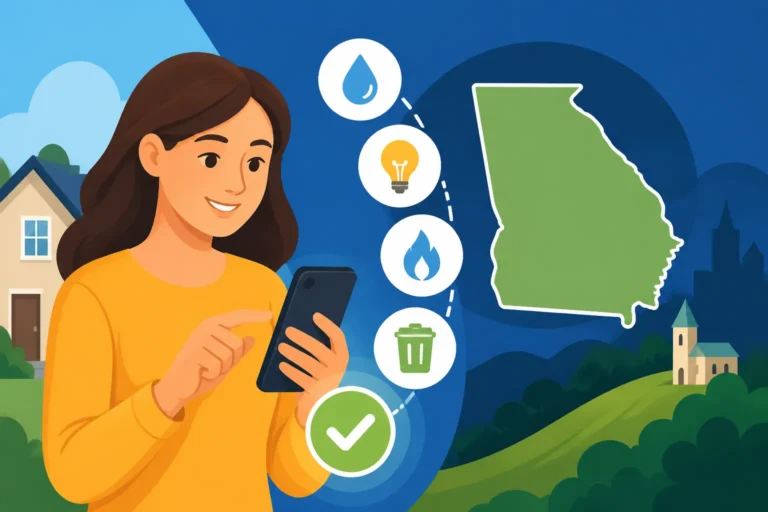
The Georgian utility landscape, much like its stunning geography, is wonderfully varied. Unlike places where you might sign up for a single bundled package covering everything, here you'll typically manage electricity, water, gas, and internet/mobile services as separate entities. This means a separate account for each, potentially different billing cycles, and distinct customer service channels. The good news is that once you get the hang of it, and know who to contact for what, it becomes much more manageable. However, that initial learning curve can be steep, especially if you’re grappling with a new language and unfamiliar bureaucracy. The trick is to approach each utility as a standalone project, rather than trying to conquer them all at once.
It’s also important to note that the providers themselves can differ depending on whether you're in the capital, Tbilisi, or in one of the other fantastic cities like Batumi or Kutaisi, or even out in a more rural area. What holds true for a Tbilisian apartment might have slight variations for a house in Kakheti. This regional difference adds another layer of specificity, which means a little local digging is always a good idea. Your landlord or a friendly neighbour can be an invaluable resource in pinpointing the correct local offices or contact numbers.
Essential Documents You'll Need
Getting your documents in order before you even step foot into a service centre will save you a world of headaches. Georgian bureaucracy, while generally improving, still appreciates a well-organised stack of papers. For almost any utility account, you'll need a few key items, and having multiple copies is always a wise move.
Firstly, your passport is paramount. This serves as your primary identification. If you've already secured a residence permit, bring that along too, as it solidifies your long-term presence in the country and might simplify things down the line. Many expats initially operate on their visa-free stay, and for utilities, this is usually perfectly acceptable, especially if you have a solid rental agreement.
Speaking of which, your rental agreement or proof of property ownership is absolutely critical. This document establishes your legal right to the property and therefore your eligibility to set up utility accounts in your name. Make sure your rental contract is officially notarized and ideally translated into Georgian. While some customer service agents might speak English, having documents in Georgian is always safer. If you’re purchasing property, the official deed from the Public Service Hall will be your proof.
Finally, while not always strictly required, having your Taxpayer ID (TIN) can sometimes be helpful, particularly for larger transactions or if you’re registering for specific online services later on. It’s best to have everything ready, even if you don't end up needing every single piece of paper for every single utility. For more details on the paperwork involved, checking out resources like How to Sign a Rental Contract and Pay a Deposit in Georgia can be incredibly useful.
Connecting with Local Providers
Once you have your documents, the next step is to actually engage with the utility companies. As mentioned, there isn't one central hub. For most expats, especially those moving into established apartments or houses, the process usually involves visiting the local service centres for each respective utility provider. These are physical offices where you can register, transfer accounts, or address any issues.
The experience at these centres can vary. Some, particularly in Tbilisi, are quite modern, with ticket systems and staff who might speak some English. Others, in smaller towns, might be more old-school and require a bit more patience and perhaps the help of a Georgian-speaking friend. It’s a good idea to bring a Georgian speaker with you if your language skills aren't quite there yet, or at least have a translation app handy. They can help clarify any nuanced questions or forms.
Often, if you’re renting, your landlord will play a significant role here. Many landlords prefer to either handle the utility transfers themselves or accompany you to the service centres to ensure a smooth transition. This isn’t just a courtesy; it ensures that past bills are settled and new accounts are correctly initiated in your name, preventing any issues down the line. Don't be shy about asking your landlord for assistance – it's a common expectation here.
Electricity: Powering Your Georgian Home
Electricity is, of course, a non-negotiable. From charging your phone to lighting your home and running your appliances, it’s the lifeline of modern living. Understanding Georgia's electricity system is the first step to ensuring you're never left in the dark.
Identifying Your Electricity Provider
In Georgia, the electricity supply is largely managed by two primary entities, depending on your location. If you’re living in the bustling capital, Tbilisi, your electricity provider will almost certainly be Telasi. They are the dominant force there, responsible for distribution, billing, and customer service for all residential and commercial properties within the city limits. Their service centres are generally well-equipped to handle new registrations and queries, though peak hours can mean a bit of a wait.
For those residing outside of Tbilisi, across the rest of Georgia, Energo-Pro Georgia is the name you’ll become familiar with. They cover the vast majority of the country's regions, from the Black Sea coast to the mountainous north. While their presence in smaller towns might mean less English-speaking staff, their services are consistent. The easiest way to confirm your specific provider, if you're unsure (perhaps you've bought a property, and there are no prior bills), is to ask your landlord, previous owner, or even a local neighbour. They'll know exactly which company services your area. You can also often find the company name on the existing electricity meter or on any old bills left at the property.
The Connection Process and Account Registration
Once you know your provider, the actual process of getting connected or transferring an existing account begins. For new connections in a newly built property, you'll need to visit the respective service centre (Telasi or Energo-Pro Georgia) with your passport/residence permit and proof of property ownership. You’ll fill out an application form, and a technician will likely be scheduled to visit your property to activate the connection and record the initial meter reading. This process can take a few days, so plan accordingly.
If you’re moving into an already-connected rental property, the process is usually a transfer of ownership on an existing account. You and your landlord (or previous tenant) will typically go to the service centre together. The landlord will close their account or transfer responsibility, and you will open a new one in your name for the same meter. Critically, ensure that the final meter reading from the previous tenant/owner is accurately recorded and verified by you before the transfer, and that you get a photo of your own initial meter reading. This prevents you from being charged for someone else's past consumption. It’s also wise to check for any outstanding debts on the meter from the previous occupant; the utility company should be able to confirm this.
After successful registration, you'll be provided with an account number and information on how to access your bills. Keep this account number safe, as it's essential for all future payments and inquiries. Often, you'll also be given details on how to register for an online portal or mobile app, which streamlines bill access and payment.
Understanding Electricity Tariffs and Billing
Georgian electricity tariffs operate on a tiered system, meaning the price per kilowatt-hour (kWh) increases as your consumption goes up within a given month. This is designed to encourage conservation and ensure that very high users pay more. For residential customers, there are typically three tiers: a lower rate for your initial consumption (e.g., up to 101 kWh), a mid-tier rate for the next band of consumption (e.g., 101-301 kWh), and a higher rate for anything above that (e.g., over 301 kWh).
The exact rates are set by the Georgian National Energy and Water Supply Regulatory Commission (GNERC) and can be subject to change, so it’s always a good idea to check the latest tariffs on your provider’s website or your bill. You'll receive your electricity bill monthly. These can come in various formats: sometimes a physical bill slipped under your door, often via SMS to your registered phone number, or, increasingly, through an online portal or mobile app.
Payment methods are quite flexible. You can pay at your provider’s service centre, at any bank, through self-service payment kiosks (like PayBox or Nova Technology terminals found everywhere), or via online banking apps (such as those from Bank of Georgia or TBC Bank). Many expats find the online banking apps the most convenient option, as they allow you to pay all your utilities from one place, usually by simply entering your account number. For more insights into your monthly expenses, consider looking at How Much Does Electricity Cost per Month in Georgia?
Water Supply: Keeping the Taps Flowing
Access to clean, reliable water is fundamental, and Georgia generally does a good job of providing it. The setup process is quite similar to electricity, but again, with a distinct provider.
Your Water Service Provider
In Tbilisi, the dominant water utility is Georgian Water and Power (GWP). They handle everything from water supply and distribution to sewerage services within the capital region. Like Telasi for electricity, GWP has a strong presence in Tbilisi with multiple service centres. If you're living in Batumi, you'll be dealing with Batumi Water, and similar municipal or regional water companies exist across other parts of Georgia.
It’s less common for water providers to have significant regional variations in their setup process compared to electricity or gas, but it's still worth confirming your specific provider if you're outside of Tbilisi. Your landlord or previous utility bills are, once again, your best source of information here. Georgian Water and Power also operates a relatively accessible online portal and has an emergency hotline for issues like leaks or interruptions.
Setting Up or Transferring Your Water Account
The process for initiating your water service or transferring an account is very much akin to what you'd do for electricity. Head to the local GWP (or regional equivalent) service centre with your passport/residence permit and your rental agreement or property ownership documents. If you're renting, it's highly recommended to go with your landlord to ensure a smooth transfer.
The critical step here is to record the initial water meter reading accurately. Just like with electricity, you don't want to inadvertently pay for the previous occupant's usage. Take a photo of the meter reading on the day you take possession of the property. The utility company will register this as your starting point. Make sure the previous owner or landlord has settled any outstanding bills on that meter to avoid any complications.
Once your account is set up, you'll be given an account number. This number is your key for all future interactions, payments, and queries. It's usually straightforward, but don't hesitate to ask for clarification if anything isn't clear, especially if there's a language barrier. Patience and politeness go a long way in these situations.
Interpreting Water Bills and Payment Options
Water bills in Georgia are typically issued monthly. They will usually show your consumption in cubic meters (m³) and the corresponding charge, which is a fixed rate per cubic meter for residential use. In addition to consumption, there might be a small fixed monthly service charge. The bills are generally quite transparent, detailing the previous and current meter readings to show your usage.
Just like with electricity, you'll receive your water bill through various channels: sometimes a paper bill, frequently via SMS, or through the provider's online portal or mobile app. GWP, for instance, has a decent online system where you can check your balance and history.
Payment options mirror those for electricity. You can pay at GWP service centres, at commercial banks, through the ubiquitous self-service payment kiosks (PayBox, Nova Technology), or via your online banking app (Bank of Georgia, TBC Bank). Using banking apps is often the most convenient, allowing you to pay your GWP bill directly using your account number. Remember that prompt payment is always best to avoid any late fees or, in extreme cases, service interruptions, though these are rare for minor delays.
Gas Supply: Staying Warm and Cooking
For many homes in Georgia, natural gas is crucial for heating, hot water, and cooking. While it's an efficient utility, it also requires a bit more attention to safety.
The Dominant Gas Provider
In Tbilisi, the main provider for natural gas is KazTransGas-Tbilisi. They are responsible for the safe distribution and supply of gas to homes and businesses across the capital. As with other utilities, if you’re outside of Tbilisi, a different regional gas company will be your provider. These regional companies also fall under the general regulatory framework but operate locally.
Gas infrastructure in Georgia has seen significant improvements, but it's vital to be aware of safety protocols. Always ensure that any gas appliances in your home are regularly serviced and that you have proper ventilation. Carbon monoxide detectors are a wise investment, especially during the colder months when heating systems are in constant use. If you ever smell gas, immediately ventilate the area, do not use electrical switches, and call the emergency services (112).
Getting Your Gas Connected and Account Setup
Setting up a gas account can sometimes be a slightly more involved process than electricity or water, primarily due to safety regulations. If your property is newly built or has had its gas supply disconnected for a long period, a technician visit will be mandatory to ensure all connections and appliances are safe and up to code before gas is supplied.
For moving into an existing property, you'll typically follow a similar procedure to electricity and water: visit the KazTransGas-Tbilisi (or regional provider) service centre with your passport/residence permit and your rental agreement/proof of ownership. Again, bringing your landlord is highly recommended. You’ll need to transfer the existing account into your name.
Accurate meter readings are just as crucial for gas. Ensure the final reading from the previous occupant is recorded, and your initial reading is documented and photographed. Gas meters typically measure in cubic meters (m³). Once the account is successfully transferred and any necessary safety checks are completed (if applicable), you'll receive your unique gas account number.
Gas Tariffs, Usage, and Payment
Gas tariffs in Georgia are generally a flat rate per cubic meter for residential consumers. While the rate per unit doesn't typically tier like electricity, your consumption will naturally fluctuate significantly depending on the season. Winter months, when central heating systems are running, will see substantially higher bills than summer months. Being mindful of your heating usage can help manage costs.
Bills are issued monthly, usually via SMS and/or an online portal, with physical bills also common in some areas. KazTransGas-Tbilisi, for example, has an online platform where you can monitor your consumption and pay bills.
Payment options are consistent with other utilities: service centres, banks, self-service kiosks, and online banking apps. The sheer convenience of paying via an app like Bank of Georgia or TBC Bank cannot be overstated for managing all your household bills from one place. Just punch in your account number, verify the amount, and you're done. Remember, staying on top of your utility bills is important to avoid any disruptions, especially with gas where reconnection can be more complex due to mandatory safety inspections.
Internet and Mobile Connectivity: Staying Connected
In today's world, internet and mobile services aren't just a convenience; they're essential utilities for work, communication, and staying connected with family back home. Georgia offers robust and generally affordable options.
Choosing an Internet Service Provider (ISP)
When it comes to home internet, Georgia has several strong contenders. The main players you'll encounter are MagtiCom, Silknet, and Beeline. Each offers a range of packages, typically combining fiber optic internet with digital TV services.
- MagtiCom is widely regarded for its extensive coverage and reliable fiber optic network. They offer competitive speeds and often have good customer service, including some English-speaking support.
- Silknet is another major provider, offering similar fiber internet and TV packages. They are often bundled with fixed-line telephone services, though fixed lines are less common for expats.
- Beeline, while primarily known for mobile services, also offers home internet in certain areas, sometimes at a more budget-friendly price point, though coverage might not be as universal as Magti or Silknet for home internet.
When choosing, consider factors like the available technology (fiber optic is best, ADSL/DSL is slower but might be present in older buildings), advertised speeds, monthly cost, and any bundle deals that might include mobile services or TV. It’s worth checking with neighbours or your landlord about which provider has the best reputation in your specific building or area. For a deeper dive into choosing your provider, check out How to Choose the Best Internet Provider in Georgia?.
Setting Up Home Internet
Once you've chosen your ISP, setting up home internet typically involves a technician visit. You'll need to go to a service centre (e.g., a Magti or Silknet branch) with your passport/residence permit and rental agreement/proof of ownership to sign a contract. You'll choose your package, and an installation date will be scheduled.
The technician will come to your home, run the fiber optic cable (if it's not already wired), install the modem/router, and ensure the connection is working. This process usually takes a few hours. Make sure you understand the Wi-Fi password and how to reset the router if needed. It's not uncommon for technicians to speak limited English, so having a translation app or a Georgian speaker on hand during installation can be very helpful.
Until your home internet is installed, or if you need a backup, mobile internet via a local SIM card (see below) or an eSIM from providers like Airalo can be a lifesaver. Airalo allows you to get an eSIM for Georgia, giving you instant mobile data upon arrival without needing to find a physical SIM card right away. This is fantastic for those first few days or weeks while you get settled and wait for home internet installation.
Mobile Phone Services and SIM Cards
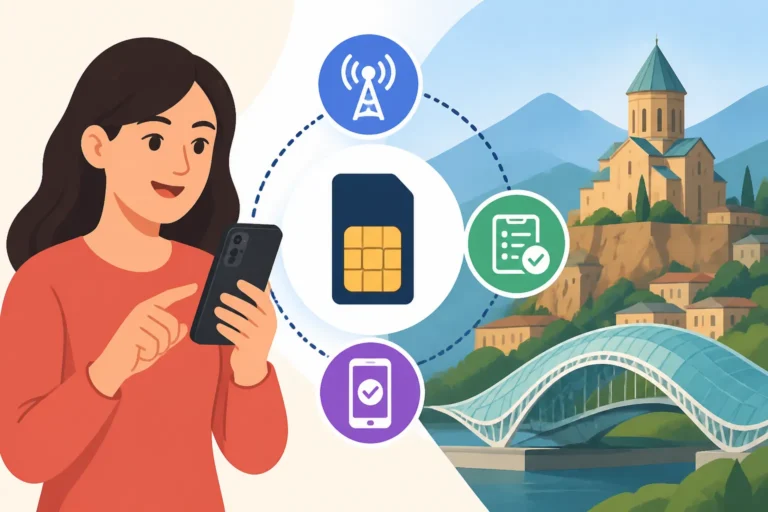
Getting a local Georgian SIM card is one of the easiest and most important things to do upon arrival. The three main mobile operators are MagtiCom, Silknet (which operates under the Geocell brand for mobile), and Beeline. All three offer excellent 4G/LTE coverage across most populated areas and are increasingly rolling out 5G in major cities.
You can buy a SIM card at any of their branded stores, at many small kiosks, or even at the airport. You'll just need your passport. The process is quick and usually takes less than 10 minutes. Staff in major city stores often speak English. You can choose between prepaid (pay-as-you-go) and postpaid (contract) plans. For most expats starting out, a prepaid plan is usually best, as it offers flexibility and easy top-ups.
Prepaid plans come with various bundles of data, calls, and SMS. You can top up your balance or purchase new bundles through their mobile apps, online, at payment kiosks, or in stores. For example, MagtiCom offers various "Magti Unlimited" packages which are popular. The costs are generally very affordable compared to many Western countries. Having a local number is essential for everything from registering for delivery services to providing contact information for utilities or banking. For setting up all your communications, you might find useful tips in How to Set Up Internet and Mobile Service in Georgia.
Navigating Payments and Troubleshooting
Once all your utilities are set up, the next stage is managing bills and knowing what to do if something goes wrong. This is where a little proactive organisation can save a lot of reactive stress.
Common Payment Methods for Utilities
Paying utility bills in Georgia is generally quite convenient, with multiple options available. You'll find a system designed to make payments accessible to everyone, whether you prefer digital or cash.
- Online Banking Apps: This is by far the most popular and convenient method for many expats. Georgian banks like Bank of Georgia and TBC Bank have robust and user-friendly mobile banking apps. Once you have a Georgian bank account, you can add your utility providers (e.g., Telasi, GWP, KazTransGas, MagtiCom) as billers and simply input your account number. The outstanding amount will appear, and you can pay with a few taps. You can also How Do I Set Up Auto-Pay for My Utility Bills in Georgia? if your bank offers this service directly.
- Self-Service Payment Kiosks: These ubiquitous terminals, often branded as PayBox or Nova Technology, are everywhere – in supermarkets, metro stations, pharmacies, and on street corners. They have touchscreens, usually with English language options. You select your utility provider, enter your account number, and pay with cash. They print a receipt, which you should keep. There's usually a small service fee (around 0.5-1 GEL).
- Utility Provider Service Centres: You can always pay your bills directly at the customer service centres of Telasi, GWP, KazTransGas-Tbilisi, or your internet/mobile provider. This is a good option if you have questions or need to resolve an issue at the same time.
- Commercial Banks: Most commercial banks in Georgia also accept utility bill payments at their branches, either at the counter or through in-branch payment terminals.
Whichever method you choose, always remember to keep your receipts or confirmation numbers as proof of payment. This is invaluable if any discrepancies arise later. You'll also want to understand the typical utility costs for an apartment. Learning about What Is the Average Utility Bill for an Apartment in Georgia? can help you budget accordingly.
Tackling Utility Bill Issues and Discrepancies
Despite the best intentions, sometimes things go awry. You might receive a bill that seems unusually high, or perhaps you're charged for a period before you moved in. Dealing with these discrepancies requires a calm approach and good documentation.
First, check your meter readings. Always compare the current reading on your bill with the actual reading on your meter at home. If there's a significant difference, take a photo of your meter. Second, review your previous bills. Look for any sudden jumps in consumption that don't align with your usage patterns.
If you find a discrepancy, gather all your evidence: photos of meter readings, copies of your rental agreement (especially showing your move-in date), and previous bills. Then, contact the utility provider's customer service. This is where the language barrier can be a challenge. While some providers in Tbilisi might have English-speaking staff on their phone lines or at service centres, it’s not guaranteed. Having a Georgian friend or a translation app ready is highly recommended. You can also visit their service centre in person, which often yields better results for complex issues. Be polite but firm, and clearly present your evidence. Keep a record of who you spoke to, when, and what was discussed.
Dealing with Outages and Emergency Situations
Power cuts, water leaks, or a strange smell of gas – these situations can be alarming, but knowing what to do can make all the difference.
- Electricity Outages: Short, planned power cuts for maintenance are not uncommon in some areas and are often announced in advance by SMS or on the provider's website. Unplanned outages should be reported. For Telasi in Tbilisi, you can call their hotline or check their website/app for outage maps. For Energo-Pro Georgia, similar channels exist. Always check your building's main breaker first.
- Water Leaks/Issues: For significant water leaks outside your property or prolonged service interruptions, contact GWP (or your regional water provider) immediately. If it's a leak inside your apartment, your landlord is typically the first point of contact, or you’d call a plumber.
- Gas Smells: This is the most serious. If you smell gas, do not use any electrical switches, open all windows and doors for ventilation, and evacuate the building if the smell is strong. Then, call the emergency number 112 (which covers police, fire, and ambulance, and can connect you to gas emergency services). For KazTransGas-Tbilisi, they also have a dedicated emergency line. Never try to investigate a gas leak yourself.
Knowing your building's main utility shut-off valves (for water and gas) can also be useful for minor internal issues, but only use them if you know what you're doing or are directed to by your landlord or emergency services.
Moving In and Moving Out: Utility Transfer Logistics
The beginning and end of your tenancy are crucial moments for managing utilities. Getting these transfers right ensures a smooth process and avoids nasty surprises like being billed for someone else's consumption or having your rental deposit held back.
Taking Over Utilities When You Move In
When you first move into a new place in Georgia, whether it's a rental or a purchased property, the primary goal is to ensure that the utility accounts are correctly registered in your name and that you start billing from an accurate meter reading. This prevents you from inheriting previous debts or paying for the consumption of the former occupants.
The most important step is to take photos of all utility meters (electricity, water, gas) on the exact day you gain possession of the property. Make sure the date and time are clearly visible in the photos. These are your baseline readings. If your landlord or the previous owner is transferring the accounts, they should also take these readings and provide them to the utility companies. You should confirm that the utility company registers these initial readings as your starting point. It’s also important to confirm with the landlord that all previous bills have been settled. Some providers may not allow you to open a new account if there are outstanding debts on the meter number, even if they belong to a previous tenant. Getting your deposit back later can sometimes be a hassle, so clarifying everything from the outset is always preferable. More information on deposits and contracts can be found in How to Get My Rental Deposit Back in Georgia? and The Complete Guide to Renting an Apartment in Georgia (2026).
Closing Accounts When You Move Out
Equally important is properly closing your utility accounts when you prepare to move out of a property in Georgia. Neglecting this step can lead to you being held responsible for future consumption, which is a headache you definitely don’t want.
A few days before your planned departure, or on your final day in the property, take final meter readings for all utilities (electricity, water, gas). Again, photograph these with a timestamp. Then, visit the service centres of each utility provider. Bring your passport, your account numbers, and the final meter readings. You will inform them of your departure date and request to close your account. They will process a final bill based on your last readings. Pay this final bill on the spot or confirm the amount and how you will pay it (e.g., via bank transfer if you're leaving shortly after).
It’s good practice to get written confirmation that your account has been closed and that there are no outstanding debts. This document can be invaluable proof for your landlord if they have any questions regarding utility payments after you’ve left. This helps ensure a smooth handover and protects your interests.
The Landlord's Role vs. Your Responsibility
The relationship between landlords and tenants regarding utilities in Georgia can sometimes be a bit of a grey area, so clarity is key. Generally, as a tenant, you are responsible for paying all utility bills (electricity, water, gas, internet, mobile) that accrue during your tenancy. The accounts are typically transferred into your name.
However, landlords often play a crucial role in the initial setup and, sometimes, in assisting with troubleshooting due to language barriers or their familiarity with the local systems. Some landlords may prefer to keep the utility accounts in their name, especially for shorter-term rentals, and then charge you directly based on meter readings. While this simplifies the initial setup for you, it means you rely entirely on your landlord for accurate billing and payment. If this is the case, ensure this arrangement is explicitly detailed in your rental agreement, along with how meter readings will be verified and how payments will be made.
It’s always best practice to have the accounts transferred into your name if you're planning a long-term stay. This gives you direct control over monitoring consumption, receiving bills, and making payments, rather than relying on a third party. Regardless of the arrangement, make sure the rental contract clearly states who is responsible for what, including who pays for communal building charges or any pre-existing debts on the property. Understanding your rights and responsibilities as a tenant, as covered in Understanding Tenant and Landlord Rights in Georgia, is very important.
Tips for Expats: Making Life Easier
Living in Georgia as an expat is a wonderful adventure, but it comes with its unique challenges, especially when dealing with administrative tasks like utility setup. Here are a few tips to smooth the process.
Language Barriers and Assistance
Let's be honest: Georgian is a beautiful but complex language, and not everyone at utility service centres or on helplines will speak English fluently. This can be a major source of frustration when you're trying to explain a billing issue or understand a contract.
- Google Translate: Keep your phone charged and the Google Translate app (or similar) ready. The conversational mode can be surprisingly effective for simple exchanges.
- Bring a Georgian Friend: If you have local friends, don't hesitate to ask for their help. Georgians are generally very hospitable and willing to assist. Offering to treat them to coffee or dinner as a thank you is a nice gesture.
- Real Estate Agent: If you used a real estate agent to find your apartment, they often provide post-move-in support, which can include assisting with utility setup. Don’t be afraid to ask if this service is included.
- Relocation Services: For those who prefer a completely hands-off approach, consider using a professional relocation service. Companies like Sirelo can connect you with service providers who offer a wide range of support, including utility setup assistance, making your move to Georgia smoother. They can act as an intermediary, translating and navigating the bureaucracy on your behalf.
- Learn Basic Phrases: Even knowing a few polite Georgian phrases like "Gamarjoba" (Hello), "madloba" (thank you), and "inglisurad laparakob?" (Do you speak English?) can go a long way in showing respect and initiating a positive interaction.
Digital Tools and Apps
Embrace technology! Georgian utility providers and banks have made significant strides in their digital offerings, which can massively simplify your life.
- Bank Mobile Apps: As mentioned, the mobile apps for Bank of Georgia and TBC Bank are your best friends for paying bills. They are intuitive, reliable, and generally have English language options. You can pay all your utilities (electricity, water, gas, internet, mobile) from one central place, usually by just entering your account number.
- Utility Provider Apps/Portals: Most major utility providers (Telasi, GWP, KazTransGas-Tbilisi, MagtiCom, Silknet) have their own mobile apps or online customer portals. These allow you to check your current balance, view past bills, track consumption, and sometimes even pay directly. Familiarise yourself with them.
- SMS Notifications: Many providers will send you monthly SMS notifications with your current bill amount and a link to pay. Keep an eye on your messages.
Leveraging these digital tools means less time spent waiting in lines and more time enjoying your new life in Georgia. They provide a level of convenience that makes the fragmented utility system much more manageable.
Energy Conservation in Georgia
While utility costs in Georgia are generally lower than in many Western countries, they can still add up, especially during peak heating or cooling seasons. Being mindful of your energy consumption can save you money and is good for the environment.
- Heating: Many Georgian apartments use individual gas boilers for heating and hot water. These can be very efficient, but if you have older radiators or poor insulation, heat can escape quickly. Try to only heat rooms you are actively using, and consider lowering the thermostat at night or when you're out. Draft stoppers for windows and doors can make a surprising difference.
- Air Conditioning: Summers in Georgia can be hot. Use air conditioning wisely. Keep windows and curtains closed during the hottest parts of the day to keep the cool air in and direct sunlight out. Clean AC filters regularly for optimal efficiency.
- Lights and Appliances: The usual advice applies: turn off lights when you leave a room, unplug chargers, and switch off appliances that draw phantom power.
- Washing Machine: If your washing machine has an economy or cold wash cycle, use it. Hot water heating can be a significant energy consumer.
By being smart about your usage, you can keep your utility bills manageable and contribute to a more sustainable lifestyle. Remember, understanding your bills and knowing your consumption patterns is the first step towards effective conservation. For new arrivals, looking at The Complete Guide to Moving to Georgia: Your First 90 Days (2026) can offer broader tips for getting settled.
Disclaimer
The information provided in this guide is for general informational purposes only and does not constitute professional advice. While we strive to keep the information up-to-date and accurate, utility providers, regulations, and processes in Georgia can change. It is always recommended to verify the latest information directly with the respective utility companies or local authorities, or to consult with a local expert for specific advice tailored to your situation.