How Do I Get a Sick Note from a Doctor in Georgia?
Navigating illness in a foreign land is never easy, and when you add the need for official documentation like a sick note, it can feel like a whole new level of bureaucracy. Many of us expats have been there, sniffling through a Georgian clinic, wondering if the piece of paper we eventually get will actually be accepted back at work or school. This guide is here to unravel the process of obtaining a sick note from a doctor in Georgia, offering practical, realistic advice from someone who's lived it.
Understanding the Importance of a Georgian Sick Note
When you're feeling under the weather, the last thing you want to worry about is paperwork. But in Georgia, just like in many places around the world, an official sick note from a licensed medical professional is more than just a formality; it's a vital document that confirms your inability to perform regular duties due to illness. For expats, understanding its nuances is crucial.
Why You Might Need One
The reasons for needing a sick note are as varied as the sniffles themselves. The most common scenario, and probably the one you're facing right now, is for your employer. Georgian labour law, like many others, requires documentation for sick leave, especially if it extends beyond a day or two. Without it, your absence might be considered unauthorized, potentially impacting your pay or even your job status, depending on your contract and employer’s policies. It's not uncommon for companies, whether local or international, to have strict rules around this, so don't just assume a quick phone call will suffice.
Beyond employment, sick notes can sometimes be necessary for academic institutions. If you or your child is enrolled in a school or university here, a medical certificate proves a legitimate reason for absence, preventing any negative marks or attendance issues. While less common, I've even heard of cases where individuals needed a sick note for certain visa or residency application renewals, particularly if an underlying health condition might affect their ability to work or stay in the country long-term. And, of course, if you have any sort of private health insurance or even international travel insurance like SafetyWing, a sick note often serves as a key piece of evidence when making a claim for medical expenses or lost travel days. It’s about having that official paper trail for peace of mind in a system that values it.
What a Sick Note Entails in Georgia
A Georgian sick note, or medical certificate (medspravka in a more general sense, though the formal term is "avadmyopobis cnobis damtkiceba" for an illness certificate), is an official document issued by a licensed medical practitioner. This isn't just a handwritten scribbling from your auntie who happens to be a nurse back home; it needs to come from a doctor authorized to practice in Georgia, and it will feature their signature and the official stamp of the medical facility.
Typically, it will contain key pieces of information: your full name, date of birth, and usually a general diagnosis. Sometimes, for privacy reasons or simply due to common practice, the diagnosis might be something like "acute respiratory infection" rather than a super-specific ailment. Crucially, it will clearly state the recommended period of absence from work, school, or other activities, including the start and end dates. The important thing to remember is that these documents are almost exclusively issued in Georgian. While some international clinics might provide an additional informal letter in English, the legally recognized document for local purposes will be in the national language. This can be a hurdle if your employer or institution is based abroad and doesn't have Georgian speakers on staff, so be prepared for potential translation needs, which we'll delve into a bit later.
Navigating the Healthcare System for a Sick Note
Getting a sick note requires you to engage with the Georgian healthcare system, which, for many expats, can feel like a maze. Knowing where to go and what to expect can significantly reduce stress, especially when you're not feeling your best.
Finding a Doctor
The first step is always to find a doctor. For English-speaking expats, Tbilisi offers several private clinics that cater specifically to foreigners. Places like MediClub Georgia or the American Medical Center are well-known for having English-speaking staff and doctors who are more accustomed to international patient expectations. These clinics often have higher consultation fees, but the convenience and clarity of communication can be invaluable when you're unwell and need specific documentation. You might want to refer to our guide on How to Find an English-Speaking Doctor in Georgia for more detailed options.
On the other hand, you have the local polyclinics and smaller private practices scattered across cities. These can be significantly cheaper, sometimes just a fraction of the cost of the larger international clinics. However, the language barrier can be a very real and challenging issue. While some younger doctors might speak a little English, it's certainly not guaranteed, and navigating symptoms and bureaucratic needs through gestures or a translation app can be exhausting when you're sick. If you have a Georgian friend who can accompany you, that's often a lifesaver. More recently, telehealth options have started to emerge, particularly for initial consultations, which can be a convenient first step to gauge your condition, though a physical examination is usually required for an official sick note. Ideally, if you plan to stay in Georgia long-term, try to establish a relationship with a general practitioner (GP) whom you trust and who understands your medical history. This makes future visits, including those for sick notes, much smoother.
Making an Appointment
Once you've decided on a clinic or doctor, the next hurdle is securing an appointment. Unlike some countries where walk-ins are common for minor ailments, many Georgian clinics, especially the more popular private ones, prefer appointments. It's always best to call ahead. You can usually find phone numbers on their websites or Google Maps listings. When you call, clearly state that you're sick and you might need a medical certificate (a sick note). This helps them book you with the appropriate doctor and allocate enough time.
Some of the larger, more modern clinics might even have online booking systems or dedicated apps, which can be a godsend if you're not comfortable speaking Georgian over the phone. Don't be surprised if you can get an appointment the same day, especially in less busy clinics, but for popular doctors, you might have to wait a day or two. If it's truly an emergency, of course, that's a different story and you should head straight to an emergency room, but for a sick note, standard appointments are the way to go. Be prepared for potentially short notice cancellations or delays too; flexibility is key when dealing with local administrative processes.
What to Bring to Your Doctor's Visit
Preparation is key, especially when you're feeling rough. First and foremost, always bring your passport or a valid form of identification. If you have a Georgian residence permit, bring that along too, as it can be useful for local clinics to identify you and potentially access any local benefits, though most expats rely on private insurance.
If you have private health insurance, whether a local plan or an international one like SafetyWing, make sure to bring your policy details or insurance card. You'll likely pay upfront and then submit a claim for reimbursement later, so having all your insurance information handy will streamline that process. It's also a good idea to bring any relevant medical history, even if it's just a mental rundown of chronic conditions, allergies, or medications you're currently taking. While not always strictly necessary for a simple sick note, it helps the doctor get a fuller picture. Lastly, a bit of cash can be useful, especially for smaller clinics or older payment systems, as card machines aren't always guaranteed or might be temperamental. For a quick check on general requirements for seeing a doctor, our article What Documents Do I Need to See a Doctor in Georgia? offers further details.
The Consultation and Obtaining the Sick Note
Alright, you’ve made it to the clinic. Now comes the actual interaction with the doctor and getting that all-important piece of paper. This part requires clear communication, even with a language barrier, to ensure you get what you need.
Explaining Your Symptoms
When you finally sit down with the doctor, be as clear and concise as possible about your symptoms. Don't feel the need to dramatically exaggerate your illness, but certainly don't downplay it either. Doctors here, like everywhere, rely on your honest description to make a diagnosis. If you have specific concerns, or if certain symptoms are particularly debilitating, make sure to highlight them.
Crucially, this is the point where you need to explicitly state that you require a sick note. In Georgian, you might say, "MesaWiro avadmyopobis cnobis damtkiceba mushaobisTvis" (I need a sick certificate for work) or "skolisTvis" (for school). Be direct about the purpose of your visit beyond just seeking treatment. The doctor will then evaluate your condition, and based on their professional judgment, determine if a sick note is warranted and for how long. It's important to understand that it's entirely at their discretion; they won't issue one if they don't believe you're genuinely unwell enough to require absence.
The Sick Note Itself: Format and Content
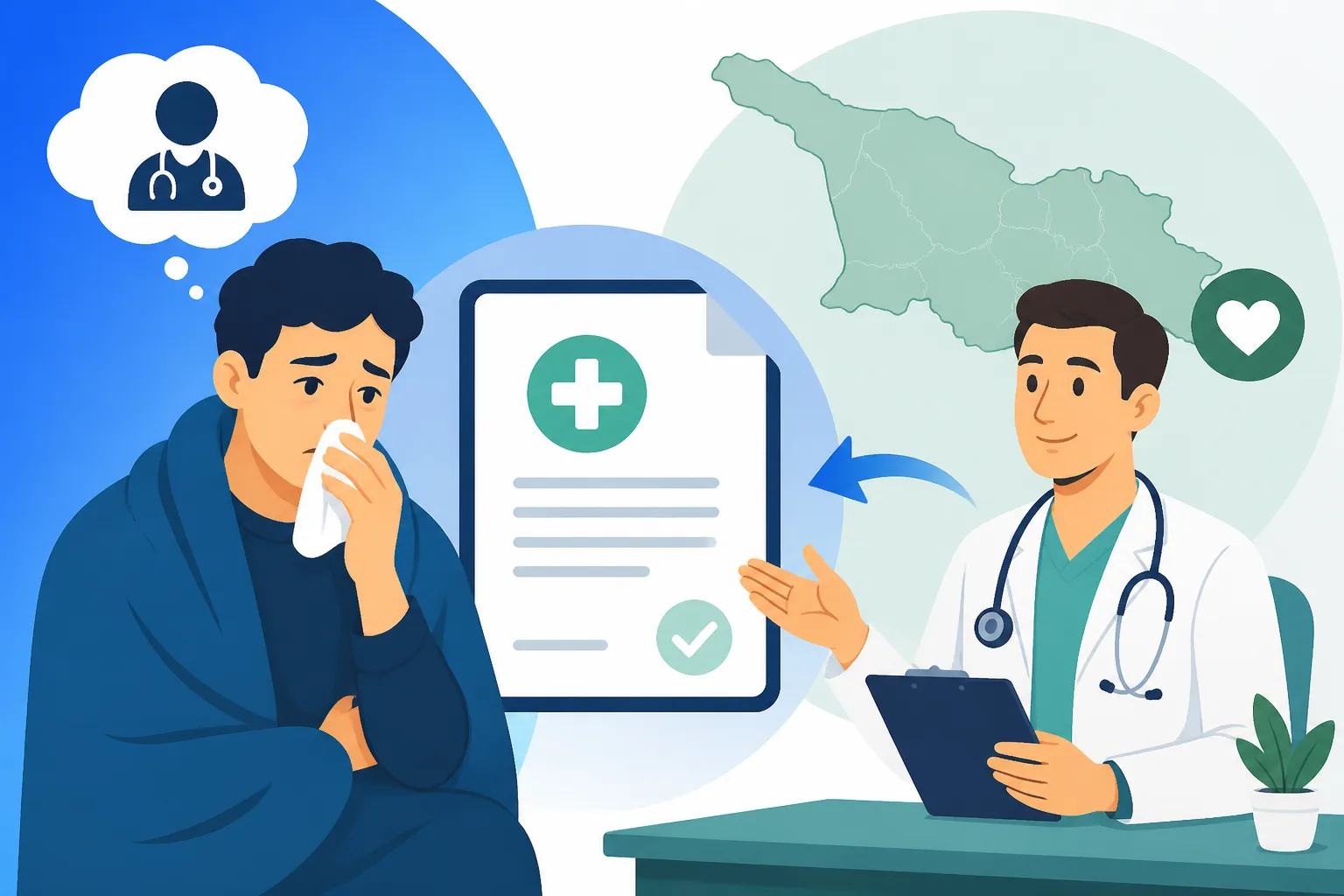
Once the doctor has assessed you and agreed that a sick note is necessary, they will typically prepare a standard form. This isn't usually something bespoke; it's a pre-printed document that the doctor fills in. The note will include your personal details – your full name, date of birth, and sometimes your address. It will also specify the diagnosis, which, as mentioned earlier, might be a general category for common illnesses like a cold or flu.
The most critical part for your employer or institution will be the dates. The sick note will clearly state the period you are excused from work or study, indicating both the start and end dates. This duration can vary widely: a common cold might get you a few days, while a more serious illness could warrant a week or more. The document will always be signed by the doctor and bear the official stamp of the medical facility. Without both, it might not be considered valid. Always double-check these details before you leave the clinic to ensure everything is accurate and legible. A missing stamp or illegible date can cause headaches later on.
Handling Language Barriers and Translations
Here’s where it often gets tricky for expats. As the official sick note will almost certainly be in Georgian, if your employer, school, or insurer is based outside of Georgia and doesn't have a Georgian speaker, you will likely need a certified translation. This is not the time to rely on Google Translate or a friend's rough interpretation. For legal and official purposes, a certified translation from a reputable translation agency in Georgia is usually required. They will stamp and sign the translated document, attesting to its accuracy.
While some English-speaking doctors in international clinics might be willing to provide a simple, informal letter in English summarizing your condition and absence dates, this is typically supplementary and not a replacement for the official Georgian document. Always check with the recipient of the sick note if an informal English letter will suffice, or if they strictly require a certified translation of the Georgian original. Planning for this extra step and cost (certified translations aren't free) is an important part of the process, especially if you anticipate needing a sick note for an international entity.
Costs, Insurance, and Common Scenarios
Understanding the financial aspect and how your insurance plays into getting a sick note is just as important as the medical consultation itself. For many expats, this can be a key differentiator when choosing where to seek care.
How Much Does a Doctor Visit Cost in Georgia?
The cost of a doctor’s visit in Georgia can vary quite a bit, primarily depending on whether you opt for a public clinic or a private one, and the specific reputation of the private clinic. Generally, a consultation at a private clinic, especially those catering to expats in Tbilisi, will range from around 50 to 150 GEL (Georgian Lari). Some specialist consultations might be a bit more. While this might seem high compared to local standards, it's often significantly more affordable than similar private care in many Western countries. For a more detailed breakdown, our guide on How Much Does a Doctor Visit Cost in Georgia? provides comprehensive information.
Public polyclinics, on the other hand, are considerably cheaper. For Georgian citizens and legal residents covered by the Universal Healthcare Program, basic services might be very low cost or even free. However, for many expats, especially those on visa-free stays or without specific local insurance, the costs might still apply, though at a lower rate than private clinics. The trade-off, as mentioned, is often the language barrier and potentially older facilities. It’s a balance between cost, convenience, and communication.
Using Health Insurance for a Sick Note
If you're an expat in Georgia, hopefully, you’ve sorted out some form of health insurance. Many private health insurance plans, both local Georgian policies and international plans like those offered by SafetyWing, will cover the cost of a doctor's consultation that leads to a sick note. The typical process is that you pay for the visit out-of-pocket at the clinic, and then you submit a claim to your insurance provider for reimbursement.
To ensure a smooth reimbursement process, always keep all receipts, the official sick note, and any other relevant medical documents provided by the clinic. These will be essential for your claim. It's a good idea to familiarise yourself with your policy’s specific requirements for claiming, as some might have limits or exclusions. You can find more comprehensive advice on this in our article How to Claim Reimbursement from Private Insurance in Georgia. It's also worth noting that while Georgia has a Understanding the Universal Healthcare Program UHC in Georgia, it typically only covers Georgian citizens and certain categories of legal residents, meaning many expats will not be eligible and will rely solely on private coverage. Consider comparing your options by reading Health Insurance in Georgia: Private and International Options Explained.
Sick Notes for Children and Dependents
If your child or another dependent is ill and needs a sick note for school or another institution, the process is largely similar to that for adults. You would take your child to a pediatrician, who will conduct an examination and, if deemed necessary, issue a sick note in the child's name. As the parent or guardian, you'll be the one communicating with the doctor and receiving the document.
In Tbilisi, there are several excellent pediatric clinics, some of which also have English-speaking staff, making the process much smoother for expat families. Just as with adult sick notes, the document will be in Georgian and will require the pediatrician's signature and the clinic's official stamp. Always ensure you have your child's identification documents (passport, birth certificate) and your own on hand during the visit. To help you find suitable options, take a look at our guide on How Do I Find a Pediatrician in Tbilisi?.
Important Considerations and Expat Tips
Living abroad means adapting, and getting a sick note in Georgia is no exception. A few practical tips can save you a lot of hassle and ensure your experience is as smooth as possible.
Don't Delay Seeking Medical Attention
This might seem obvious, but it's genuinely important. When you start feeling unwell, don't put off seeing a doctor, especially if you anticipate needing a sick note. Waiting too long can complicate things. Firstly, from a health perspective, early intervention is always better. Secondly, from a bureaucratic standpoint, it can become more challenging for a doctor to accurately confirm the onset date of your illness if you only show up days after your symptoms began. For example, if you call in sick on Monday but don't see a doctor until Wednesday, they might only be able to certify your illness from Wednesday onwards, potentially leaving a gap in your official sick leave documentation. So, as soon as you feel it necessary, make that appointment.
Communication with Your Employer/Institution
Proactive communication is your best friend here. As soon as you know you're unwell and might need to be absent, inform your employer or institution. Don't wait until the last minute. More importantly, clarify their specific requirements for a sick note upfront. Some employers, particularly those with a more international outlook or remote setups, might be flexible and accept a digital copy or even an informal English letter from the doctor. Others, especially local Georgian companies, might strictly require the official Georgian document, and sometimes even demand a certified translation if they don't have Georgian-speaking HR staff.
Knowing these expectations beforehand saves you a mad dash to a translation agency while still feeling poorly. It's also a good idea to understand your Understanding Sick Leave Entitlements Under Georgian Labour Law so you know your rights and what documentation is legally required.
Long-Term Illness and Follow-ups
If your illness turns out to be more severe or requires an extended period of absence, you’ll likely need follow-up appointments and updated sick notes. Georgian doctors typically issue sick notes for a specific duration. If you're still unwell beyond that period, you'll need another consultation to have your condition re-evaluated and a new sick note issued. This might also involve referrals to specialists for further diagnosis or treatment, which is a common part of the healthcare system here. Our guide on How Specialist and Hospital Referrals Work in Georgia can shed more light on this process. Keep all your documentation meticulously organized, as a continuous paper trail is essential for longer sick leaves.
The Role of International Health Insurance Providers like SafetyWing
Many expats choose international health insurance providers like SafetyWing for their global coverage, and they often offer handy features. For instance, some SafetyWing plans include telemedicine services, allowing you to have an initial consultation with a doctor online. While these online consultations can be great for general advice and basic medical needs, whether they can issue an official, locally recognized sick note for a Georgian employer might vary.
For a formal, stamped, and signed document needed for local employment or institutions, a visit to a physical clinic in Georgia is almost always necessary. However, the telemedicine service from your SafetyWing plan could provide a preliminary assessment and advice, helping you decide if an in-person visit is truly required, or if your condition is minor enough for a digital note (if accepted by your employer). Always check your specific SafetyWing policy details to understand what is covered and what kind of documentation they can provide that would be accepted by your employer or school here in Georgia. They are often geared more towards travel emergencies rather than extended work leave, so always clarify.
| Feature / Clinic Type | Private International Clinic (e.g., MediClub) | Local Private Clinic | Public Polyclinic |
|---|---|---|---|
| Typical Cost | 80-150 GEL+ | 50-100 GEL | 20-50 GEL |
| Language Spoken | English-speaking staff/doctors common | Georgian, some English | Primarily Georgian |
| Appointment Ease | Easy to book, online options | Phone/walk-in, moderate | Often walk-in, can be busy |
| Sick Note Format | Standard Georgian, sometimes informal English letter | Standard Georgian | Standard Georgian |
| Acceptance Abroad | High (with certified translation) | High (with certified translation) | High (with certified translation) |
| Wait Times | Short | Moderate | Can be long |
| Facility Quality | Modern, good standards | Varies, generally good | Varies, can be basic |
Disclaimer
The information provided in this guide is for general informational purposes only and does not constitute medical or legal advice. While we strive to provide accurate and up-to-date information, local regulations and medical practices in Georgia can change. Always consult with a qualified medical professional for health concerns and a legal expert for specific immigration or employment questions. We recommend verifying all processes and requirements with the relevant Georgian authorities or your employer before making any decisions.