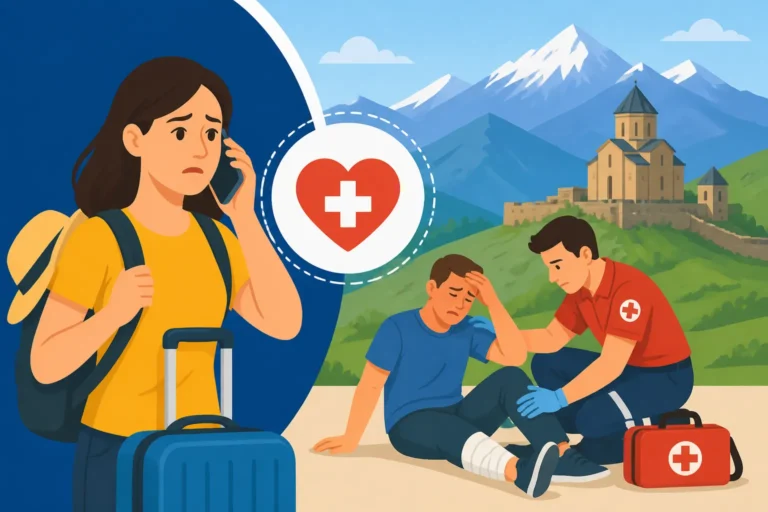
Understanding Sick Leave Entitlements Under Georgian Labour Law
Getting sick in a new country is a special kind of stress, isn't it? Beyond just feeling unwell, you're immediately hit with a flurry of questions: Do I even have sick leave? How does it work here? Will I get paid? The complexities of Georgian labour law, coupled with potential language barriers, can make a simple cold feel like an administrative nightmare. This guide is here to untangle the specifics of sick leave entitlements under Georgian Labour Law, giving you clarity and peace of mind.
The Foundations of Sick Leave in Georgia: Understanding the Labour Code
When you step into the world of employment in Georgia, whether you're working for a local company or an international branch, understanding the legal framework governing your rights is paramount. It’s not just about showing up and doing the job; it’s about knowing what safeguards are in place for you, especially during unforeseen circumstances like illness.
Georgian Labour Code: The Guiding Principles
The primary legislative act that dictates employment relationships in Georgia is the Labour Code of Georgia. This isn't just some dusty old book of rules; it's the foundation upon which your employment rights and obligations are built. When it comes to sick leave, the Code aims to strike a balance: ensuring employees have the necessary time to recover without jeopardizing their financial stability, while also providing employers with a clear framework for managing absences.
Specifically, the Code outlines provisions for periods of temporary incapacity for work, which is the legal term for sick leave. It recognizes that illness is a part of life and that employees should not be unduly penalized for it. The general principle is one of protection – safeguarding the employee's job and, to some extent, their income during their recovery. This protection extends to various forms of incapacity, from a common flu that keeps you home for a few days to more serious conditions requiring longer rehabilitation. However, it's crucial to remember that these protections come with responsibilities, primarily the need for proper documentation and timely communication, which we'll delve into later. The code is periodically updated, so what was true a few years ago might have slight tweaks today, making it important to always refer to the most current version or consult a local expert. For a broader understanding of your worker rights, it's worth checking out our comprehensive guide on Understanding Georgian Labour Law and Worker Rights (2027).
Who is Covered: Employees vs. Independent Contractors
This is where things can get a little tricky for expats, especially those used to different employment classifications in their home countries. The Georgian Labour Code primarily protects individuals who are in an employment relationship with a company. What does that mean in practice? It means you have an official employment contract, you work under the direct supervision of an employer, and your working conditions are determined by that employer.
If you are a salaried employee, working full-time or part-time with a formal contract, congratulations – you are generally covered by the sick leave provisions of the Labour Code. This means your employer has certain obligations towards you if you fall ill.
However, many expats in Georgia operate as independent contractors or freelancers, especially those in the digital nomad community or working for international companies remotely. If you've registered as an Individual Entrepreneur (IE) or work on a service agreement rather than an employment contract, the Labour Code's sick leave provisions generally do not apply to you. You are, in the eyes of the law, a separate entity providing services, not an employee. This is a critical distinction, as it means you typically won't receive paid sick leave from your clients or the companies you contract with. For those navigating this terrain, it’s vital to understand Understanding Health Coverage for the Self-Employed in Georgia and plan accordingly, perhaps looking into private insurance options like SafetyWing, which offers flexible travel medical insurance suitable for digital nomads and freelancers, bridging the gap when traditional employer benefits aren't there. Your residence status, too, can sometimes play a nuanced role in how these distinctions are applied, so it's always good to be clear on How Your Residence Status Affects Health Coverage in Georgia.
Navigating Sick Leave Duration and Payment Entitlements
Alright, so you’ve established you’re an employee. Now for the million-dollar question: How long can you be off, and, more importantly, will you get paid? This is often the most confusing part for foreigners, as the system here has its own quirks compared to what you might be accustomed to.
Short-Term Illness: What to Expect for a Few Days Off
In Georgia, for short-term illnesses, the initial burden often falls on the employer. While the Labour Code establishes the right to paid sick leave, the duration and exact percentage of pay are frequently determined by either the employer's internal policies or through collective agreements. There isn't a universally mandated, fixed number of paid sick days for all employees across all sectors that kicks in from day one, like in some Western countries.
What usually happens? Many reputable companies, especially those with international standards or larger operations, will have a policy of paying for a certain number of sick days (e.g., 5-10 days per year) at 100% or a reduced percentage of your salary. This is often an unwritten perk or a company policy, rather than a strict legal mandate for every single employer. If your company doesn't have such a policy, technically, for very short absences, you might find yourself without pay, relying solely on the medical certificate to justify your absence without risking your job. This can be a real point of frustration for expats who expect more robust short-term sick pay. Always, always clarify your employer's specific sick leave policy during your onboarding or check your employment contract. If you're new to the country and don't yet have an employer, or if your current job doesn't offer robust short-term coverage, considering an international health insurance provider that can cover your initial medical costs for common illnesses could be a smart move, even before factoring in lost wages.
Extended Illness: State Benefits and Employer Responsibilities
Now, for longer periods of temporary incapacity, the situation becomes a bit more structured, though still requires careful navigation. The Georgian state does have a system in place for social insurance benefits that can kick in for prolonged illnesses. However, this is primarily managed through the Social Service Agency and relies on contributions made into the social insurance fund.
Here's the rub for many expats: your eligibility for these state benefits depends on whether you and your employer have been contributing to the relevant social insurance schemes. Many private employers, particularly smaller ones or those employing foreign workers, might not consistently contribute to all these state social insurance schemes in a way that guarantees sick pay benefits for all prolonged illnesses for all employees, in the same way, a highly developed welfare state might.
Typically, if eligible, state-provided sick benefits will cover a percentage of your average salary, often 70-80%, for a certain period, usually up to 150 calendar days for most illnesses, or potentially longer for specific, severe conditions like tuberculosis or occupational diseases. The calculation is complex, taking into account your past earnings and contributions.
For an expat, this often means two things:
- Clarify Contributions: You need to explicitly ask your HR department or employer if they contribute to the state social insurance funds that would cover temporary disability benefits for you. Don't assume.
- Private Insurance is Key: Given the potential gaps in both short-term employer-paid leave and complex state benefits, many expats wisely invest in private health insurance. This isn't just for hospital stays; a good private plan can cover the costs of doctor visits, diagnostics, and medications, which are direct costs associated with being sick, even if it doesn't replace your lost income directly. Providers like SafetyWing are popular among digital nomads and self-employed expats precisely because they offer a safety net for medical expenses when official state social benefits might not be accessible or sufficient. For a deeper dive into available options, explore Health Insurance in Georgia: Private and International Options Explained. Understanding how Georgia's health system works is crucial here, as it's a mix of universal healthcare and private options. How Georgia's Health System Works: Universal Healthcare and Private Care Explained (2027).
To summarise the payment dynamics, here's a helpful table:
| Aspect | Short-Term Sick Leave (e.g., 1-10 days) | Extended Sick Leave (e.g., 10+ days up to 150 days) |
|---|---|---|
| Duration | Varies greatly by employer policy, generally a few days to two weeks. | Up to 150 calendar days for most illnesses (longer for specific conditions). |
| Payer | Primarily the employer (if specified in contract/policy). | State Social Service Agency (if eligible via contributions). |
| Payment % of Salary | Often 100% or reduced % per employer policy; potentially unpaid if no policy. | Typically 70-80% of average earnings, capped by certain limits. |
| Documentation Needed | Medical certificate (sick note) from a licensed doctor. | Official medical certificate, often requiring specific forms from state-approved clinics. |
| Expat Consideration | Crucial to check employment contract; potential for unpaid days. | Eligibility depends on employer's social insurance contributions for you. Private insurance is strongly recommended for medical costs. |
Essential Documentation for Sick Leave: Medical Certificates and Procedures
So, you're feeling under the weather, but before you curl up with some khachapuri and a good book, you need to ensure your absence is properly documented. This isn't just a formality; it's a legal requirement that protects both you and your employer. Without the right paperwork, your sick leave could be seen as an unauthorized absence, leading to serious issues.
Obtaining a Valid Medical Certificate (Sick Note)
In Georgia, the equivalent of a "sick note" or doctor's note is officially called a საავადმყოფო ფურცელი (saavadmkopo furtseli), which translates to "hospital sheet" or "medical certificate of temporary incapacity." This document is your official proof of illness and your eligibility for sick leave.
Here’s how you generally go about getting one:
- Visit a Licensed Doctor/Clinic: You must be seen by a licensed medical professional at a recognized clinic or hospital. Self-diagnosis and self-declaration won't cut it for official sick leave. This is why it’s incredibly helpful to know How to Find an English-Speaking Doctor in Georgia before you actually need one in a panic. Many expats find private clinics like Medifast or Evex Medical Corporation more accommodating with English-speaking staff and clearer procedures for sick notes.
- Explain Your Symptoms Thoroughly: Be clear and detailed about your symptoms and how they prevent you from working. The doctor will assess your condition and determine the appropriate duration for your temporary incapacity.
- Ensure Proper Information: The medical certificate needs to contain specific information to be valid:
- Your full name and personal identification number (PIN).
- The name and stamp of the medical institution.
- The doctor's signature and stamp.
- The diagnosis (or a general statement if you prefer it not to be too specific for privacy).
- The start and end dates of your temporary incapacity.
- A statement confirming you are unfit for work.
- Follow-up Visits: If your illness is prolonged, you'll likely need to revisit the doctor periodically to extend your medical certificate. They won't usually issue one for an indefinite period.
- Cost: While the Universal Healthcare Program (UHC) in Georgia covers some aspects of public healthcare for citizens and certain residents, for many expats, especially those relying on private clinics, there will be a cost associated with a doctor's visit to get a sick note. This is another area where private health insurance can be a lifesaver, covering these consultation fees. If you're wondering How Much Does a Doctor Visit Cost in Georgia?, it can vary, but generally, private clinic visits are quite affordable by international standards.
Remember, a proper medical certificate is your golden ticket. Without it, even if you’re genuinely ill, your employer is well within their rights to consider your absence unexcused.
Submitting Your Documentation to Your Employer
Once you have your saavadmkopo furtseli in hand, the next crucial step is getting it to your employer. Timeliness and clarity are key here.
- Communicate Immediately: As soon as you realize you're too sick to work, notify your direct manager and/or HR department. Don't wait until the day you return. A phone call, text, or email on the first day of absence is usually sufficient for initial notification.
- Submit the Certificate Promptly: While you might notify your employer on day one, you'll typically submit the physical or scanned medical certificate upon your return to work or as soon as it's issued. Some employers might ask for a scan immediately if your absence is expected to be more than a day or two. Always clarify their preferred method of submission (e.g., email, company portal, physical copy to HR).
- Keep Copies: Always, always keep a copy of your medical certificate for your own records. A photo on your phone or a scan stored digitally can save you a lot of hassle down the line if there are any disputes or questions about your sick leave.
- Language Considerations: Most medical certificates will be issued in Georgian. If your employer requires an English translation, you might need to arrange this, though many international companies will accept the Georgian original. If you’re at a smaller local firm, they might also be fine with the Georgian document. Be prepared for this potential need.
Failing to submit proper documentation in a timely manner can result in your sick leave being reclassified as unauthorized absence, which could lead to disciplinary action, including loss of pay or, in extreme cases, even termination. So, while you're recovering, make sure someone (or yourself, if you're well enough) handles this administrative side.
Your Rights and Your Employer's Obligations During Sick Leave
Dealing with an illness is tough enough without worrying about your job. Thankfully, the Georgian Labour Code provides certain protections for employees on sick leave, ensuring that your health takes priority without undue professional repercussions.
Protection Against Dismissal and Discrimination
This is a cornerstone of employee protection under Georgian law. The Labour Code explicitly states that an employer generally cannot dismiss an employee solely on the grounds of temporary incapacity for work (i.e., being on sick leave). This protection is crucial and applies as long as your sick leave is properly documented and falls within the legally defined periods.
Think about it: if you're seriously ill and recovering, the last thing you need is the added stress of losing your job. The law understands this. Your employment relationship is considered suspended or temporarily interrupted, but not terminated, during valid sick leave. This means your position should be there for you when you return.
However, there are nuances. While you cannot be dismissed because you are sick, there might be other valid grounds for dismissal that could coincide with your sick leave period, though these are typically difficult for an employer to prove if challenged. For instance, if the company is undergoing legitimate restructuring that eliminates your role, and this process started before your illness, it might be a different situation. But simply being out for a cough or a broken leg, with proper documentation, should not be a cause for dismissal.
Furthermore, employers are prohibited from discriminating against employees based on their health status. This means you shouldn't face negative consequences, be passed over for promotions, or be treated unfairly simply because you've had to take sick leave in the past. If you feel your rights have been violated in this regard, seeking legal counsel specializing in Georgian labour law is strongly advised. It's a complex area, and a local expert will be able to guide you through the specifics of lodging a complaint or understanding your standing.
Returning to Work and Workplace Adaptations
The transition back to work after an illness can sometimes be as challenging as the illness itself. The Georgian Labour Code generally expects employees to return to their duties once their temporary incapacity ceases, as indicated by their medical certificate.
- Medical Clearance: For longer or more serious illnesses, your doctor might issue a certificate specifically stating you are fit to return to work, or fit for "light duty." This "medical clearance" is important.
- Gradual Return to Work: While not explicitly detailed as a strict legal right for all types of illnesses in the same way some Western countries implement it, some employers may offer or be open to a gradual return to work or temporary adjustments if your doctor recommends it. For example, reduced hours or modified tasks for a short period. This often comes down to employer discretion, the nature of your job, and the severity of your illness. It's always best to discuss this openly with your employer and provide supporting medical recommendations if a gradual return is necessary.
- Employer's Duty to Accommodate (within reason): For long-term or permanent disabilities resulting from illness, the Labour Code, along with other Georgian legislation on the rights of persons with disabilities, does place an obligation on employers to make reasonable accommodations to facilitate the employee's continued employment. This could include adapting the workplace, modifying tasks, or providing assistive technology. What constitutes "reasonable" is often assessed on a case-by-case basis, considering the size and resources of the employer.
The key takeaway here is communication. If you anticipate any difficulties returning to your full duties or believe you require specific accommodations, start the conversation with your employer and doctor well in advance of your planned return date. Providing clear, medically supported reasons for any requested adaptations will always strengthen your case.
Common Expat Challenges and Solutions Regarding Sick Leave
While the legal framework exists, navigating sick leave as an expat in Georgia comes with its own set of unique hurdles. It's not just about knowing the law; it's about applying it in a new cultural and administrative environment.
The Self-Employed and Freelancer Dilemma
This is perhaps the biggest headache for many foreign residents in Georgia. As we touched upon earlier, if you're an Individual Entrepreneur (IE), a freelancer, or working as an independent contractor, you generally fall outside the scope of the Labour Code's sick leave provisions. This means no paid sick days from clients, no state social insurance benefits (unless you've specifically opted into complex voluntary schemes, which are rare for IEs), and no legal protection against income loss due to illness.
The Pain Point: You get sick, you don't work, you don't get paid. It's that simple, and often brutal, reality. A bad bout of flu can mean a significant hit to your monthly income. Moreover, medical costs for consultations, tests, and medications quickly add up, further straining your finances during a vulnerable time.
Solutions for Freelancers and Self-Employed Expats:
- Build an Emergency Fund: This is non-negotiable. Aim for at least 3-6 months of living expenses in savings. This fund acts as your personal sick leave pay.
- Private Health Insurance: Crucially, invest in a robust private health insurance policy that covers medical expenses, doctor visits, hospitalizations, and potentially even emergency dental work. While it won't replace lost income, it will significantly reduce the financial burden of healthcare costs. Many expats find international plans like those offered by SafetyWing extremely beneficial. They are designed for global citizens, offering flexibility and coverage that travels with you, which is ideal if you're not tied to a single employer's benefits. It also helps cover you if you need to access Emergency Medical Care in Georgia: What Every Expat Needs to Know.
- Disability Income Insurance: In your home country, you might find specific disability income insurance plans designed for self-employed individuals. These plans pay out a portion of your income if you become temporarily or permanently disabled due to illness or injury. Research if such options are available and suitable for you while living abroad.
- Network of Support: Having a strong community can make a difference. Fellow freelancers might be able to refer clients for short-term projects you can do when you recover, or simply provide emotional support.
Navigating Communication Barriers and Employer Misunderstandings
Even if you're working for an employer that does offer sick leave, miscommunications can arise. Not all Georgian employers are fully versed in international HR practices, and some might interpret the Labour Code differently than you expect. Add in a language barrier, and things can get lost in translation.
The Pain Point: You might struggle to explain your symptoms to a Georgian-speaking doctor, leading to a less-than-thorough sick note. Your HR department might not fully grasp the specifics of a pre-existing condition or the implications of a long-term illness from an expat's perspective. Misunderstandings about documentation, submission deadlines, or even the basic concept of paid sick leave can cause friction.
Solutions:
- Clear and Early Communication: Always communicate your illness and absence as early as possible. Be concise but clear about your inability to work.
- Get Everything in Writing: Whenever possible, follow up verbal communications with an email summary. "Just confirming our conversation regarding my sick leave, and I will provide my medical certificate by [date]." This creates a paper trail.
- Seek English-Speaking Medical Professionals: Prioritize finding doctors and clinics where communication is easy. This ensures you get accurate diagnoses and properly filled-out medical certificates. We have a whole guide dedicated to How to Find an English-Speaking Doctor in Georgia for this very reason.
- Understand Your Contract: Re-read your employment contract. Does it specify sick leave policies? If not, ask for a copy of the company's internal HR policies on sick leave.
- Professional Translation: If you have crucial medical documents in Georgian and need to explain them to your employer, or vice versa, consider using a professional translation service.
- Consult Legal Counsel: If significant disputes arise or you feel your rights are being violated, don't hesitate to consult a local labour lawyer. They can interpret the nuances of the law and advocate on your behalf.
Understanding the Cost Implications and Tax Considerations
Sick leave isn't just about time off; it has financial repercussions that expats need to consider.
The Pain Point: Even if you get paid sick leave, it might not be 100% of your salary. This means a temporary drop in income. Then there are the direct medical costs: doctor's consultations, prescription medications, diagnostic tests, and potentially unforeseen hospital stays. These costs can quickly accumulate, especially if you don't have adequate health insurance. Additionally, any sick pay you receive might be subject to income tax.
Solutions:
- Budget for Reduced Income: Factor in the possibility of receiving less than 100% of your salary during sick leave. Keep a buffer in your monthly budget for this.
- Comprehensive Health Insurance: This cannot be stressed enough. A good health insurance plan is your best defense against unexpected medical bills. Research plans that cover a wide range of services, including outpatient visits, diagnostics, and prescriptions. The Complete Guide to Healthcare in Georgia for Expats (2027) will offer a wealth of information here.
- Understand Tax Implications: While the primary focus during illness is recovery, remember that sick pay is generally considered taxable income in Georgia. This means it will be subject to the standard 20% personal income tax, unless it falls under a specific exemption (which is rare for regular sick pay). It's worth Understanding Income Tax and the Flat 20% Rate in Georgia to be prepared. When you're filing your annual tax return, ensure any sick pay received is correctly declared.
- Pharmacy System Awareness: Know how Prescription Medications and Pharmacies in Georgia: The Complete Guide works to quickly and affordably get your necessary medicines.
By being proactive about these potential challenges, expats can better protect themselves and ensure a smoother recovery process when illness strikes.
Disclaimer
The information provided in this guide is for general informational purposes only and does not constitute legal, financial, or medical advice. Labour laws, social security regulations, and health system rules in Georgia can change, and their application may vary significantly depending on individual circumstances, employment contracts, and residence status. We recommend consulting with a qualified Georgian labour lawyer, a tax professional, or a reputable insurance advisor for advice tailored to your specific situation. Reliance on any information on this site is solely at your own risk.