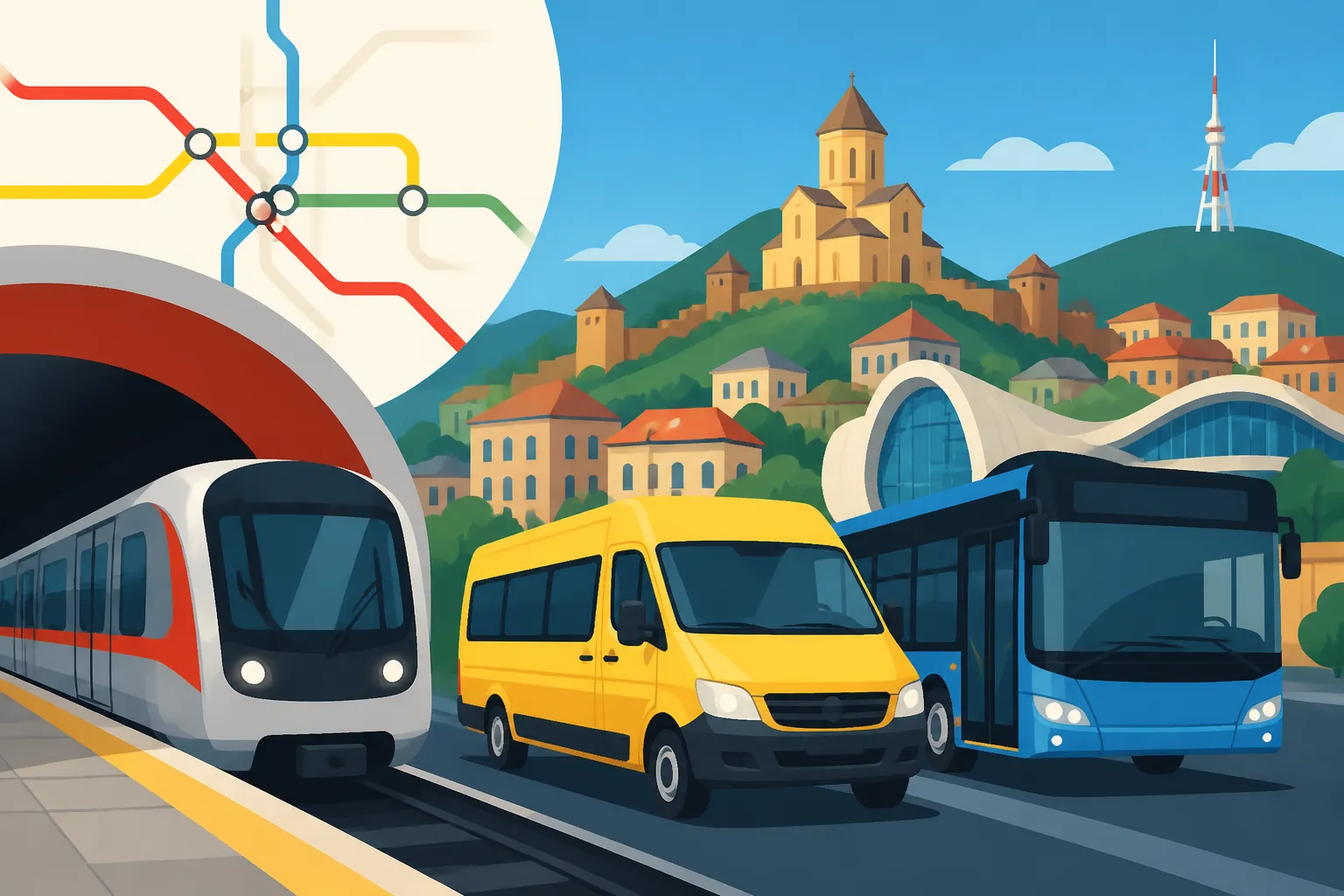
Understanding the Tbilisi Metro, Marshrutka and Bus Networks
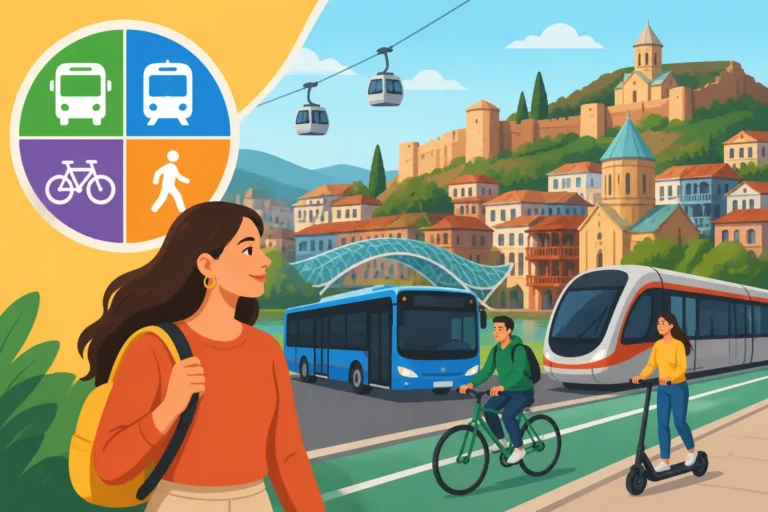
Trying to figure out how to get around Tbilisi without a car can feel like navigating a maze, especially when you're fresh off the plane. The city's public transport system, while extensive, isn't always intuitive for newcomers, with its blend of underground trains, bustling minibuses, and modern city buses. This comprehensive guide will demystify the Tbilisi Metro, marshrutka, and bus networks, helping you understand each mode of transport, how to pay, and all the little quirks that make getting around Georgia's capital an authentic expat experience.
Tbilisi Metro: The Backbone of City Commute
Ah, the Tbilisi Metro. For many of us expats, it quickly becomes our reliable workhorse for getting across the city. It’s efficient, mostly on time, and a welcome escape from above-ground traffic, especially during rush hour. You’ll quickly learn that Tbilisi isn't as sprawling as some other major capitals, which means the metro system, while not as vast, is incredibly effective for covering key areas. It's a genuine lifesaver when you need to be somewhere fast, and you can always count on it to get you to major hubs or popular spots like Liberty Square or Rustaveli Avenue.
The stations themselves are often deep underground, a relic of their Soviet-era construction, some with impressive architectural details. Don't be surprised by the long, steep escalators; they're a hallmark feature! Just embrace the ride and enjoy the brief moment of quiet before you emerge back into the city's vibrant chaos. For many, it's their first introduction to the practicalities of public transport in Georgia.
Understanding the Lines and Stations
The Tbilisi Metro currently consists of two main lines, which makes understanding it far less daunting than systems in mega-cities. You have the Akhmeteli-Varketili Line (Red Line), which runs from north to south, and the Saburtalo Line (Green Line), which is shorter and runs west-east through the central districts. The two lines intersect at the Station Square (Sadguris Moedani), which is probably going to be your most frequented transfer point. This station is a hub not just for metro transfers, but also connects to the main railway station, making it a crucial junction for those traveling further afield by train.
Navigating the lines is straightforward once you know which direction you're heading. Each station clearly displays maps, and the trains announce upcoming stops in both Georgian and English, a massive help for us foreigners. Iconic stations like Rustaveli, Liberty Square, and Marjanishvili are on the Red Line and will likely be your go-to stops for exploring the city center, cultural sites, and popular dining areas. The Saburtalo line serves areas like Medical University and Delisi, which are often residential or host various university campuses. When you're first figuring out how to use the Metro in Tbilisi, it feels a bit like a rite of passage.
Metro Operating Hours and Frequency
One of the great things about the Tbilisi Metro is its consistency. It generally operates from 6:00 AM until midnight, seven days a week. During peak hours, typically weekday mornings (around 7:00 AM to 10:00 AM) and evenings (around 5:00 PM to 8:00 PM), trains run very frequently, often every 3-5 minutes. This high frequency means you rarely have to wait long, which is a blessing when you’re rushing to an appointment or just eager to get home after a long day.
Outside of peak times, the frequency might drop slightly, to around every 7-10 minutes, especially later in the evening or on weekends. Still, it’s a very reliable schedule. You won't find yourself stranded late at night, but if you're planning to stay out past midnight, you'll need to consider other options like taxis or the infrequent night bus service. Keep an eye on local public holidays too, as schedules can sometimes be adjusted, though the metro tends to be more consistent than other modes of transport in this regard.
Accessibility and Safety Considerations
While the Tbilisi Metro is fantastic for its speed and reach, it does have some accessibility challenges, especially for those with mobility issues or parents with strollers. As mentioned, many stations have incredibly long and steep escalators, and not all have elevator access. Older stations, in particular, might only offer stairs and escalators, which can be a real struggle if you're lugging heavy groceries or a small child. Newer stations or those that have undergone recent renovations are generally more accessible, but it's wise to check ahead if accessibility is a major concern.
In terms of safety, the metro is generally very safe. Stations are often monitored by cameras, and you'll see police presence, particularly at major hubs. Like any crowded public space, it's always wise to be mindful of your belongings and keep an eye out for pickpockets, especially during busy times. However, serious crime is rare. The trains themselves are well-maintained, and the general atmosphere is orderly. Personally, I've always felt very secure riding the metro, even late at night.
Marshrutkas: The Unpredictable Lifeline
Now, let's talk about marshrutkas. Oh, the marshrutkas! These yellow (or sometimes white) minibuses are absolutely ubiquitous in Tbilisi and across Georgia. They are simultaneously the most frustrating and most indispensable part of the public transport landscape. If the metro is the city’s backbone, marshrutkas are its sprawling, chaotic nervous system, reaching places the metro can only dream of. They're faster than a bus because they don't have fixed stops (mostly), but they're also a wild card, packed, hot, and often driven with a certain… enthusiasm. Getting used to them is a true immersion into Georgian daily life.
You'll see them zipping around everywhere, often honking to alert potential passengers. For many expats, the initial experience can be overwhelming, trying to figure out where they go and how to signal a stop. But once you crack the code, they're incredibly convenient and often take you directly to your destination without the need for transfers, though sometimes with a scenic detour or two.
The Art of Catching a Marshrutka
Catching a marshrutka is less about finding a designated bus stop and more about spotting one going in your general direction and flagging it down. Seriously. You stand on the side of the road, extend your arm, and if the driver sees you and has space, they'll pull over. Sometimes. Other times, they might zoom past, already packed to the brim, leaving you to wait for the next one. It's a game of chance, really. The key is to look for the route number and a small sign in the window indicating the final destination, often with a few key stops listed. Google Maps or the Moovit app can sometimes help with general directions and route numbers, but don't expect real-time tracking like you would for a regular bus.
Once you’re in, you pay the driver, usually when you get on, but sometimes when you get off, depending on the route and driver's preference. It's a bit of a free-for-all! When you want to get off, you shout "Gaacheret!" (gah-cheh-REHT) or "Shemokhtsiet!" (sheh-mokh-TSEET), which roughly translates to "Stop!" or "Please stop here!" Most drivers are used to expats struggling with pronunciation, so a simple "Stop, please!" in English, combined with a gesture, usually does the trick. You might also hear locals saying "next stop" or pointing. It’s all part of the charming chaos.
Routes, Destinations, and Their Quirks
Marshrutka routes are extensive, covering almost every neighborhood and even connecting Tbilisi to nearby towns and villages. The signs in the windows are almost exclusively in Georgian, which means you'll either need to memorize the Georgian spelling of your destination or rely on the kindness of strangers. A helpful trick is to have your destination written down in Georgian on your phone or a piece of paper to show the driver or fellow passengers. The main hubs for marshrutkas departing to different parts of the city and beyond are usually around metro stations, like Didube (for destinations further afield in Georgia) and Station Square.
One of the biggest quirks is that marshrutkas will often deviate slightly from their official route if enough passengers request it, or if traffic demands it. This means your journey might not always be identical, even on the same route. They are also notorious for stopping anywhere along the route to pick up or drop off passengers, which can make for a rather stop-and-go journey. Don't expect personal space; during peak hours, these vehicles can be crammed with people, often standing shoulder-to-shoulder. It's an intimate, albeit sometimes uncomfortable, way to travel. But hey, you'll definitely get a feel for the local vibe!
Cost and Payment Methods
The cost of a marshrutka ride is generally fixed and very affordable, usually around 1 GEL. This makes them one of the cheapest ways to get around Tbilisi. Payment is almost exclusively in cash, directly to the driver. It’s crucial to have small denominations (1 GEL or 50 tetri coins are best, though 2 GEL notes are also fine) because drivers rarely carry a lot of change. Trying to pay with a 20 GEL note for a 1 GEL fare will likely earn you a sigh or a stern look, and sometimes, they simply won't have the change. So, always keep a stash of small coins and notes handy.
Unlike the metro or buses, marshrutkas do not typically accept the MetroMoney card. This is important to remember, as it means you can't rely solely on your card for all public transport. Always double-check with the driver if you're unsure, but generally, assume cash is king for these speedy little buses. This cash-only policy is one of those small logistical hurdles that How Do I Get My Health Coverage As A Newcomer In Georgia? doesn't cover, but it's part of the everyday reality of living here.
Tbilisi Bus Network: Reaching Every Corner
The Tbilisi bus network is probably the most expansive and arguably the most comfortable public transport option in the city. Over the past few years, there's been a significant upgrade to the fleet, with many modern, comfortable, and air-conditioned buses replacing older models. This has made a huge difference, especially during the sweltering Georgian summers or chilly winters. The bus system covers virtually every district and street, filling in the gaps left by the metro and offering a more structured, though slower, alternative to the marshrutkas.
Unlike marshrutkas, buses operate on fixed routes with clearly marked stops, making them much easier for expats to navigate. If you're someone who prefers predictability and comfort over speed and spontaneity, the bus network will be your preferred choice. It's a great way to explore the city at a slightly more leisurely pace, taking in the sights as you go.
Modern Buses and Extensive Routes
Tbilisi boasts a fleet of new, environmentally friendly buses, including electric and natural gas models. These buses are a far cry from the older ones, offering comfortable seating, air conditioning, digital display screens showing upcoming stops (often in English!), and even USB charging ports on some models. This modern upgrade has significantly improved the user experience, making bus travel a much more pleasant affair.
The bus routes are incredibly extensive, covering areas that the metro doesn't reach and providing more localized transport within neighborhoods. Major routes connect key areas like the city center, shopping districts, residential areas, and even the airport. For example, the N337 bus (formerly 37) provides a direct link between the city center (Rustaveli, Liberty Square) and Tbilisi International Airport, running frequently throughout the day and evening. Understanding the bus network, combined with the metro, will give you incredible freedom to explore the best neighbourhoods for expats in Georgia with ease.
Using the Bus Schedule and Stops
Buses adhere to published schedules and stop only at designated bus stops. These stops are usually clearly marked with a sign featuring a bus icon, route numbers, and sometimes a small shelter. Digital screens at many stops now show real-time arrival information, which is a fantastic feature for planning your journey. If a bus doesn't have a digital display, you can still rely on apps like Moovit or Tbilisi Transport (the official app) to track bus locations and estimated arrival times. These apps are indispensable for navigating the bus network and can save you a lot of waiting time.
When you're waiting for your bus, it's generally expected that you flag it down as it approaches, even at a designated stop. A simple wave of the hand is usually enough to signal the driver. This ensures they know you intend to board, as they might not stop if no one is signaling or getting off. Remember to keep an eye out for your stop, as drivers sometimes announce them, but it’s always best to be prepared to press the "stop request" button well in advance. Having a reliable mobile phone plan, perhaps an eSIM from a provider like Airalo, will certainly help you use these apps effectively without worrying about data roaming charges.
Night Buses and Special Services
While the main bus network largely winds down around midnight, Tbilisi does offer a limited night bus service. These special routes operate through the early hours of the morning, typically from midnight until 6:00 AM. They usually cover major arteries and connect popular nightlife spots with residential areas. However, frequencies are significantly reduced, sometimes running only once every 30-60 minutes, so planning ahead is crucial if you intend to use them. These routes are usually identified by an "N" prefix (e.g., N301).
Beyond the regular network, there are also a few special bus services. For instance, some routes might be introduced for specific events or to cater to seasonal tourist attractions. Additionally, for long-distance travel, separate intercity bus services operate from dedicated bus stations, primarily Didube Bus Station and Ortachala Bus Station, connecting Tbilisi to other cities and regions across Georgia. These are distinct from the city's internal bus network and usually require separate tickets bought at the station.
Integrated Travel: Making Connections
One of the beauties of Tbilisi's public transport system, despite its initial complexities, is how well its different components can be used together. While the marshrutkas remain largely separate in terms of payment, the metro and bus networks are wonderfully integrated. This integration is key to efficient city navigation, allowing you to combine the speed of the metro with the expansive reach of the buses to get virtually anywhere you need to go. Learning to master these connections is truly a game-changer for your daily life as an expat.
Thinking about how to find an apartment near the Metro in Tbilisi is a good starting point, but knowing how to use buses to reach that final mile from the metro station can open up many more options for where you choose to live. It's about blending modes to create the most efficient and convenient journey for you.
Seamless Transfers Between Modes
The key to seamless transfers between the metro and bus network lies in the MetroMoney card. This rechargeable card, which we'll delve into more deeply in a moment, is valid on both the metro and the city buses. The real magic happens when you transfer: if you use your MetroMoney card to tap into the metro and then tap onto a bus within a certain timeframe (usually 90 minutes), your second journey (and any subsequent journeys within that window) will be free or heavily discounted. This incentive encourages people to use both systems, making combined journeys incredibly cost-effective.
For example, you might take the metro from Varketili to Rustaveli, then hop on a bus to reach a specific street in Vera or Sololaki that isn't directly served by a metro station. As long as you tap your card correctly at each point, you'll benefit from the transfer discount. This system is a huge relief for many of us who remember navigating separate payment systems in other countries. It genuinely makes daily commuting much more affordable and less of a headache.
Planning Your Journey with Apps
In today’s digital age, physical maps are increasingly obsolete, especially for public transport. Luckily, Tbilisi has embraced digital solutions that make planning your journey a breeze. The two most popular and reliable apps for public transport in Tbilisi are Moovit and the official Tbilisi Transport app. Both offer real-time tracking for buses (and sometimes marshrutkas, though less reliably), route planning, estimated travel times, and even information on delays or disruptions.
- Moovit: This international app is a favorite among expats. It’s excellent for multi-modal journey planning, showing you the fastest routes using a combination of metro, bus, and marshrutkas. It's user-friendly and provides step-by-step directions.
- Tbilisi Transport (TTC): This is the official app from the city's transport authority. It’s particularly strong for real-time bus tracking and provides comprehensive information on all bus routes. While it might be a bit less intuitive for complex multi-modal planning than Moovit, its accuracy for bus schedules is often top-notch.
Having one or both of these apps on your phone is non-negotiable for navigating Tbilisi. They alleviate so much of the stress of figuring out which bus to take, when it will arrive, or where to transfer. Just make sure you have a reliable internet connection; many of us use a local SIM card or an eSIM from providers like Airalo to ensure we’re always connected on the go. This is a must for both planning your commute and staying in touch, similar to how you’d use your phone to set up internet in your Georgia home.
Beyond Daily Commutes: Weekend Escapes
The public transport network isn't just for getting to work or running errands; it's also your gateway to exploring beyond the immediate city center. Many bus routes take you to green spaces, lakes, and less-explored districts that offer a different perspective of Tbilisi. For instance, buses can take you towards Turtle Lake (Kus Tba) or Lisi Lake, popular spots for recreation and relaxation, especially on weekends.
Moreover, for those looking to venture further, the main bus stations at Didube and Ortachala are easily accessible by metro and city buses. From Didube, you can catch marshrutkas and larger buses to popular day-trip destinations like Mtskheta, Gori, or even further afield to the mountains. Ortachala serves routes mainly to the Kakheti wine region and parts of southern Georgia. Knowing how to efficiently reach these intercity transport hubs using the city's public network means you don’t necessarily need a car to enjoy weekend trips across Georgia, making it easier to manage your cost of living in Georgia for expats.
Navigating Payments and Passes
Okay, let's talk about the nitty-gritty of paying for your rides. This is often one of the first things newcomers try to figure out, and it can be a bit confusing at first. But don't worry, once you've got your head around the MetroMoney card, you'll be zipping around like a local. Forget fumbling for change every time; this little card is your key to convenience on the Tbilisi Metro and city buses.
It's one of those essential administrative steps, much like figuring out how to pay your electricity bill in Georgia. Once you understand the system, it's incredibly simple and makes daily life so much smoother.
The MetroMoney Card: Your Essential Pass
The MetroMoney card (also sometimes called the Transport Card) is absolutely indispensable for using the metro and public buses in Tbilisi. Think of it as your all-in-one pass. You can purchase this card at any metro station ticket booth. The card itself costs a small fee (currently around 2 GEL), which is a one-time purchase. Once you have it, you can top it up with any amount of money you wish.
The MetroMoney card works on a tap-and-go system. Simply tap your card on the turnstile reader at metro stations or on the card reader inside the bus. It deducts the fare automatically. The best part is the aforementioned transfer system: if you make multiple journeys on the metro or bus within a 90-minute window, subsequent rides are either free or significantly discounted. This makes planning your journeys with a combination of bus and metro very economical.
Topping Up and Checking Balances
Topping up your MetroMoney card is incredibly easy. You have a few options:
- Metro Station Ticket Booths: The most straightforward way. Just hand your card and the desired amount of cash to the attendant, and they’ll top it up for you.
- Payment Terminals (Pay Boxes): These self-service kiosks, often found in metro stations, bus stops, and even many small shops and supermarkets, are incredibly convenient. They typically have a multi-language interface (including English). You select "MetroMoney" or "Transport Card" (sometimes under "Utilities" or "Other Payments"), enter your card number (or scan it), and insert cash. They will usually print a receipt. These terminals are also where you might pay your utility bills in Georgia.
- Bank of Georgia or TBC Bank ATMs: Many ATMs from these major Georgian banks also allow you to top up your MetroMoney card. Look for the "Transport Card" or "MetroMoney" option on their touchscreens. This is especially useful if you prefer not to carry cash or if the ticket booths are closed.
Checking your balance is just as simple. You can do it at any metro station ticket booth by asking the attendant, or by using the payment terminals. When you tap your card on a bus reader, the remaining balance is usually displayed briefly. Keeping an eye on your balance is smart, especially before a long journey, to avoid getting stuck without enough credit.
Other Payment Options and Fares
While the MetroMoney card is king, there are a couple of other payment options, though they come with limitations:
- Bank Cards: You can use a contactless bank card (Visa or Mastercard) directly at metro turnstiles and on bus readers. However, this is generally more expensive than using the MetroMoney card because you won't benefit from the transfer discounts. Each ride will be charged at the full single-fare price. It’s convenient in a pinch if you forget your MetroMoney card, but not economical for regular use.
- Cash (Limited): As discussed, cash is essential for marshrutkas. For buses, while technically some older machines might accept coins, it's very rare and not recommended. Drivers generally don't handle cash payments on buses. For the metro, you cannot pay with cash directly at the turnstiles; you need to buy a MetroMoney card or a single-use token (if available, though these are becoming rare) from the ticket booth.
The single fare for the metro and city buses is currently 1 GEL. With the MetroMoney card, subsequent transfers within 90 minutes are free, making your effective travel cost much lower if you combine modes or have multiple stops. This affordable fare contributes significantly to why the cost of living in Georgia for expats can be quite manageable, especially in Tbilisi.
Tips for a Smooth Ride: Expat Essentials
Venturing out on Tbilisi's public transport is more than just getting from point A to point B; it’s an experience. It’s a chance to observe local life, practice a few Georgian phrases, and sometimes, even bond with fellow passengers over a shared moment of marshrutka madness. Our editorial team has gathered a few unwritten rules and practical tips that can make your journeys much smoother and more enjoyable. It's all part of adapting to the rhythms of Georgian life.
When you're first making the complete guide to moving to Georgia: your first 90 days (2027) a reality, these little insights can save you a lot of stress.
Essential Etiquette and Customs
Like any public space, there are some unwritten rules of etiquette that are good to know:
- Give Up Your Seat: It’s customary and deeply respected to offer your seat to the elderly, pregnant women, or those with small children, especially on crowded buses and marshrutkas. Don't wait to be asked; if you see someone who looks like they could use a seat more than you, offer it up.
- Personal Space (or Lack Thereof): Particularly on marshrutkas and during rush hour on buses, personal space is a luxury. Be prepared for close quarters. It’s not uncommon to be gently squeezed or bumped, just roll with it.
- Volume Control: While Georgians can be quite animated in conversation, especially on their phones, try to keep your own voice to a respectful level, especially early in the morning or late at night.
- Exiting: On the metro, stand to the side to let people off before trying to board. On buses and marshrutkas, make your way to the exit a stop or two before yours to avoid a last-minute scramble.
These small acts of consideration go a long way in showing respect for local customs.
Staying Safe and Aware
Tbilisi is generally a safe city, and its public transport is no exception. However, it's always wise to practice common-sense safety measures:
- Watch Your Belongings: Like any busy public transport system, pickpocketing can occur, especially in crowded metro stations, on packed marshrutkas, or at popular bus stops. Keep your bag zipped, phone secure, and wallet in a front pocket. Don't flash expensive electronics unnecessarily.
- Be Aware of Your Surroundings: While rare, distracted travelers can be targets. Pay attention to who is around you, especially when boarding or exiting.
- Emergency Number: If you ever find yourself in a situation where you feel unsafe or witness something concerning, remember the unified emergency number for Georgia: 112. They have English-speaking operators.
- Traffic: When getting on or off a marshrutka that stops in the middle of a busy street, always be acutely aware of traffic. Georgian drivers can be… dynamic, and crossing the street haphazardly can be dangerous.
Staying alert and trusting your instincts will serve you well.
Dealing with Language Barriers
The language barrier can be one of the more frustrating aspects of navigating public transport, especially with marshrutkas where information is largely visual or auditory in Georgian. However, there are many ways to overcome this:
- Learn Key Phrases: Even a few basic Georgian phrases like "Gamarjoba" (hello), "Madloba" (thank you), "Gaacheret" (stop), and numbers can make a huge difference. Locals genuinely appreciate the effort.
- Translation Apps: Have a translation app like Google Translate with offline Georgian language packs downloaded on your phone. This can be a lifesaver for translating signs or quickly communicating with a driver or fellow passenger.
- Show Your Destination: As mentioned earlier, having your destination written in Georgian on your phone or a piece of paper is a simple yet highly effective strategy, especially for marshrutkas.
- Ask for Help: Georgians are generally very friendly and helpful. Don't be afraid to ask for assistance. Pointing to a map or a written address often elicits a helpful response, even if there’s no common language. Many younger Georgians have some English proficiency.
A little preparation and a willingness to engage will make your public transport adventures in Tbilisi much smoother. This proactive approach applies to many aspects of expat life, even understanding something as seemingly simple as how do I find an English-speaking doctor in Georgia.
Here's a quick comparison of the three primary transport methods:
| Feature | Metro (Underground) | Marshrutka (Minibus) | Bus (City Bus) |
|---|---|---|---|
| Reach | Limited to two lines, covers major hubs | Extensive, covers almost all neighborhoods and beyond | Extensive, covers most streets and neighborhoods |
| Speed | Fastest, unaffected by traffic | Can be fast (less stops), but also stuck in traffic | Slower, fixed stops, affected by traffic |
| Cost | 1 GEL per ride (with MetroMoney, transfers discounted) | ~1 GEL per ride (cash only) | 1 GEL per ride (with MetroMoney, transfers discounted) |
| Payment | MetroMoney card (recommended), contactless bank card | Cash only (small denominations essential) | MetroMoney card (recommended), contactless bank card |
| Frequency | High (3-10 min) | High, but unpredictable (appear when full or passing) | Moderate-High (5-20 min depending on route/time) |
| Stops | Fixed stations, clearly marked | Mostly flexible, flag down/shout to stop | Fixed stops, clearly marked |
| Accessibility | Limited (long escalators, few elevators) | Poor (cramped, high steps) | Generally good (newer buses often low-floor) |
| Information | Digital signs, English announcements, maps | Mostly Georgian signs, relies on local knowledge/apps | Digital signs, real-time apps, some English announcements |
| Comfort | Moderate (can be crowded) | Low (cramped, often standing) | Moderate-High (newer buses are spacious, A/C) |
| Operating Hours | 6:00 AM – Midnight | Generally 7:00 AM – 10:00 PM (varies greatly by route) | 6:00 AM – Midnight (limited night routes after) |
Disclaimer
The information provided in this guide is intended for general informational purposes only and is based on current understanding and common practices in Georgia. Public transport rules, fares, and schedules can change. While we strive to keep the information up-to-date and accurate, it is always recommended to verify details with official sources or local transport authorities for the most current information. Always exercise caution and personal responsibility when using public transport.