What Happens If I Get Sick Without Insurance in Georgia?
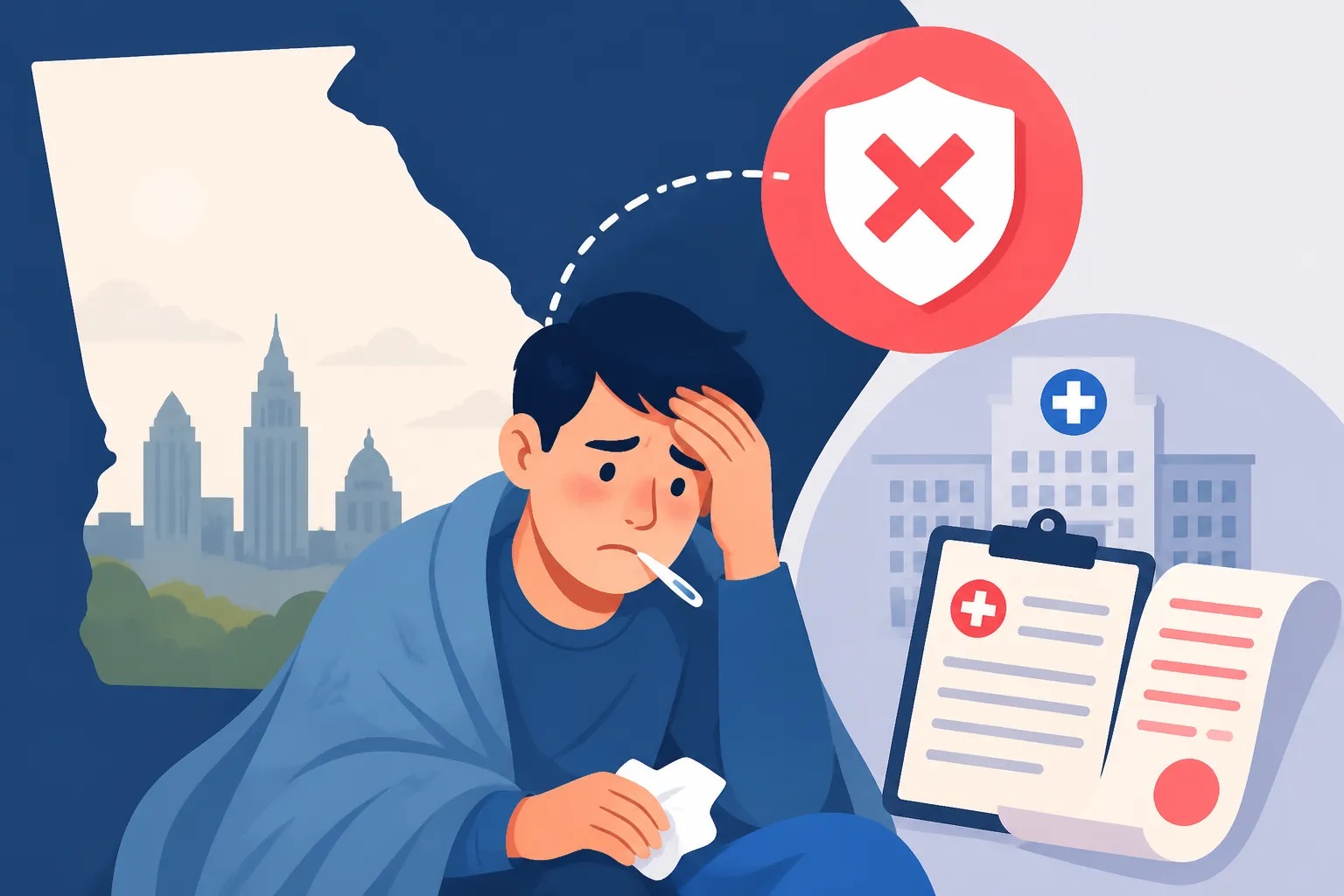
So, you're here in Georgia, soaking up the culture, maybe tackling those administrative hurdles like a champ, and then BAM – you get hit with a nasty bug or an unexpected injury. The immediate panic sets in, especially if you haven't sorted out health insurance yet. Trust me, I've been there, or known someone who has. It's a truly unsettling feeling, facing an unfamiliar healthcare system without that crucial safety net. This guide isn't about shaming you; it's about giving you the brutally honest truth and practical steps for what happens if you find yourself sick without insurance in Georgia, and crucially, how to prevent that nightmare from recurring.
The Immediate Reality: Getting Care Without a Safety Net
The moment you feel unwell in Georgia without insurance, a wave of anxiety is completely normal. Your mind races: Where do I go? How much will it cost? Will they even treat me? The good news is that medical facilities in Georgia will not refuse life-saving treatment, especially in emergencies, regardless of your insurance status. However, the path to care, the quality of that care, and the financial implications can vary dramatically. It’s not like in some countries where you might just walk into a public hospital and expect everything to be covered. Here, even in public facilities, costs will eventually come knocking.
Initial Steps and Where to Go
Your first priority, naturally, is to assess the severity of your condition. Is this a sniffle and a cough, or are we talking about something that feels genuinely critical? This distinction is paramount in deciding your next move.
For genuine emergencies, where you believe your life or limb is at risk, you must call the emergency number 112. This is the integrated emergency service for police, fire, and ambulance across Georgia. An ambulance will respond, assess your situation, and transport you to the nearest appropriate hospital. They are surprisingly quick in major cities like Tbilisi. Don't hesitate to use this service if you truly need it. Language can be a barrier, so try to convey your symptoms as clearly as possible, perhaps using simple English words, or even a translation app. They will generally take you to a public hospital or a large private one with emergency facilities. While they won't turn you away, be prepared for administrative questions about payment after initial stabilization. You can learn more about Understanding Emergency Numbers (112) and Ambulance Care in Georgia.
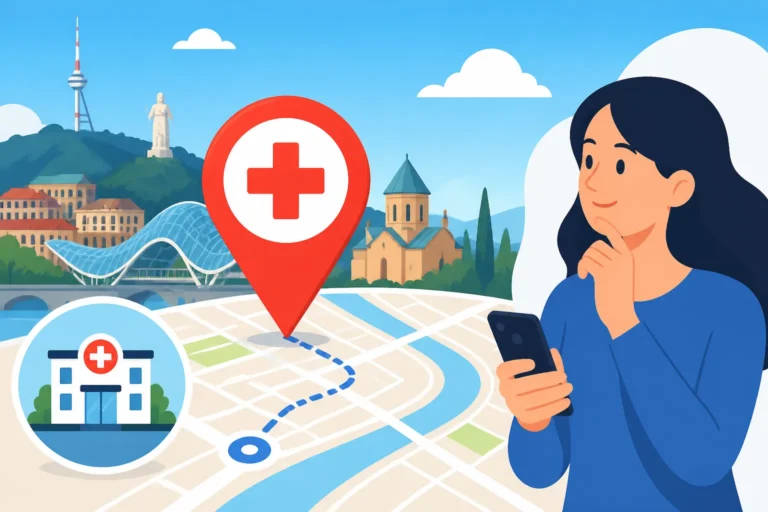
If it's not an immediate emergency – say, a persistent fever, a nasty cold, or a minor injury – then you'll be looking for a walk-in clinic or a private polyclinic. Georgia has a robust private healthcare sector, especially in cities like Tbilisi and Batumi, which many expats prefer due to better facilities and more English-speaking staff. Major private hospital networks like Evex or MediClub often have outpatient clinics where you can see a general practitioner. They might ask for immediate payment before seeing a doctor, or at least a deposit. It's a common practice here, so don't be surprised. This is where not having insurance really stings, as you'll be paying out-of-pocket for everything right from the start. Finding an How to Find an English-Speaking Doctor in Georgia can alleviate some stress.
Public vs. Private Facilities: A Fork in the Road
Without insurance, the choice between public and private healthcare facilities becomes even more critical, though perhaps less about cost difference and more about experience.
-
Public Hospitals: These are the backbone of Georgia's Universal Healthcare Program (UHC), but generally, this program doesn't fully cover foreigners without specific residence permits or employment structures. While they will admit you in an emergency, the facilities can be a mixed bag. You might encounter longer wait times, fewer English-speaking staff, and older equipment. The costs, while potentially lower than private options for some procedures, can still be substantial, and payment will be expected. For minor issues, public outpatient clinics are less common for walk-ins, and the administrative process might feel more bureaucratic.
-
Private Clinics and Hospitals: This is where many expats gravitate, even those with local private insurance. Facilities are generally modern, often equipped with the latest technology, and a higher proportion of doctors and nurses will speak English. The environment is more comfortable, and wait times are typically shorter for scheduled appointments. However, without insurance, you are essentially paying "rack rate" for everything. A simple doctor's consultation can quickly rack up costs, not to mention diagnostic tests like blood work, X-rays, or more complex procedures. While the service is often excellent, the financial hit can be crippling if you're not prepared.
Ultimately, if you're sick without insurance, the private route often offers a more comfortable and comprehensible experience, but at a significant upfront personal cost. The public system might be marginally cheaper for some items, but the overall experience can be more challenging due to language and administrative hurdles.
Navigating the Uninsured Healthcare Landscape in Georgia
Once you've decided on an initial course of action – be it an emergency call or seeking a private clinic – the journey continues. Being uninsured in a foreign country is a tough spot, and understanding the practicalities can help reduce some of the stress, even if it doesn't solve the financial crunch.
Emergency Situations: When 112 is Your Only Option
If your situation is genuinely critical, do not try to self-diagnose or weigh financial costs. Call 112 immediately. The ambulance staff are trained professionals, and their priority is to get you to safety and initial treatment.
When you arrive at a hospital via ambulance, you'll be taken to the emergency room. Expect to be triaged, meaning medical staff will assess your condition to determine how urgently you need care. Someone will ask for your passport, contact information, and eventually, payment details or proof of insurance. Without insurance, they will register you as a self-pay patient. This means you are personally responsible for all costs incurred. They might ask for an upfront deposit for non-critical procedures, or at least clarification on how you intend to pay for services beyond immediate stabilization.
For example, if you arrive with a suspected broken bone, they will X-ray it and stabilize it. But further treatment, like surgery or an overnight stay, will almost certainly require a discussion about payment. It's a tough conversation to have when you're feeling unwell, but it's a reality you'll face. The good news is that the emergency medical staff are generally very competent, especially in Tbilisi's larger hospitals. For more detailed information, check out Emergency Medical Care in Georgia: What Every Expat Needs to Know.
Non-Emergency Care: The Walk-In Clinic Gamble
For non-emergency issues, like a persistent cough, earache, or minor injury that doesn't require an ambulance, a private polyclinic is usually your best bet for finding an English-speaking doctor and more modern facilities. The "gamble" here isn't about getting treatment, but about the variable costs and the potential for upsells.
Here's how it often works:
- Finding a Clinic: You'll need to research or ask expat groups for recommendations for private clinics. Popular choices in Tbilisi include facilities within the Evex network, or the outpatient services at places like American Medical Centers (AMC).
- Making an Appointment: Even for walk-ins, it's often better to call ahead if possible, especially if you need an English-speaking doctor. You might be asked to wait.
- Registration: At the reception, you'll provide your passport and contact details. Crucially, you'll state that you do not have insurance. They will typically inform you of the consultation fee upfront.
- Consultation: The doctor will examine you, listen to your symptoms, and likely order some diagnostic tests (blood work, urine analysis, ultrasound, X-ray) if needed. This is where costs start to spiral. Each test is an additional charge.
- Payment: You will usually pay for the consultation and any immediate tests before you leave. If they prescribe medication, you'll take the prescription to a pharmacy. Remember, Prescription Medications and Pharmacies in Georgia: The Complete Guide is useful even without insurance, but again, you'll pay full price.
A hypothetical scenario: you have a bad stomach bug. You visit a private clinic.
- Initial consultation: 80-150 GEL (Georgian Lari).
- Blood tests (e.g., CBC, CRP, liver function): 100-200 GEL.
- Stool sample analysis: 50-100 GEL.
- Prescription for antibiotics/other medications: 20-80 GEL.
Total easily exceeds 300-500 GEL ($110-185 USD), and that's for a relatively minor issue. This is a significant amount to drop unexpectedly. You can see how quickly this adds up compared to having health insurance in Georgia.
The Unavoidable Costs: Preparing for the Bill
The financial aspect of getting sick without insurance in Georgia is arguably the most daunting. While healthcare services are generally more affordable than in Western Europe or North America, they are far from free, and out-of-pocket expenses can quickly deplete your savings.
What to Expect: Typical Costs and Payment Demands
When you're uninsured, every service, every test, every pill comes with a price tag. Payment is almost always expected at the point of service, or shortly thereafter. Don't expect to be able to defer payment for long stretches, especially in private facilities.
Here's a snapshot of typical out-of-pocket costs without insurance, based on recent averages:
| Service Category | Item/Procedure | Estimated Cost (GEL) | Estimated Cost (USD) | Notes |
|---|---|---|---|---|
| Doctor Consultations | General Practitioner (GP) Visit | 80 – 150 | 30 – 55 | First consultation, follow-ups usually cheaper. |
| Specialist Consultation (e.g., Dermatologist) | 100 – 200 | 35 – 75 | Often higher for highly sought-after specialists. | |
| Emergency Care | Emergency Room Visit (minor, no tests) | 150 – 300 | 55 – 110 | This is just the base fee; diagnostic tests are extra. How Much Does an Emergency Room Visit Cost in Georgia? |
| Ambulance Call (if transport needed) | 0 (usually) | 0 | Often free, but subsequent hospital care is billed. | |
| Diagnostic Tests | Basic Blood Panel (CBC, glucose) | 40 – 80 | 15 – 30 | Individual tests can be added. |
| Comprehensive Blood Panel | 100 – 250 | 35 – 90 | Includes liver, kidney function, cholesterol, etc. | |
| X-Ray (single area) | 50 – 120 | 20 – 45 | E.g., chest, hand. | |
| Ultrasound Scan (single organ) | 80 – 150 | 30 – 55 | E.g., abdomen, thyroid. | |
| MRI Scan | 300 – 600 | 110 – 220 | Varies greatly by hospital and body part. | |
| Medications | Common Antibiotics | 20 – 50 | 7 – 18 | Per course, prices vary by brand/generic. |
| Painkillers (OTC) | 5 – 15 | 2 – 5 | Ibuprofen, Paracetamol are cheap. | |
| Hospital Stays | Overnight Stay (per night, non-ICU) | 150 – 400+ | 55 – 150+ | Excludes doctor fees, procedures, medications. |
Note: Exchange rate used for USD is approximate and fluctuates (e.g., 1 USD = 2.7-2.8 GEL as of early 2024). These are estimates, and actual costs can vary depending on the facility, location (Tbilisi is often pricier), and specific doctor.
Payment is typically accepted via cash (GEL), local bank card, or sometimes international credit/debit cards. It’s always a good idea to have some cash on hand for smaller clinics or pharmacies.
Managing Debt and Financial Aftermath
Let's be blunt: getting seriously ill without insurance can lead to significant financial distress. While Georgia's healthcare isn't as astronomically expensive as, say, the US, a major surgery, a week in the ICU, or treatment for a chronic condition can easily run into thousands, or even tens of thousands, of GEL.
If you find yourself with a substantial medical bill:
- Negotiate: Don't be afraid to try and negotiate with the hospital or clinic's billing department. Sometimes, they might offer a slight discount for immediate cash payment of a lump sum, or a payment plan for larger amounts, though this is less common for foreigners without a strong local financial history.
- Family/Friends: Reach out to your support network. This is often the quickest way to get funds if you're in a bind.
- Embassy/Consulate: Your embassy or consulate might be able to offer limited assistance or advice, but they generally won't pay your medical bills. They can help you contact family or facilitate money transfers.
- Crowdfunding: For truly dire situations, online crowdfunding platforms have become a common, though desperate, recourse.
The debt incurred could severely impact your ability to continue living in Georgia, secure future housing, or even travel. It can also create legal complications if you're unable to pay. This is precisely why insurance, even a basic travel medical policy, is a fundamental necessity for any foreigner in Georgia.
Learning the Hard Way: Why Insurance is Non-Negotiable Here
I cannot stress this enough: getting sick without insurance in Georgia is an experience you absolutely want to avoid. The peace of mind alone that insurance provides is worth its weight in gold. Even if you're young and healthy, life abroad throws curveballs. You never know when you'll slip on an icy street, contract an unexpected virus, or need urgent dental work. Georgia might have a relatively low cost of living, but medical bills can quickly negate any savings you've made. For a comprehensive overview of the system, refer to The Complete Guide to Healthcare in Georgia for Expats (2027).
Essential Options: Local vs. International Plans
There are generally two main categories of health insurance available to expats and long-term visitors in Georgia:
- Local Georgian Insurance Plans: These are offered by Georgian insurance companies like GPI Holding, Imedi L, or Aldagi. They are usually more affordable than international plans and often provide good coverage within Georgia. Many employers offer these as part of their benefits package. They typically cover doctor visits, diagnostic tests, prescriptions, and hospitalization up to certain limits.
- International Health Insurance Plans: These are global policies designed for expats, digital nomads, and frequent travelers. Companies like SafetyWing, Cigna Global, or Allianz Care are popular choices. The main advantages are comprehensive worldwide coverage (excluding your home country, typically), higher limits, and often better English-speaking support. They are more expensive but offer unparalleled flexibility if you plan to travel in and out of Georgia frequently or might need treatment in a neighboring country. Many digital nomads and long-term tourists, especially those just starting out, find flexible options like SafetyWing to be a good interim solution or even a primary plan for their travel medical needs.
Choosing the right plan depends on your individual circumstances, budget, and travel habits. If you're wondering Do I Need Private Health Insurance in Georgia?, the answer for expats is almost always a resounding yes. For those looking to dive deeper into options, What Health Insurance Options Are There for Expats in Georgia? offers a great starting point.
Preventing Future Panics: Getting Covered
If you've unfortunately found yourself in the unenviable position of being sick and uninsured, let this be your wake-up call. The very next step, once you're on the mend, should be to secure adequate health insurance.
Here's a straightforward action plan:
- Research Providers: Look into both local Georgian providers and international options. Consider your needs:
- Do you need coverage for pre-existing conditions?
- What's your budget?
- Do you travel frequently outside Georgia?
- Do you prefer a local network of doctors or global access?
- Compare Plans: Don't just pick the cheapest. Look at deductibles, co-pays, annual limits, and what's explicitly covered (e.g., dental, maternity, mental health). Some expat-friendly options, such as those from SafetyWing, are designed to cover unforeseen medical events while you're abroad, including doctor visits and emergency care.
- Apply and Activate: The application process is usually straightforward, especially for international plans. Make sure your coverage is active before you need it. There are often waiting periods for certain conditions or procedures. If you're an expat, understanding How to Buy Private Health Insurance After Moving to Georgia is crucial.
- Understand Your Policy: Read the fine print. Know what's covered, what's excluded, and the claims process. This will save you immense stress down the line.
The bottom line is that while Georgia's healthcare system can be excellent, especially in private clinics, facing it without insurance is a financial and emotional gamble. It's a lesson best learned through others' experiences, not your own. Protect yourself and your peace of mind – get insured. You can explore Understanding Private Health Insurance Plans in Georgia to find a plan that suits your needs. Even a simple doctor's visit, as detailed in How Much Does a Doctor Visit Cost in Georgia?, becomes a whole lot easier when someone else is footing the bill.
Disclaimer
The information provided in this guide is for general informational purposes only and does not constitute medical, legal, or financial advice. Healthcare costs, insurance policies, and regulations in Georgia can change. Always consult with qualified medical, legal, and financial professionals for advice tailored to your specific situation. We strive to provide accurate and up-to-date information, but we make no representations or warranties of any kind, express or implied, about the completeness, accuracy, reliability, suitability, or availability with respect to the website or the information, products, services, or related graphics contained on the website for any purpose. Reliance on this information is therefore strictly at your own risk.